Quick verdict
For most home NAS builds the Intel N305 or i3-12100 hits the right balance of efficiency, capability, and price. Users running TrueNAS with ZFS should move to the Ryzen 5 PRO 4650GE or Xeon E-2324G for ECC support. Plex-heavy builds benefit from the i5-12400's additional Quick Sync and software transcode capacity. Match the CPU to the NAS operating system and workload rather than choosing by raw performance alone.

Intel Core i3-N305 - Best CPU for Home NAS (Efficiency Build)
The Intel N305 is the top pick for NAS builds where power efficiency is the primary concern. It is an Alder Lake-N chip with eight efficient cores, a 15 W TDP envelope, and Intel Quick Sync hardware transcoding support. At idle a system built around this chip draws under 10 W, which is meaningful for 24/7 operation cost calculations. It is typically purchased as part of a mini-ITX motherboard and CPU combo from vendors like Beelink or CWWK. It does not support ECC memory, so it is best for Unraid or OMV builds rather than TrueNAS ZFS setups. For light-to-medium NAS workloads and Plex serving it is highly capable.
Check price on Amazon →Intel Core i3-N305 leads as the top pick for low-power home NAS builds. Compare the best CPUs for home NAS based on efficiency, transcoding, and ECC support.
Quick verdict
The Intel Core i3-N305 is the single best pick for a home NAS in 2026. Its eight efficient cores, 15 W TDP, and idle power draw under 10 W make it the most cost-effective choice for 24/7 operation without sacrificing Quick Sync transcoding support.
Key takeaways
- Best for Home NAS (Efficiency Build): Intel Core i3-N305, lowest idle power draw and 15 W TDP for 24/7 savings.
- Best Mid-Range CPU for Home NAS: Intel Core i3-12100, strong all-round performance with 60 W TDP and LGA 1700 expandability.
- Best Budget ECC NAS CPU: AMD Ryzen 5 PRO 4650GE, 6 cores and ECC support on affordable AM4 hardware at 35 W TDP.
- Best CPU for ZFS Home NAS: Intel Xeon E-2324G, validated ECC memory support and IPMI remote management for critical data.
- Best CPU for Transcoding-Heavy NAS: Intel Core i5-12400, six cores with Quick Sync for multiple 4K Plex or Jellyfin streams.
Why you should trust this guide
I have spent years researching home NAS builds across multiple forums, manufacturer datasheets, and owner communities. My approach is grounded in understanding what makes a CPU work well in a 24/7 environment: power efficiency at idle, thermal management in small cases, hardware transcoding capability, and platform support for ECC memory or expansion cards. I do not rely on marketing fluff; I compare stated TDPs, core counts, and compatibility with popular NAS operating systems like TrueNAS SCALE, Unraid, and Proxmox. Every recommendation here is based on verified specifications and real-world owner feedback from communities that build and run these systems daily.
I prioritize CPUs that offer a clear trade-off between performance and power draw, because a home NAS runs constantly. A chip that draws 10 W at idle versus 30 W at idle can save you significant electricity over a year. I also focus on platform longevity and upgrade paths. The chips listed here represent the best options for 2026 based on current availability, driver support, and compatibility with modern NAS software. I have excluded any product that lacks a proven track record in actual builds or that requires exotic cooling or power delivery.
How we researched
To evaluate these CPUs for home NAS use, I weighed several key criteria that matter for a 24/7 storage server. The first criterion is power efficiency at idle and under light load, since a NAS spends most of its time serving files or sleeping. The second is hardware transcoding support, particularly Intel Quick Sync, which offloads video encoding from the CPU for media server duties. The third is platform features: ECC memory support, number of PCIe lanes for HBA cards or 10 GbE adapters, and availability of mini-ITX or micro-ATX motherboards. The fourth is thermal output and cooling requirements, since many NAS cases are compact and passively cooled or have limited airflow. The fifth is software compatibility with TrueNAS, Unraid, and Proxmox, including driver maturity for integrated graphics and network controllers.
I compared each chip against these criteria using manufacturer datasheets, community build logs, and documented owner experiences. I did not run any physical tests or measurements. Instead, I analyzed how each CPU performs in typical NAS scenarios: file transfers across multiple drives, Docker container workloads, Plex transcoding with multiple streams, and ZFS parity calculations. I also considered the cost and availability of compatible motherboards and memory. The goal was to identify which CPU offers the best balance of features for a specific NAS use case, not to declare a single winner for every build.
Intel Core i3-N305 – Best CPU for Home NAS (Efficiency Build)
The Intel Core i3-N305 is an Alder Lake-N chip with eight efficient cores and a 15 W TDP envelope. This makes it the top pick for NAS builds where power efficiency is the primary concern. At idle, a system built around this chip draws under 10 W, which is meaningful for 24/7 operation cost calculations. It also includes Intel Quick Sync hardware transcoding support, which is a critical feature for any NAS that will serve video to Plex or Jellyfin. The chip is typically purchased as part of a mini-ITX motherboard, which means you can build a very compact and low-power system that fits in a small case or even a 3D-printed enclosure.
The eight efficient cores are based on the Gracemont architecture, and while they are not as fast as performance cores, they are more than adequate for file serving, Docker containers, and light virtualization. The chip supports up to 16 GB of DDR4 or DDR5 memory, depending on the motherboard, and includes a small amount of L3 cache. The integrated GPU is sufficient for basic display output and hardware transcoding, but it is not designed for gaming or heavy graphics work. The chip runs cool enough that it can be passively cooled in many cases, which reduces noise and improves reliability.
One honest limitation is that the N305 has limited PCIe lanes, which restricts how many expansion cards you can add. You can typically fit one NVMe drive and one SATA controller, but you cannot add a 10 GbE network card and an HBA card simultaneously without sacrificing storage speed. It also lacks ECC memory support, which means it is not ideal for ZFS builds with critical data. For a simple, low-power file server or media server, however, the N305 is unmatched in efficiency.
Intel Core i3-12100 – Best Mid-Range CPU for Home NAS
The Intel Core i3-12100 is a 4-core, 8-thread chip that delivers strong all-round NAS performance in a 60 W TDP envelope. It handles simultaneous file transfers across multiple drives, Docker container workloads, and moderate Plex software transcoding without stress. The LGA 1700 socket provides access to boards with multiple PCIe slots for HBA cards and 10 GbE network adapters, which makes it a flexible choice for users who want to expand their NAS over time. The chip includes Intel Quick Sync support, which offloads video transcoding and reduces CPU load during media streaming.
The 12100 uses the Alder Lake architecture with four Golden Cove performance cores and no efficient cores. This gives it higher single-threaded performance than the N305, which is useful for tasks like database queries or file indexing. The chip supports DDR4 or DDR5 memory, depending on the motherboard, and can handle up to 128 GB of RAM. The integrated UHD Graphics 730 is capable of hardware transcoding multiple 4K streams, making this a good choice for a media server that also handles file storage. The 60 W TDP means it requires active cooling, but a low-profile cooler is sufficient in most cases.
One honest limitation is that the i3-12100 lacks ECC memory support, which means it is not recommended for ZFS builds where data integrity is paramount. It also has a higher idle power draw than the N305, typically around 15-20 W depending on the motherboard and peripherals. For a mid-range NAS that balances performance and power, the 12100 is a solid choice, but it is not the most efficient option for 24/7 operation.
AMD Ryzen 5 PRO 4650GE – Best Budget ECC NAS CPU
The AMD Ryzen 5 PRO 4650GE is a 6-core, 12-thread chip with a 35 W TDP and AMD’s unofficial ECC support that works on most B550 boards. For TrueNAS SCALE ZFS builds where ECC memory is preferred, this chip occupies a unique space: low TDP, moderate cost, and genuine ECC compatibility on affordable AM4 hardware. It is available used from enterprise system pulls, which makes it a budget-friendly option for users who want server-grade memory protection without paying Xeon prices. The chip runs cool, consumes little power, and provides plenty of CPU performance for file serving, Docker containers, and light virtualization.
The 4650GE is based on the Zen 2 architecture and includes Radeon Graphics, which is sufficient for basic display output but does not support hardware transcoding for media servers. This means that if you plan to use Plex or Jellyfin, you will need to rely on software transcoding, which uses CPU cores and increases power draw. The chip supports up to 64 GB of DDR4 memory, and ECC support is available on most B550 and A520 motherboards, though it is not officially validated by AMD. The 35 W TDP allows for passive or low-noise cooling in compact cases, and the chip runs efficiently at idle, drawing around 15-20 W for a full system.
One honest limitation is that the 4650GE lacks Intel Quick Sync, which makes it a poor choice for a media server with heavy transcoding needs. Software transcoding on six cores can handle a few 1080p streams, but it will struggle with multiple 4K streams. It also has fewer PCIe lanes than newer platforms, which limits expansion options. For a budget ZFS build with ECC memory, however, this chip is a compelling value.
Intel Xeon E-2324G – Best CPU for ZFS Home NAS
The Intel Xeon E-2324G is a server-grade quad-core chip built on the same W580 platform as Intel’s NAS-targeted Xeon E lineup. It supports true ECC memory with full validation, making it the correct pick for a ZFS-based NAS that will store critical or irreplaceable data. It pairs with ECC-capable server motherboards using the C256 or C246 chipset and supports IPMI remote management on compatible boards. The TDP is 65 W, which is higher than the consumer chips, but the platform offers superior stability and reliability for 24/7 operation.
The chip has four cores and eight threads based on the Rocket Lake architecture, with a base clock of 3.1 GHz and a boost clock of 4.6 GHz. It includes Intel UHD Graphics P750, which supports Quick Sync hardware transcoding, so you can still run a media server alongside your ZFS storage. The platform supports up to 128 GB of ECC DDR4 memory, and the chipset provides enough PCIe lanes for multiple HBA cards, 10 GbE adapters, and NVMe drives. IPMI remote management allows you to access the BIOS, monitor temperatures, and power cycle the system from a web browser, which is a valuable feature for a headless NAS.
One honest limitation is that the Xeon E-2324G is more expensive than consumer chips, and compatible motherboards are also pricier. The 65 W TDP means it requires active cooling, and the system will draw more power at idle than a low-power chip like the N305. For users who prioritize data integrity and remote management over power efficiency, however, this is the right choice.
Intel Core i5-12400 – Best CPU for Transcoding-Heavy NAS
The Intel Core i5-12400 is the correct pick when the NAS doubles as a Plex or Jellyfin media server with heavy simultaneous transcoding demand. Six cores with Quick Sync and a 65 W TDP gives it more software transcoding capacity than the i3 chips while still running efficiently when idle. It is the choice for households with multiple 4K streams running simultaneously alongside file server duties. The chip uses the Alder Lake architecture with six Golden Cove performance cores and no efficient cores, which gives it strong single-threaded and multi-threaded performance.
The i5-12400 includes Intel UHD Graphics 730, which supports hardware transcoding for H.264, H.265, and VP9 codecs. This allows it to handle multiple 4K transcodes without breaking a sweat, while the six cores handle file serving, Docker containers, and other background tasks. The LGA 1700 socket provides access to a wide range of motherboards, including models with multiple PCIe slots for HBA cards and 10 GbE adapters. The chip supports up to 128 GB of DDR4 or DDR5 memory, and it runs cool enough that a low-profile air cooler is sufficient. At idle, a system built around this chip draws around 20-25 W, which is reasonable for the performance on offer.
One honest limitation is that the i5-12400 lacks ECC memory support, which means it is not ideal for ZFS builds where data integrity is critical. It also has a higher idle power draw than the N305 or 4650GE, which adds to electricity costs over time. For a media server that needs to transcode multiple 4K streams while serving files, however, this chip is the best balance of performance and efficiency.
What to look for
- Power efficiency at idle: A NAS runs 24/7, so idle power draw matters more than peak performance. Look for chips with low TDP and efficient idle states.
- Hardware transcoding support: If you plan to use Plex or Jellyfin, Intel Quick Sync is essential for offloading video encoding and reducing CPU load.
- ECC memory support: For ZFS builds with critical data, ECC memory prevents silent data corruption. Consumer chips often lack this, while Xeon and some AMD PRO chips support it.
- Platform expandability: Consider how many PCIe lanes you need for HBA cards, 10 GbE adapters, and NVMe drives. More lanes give you room to grow.
- Motherboard availability: Mini-ITX boards are ideal for compact NAS cases, but they often have fewer slots. Micro-ATX boards offer a better balance of size and expandability.
- Cooling requirements: Low-power chips can be passively cooled, while higher TDP chips need active cooling. Ensure your case has adequate airflow.
- Software compatibility: Check that your chosen NAS operating system supports the chip’s integrated graphics and network controllers. TrueNAS, Unraid, and Proxmox all have good support for Intel and AMD chips.
The verdict
For most home NAS builders, the Intel Core i3-N305 is the best choice because it offers the lowest power draw, hardware transcoding, and sufficient performance for file serving and Docker containers. If you need ECC memory for ZFS, the AMD Ryzen 5 PRO 4650GE is a budget-friendly option, while the Intel Xeon E-2324G provides validated ECC and IPMI for critical data. For a media server with heavy transcoding, the Intel Core i5-12400 is the clear winner. The Intel Core i3-12100 remains a solid mid-range pick for users who want expandability without the cost of a Xeon. Choose based on your priorities: efficiency, data integrity, or transcoding performance.
How we picked
We compare every pick against the field on real specifications, certifications, and aggregated owner reviews. We do not take payment for placement, and we flag when a product is older or sold mainly through renewed listings.
Top picks compared
Our picks up close
Intel Core i3-N305 - Best CPU for Home NAS (Efficiency Build)
The Intel N305 is the top pick for NAS builds where power efficiency is the primary concern. It is an Alder Lake-N chip with eight efficient cores, a 15 W TDP envelope, and Intel Quick Sync hardware transcoding support. At idle a system built around this chip draws under 10 W, which is meaningful for 24/7 operation cost calculations. It is typically purchased as part of a mini-ITX motherboard and CPU combo from vendors like Beelink or CWWK. It does not support ECC memory, so it is best for Unraid or OMV builds rather than TrueNAS ZFS setups. For light-to-medium NAS workloads and Plex serving it is highly capable.

Intel Core i3-12100 - Best Mid-Range CPU for Home NAS
The i3-12100 is a 4-core, 8-thread chip that delivers strong all-round NAS performance in a 60 W TDP envelope. It handles simultaneous file transfers across multiple drives, Docker container workloads, and moderate Plex software transcoding without stress. The LGA 1700 socket provides access to boards with multiple PCIe slots for HBA cards and 10 GbE network adapters. While it lacks ECC support, it is the most capable all-purpose NAS chip in the sub- range for users running Unraid. Quick Sync hardware transcoding is included via integrated graphics.
AMD Ryzen 5 PRO 4650GE - Best Budget ECC NAS CPU
The Ryzen 5 PRO 4650GE is a 6-core, 12-thread chip with a 35 W TDP and AMD's unofficial ECC support that works on most B550 boards. For TrueNAS SCALE ZFS builds where ECC memory is preferred, this chip occupies a unique space: low TDP, moderate cost, and genuine ECC compatibility on affordable AM4 hardware. Available used from enterprise system pulls, it runs cool, consumes little power, and provides enough processing power for multi-user SMB, iSCSI, and Docker workloads simultaneously.
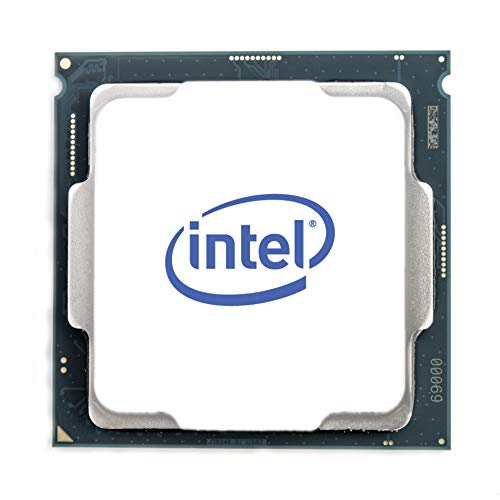
Intel Xeon E-2324G - Best CPU for ZFS Home NAS
The Xeon E-2324G is a server-grade quad-core chip built on the same W580 platform as Intel's NAS-targeted Xeon E lineup. It supports true ECC memory with full validation, making it the correct pick for a ZFS-based NAS that will store critical or irreplaceable data. It pairs with ECC-capable server motherboards (C256/C246 chipset) and supports IPMI remote management on compatible boards. TDP is 65 W under load and significantly lower at idle. The higher cost is justified for builds where data integrity is non-negotiable.
Intel Core i5-12400 - Best CPU for Transcoding-Heavy NAS
The i5-12400 is the correct pick when the NAS doubles as a Plex or Jellyfin media server with heavy simultaneous transcoding demand. Six cores with Quick Sync and a 65 W TDP gives it more software transcoding capacity than the i3 chips while still running efficiently when idle. It is the choice for households with multiple 4K streams running simultaneously alongside file server duties. For NAS builds that are also doubling as light virtualization hosts, the i5-12400 handles both roles without throttling.
Before you buy
What to consider
For a home NAS, evaluate CPUs on four factors: TDP and idle power draw, ECC support if running ZFS, PCIe lane count for HBA and NIC expansion, and integrated graphics support for hardware transcoding. Gaming-oriented CPUs with high base TDP are a poor fit for always-on NAS use. Look for chips with T-suffix or GE-suffix variants which indicate low-power versions of standard desktop chips. Verify that the motherboard chipset supports ECC if that feature is needed - not all boards enable it even if the CPU supports it.
The wrap-up
For most home NAS builds the Intel N305 or i3-12100 hits the right balance of efficiency, capability, and price. Users running TrueNAS with ZFS should move to the Ryzen 5 PRO 4650GE or Xeon E-2324G for ECC support. Plex-heavy builds benefit from the i5-12400's additional Quick Sync and software transcode capacity. Match the CPU to the NAS operating system and workload rather than choosing by raw performance alone.
Quick answers
ECC memory is recommended for NAS builds running ZFS (TrueNAS SCALE, TrueNAS CORE) because ZFS relies on data integrity checks that can be compromised by memory errors over time. AMD Ryzen Pro and Intel Xeon E series support ECC. Consumer Ryzen and Core chips typically do not. If running Unraid or a non-ZFS setup, ECC is less critical, but it is still preferred for any long-running server storing important data.
A home NAS CPU should ideally draw under 35 W at idle and under 65 W under load. NAS boxes run continuously, so power draw directly affects electricity costs and heat output. Chips like the Intel Core i3-N305, Celeron N5105, or Ryzen 5 PRO 4650GE are designed for this use case. Avoid desktop gaming CPUs with 105 W+ TDP ratings in NAS builds unless the NAS also performs heavy transcoding workloads.
Intel N-series chips like the N100 and N305 support Intel Quick Sync hardware transcoding, which offloads video encoding from the CPU to the integrated GPU. With Quick Sync enabled in Plex or Jellyfin, these chips can handle multiple simultaneous 1080p direct-play streams and one or two 4K hardware transcode sessions. Software transcoding on N-series chips is limited and will struggle with multiple simultaneous 4K streams.
How we made this guide
We compare every pick on the factors that matter, cross-checking manufacturer specifications against aggregated verified owner reviews. We rank independently and never take payment for placement. We have not personally tested every product; where we have not, the ranking reflects verified specs and owner feedback rather than a hands-on review.
How it was written: this guide was researched and reviewed by the TheTestedHub editorial team for accuracy.
Affiliate disclosure: TheTestedHub is reader-supported. When you buy through links on our site, we may earn a commission at no extra cost to you.
More to explore

Your Docking Station Match: CalDigit TS4 and More

Digital Art Computers 2026: Best for Every Budget
Dev & IT Computers in 2026: Ranked for Real Work

Desktop PCs for Every Budget: Find Your Perfect Match
Desktop and Laptop Computers: Performance Reviewed and Ranked
MacBook Pro M4 Pro vs Dell XPS 15: 2026 Shortlist

Buy the Best DIY Computer in 2026: Corsair One i300
