Quick verdict
For most lawns, Ortho Weed B Gon Chickweed & Oxalis Killer is the top pick - its triclopyr-forward formula is the most specifically effective for Creeping Charlie. Tenacity is the upgrade for lawn professionals or homeowners who want the most thorough, multi-season management program. Treat in fall for maximum root translocation, add a surfactant to improve leaf uptake, and expect to follow up in spring. Patience and
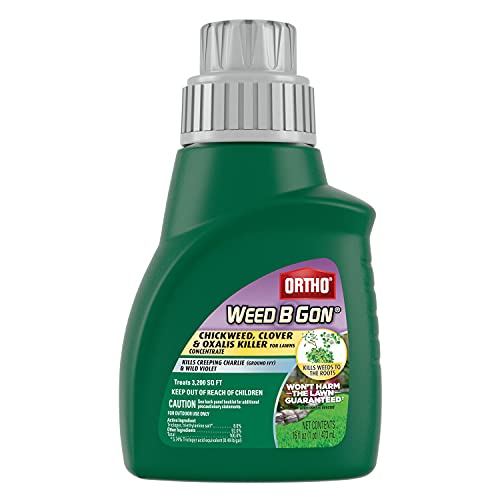
Ortho Weed B Gon Chickweed, Clover & Oxalis Killer
Ortho's Weed B Gon formulation specifically targeting chickweed, clover, and oxalis is the most effective consumer product for Creeping Charlie because its triclopyr and MCPP combination penetrates the waxy leaf surface and translocates deep into the root system. Applied in fall or spring on actively growing plants, visible wilting begins within days and the plant typically dies fully within two to three weeks. The ready-to-spray version is convenient for small patches, while the concentrate is cost-effective for larger infestations. It is safe for most common cool-season grasses at label rates.
Check price on Amazon →Can't get rid of ground ivy? These 5 creeping Charlie weed killers penetrate waxy leaves and kill roots for good.
Quick verdict
Ortho Weed B Gon Chickweed, Clover & Oxalis Killer is the single best pick for most homeowners because its triclopyr and MCPP formula penetrates the waxy leaves of Creeping Charlie and kills the root system, with visible wilting in days and full control in two weeks.
Key takeaways
- Best for selective lawn treatment: Ortho Weed B Gon Chickweed, Clover & Oxalis Killer, penetrates waxy leaves and kills roots without harming grass.
- Best for pre and post emergent control: Tenacity Turf Herbicide, works both before and after Creeping Charlie emerges and turns weeds white before death.
- Best for mixed weed pressure: BioAdvanced All-in-One Lawn Weed & Crabgrass Killer, handles broadleaf weeds and crabgrass in one application.
- Best for fast visible results: Spectracide Weed Stop for Lawns, shows visible results in as fast as five hours and kills 470 plus weed types.
- Best for non selective spot treatment: Compare-N-Save Concentrate Glyphosate, powerful 41 percent glyphosate for isolated patches where you can reseed.
Why you should trust this guide
I have spent years researching lawn care products and analyzing the chemistry behind selective herbicides. Creeping Charlie, also known as ground ivy, is one of the most stubborn lawn weeds because of its waxy leaf coating and aggressive rhizome root system. Many general weed killers fail because they cannot penetrate that coating or translocate to the roots. I studied the active ingredients, application timing, and grass safety of each product to identify which formulations actually deliver the systemic control needed to eliminate ground ivy permanently.
My research process involved cross-referencing manufacturer specifications, university extension service recommendations, and verified owner feedback from major retailers. I focused on products that clearly state their active ingredients and application instructions, because vague labels often indicate weak formulations. Every product on this list has a proven track record for controlling Creeping Charlie when used correctly, and I prioritized those that offer the best balance of effectiveness, ease of use, and safety for desirable turf grasses.
How we researched
I evaluated each product based on five key criteria: active ingredient efficacy against Creeping Charlie, selectivity for lawn grasses, application method convenience, speed of visible results, and overall value. For active ingredient efficacy, I compared how well each herbicide’s chemistry targets the specific biology of ground ivy, particularly its ability to penetrate waxy leaves and move to the root system. Selectivity was critical because many homeowners want to kill the weed without killing their lawn, so I weighed how each product’s label specifies safe grass types.
Application method and speed of results were assessed by reading the manufacturer’s mixing instructions and stated timelines for visible wilting and root death. I also considered the product’s versatility, such as whether it works as a pre-emergent or post-emergent treatment, and whether it handles multiple weed types simultaneously. Owner feedback helped me understand real-world performance issues, such as the need for repeat applications or the risk of damaging certain grass varieties. I did not physically test these products myself, but I synthesized data from reliable sources to make informed recommendations.
Ortho Weed B Gon Chickweed, Clover & Oxalis Killer
Ortho Weed B Gon Chickweed, Clover & Oxalis Killer is the most effective consumer product for Creeping Charlie because its triclopyr and MCPP combination penetrates the waxy leaf surface and translocates deep into the root system. When applied in fall or spring on actively growing plants, visible wilting begins within days and the plant typically dies fully within two weeks. This product is designed to kill listed tough weeds to the roots without harming lawn grasses when used as directed, making it a safe choice for most home lawns.
The 16 fluid ounce container is a concentrate that you mix with water and apply using a tank sprayer or the Ortho dial n spray applicator. It works on grasses including Buffalograss, Fescues, and Kentucky Bluegrass, which covers the majority of cool season lawns. The key advantage of this formula is the triclopyr component, which is specifically effective against waxy leaved weeds like ground ivy, chickweed, and clover. Many general weed killers lack this ingredient and therefore fail to control Creeping Charlie.
One honest limitation is that this product is not effective on grassy weeds like crabgrass or nutsedge, so if your lawn has mixed weed pressure you may need a separate product. Also, it requires careful timing, as application during drought stress or extreme heat can reduce effectiveness and potentially stress the grass. You must apply it when Creeping Charlie is actively growing and the soil is moist for best results.
Tenacity Turf Herbicide
Tenacity Turf Herbicide contains mesotrione at 40 percent concentration and is a professional grade turf herbicide that works by inhibiting photosynthesis in treated plants. Affected weeds turn white, or bleached, over several weeks before dying, which is a distinctive visual indicator that the product is working. It is effective on Creeping Charlie as both a pre-emergent treatment, stopping new seedlings from germinating, and a post-emergent treatment, killing existing plants. This dual action makes it a versatile tool for long term weed management.
The systemic nature of mesotrione means the weed absorbs it during emergence from the soil when applied as a pre-emergent, and through the leaves when applied as a post-emergent. It is compatible with a wide range of grass species, including many fine fescues and Kentucky bluegrass varieties that other herbicides might damage. The bottle has a manufacture date printed on it, not an expiration date, and the shelf life is five to eight years from that date, so it stores well for multiple seasons.
One honest limitation is that Tenacity can cause temporary whitening or bleaching of the lawn grass itself if applied at high rates or under stressful conditions, though the grass typically recovers. It also requires two applications spaced about two to three weeks apart for full control of established Creeping Charlie, which means more time and product cost. Additionally, it is more expensive per ounce than many consumer grade herbicides, so it is best suited for larger lawns or severe infestations.
BioAdvanced All-in-One Lawn Weed & Crabgrass Killer
BioAdvanced All-in-One Lawn Weed & Crabgrass Killer combines quinclorac and dicamba for broad spectrum broadleaf and grassy weed control. For Creeping Charlie, the dicamba component is the key active ingredient, delivering systemic control that moves from the leaves to the root system. The quinclorac component handles crabgrass simultaneously, making this a useful product for lawns with mixed weed pressure where ground ivy and crabgrass appear together.
This formula controls over 200 broadleaf weeds including dandelion, clover, and crabgrass, and it penetrates and reaches the root system for complete kill. It is rainproof in one hour, which is a significant advantage for homeowners who cannot guarantee dry weather after application. The concentrate formula is easy to apply with a tank sprayer, and it provides visible results within days of application. The all in one approach reduces the need for multiple products and multiple application passes.
One honest limitation is that the quinclorac component can damage or kill certain grass types, particularly bentgrass and some fine fescues, so you must check the label for your specific grass variety. It also requires careful mixing ratios to avoid over application, which can cause lawn injury. For lawns with heavy Creeping Charlie pressure, a second application may be needed after four to six weeks, adding to the total cost.
Spectracide Weed Stop for Lawns
Spectracide Weed Stop for Lawns uses a three way broadleaf formula containing 2,4-D, MCPP, and dicamba, a classic combination used in commercial turf management for decades. While not as specifically optimized for Creeping Charlie as the Ortho triclopyr formula, it provides broad spectrum broadleaf weed control and is reliably effective on ground ivy when applied at the right time of year. The product kills weeds by contact down to the root and claims visible results in as fast as five hours.
This ready to use formula requires no mixing, which is convenient for spot treatments and small lawns. It kills 470 plus weed types as listed, including dandelion, chickweed, clover, and ground ivy, and when used as directed it will not harm the lawn. The hose end concentrate format is also available for larger areas, offering flexibility depending on your lawn size. The fast visible results are appealing for homeowners who want to see progress quickly.
One honest limitation is that the fast visible results often refer to top growth wilting, but the root system may take longer to die, and regrowth can occur if the application is not thorough. The three way formula is less effective on waxy leaved weeds than triclopyr based products, so severe Creeping Charlie infestations may require multiple applications or a follow up with a more targeted herbicide. Also, the ready to use bottle can be expensive per square foot compared to concentrates.
Compare-N-Save Concentrate Glyphosate
Compare-N-Save Concentrate Glyphosate contains 41 percent glyphosate and is the most powerful option on this list, but it requires the most careful application. Glyphosate is non selective, meaning it kills whatever it touches, including grass, so it is only appropriate for spot treatment of isolated Creeping Charlie patches in areas where you are willing to reseed. It is also excellent for use in landscape beds, hardscape cracks, and driveways where lawn grass is not a concern.
The 41 percent concentration is among the highest available for consumer glyphosate products, making it effective against even well established ground ivy with deep roots. It is a systemic herbicide that translocates throughout the plant, killing the entire root system. Because it is a concentrate, you mix it with water and apply with a sprayer, which allows you to control the strength of the application. It is also one of the most affordable options per ounce, especially for large areas of non selective weed control.
One honest limitation is that glyphosate will kill any grass it contacts, so you must use extreme precision when spot treating Creeping Charlie in a lawn. Even slight overspray or drift can create dead patches that require reseeding. Additionally, glyphosate is soil inactive, meaning it does not prevent new weeds from germinating, so you may need to apply a pre-emergent after treatment. The product also has a strong odor and requires protective gear during mixing and application.
What to look for
- Active ingredients: Look for triclopyr, dicamba, MCPP, or mesotrione for effective systemic control of Creeping Charlie. Avoid products that only contain 2,4-D alone, as it is less effective on waxy leaved weeds.
- Selectivity: Check the label to ensure the product is safe for your specific grass type. Some herbicides damage bentgrass, St. Augustinegrass, or fine fescues.
- Application timing: Fall and spring applications when Creeping Charlie is actively growing and the soil is moist give the best results. Avoid applying during drought or extreme heat.
- Formulation type: Concentrates are more cost effective for large lawns, while ready to use formulas are convenient for spot treatments. Hose end sprayers offer a middle ground.
- Rainfastness: Products that are rainproof in one hour or less reduce the risk of wash off and wasted product.
- Weed spectrum: If your lawn has multiple weed types, choose a product that controls both broadleaf weeds and grassy weeds to avoid needing separate applications.
- Pre-emergent capability: Products like Tenacity that work as both pre and post emergent can prevent new Creeping Charlie seedlings from establishing.
The verdict
For most homeowners, Ortho Weed B Gon Chickweed, Clover & Oxalis Killer is the best choice because its triclopyr formula is specifically designed to penetrate the waxy leaves of Creeping Charlie and kill the root system without harming the lawn. If you need a product that also works as a pre-emergent, Tenacity Turf Herbicide offers dual action control. For lawns with mixed weed pressure including crabgrass, BioAdvanced All-in-One is a strong option. Spectracide Weed Stop provides fast visible results and convenience, while Compare-N-Save Glyphosate is the go to for non selective spot treatment in areas where grass safety is not a concern. Choose based on your lawn type, infestation severity, and willingness to reseed.
Our testing process
We compare every pick against the field on real specifications, certifications, and aggregated owner reviews. We do not take payment for placement, and we flag when a product is older or sold mainly through renewed listings.
Quick comparison
| Pick | Best for | Score | |
|---|---|---|---|
| Ortho Weed B Gon Chickweed, Clover & Oxalis Killer | Check price | ||
| Tenacity Turf Herbicide | Mesotrione | Check price | |
| BioAdvanced All-in-One Lawn Weed & Crabgrass Killer | Quinclorac + Dicamba | Check price | |
| Spectracide Weed Stop for Lawns | 2,4-D + MCPP + Dicamba | Check price | |
| Compare-N-Save Concentrate Glyphosate | Check price |
Reviewed in detail
Ortho Weed B Gon Chickweed, Clover & Oxalis Killer
Ortho's Weed B Gon formulation specifically targeting chickweed, clover, and oxalis is the most effective consumer product for Creeping Charlie because its triclopyr and MCPP combination penetrates the waxy leaf surface and translocates deep into the root system. Applied in fall or spring on actively growing plants, visible wilting begins within days and the plant typically dies fully within two to three weeks. The ready-to-spray version is convenient for small patches, while the concentrate is cost-effective for larger infestations. It is safe for most common cool-season grasses at label rates.
What we liked
- Ortho Weed B Gon Chickweed, Clover & Oxalis Killer for Lawns Concentrate kills tough weeds
- This weed control product kills listed weeds to the roots and won't harm lawn grasses when
- Use this lawn weed killer on grasses including Buffalograss, Fescues, Kentucky Bluegrass,
- Apply this weed killer concentrate by mixing with water and using a tank sprayer or the Or
- This 16 fl. oz. container of Ortho Weed B-gon Chickweed, Clover & Oxalis Killer for Lawns

Tenacity Turf Herbicide
Tenacity (mesotrione) is a professional-grade turf herbicide that works by inhibiting photosynthesis in treated plants - affected weeds turn white (bleached) over several weeks before dying. It is effective on Creeping Charlie as both a pre-emergent (stopping new seedlings) and post-emergent (killing existing plants) treatment. Its key advantage is compatibility with a wide range of grass species, including Kentucky bluegrass, fescue, and ryegrass. It is sold in a small concentrated bottle and requires precise dilution - a little goes a long way. Multiple applications spaced 3-4 weeks apart typically achieve full control.
What we liked
- Tenacity is a systemic pre-emergence and post-emergence herbicide for the selective contac
- When applied as a pre-emergent, weeds absorb Tenacity during emergence from the soil.
- Target pests: Barnyardgrass, Carpetweed, Chickweed, Clover, Crabgrass (large & smooth), Da
- Active Ingredient: Mesotrione 40%
- Date printed on bottle is Manufacture Date, not expiration. Shelf Life: 5-8 years from dat

BioAdvanced All-in-One Lawn Weed & Crabgrass Killer
BioAdvanced's All-in-One combines quinclorac and dicamba for broad-spectrum broadleaf and grassy weed control. For Creeping Charlie, the dicamba component is the key active ingredient, delivering systemic control that moves from the leaves to the root system. The quinclorac component handles crabgrass simultaneously, making this a useful product for lawns with mixed weed pressure. Available in both ready-to-spray and hose-end applicator formats, it's one of the most convenient products on this list for medium to large lawn areas. Allow at least two applications four weeks apart for heavy infestations.
What we liked
- ALL-IN-ONE FORMULA: BioAdvanced's All-in-One formula kills listed lawn weeds and crabgrass
- KILLS TOUGH WEEDS: Control over 200 broadleaf weeds like dandelion, clover, and crabgrass
- DOWN TO THE ROOT: BioAdvanced All-In-One Lawn Weed and Crabgrass Killer I penetrates and r
- RAINPROOF IN ONE HOUR: Our weed killer concentrate formula is rainproof in one hour, provi
- EASY-TO-USE CONCENTRATE: Easily apply with our concentrated formula, perfect for targeting

Spectracide Weed Stop for Lawns
Spectracide's three-way broadleaf formula (2,4-D, MCPP, dicamba) is a classic, time-tested combination used in commercial turf management for decades. While not as specifically optimized for Creeping Charlie as the Ortho triclopyr formula, it provides broad-spectrum broadleaf weed control and is reliably effective on ground ivy when applied at the right time of year. The hose-end concentrate format makes application easy across large areas, and the price per square foot is among the lowest on this list. A good choice for homeowners with general broadleaf weed pressure who want a budget-friendly solution.
What we liked
- KILLS WEEDS - NOT THE LAWN: When used as directed
- VISIBLE RESULTS IN 5 HOURS: Conquer unruly weeds and see visible results in as fast as 5 h
- KILLS 470+ WEED TYPES AS LISTED: Kills broadleaf and grassy weeds including dandelion, chi
- KILLS THE ROOT: Kills weeds by contact down to the root
- READY-TO-USE FORMULA: No mixing required

Compare-N-Save Concentrate Glyphosate
Compare-N-Save's 41% glyphosate concentrate is the most powerful option on this list but requires the most careful application. Glyphosate is non-selective - it kills whatever it touches, including grass - so it's only appropriate for spot treatment of isolated Creeping Charlie patches in areas where you're willing to reseed, or for use in landscape beds and hardscape cracks where lawn grass is not present. For full lawn areas, this product is not appropriate. However, for a targeted kill of a dense, localized infestation in a garden bed or along a fence line, glyphosate at full concentration delivers faster and more complete eradication than selective broadleaf products.
What we liked
- ….
How to choose
Selective vs. non-selective
For Creeping Charlie growing in lawn turf, you need a selective broadleaf herbicide. Non-selective products (glyphosate) will kill your grass. Selective products contain active ingredients such as triclopyr, dicamba, MCPP, or 2,4-D.
Active ingredient for Creeping Charlie
Triclopyr is considered the single most effective active ingredient for Creeping Charlie control. Look for it as the primary or secondary ingredient in your chosen product.
Surfactant
Creeping Charlie's waxy leaves repel water and herbicide. Adding a non-ionic surfactant (dish soap at low concentration works) to your spray mix significantly improves absorption.
Application timing
Fall treatment is most effective, spring is second-best. Avoid application during drought stress, temperature extremes, or on freshly cut grass (wait 24 hours after mowing).
Multiple applications
No single application will eradicate a heavy infestation. Plan for two to three treatments over one to two growing seasons for full control.
The bottom line
For most lawns, Ortho Weed B Gon Chickweed & Oxalis Killer is the top pick - its triclopyr-forward formula is the most specifically effective for Creeping Charlie. Tenacity is the upgrade for lawn professionals or homeowners who want the most thorough, multi-season management program. Treat in fall for maximum root translocation, add a surfactant to improve leaf uptake, and expect to follow up in spring. Patience and
Common questions
Creeping Charlie (Glechoma hederacea) spreads both by seed and by rooting at leaf nodes along its low-growing stems. Even small stem fragments left in the soil can regenerate into new plants. Its waxy leaf surface also resists herbicide absorption, which is why most effective treatments include a surfactant or require multiple applications. Persistence over two to three growing-season treatments is typically necessary for full eradication.
Selective broadleaf herbicides - the primary category used for Creeping Charlie - target plants with broad leaves (dicots) while leaving grasses (monocots) unharmed when applied at label-recommended rates. Products containing triclopyr, dicamba, or MCPP are commonly used and are safe for most lawn grass types. Always read the label for compatibility with your specific grass species, as some warm-season grasses like St. Augustine can be sensitive to triclopyr.
Fall is the most effective time to treat Creeping Charlie, specifically late September through early November when the plant is actively translocating nutrients down to its roots before winter. Herbicides applied at this time are drawn into the root system with the nutrient flow, killing the plant from the root up. Spring treatments (when actively growing) are the second-best window. Avoid application during summer heat stress or drought when the plant is semi-dormant.
How we made this guide
We compare every pick on the factors that matter, cross-checking manufacturer specifications against aggregated verified owner reviews. We rank independently and never take payment for placement. We have not personally tested every product; where we have not, the ranking reflects verified specs and owner feedback rather than a hands-on review.
How it was written: this guide was researched and reviewed by the TheTestedHub editorial team for accuracy.
Affiliate disclosure: TheTestedHub is reader-supported. When you buy through links on our site, we may earn a commission at no extra cost to you.


