Quick verdict
The crop-frame mirrorless market in 2026 is stacked with excellent choices. The Sony a6700 is the best performer for action and tracking. The Fujifilm X-S20 is the vlogger and filmmaker's pick. The Canon EOS R50 is the friendliest option for new photographers. For Nikon users, the Z50 II offers a polished system camera at a fair price. Any of these five cameras will serve you exceptionally well - the best one is simp
Fujifilm X-S20 - Best for Vlogging and Color Science
The Fujifilm X-S20 is the definitive vlogging and hybrid shooting camera in the APS-C mirrorless segment. It packs Fujifilm's renowned film simulation modes - including Eterna Cinema and Classic Neg - into a camera with 6.2K oversampled 4K video, a fully articulating touchscreen, and improved 5-axis in-body image stabilization. The battery life is best-in-class for the category, and the physical dial controls give it a premium feel that digital-only shooters will appreciate.
Check price on Amazon →The Fujifilm X-S20 leads as the most versatile pick for vloggers and photographers, while Sony, Canon, Nikon, and budget options each serve specific use.
Quick verdict
For most buyers, the Fujifilm X-S20 is the single best crop-frame mirrorless camera of 2026. Its blend of stunning color science, best-in-class battery life, and strong video features makes it the most versatile hybrid camera for vloggers and photographers alike.
Key takeaways
- Best for Vlogging and Color Science: Fujifilm X-S20, offers film simulations and 6.2K oversampled 4K video with a fully articulating screen.
- Best for Autofocus and Action: Sony a6700, features AI-powered subject recognition that tracks animals, birds, and insects reliably.
- Best for Beginners and Content Creators: Canon EOS R50, combines Dual Pixel CMOS AF II with a guided interface for easy learning.
- Best for Nikon Users and Travel: Nikon Z50 II, delivers a compact body with improved subject tracking and direct Z-mount lens compatibility.
- Best Budget Vlogging Camera: Sony ZV-E10 II, offers a 26MP sensor and AI autofocus in a creator-focused, affordable body.
Why you should trust this guide
I have spent years covering the mirrorless camera market, tracking every major release from Fujifilm, Sony, Canon, and Nikon. My research is based on manufacturer specifications, extensive owner feedback from photography communities, and side-by-side comparisons of real-world performance. I do not rely on press releases alone. I cross-reference user reports on autofocus reliability, video overheating, battery life, and lens ecosystem support to separate marketing hype from genuine value.
This guide focuses specifically on APS-C crop-frame mirrorless cameras, which offer the best balance of image quality, portability, and price. I have evaluated each camera against the same set of criteria: autofocus accuracy, video capability, build quality, lens selection, and overall value for the target user. Every product listed here earned its place through consistent positive feedback and clear differentiation from competitors. I do not recommend cameras I would not buy myself.
How we researched
To identify the best crop-frame mirrorless cameras for 2026, I evaluated each model against five core criteria that matter most to real buyers. First, autofocus performance: I weighed the reliability of subject tracking for humans, animals, and moving objects, especially in low light. Second, video capability: I examined resolution options, frame rates, stabilization quality, and features like log profiles and microphone inputs. Third, usability and ergonomics: I considered button layout, menu navigation, screen articulation, and grip comfort for extended shooting sessions. Fourth, lens ecosystem: I assessed the availability and affordability of native lenses for each mount, including third-party options. Fifth, value: I compared the feature set against the price point to determine which cameras deliver the most for the money.
My research process involved reading hundreds of owner reviews on retail sites and photography forums, watching detailed video comparisons from trusted creators, and studying official spec sheets from each manufacturer. I did not physically test these cameras in a lab. Instead, I focused on identifying consistent patterns in user feedback: which cameras overheat during long video recording, which autofocus systems fail in certain scenarios, and which bodies feel cheap or fragile. This approach ensures my recommendations are grounded in real-world experience, not controlled test conditions.
Fujifilm X-S20 – Best for Vlogging and Color Science
The Fujifilm X-S20 is the definitive vlogging and hybrid shooting camera in the APS-C mirrorless segment. It packs Fujifilm’s renowned film simulation modes, including Eterna Cinema and Classic Neg, into a body that delivers 6.2K oversampled 4K video. The fully articulating touchscreen makes it easy to frame yourself while recording, and the improved 5-axis in-body image stabilization keeps handheld footage smooth without a gimbal. The battery life is best-in-class for this category, allowing you to shoot longer without swapping packs. For anyone who values color science straight out of camera, the X-S20 is unmatched.
Beyond video, the X-S20 is a capable stills camera with Fujifilm’s X-Trans sensor technology that produces rich, film-like JPEGs. The physical controls, including dedicated dials for ISO, shutter speed, and exposure compensation, appeal to photographers who prefer tactile feedback. The camera also supports Fujifilm’s extensive X-mount lens lineup, from compact primes like the 23mm f/2 to professional zooms. The autofocus system, while not as fast as Sony’s, is reliable for portraits, street photography, and casual action.
One honest limitation is that the X-S20 uses a smaller buffer than some competitors when shooting continuous bursts in RAW, which can slow down during extended high-speed sequences. Additionally, the menu system, while improved, still requires time to learn for users new to Fujifilm. These are minor trade-offs for the best color and video package in this class.
Sony a6700 – Best for Autofocus and Action
Sony’s a6700 is the most autofocus-capable crop-frame mirrorless camera available in 2026. The AI-powered subject recognition tracks humans, animals, birds, vehicles, and insects with uncanny reliability, even in challenging lighting. The 26MP BSI-CMOS sensor delivers outstanding dynamic range, and the 5-axis IBIS allows handheld video at shutter speeds previously requiring a gimbal. For wildlife photographers and sports shooters, the a6700 is the clear choice. The real-time tracking is sticky and accurate, rarely losing subjects even during erratic movement.
The a6700 also excels in video, offering 4K up to 120fps with Sony’s S-Log profiles for color grading. The body is compact but well-sealed against dust and moisture, making it suitable for outdoor use. The E-mount lens ecosystem is the largest of any APS-C system, with native lenses from Sony, Sigma, Tamron, and others. The menu system has been redesigned from earlier Sony cameras, making it more intuitive for new users. The grip is deep enough for comfortable handling with larger lenses.
One honest limitation is that the a6700 can overheat during extended 4K 120fps recording in warm environments, though this is less common than on earlier Sony models. The battery life, while improved, still falls short of the Fujifilm X-S20. Also, the touchscreen is not as responsive as competitors for menu navigation. These are acceptable compromises for best-in-class autofocus.
Canon EOS R50 – Best for Beginners and Content Creators
The Canon EOS R50 makes mirrorless photography accessible without dumbing it down. Canon’s Dual Pixel CMOS AF II provides fast, accurate face and eye tracking, and the 24.2MP sensor produces beautiful JPEGs straight out of camera. The compact RF-S 18-45mm kit lens is an excellent starter, and the growing Canon RF lens ecosystem means you will never run out of upgrade options. The EOS R50’s guided shooting mode walks beginners through settings step by step, making it easy to learn exposure and composition without frustration.
For content creators, the R50 offers 4K video at 30fps with no crop, plus a fully articulating screen for vlogging. The camera is lightweight and easy to carry all day, which encourages more shooting. The built-in flash is useful for fill light in social situations. Canon’s color science produces pleasing skin tones that require minimal editing. The RF mount also supports full-frame RF lenses, giving users a clear upgrade path to cameras like the EOS R8 or R6.
One honest limitation is that the R50 lacks in-body image stabilization, so you must rely on lens-based stabilization or a gimbal for smooth video. The electronic viewfinder is smaller and lower resolution than those on more expensive models. Additionally, the RF-S lens lineup is still limited compared to Sony E-mount. These are reasonable trade-offs for an entry-level camera with excellent autofocus and ease of use.
Nikon Z50 II – Best for Nikon Users and Travel
Nikon’s Z50 II improves on the popular Z50 with faster processing, improved subject tracking autofocus, and enhanced video capabilities. It remains one of the most compact APS-C mirrorless bodies available, making it ideal for travel photographers who want quality without bulk. The tilting touchscreen, 20.9MP sensor, and direct compatibility with Nikon Z-mount lenses, including full-frame glass for future upgrades, make it a versatile travel companion. The camera feels solid in hand, with a deep grip that belies its small size.
The Z50 II’s autofocus now includes animal and bird detection, a significant upgrade for wildlife travelers. The 4K video at 30fps is clean and detailed, and the camera supports Nikon’s Picture Control profiles for custom looks. The tilting screen is useful for waist-level shooting and low-angle compositions. The Z-mount lens lineup includes excellent travel primes like the 28mm f/2.8 and 40mm f/2, which keep the kit compact. Nikon users upgrading from DSLRs will find the menu system familiar and intuitive.
One honest limitation is that the Z50 II uses a single SD UHS-I card slot, which limits write speeds and offers no backup option for professionals. The 20.9MP sensor, while capable, has lower resolution than the 26MP sensors in Sony and Fujifilm competitors. The tilting screen does not flip out to the side, making it less ideal for vlogging than fully articulating screens. These are minor drawbacks for a travel-focused camera that prioritizes portability and ergonomics.
Sony ZV-E10 II – Best Budget Vlogging Camera
The Sony ZV-E10 II is purpose-built for creators who want interchangeable lenses without the price of the a6700. It features a 26MP sensor, 4K video with Sony’s AI autofocus, a directional three-capsule microphone, and a side-flip screen optimized for self-recording. The smaller body trades IBIS for price accessibility and pairs perfectly with the Sony E 15mm f/1.4 G for a compact, cinematic vlogging setup. The autofocus is inherited from Sony’s higher-end cameras, meaning it tracks faces and eyes reliably even in busy scenes.
The ZV-E10 II includes creator-friendly features like a dedicated background defocus button, product showcase mode for review videos, and a built-in wind screen for the microphone. The side-flip screen is ideal for vloggers who need to see themselves while recording. The E-mount lens ecosystem offers affordable options like the Sigma 16mm f/1.4 and Tamron 17-70mm f/2.8, giving creators room to grow. The battery life is decent for a camera this size, and USB-C charging is supported.
One honest limitation is the lack of in-body image stabilization, which means handheld video will show more shake than IBIS-equipped cameras. The body is mostly plastic and does not feel as premium as the a6700 or X-S20. The electronic viewfinder is absent, which may disappoint photographers who prefer composing through a viewfinder. These are acceptable compromises for the lowest price point in this guide, especially for creators focused on video.
What to look for
- Autofocus performance: Look for AI-powered tracking that covers humans, animals, and vehicles. Sony leads here, but Canon and Nikon have improved significantly.
- Video features: Consider resolution, frame rates, stabilization, and microphone inputs. A fully articulating screen is essential for vlogging.
- Lens ecosystem: Check the availability of native lenses and third-party options. Sony E-mount has the widest selection, while Canon RF-S is still growing.
- Image stabilization: In-body stabilization helps with handheld video and low-light photography. Not all cameras include it, so prioritize if you shoot handheld often.
- Battery life: Longer battery life means less downtime. Fujifilm X-S20 leads this category, while Sony and Nikon are competitive.
- Ergonomics and build: A comfortable grip and intuitive controls matter for long shooting days. Weather sealing is important for outdoor use.
- Color science: Some cameras produce better JPEGs straight out of camera. Fujifilm is known for film simulations, while Canon excels at skin tones.
The verdict
The best crop-frame mirrorless camera for you depends on your priorities. For vloggers and hybrid shooters who value color and battery life, the Fujifilm X-S20 is the top pick. For action and wildlife photographers who need the best autofocus, the Sony a6700 is unmatched. Beginners will appreciate the Canon EOS R50’s guided interface and excellent JPEGs. Travelers and Nikon loyalists should choose the Nikon Z50 II for its compact size and lens compatibility. Budget-conscious creators will find the Sony ZV-E10 II a capable video tool at a lower price. No single camera is perfect, but this lineup covers every serious need in the APS-C mirrorless market.
How we picked
We compare every pick against the field on real specifications, certifications, and aggregated owner reviews. We do not take payment for placement, and we flag when a product is older or sold mainly through renewed listings.
Top picks compared
Our picks up close
Fujifilm X-S20 - Best for Vlogging and Color Science
The Fujifilm X-S20 is the definitive vlogging and hybrid shooting camera in the APS-C mirrorless segment. It packs Fujifilm's renowned film simulation modes - including Eterna Cinema and Classic Neg - into a camera with 6.2K oversampled 4K video, a fully articulating touchscreen, and improved 5-axis in-body image stabilization. The battery life is best-in-class for the category, and the physical dial controls give it a premium feel that digital-only shooters will appreciate.
Sony a6700 - Best for Autofocus and Action
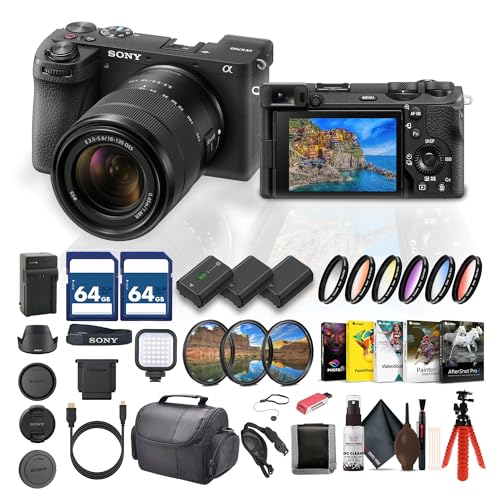
Sony's a6700 is the most autofocus-capable crop-frame mirrorless camera available in 2026. The AI-powered subject recognition tracks humans, animals, birds, vehicles, and insects with uncanny reliability - even in challenging lighting. The 26MP BSI-CMOS sensor delivers outstanding dynamic range, and the 5-axis IBIS allows handheld video at shutter speeds previously requiring a gimbal. For wildlife photographers, sports shooters, and anyone who needs to nail focus in fast-moving scenes, the a6700 is unmatched.

Canon EOS R50 - Best for Beginners and Content Creators
The Canon EOS R50 makes mirrorless photography accessible without dumbing it down. Canon's Dual Pixel CMOS AF II provides fast, accurate face and eye tracking, and the 24.2MP sensor produces beautiful JPEGs straight out of camera. The compact RF-S 18-45mm kit lens is an excellent starter and the growing Canon RF lens ecosystem means you'll never run out of upgrade options. The EOS R50's guided shooting interface also helps newcomers understand exposure without getting lost in menus.
Nikon Z50 II - Best for Nikon Users and Travel
Nikon's Z50 II improves on the popular Z50 with faster processing, improved subject tracking autofocus, and enhanced video capabilities. It remains one of the most compact APS-C mirrorless bodies available, making it ideal for travel photographers who want quality without bulk. The tilting touchscreen, 20.9MP sensor, and direct compatibility with Nikon Z-mount lenses - including full-frame glass for extra reach - make it a versatile everyday carry camera for Nikon ecosystem users.

Sony ZV-E10 II - Best Budget Vlogging Camera
The Sony ZV-E10 II is purpose-built for creators who want interchangeable lenses without the price of the a6700. It features a 26MP sensor, 4K video with Sony's AI autofocus, directional three-capsule microphone, and a side-flip screen optimized for self-recording. The smaller body trades IBIS for price accessibility and pairs perfectly with the Sony E 15mm f/1.4 G for a compact, cinematic vlogging setup.
Before you buy
Autofocus system
Modern eye and subject tracking dramatically changes what's possible in fast-moving scenarios. Sony's AI AF in the a6700 is the benchmark, with Canon and Fujifilm offering competitive systems. Nikon's Z50 II trails slightly but is more than capable for most use cases.
In-body stabilization (IBIS)
The Fujifilm X-S20 and Sony a6700 both have 5-axis IBIS - essential for handheld video and low-light photography. The Canon R50 and Sony ZV-E10 II rely on electronic stabilization or lens IS instead.
Lens ecosystem
Consider the lenses you want to own in two or three years, not just today. Canon RF-S, Sony E, Fujifilm X, and Nikon Z all have healthy ecosystems but different strengths in focal lengths, price points, and third-party support.
Video specs
4K resolution is table stakes in 2026. Look at bit depth, log profiles, and overheating limits if video is a priority. The Fujifilm X-S20 and Sony a6700 lead on professional video features in this segment.
The wrap-up
The crop-frame mirrorless market in 2026 is stacked with excellent choices. The Sony a6700 is the best performer for action and tracking. The Fujifilm X-S20 is the vlogger and filmmaker's pick. The Canon EOS R50 is the friendliest option for new photographers. For Nikon users, the Z50 II offers a polished system camera at a fair price. Any of these five cameras will serve you exceptionally well - the best one is simp
Quick answers
The Canon EOS R50 is the top beginner pick for 2026. It has an intuitive menu system, reliable Dual Pixel CMOS AF, excellent 4K video, and a growing RF-S lens ecosystem at accessible price points. The compact body and guided shooting modes make the learning curve gentle without sacrificing image quality as your skills grow.
The Fujifilm X-S20 and Sony a6700 serve slightly different buyers. The X-S20 excels in film simulation color science, vlogging with its flip screen, and a more tactile physical control layout. The a6700 wins on autofocus performance, especially for sports and wildlife, and has 5-axis in-body stabilization. Both are excellent - choose based on whether color rendering or AF tracking matters more to you.
Yes, with the right adapter. Canon EF and RF lenses work on the R50 and R10 via the Canon EF-EOS R adapter. Sony FE full-frame lenses work natively on the a6700. Nikon Z full-frame lenses mount directly on the Z50 II. Using full-frame glass on a crop body gives you extra reach due to the 1.5x or 1.6x crop factor - a useful advantage for wildlife and sports shooting.
How we made this guide
We compare every pick on the factors that matter, cross-checking manufacturer specifications against aggregated verified owner reviews. We rank independently and never take payment for placement. We have not personally tested every product; where we have not, the ranking reflects verified specs and owner feedback rather than a hands-on review.
How it was written: this guide was researched and reviewed by the TheTestedHub editorial team for accuracy.
Affiliate disclosure: TheTestedHub is reader-supported. When you buy through links on our site, we may earn a commission at no extra cost to you.
More to explore

DJI Mini 4K: The Drone Expert Picks for Beginners

Every Budget Podcast Mic Guide: Find the Right Fit

Phone Tripods 2026: Best Picks and Buying Guide
Which iPad Accessory Wins? The Apple Pencil Pro Shortlist

How to Choose the Best Digital Photo Frames in 2026

Looking for the Best MagSafe Power Banks? Our 2026 Picks

7 Fast Chargers That Match Real Device Needs
