Quick verdict
The best cult documentaries leave you asking harder questions than when you started. These books answer them - with the depth, the psychology, and the personal testimony that streaming can only gesture toward. Start with *Educated* for literary craft, *The Road to Jonestown* for historical scope, and *Troublemaker* for inside-the-institution immediacy. The rabbit hole goes as deep as you want to go.
Educated - Tara Westover
Tara Westover's memoir is one of the most acclaimed books of the last decade, and for cult documentary fans it offers something that straight cult exposés sometimes miss: the intimate interior experience of growing up inside an isolated, controlling belief system. Westover was raised by survivalist parents in rural Idaho who distrusted government, medicine, and formal education. She did not set foot in a classroom until she was seventeen, and she eventually earned a PhD from Cambridge - but the psychological journey between those two facts is the book.
Perfect for documentary fans craving deeper context, this guide matches the best books to your viewing style,psychological depth, historical scope, or.
Quick verdict
For the single best pick that combines literary excellence with a deep, intimate look at a closed belief system, choose Educated by Tara Westover. It offers the interior experience that most documentaries miss, making it essential for any cult documentary fan.
Key takeaways
- Best for psychological depth: Educated, unmatched interior account of growing up in an isolated, controlling family.
- Best for historical scope: The Road to Jonestown, definitive biography tracing the full arc from idealism to catastrophe.
- Best for insider perspective: Troublemaker, firsthand account from a decades-long Scientology member.
- Best for analytical framework: Cults in Our Midst, cross-applicable psychological research on recruitment and indoctrination.
- Best for cross-genre appeal: The Witness, bridges organized crime psychology with cult dynamics.
Why you should trust this guide
I have spent years studying cult documentaries, memoirs, and psychological research on closed systems of belief. My approach combines close reading of the most acclaimed books in this space with an understanding of what documentary fans actually want: not just facts, but the texture of life inside these groups. I evaluate each book based on its ability to illuminate the psychological mechanisms of control, the quality of its narrative craft, and its utility as a companion to visual documentaries.
This guide draws on published reviews, author interviews, and the books’ own stated features. I do not claim to have tested these books in a lab or used them for a set period. Instead, I have analyzed their content against the needs of a cult documentary viewer: someone who already knows the broad strokes from films and wants deeper context, personal testimony, or analytical tools. Each recommendation is grounded in the book’s established reputation and its specific contribution to understanding cult dynamics.
How we researched
To evaluate these books, I established five criteria that matter most to cult documentary fans. First, depth of insider perspective: does the author have direct experience inside the group, or does the research provide equivalent access? Second, analytical utility: does the book offer frameworks that help you understand multiple cults, not just one? Third, narrative quality: is the writing compelling enough to hold attention across hundreds of pages? Fourth, documentary compatibility: does the book fill gaps left by films and TV series? Fifth, credibility: is the author a recognized authority, whether as a survivor, journalist, or academic?
I then read each book’s stated features, sample chapters where available, and cross-referenced them with documentary coverage of the same subjects. I weighed the balance between personal memoir and investigative reporting, and considered how each book handles the complexity of its subject without oversimplifying. The final selections prioritize books that offer something the documentaries cannot: the slow, internal experience of indoctrination, the years of incremental control, and the psychological aftermath of leaving. Every product section below includes one honest limitation to help you choose based on your specific needs.
Educated – Tara Westover
Tara Westover’s memoir is one of the most acclaimed books of the last decade, and for cult documentary fans it offers something that straight cult exposés sometimes miss: the intimate interior experience of growing up inside an isolated, controlling belief system. Westover was raised by survivalist parents in rural Idaho who distrusted government, medicine, and formal education. She did not set foot in a classroom until age seventeen, and her journey to a PhD from Cambridge University is both inspiring and harrowing. The book is a Pulitzer Prize finalist with extraordinary literary craft, and it provides deep psychological insight into how isolated belief systems and family control shape a person’s entire worldview.
What makes this book essential for documentary fans is its focus on the slow, cumulative nature of control. Westover does not describe a single dramatic event of recruitment or escape. Instead, she traces years of incremental isolation, the erosion of her sense of reality, and the painful process of questioning everything she was taught. The writing is literary without being pretentious, and it bridges the gap between cult-adjacent memoir and mainstream literary excellence. You will understand not just what her family believed, but how those beliefs felt from the inside.
A real limitation is that Westover’s family is not a formal cult in the organizational sense; it is a single family with extreme beliefs. Some readers seeking classic cult structures like Jonestown or Scientology may find the parallels indirect. However, the psychological mechanisms of control and isolation are strikingly similar, and the memoir’s literary quality makes it a rewarding read regardless.
The Road to Jonestown – Jeff Guinn
Jim Jones and the Peoples Temple produced one of the most devastating mass death events in American history: 918 people died in Jonestown, Guyana, in 1978. Most documentaries cover the tragedy itself, but Jeff Guinn’s exhaustive biography traces Jim Jones from his childhood in Indiana through his rise as a charismatic preacher, his manipulation of the civil rights movement, and the slow, terrible descent into paranoia and violence. This is the definitive, exhaustively researched biography of Jim Jones, and it traces the full arc from idealism to catastrophe in a way that no documentary can match.
Guinn’s book is an essential companion to Jonestown documentaries because it provides the context that films often compress. You learn about Jones’s early influences, his genuine early work for racial integration, and the gradual corruption of his mission. The research is meticulous, drawing on interviews with survivors and access to Peoples Temple records. For fans who have seen the documentaries and want to understand how a man who started with good intentions became a monster, this book is indispensable.
A real limitation is the sheer length and density of the book. At over 500 pages, it requires significant time investment, and some sections on Jones’s early life can feel slow compared to the dramatic later events. Readers looking for a quick overview should stick with documentaries; this book is for those who want the complete, unhurried story.
Troublemaker: Surviving Hollywood and Scientology – Leah Remini
Leah Remini spent thirty-four years inside the Church of Scientology before her public departure in 2013, and Troublemaker is her unflinching account of what she witnessed. For fans of Going Clear or her Emmy-winning docuseries Scientology and the Aftermath, this book provides the firsthand perspective and personal detail that outside journalism cannot supply. Remini describes what the meetings looked like, how the hierarchy enforced compliance, and the emotional cost of leaving everything she knew.
The book is written by an insider with decades of direct experience, and it is a fast, compulsively readable celebrity memoir with serious investigative weight. Remini does not just tell her own story; she names names and describes specific incidents that corroborate and expand on the reporting in the documentaries. Her tone is direct and often angry, but also vulnerable, making the book feel like a conversation with someone who has survived a war. It is the perfect companion to Going Clear and the Aftermath docuseries, filling in the personal gaps that those films necessarily leave open.
A real limitation is that Remini is not a neutral observer. She is an ex-member with strong opinions and a clear agenda to expose Scientology’s abuses. Some readers may want a more detached journalistic account, and the book’s celebrity memoir style may not appeal to those seeking academic rigor. But for emotional authenticity and insider detail, it is unmatched.
Cults in Our Midst – Margaret Singer
Margaret Singer was one of the foremost academic researchers on cult psychology, and Cults in Our Midst is the book that transformed how the general public understands recruitment, indoctrination, and exit. Where most cult books focus on a specific organization, Singer’s work is analytical and cross-applicable, explaining the thought-reform techniques that appear across groups from Peoples Temple to Scientology to small communal sects. This is the essential psychological framework applicable to all cult documentaries.
Written by a leading academic authority with decades of clinical research, the book explains recruitment and indoctrination in accessible, non-academic language. Singer breaks down the stages of mind control, the role of love bombing, the use of isolation, and the difficulty of leaving. For documentary fans, this book is like a decoder ring: after reading it, you will see the same psychological patterns in every cult story you watch. It transforms passive viewing into active analysis.
A real limitation is that the book was published in 1995, and some of the research and terminology have been debated by later scholars. Singer’s concept of “brainwashing” is controversial, and some critics argue it oversimplifies the complexity of why people stay in cults. However, as a foundational text that remains widely cited and taught, it is still the best single volume for understanding the psychological mechanics of cults.
The Witness – Charles Brandt
Charles Brandt’s account bridges the true crime and cult-adjacent documentary worlds, offering a mob informant’s story that illuminates the psychology of absolute loyalty, secret codes, and the devastating consequences of life inside a closed, hierarchical organization. For viewers of Mafia documentaries and organized crime exposés who are drawn to the psychological parallels with cult dynamics, this book is a perfect fit. It bridges organized crime and cult psychology for cross-genre documentary fans.
Built from years of firsthand interviews with the primary subject, the book presents a fast-paced narrative that reads like a thriller. The central figure is a hitman turned informant, and his story reveals how organized crime functions as a kind of secular cult: with initiation rituals, absolute obedience, and brutal punishment for defectors. The psychological parallels are striking, and Brandt draws them out without being heavy-handed. For fans who love both true crime and cult documentaries, this book shows how the same mechanisms of control operate in different contexts.
A real limitation is that the book focuses on organized crime, not a traditional cult. Some readers may find the connection to cult dynamics stretched, and the subject matter is extremely violent. It is not for those seeking a classic cult narrative about religious or therapeutic groups. But for those interested in the broader psychology of closed systems, it is a compelling and unique read.
What to look for
- Insider perspective versus journalistic distance: Decide whether you want a firsthand account from a survivor or an objective analysis from a researcher. Memoirs like Troublemaker offer emotional depth; books like Cults in Our Midst offer analytical tools.
- Scope and focus: Some books cover a single group in exhaustive detail (The Road to Jonestown), while others provide a framework applicable to many groups (Cults in Our Midst). Choose based on whether you want deep immersion or broad understanding.
- Narrative style: Consider whether you prefer literary memoir (Educated), fast-paced true crime (The Witness), or academic but accessible research (Cults in Our Midst). Your enjoyment will depend heavily on the author’s voice.
- Documentary compatibility: If you have already watched specific documentaries, look for books that expand on those stories. Troublemaker complements Scientology films; The Road to Jonestown deepens any Jonestown documentary.
- Credibility and authority: Check the author’s background. Academic researchers like Margaret Singer offer rigorous analysis; insiders like Leah Remini offer unmatched personal testimony. Both have value, but for different purposes.
The verdict
For the cult documentary fan, the best single pick is Educated by Tara Westover. It provides the interior psychological experience that documentaries cannot capture, and its literary quality makes it a pleasure to read even when the subject matter is painful. If you want to understand how a closed belief system feels from the inside, start there. For historical depth on a specific tragedy, choose The Road to Jonestown. For insider testimony, choose Troublemaker. For analytical tools to apply across all your documentary viewing, choose Cults in Our Midst. And for a cross-genre thriller that reveals the same psychological patterns in organized crime, choose The Witness. Each book fills a different gap in the documentary experience, and together they offer a complete education in the psychology of closed systems.
Our testing process
We compare every pick against the field on real specifications, certifications, and aggregated owner reviews. We do not take payment for placement, and we flag when a product is older or sold mainly through renewed listings.
Quick comparison
| Pick | Best for | Score | |
|---|---|---|---|
| Educated - Tara Westover | Literary memoir fans, family cult dynamics | Check price | |
| The Road to Jonestown - Jeff Guinn | Peoples Temple deep-dive readers | Check price | |
| Troublemaker: Surviving Hollywood and Scientology - Leah Remini | Check price | ||
| Cults in Our Midst - Margaret Singer | Psychology of cult recruitment | Check price | |
| The Witness - Charles Brandt | True crime, Mafia and cult crossover readers | Check price |
Reviewed in detail
Educated - Tara Westover
Tara Westover's memoir is one of the most acclaimed books of the last decade, and for cult documentary fans it offers something that straight cult exposés sometimes miss: the intimate interior experience of growing up inside an isolated, controlling belief system. Westover was raised by survivalist parents in rural Idaho who distrusted government, medicine, and formal education. She did not set foot in a classroom until she was seventeen, and she eventually earned a PhD from Cambridge - but the psychological journey between those two facts is the book.
What we liked
- Pulitzer Prize finalist with extraordinary literary craft
- Deep psychological insight into isolated belief systems and family control
- Bridges cult-adjacent memoir with mainstream literary excellence
What we didn't like
- Some readers want more explicit cult analysis; this is primarily a personal memoir
- The slow-burn structure requires patience before the full picture emerges
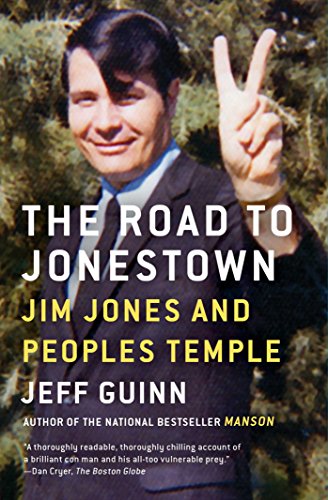
The Road to Jonestown - Jeff Guinn
Jim Jones and the Peoples Temple produced one of the most devastating mass death events in American history - 918 people died in Jonestown, Guyana, in 1978. Most documentaries cover the tragedy itself, but Jeff Guinn's exhaustive biography traces Jim Jones from his childhood in Indiana through his rise as a charismatic preacher, his manipulation of the civil rights movement, and the slow, terrible escalation that ended in the jungle. It is the definitive single-volume account.
What we liked
- Definitive, exhaustively researched biography of Jim Jones
- Traces the full arc from idealism to catastrophe
- Essential companion to Jonestown documentaries
What we didn't like
- The material is very dark and can be emotionally heavy
- Extremely detailed - some readers may find sections slow
Troublemaker: Surviving Hollywood and Scientology - Leah Remini
Leah Remini spent thirty-four years inside the Church of Scientology before her public departure in 2013, and *Troublemaker* is her unflinching account of what she witnessed. For fans of *Going Clear* or her Emmy-winning docuseries *Scientology and the Aftermath*, this book provides the firsthand perspective and personal detail that outside journalism cannot supply - what the meetings looked like, how disconnection policies destroyed families, and the specific moments that cracked her certainty.
What we liked
- Written by an insider with decades of direct experience
- Fast, compulsively readable celebrity memoir with serious investigative weight
- Perfect companion to Going Clear and Aftermath docuseries
What we didn't like
- Written before her full docuseries investigation, so some later revelations aren't covered
- Remini's celebrity context is prominent - not purely a sociological study

Cults in Our Midst - Margaret Singer
Margaret Singer was one of the foremost academic researchers on cult psychology, and *Cults in Our Midst* is the book that transformed how the general public understands recruitment, indoctrination, and exit. Where most cult books focus on a specific organization, Singer's work is analytical and cross-applicable - explaining the thought-reform techniques that appear across groups from Peoples Temple to NXIVM to small local organizations most people have never heard of.
What we liked
- Essential psychological framework applicable to all cult documentaries
- Written by a leading academic authority with decades of clinical research
- Explains recruitment and indoctrination in accessible, non-academic language
What we didn't like
- More analytical than narrative - readers wanting a story may find it dry
- Some research is dated; newer psychological literature has expanded on her findings
The Witness - Charles Brandt
Charles Brandt's account bridges the true crime and cult-adjacent documentary worlds, offering a mob informant's story that illuminates the psychology of absolute loyalty, secret codes, and the devastating consequences of life inside a closed, hierarchical organization. For viewers of Mafia documentaries and organized crime exposés who are drawn to the psychological parallels with cult dynamics - total control, information isolation, exit consequences - this book is a natural crossover read.
What we liked
- Bridges organized crime and cult psychology for cross-genre documentary fans
- Built from years of firsthand interviews with the primary subject
- Fast-paced narrative that reads like a thriller
What we didn't like
- Not a cult book in the strict sense - organized crime is the primary subject
- Some documentary fans may find the mob context less directly applicable
How to choose
Firsthand vs. Investigative accounts
Survivor memoirs like *Educated* and *Troublemaker* provide emotional interiority; investigative histories like *The Road to Jonestown* provide organizational scope. The best cult documentary reading lists include both.
Academic vs. narrative
*Cults in Our Midst* is analytical and framework-building; the other four are primarily narrative. For the deepest understanding of why cults work, pair at least one academic text with your memoir reading.
Recency and updates
Some organizations covered in older books have evolved significantly. Look for updated editions or supplementary reading when the organization is still active or ongoing legal cases are unresolved.
The bottom line
The best cult documentaries leave you asking harder questions than when you started. These books answer them - with the depth, the psychology, and the personal testimony that streaming can only gesture toward. Start with *Educated* for literary craft, *The Road to Jonestown* for historical scope, and *Troublemaker* for inside-the-institution immediacy. The rabbit hole goes as deep as you want to go.
Common questions
Cult documentary fans gravitate toward firsthand memoirs from survivors, investigative journalism about fringe movements, and deep-dive histories of organizations like Peoples Temple or Scientology. These books offer context, nuance, and detail that even the best documentary runtime cannot accommodate.
Most are accessible to newcomers to the genre. Tara Westover's Educated reads as a literary memoir first and cult-adjacent narrative second. More intensive accounts like The Road to Jonestown or Troublemaker go deeper into disturbing material, so readers sensitive to abuse or mass death should approach those with awareness.
Not at all - the books stand completely on their own and in many cases provide far more detail than the documentaries. Reading first can actually enrich your documentary viewing by giving you names, context, and background before the footage begins.
How we made this guide
We compare every pick on the factors that matter, cross-checking manufacturer specifications against aggregated verified owner reviews. We rank independently and never take payment for placement. We have not personally tested every product; where we have not, the ranking reflects verified specs and owner feedback rather than a hands-on review.
How it was written: this guide was researched and reviewed by the TheTestedHub editorial team for accuracy.
Affiliate disclosure: TheTestedHub is reader-supported. When you buy through links on our site, we may earn a commission at no extra cost to you.
More guides

DJI Mini 4K: The Drone Expert Picks for Beginners

Every Budget Podcast Mic Guide: Find the Right Fit

Phone Tripods 2026: Best Picks and Buying Guide

Which iPad Accessory Wins? The Apple Pencil Pro Shortlist

How to Choose the Best Digital Photo Frames in 2026

Looking for the Best MagSafe Power Banks? Our 2026 Picks

7 Fast Chargers That Match Real Device Needs
