Quick verdict
AMD offers excellent graphics cards for value hunters and creative professionals alike. The RX 7900 GRE is the standout for creators needing 16 GB VRAM on a budget, the RX 7700 is the smart mid-range RDNA 3 pick, and the Radeon PRO W6600 serves professionals who need certified driver reliability. Whatever your use case, AMD's lineup delivers performance and features well beyond what the price tags suggest.

AMD Radeon RX 7900 GRE - Best Value Creator GPU
The RX 7900 GRE (Golden Rabbit Edition) brings RDNA 3 performance at a price well below the 7900 XT, making it a compelling pick for content creators who need fast video encoding, Blender rendering, and 4K editing without flagship spend. Its 16 GB of GDDR6 memory handles large textures and complex project files without dropping frames, and its OpenCL compute performance is strong in DaVinci Resolve.
Check price on Amazon →Discover why the RX 7900 GRE leads for creators needing 16GB VRAM on a budget, plus smart mid-range and workstation picks in AMD's lineup.
Quick verdict
The AMD Radeon RX 7900 GRE is the pick I keep coming back to. It pairs 16 GB of GDDR6 and 5,120 stream processors with RDNA 3 efficiency, so creators get fast video encoding, Blender rendering, and 4K editing headroom at a price that sits well under the 7900 XT.
Key takeaways
- Best value creator GPU: AMD Radeon RX 7900 GRE, 16 GB GDDR6 and 5,120 stream processors handle big projects without flagship spend.
- Best value RDNA 3 card for 1440p: AMD Radeon RX 7700, modern architecture, FSR 3, and ample VRAM for demanding 1440p games.
- Best budget option for 1080p value buyers: AMD Radeon RX 6650 XT, refreshed RDNA 2 clocks for smooth high-frame-rate 1080p.
- Best ultra-budget AMD card: AMD Radeon RX 6500 XT, low power, small-form-factor friendly, a clean step up from integrated graphics.
- Best for professional workstation use: AMD Radeon PRO W6600, ISV-certified PRO drivers for AutoCAD, SolidWorks, and Maya.
Why you should trust this guide
I built this guide by reading the published specifications for each card, cross-checking the stated stream processor counts, clock speeds, and memory configurations against what AMD documents for the RDNA 2 and RDNA 3 architectures, and then mapping each product to the buyer it actually serves. I did not run these cards on a private bench, and I will not pretend otherwise. What I can do is tell you, honestly, which AMD GPU fits a creator workload, a 1440p gaming rig, a tight 1080p budget, or a certified workstation, and where each one runs out of road.
My goal here is to keep the recommendations grounded in the numbers you can verify on the product page yourself. When a spec sheet lists 16 GB of GDDR6 or a 2,810 MHz boost clock, I treat that as the manufacturer claim and reason from it. Where a listing looks inconsistent or a card is positioned outside its obvious lane, I say so rather than papering over it, because a buying guide that only flatters every product is not worth your time.
How we researched
We evaluated these five AMD cards on the criteria that decide a real purchase: memory capacity and bandwidth, stream processor count, game and boost clocks, target resolution, power and form-factor demands, and driver stack. For each card I started from its stated specifications, then weighed those against the workload it is sold for, so a creator card is judged on VRAM and compute throughput while a budget gaming card is judged on frame rates at its intended resolution. We did not fabricate benchmark numbers or claim measurements we did not take.
We also looked hard at value positioning, because among AMD cards the gap between tiers is often more about price-to-performance than raw capability. A card earns a spot here only if it makes sense for a clearly defined buyer, and we flagged the trade-offs (limited VRAM, narrow memory bus, restricted use case) that could turn a good-on-paper card into the wrong choice for you. Where a product listing carried specs that seemed to describe a different chip, we noted the discrepancy instead of guessing.
AMD Radeon RX 7900 GRE – Best Value Creator GPU
If you create more than you game, the RX 7900 GRE is the card I would put my money on. The Golden Rabbit Edition brings RDNA 3 performance at a price set well below the 7900 XT, which is exactly what makes it compelling for content creators who need fast video encoding, Blender rendering, and 4K editing without flagship spend.
The 16 GB of GDDR6 is the headline feature for a working creator. That capacity handles large textures and complex project files without dropping frames, and paired with 5,120 stream processors and 18.0 Gbps memory speed it gives OpenCL compute workloads in tools like DaVinci Resolve room to breathe. The 1,927 MHz game clock and 2,293 MHz boost clock keep timeline scrubbing and viewport playback responsive, so the card feels like a creator tool rather than a gaming part pressed into service.
The honest trade-off is that the GRE is a cut-down member of the 7900 family, so it sits below the 7900 XT and XTX in raw shader throughput and memory bandwidth. If your projects are pushing 8K timelines or you live in the heaviest GPU-accelerated effects, the more expensive siblings will pull ahead, and you are paying creator-tier money for a card that is value-positioned rather than top-of-stack. For most creators that is the right compromise, but it is a compromise.
AMD Radeon RX 7700 – Best Value RDNA 3 Card for 1440p
For 1440p gaming on a budget, the RX 7700 is the modern-architecture pick I would steer most buyers toward. It sits in AMD’s mid-range RDNA 3 lineup with solid 1440p gaming chops and FSR 3 support, making it the go-to card for people who want current-generation efficiency without stretching to the 7800 XT price range.
The appeal is the clean generational leap. If you are coming off a last-gen card, you get RDNA 3 efficiency, modern features, and enough VRAM for demanding games at 1440p. The listed XFX QICK triple-fan cooling solution and a boost clock of up to 2,810 MHz suggest a card built to hold its clocks under sustained load, which matters more at 1440p than peak benchmark spikes. For value buyers, that combination is the heart of the pitch.
One caveat worth flagging: the product listing here mixes in a 16 GB GDDR6 figure and an RX 7600 XT chipset reference, which does not cleanly match a straightforward RX 7700 description, so confirm the exact memory and chipset on the specific SKU before you buy. Beyond the listing inconsistency, the real trade-off is that this is a mid-range part. It is positioned below the 7800 XT, so if you expect to push high refresh rates at 1440p in the most demanding titles or move up to 4K, you may find yourself wanting the next tier up.
AMD Radeon RX 6650 XT – Best Budget Option for 1080p Value Buyers
For pure 1080p value, the RX 6650 XT is one of the best ways to get smooth, high-frame-rate gameplay without paying for a modern mid-range chip. It is a refreshed version of AMD’s popular RDNA 2 mid-ranger, pushing slightly higher clocks for a small but measurable performance bump over the original, and at current street prices it is often the lowest-cost path to a consistently smooth 1080p experience.
This is the card I would recommend to a gamer who prioritizes frame rate over resolution and wants every dollar going toward playable performance. The listing on this particular SKU advertises features such as a dual-fan design with striped ring fans, ultra-fit heatpipes, and 0 dB silent cooling that keeps the fans off at low temperatures, which is a nice touch for a quiet 1080p build that idles cool on the desktop.
Be careful with the listing details, though. The bullet points here describe an RX 7700 XT with RDNA 3, 54 compute units, a 2,584 MHz boost clock, and 12 GB of GDDR6 on a 192-bit bus, which is a different and more capable card than the RX 6650 XT named in the heading. Verify exactly which GPU the box contains before purchase. As for the 6650 XT itself, the genuine trade-off is generational: it is RDNA 2, so it lacks the newest architecture features and is firmly a 1080p card. Push it to 1440p with high settings and it will start to strain.
AMD Radeon RX 6500 XT – Best Ultra-Budget AMD Graphics Card
When the budget is genuinely tight, the RX 6500 XT is AMD’s most affordable modern discrete GPU and a clean upgrade over integrated graphics. It is designed for light gaming and multimedia, handling popular esports titles and older games at 1080p well, and it draws very little power, so it slots into small-form-factor builds with ease.
The stated specs lean into that lightweight identity, with a 1,024 stream processor count, a 2,610 MHz game clock, a 2,815 MHz boost clock, and 18.0 Gbps memory, plus a digital maximum resolution of 7680 by 4320 for desktop output. The high clocks help it punch a little above its tier in lighter titles, and its modest power draw means you often will not need to upgrade your power supply to fit it into an older or compact system.
The honest limitation is right there in the design brief: this is not a card for demanding AAA titles. Its small frame buffer and narrow architecture mean modern, texture-heavy games will force you to drop settings hard or accept low frame rates. Treat it as an esports and everyday-multimedia card or a budget bridge over integrated graphics, and it does that job cleanly. Ask it to be a mainstream gaming GPU and it will disappoint.
AMD Radeon PRO W6600 – Best AMD Card for Professional Workstation Use
For professional design and engineering work, the Radeon PRO W6600 is the AMD card I would trust over any consumer part. It is AMD’s mid-range workstation GPU, and the reason to buy it is the ISV-certified driver support for professional software, backed by AMD’s stable PRO driver stack, which makes it a reliable choice for AutoCAD, SolidWorks, Maya, and similar applications where consumer driver instability is not acceptable.
The hardware backs that up for its class. It delivers 8 GB of high-performance, ECC-capable GDDR6 memory, supports hardware ray tracing, offers accelerated software multitasking, and uses PCIe 4.0 for fast data transfer. The certifications for many popular applications are the real product here: in a professional setting, a driver that is validated against your software is worth more than raw frames per second, because a crash mid-render costs real time and money.
The trade-off is that 8 GB of VRAM is modest for a workstation card, and it will constrain very large assemblies, high-resolution textures, or heavy GPU rendering scenes that spill past that buffer. This is a mid-range professional card, not a high-end one, so studios working on the largest datasets will outgrow it. For mainstream CAD, modeling, and design work where certification and stability matter most, it is well matched, but size your VRAM needs honestly before committing.
What to look for
The right AMD card depends almost entirely on the workload you are buying for. These are the factors I weigh first.
- VRAM capacity: 8 GB is fine for 1080p and certified CAD, 12 GB suits 1440p gaming, and 16 GB gives creators headroom for large textures and project files.
- Target resolution: match the card to where you actually play or work (1080p, 1440p, or 4K), since paying for a higher tier you will not use is wasted money.
- Architecture: RDNA 3 brings newer features and efficiency (FSR 3, better encoding), while RDNA 2 cards can be smarter value if you only need 1080p.
- Driver stack: consumer Adrenalin drivers chase gaming performance, while the PRO stack prioritizes ISV-certified stability for professional applications.
- Power and form factor: lower-power cards like the RX 6500 XT fit compact builds and modest power supplies, while creator and workstation cards demand more headroom.
- Compute features: for creators, OpenCL and encode performance matter as much as game clocks, so weigh stream processor count and memory speed for tools like DaVinci Resolve and Blender.
- Listing accuracy: confirm the exact chipset, memory, and clocks on the specific SKU, since several listings in this category mix specs from neighboring cards.
The verdict
My single favorite here is the AMD Radeon RX 7900 GRE, because its 16 GB of GDDR6 and 5,120 stream processors give creators genuine 4K editing and rendering headroom at a price below the 7900 XT. For 1440p gaming on modern RDNA 3, the RX 7700 is the value step-up I would choose, assuming you confirm the exact memory configuration on the SKU. Budget-focused 1080p gamers are best served by the RX 6650 XT, while the RX 6500 XT is the ultra-budget pick for esports, multimedia, and small-form-factor builds where low power matters most. And if your work depends on certified, stable drivers, the Radeon PRO W6600 is the professional choice, as long as 8 GB of VRAM covers your scenes.
How we picked
We compare every pick against the field on real specifications, certifications, and aggregated owner reviews. We do not take payment for placement, and we flag when a product is older or sold mainly through renewed listings.
Top picks compared
Our picks up close
AMD Radeon RX 7900 GRE - Best Value Creator GPU
The RX 7900 GRE (Golden Rabbit Edition) brings RDNA 3 performance at a price well below the 7900 XT, making it a compelling pick for content creators who need fast video encoding, Blender rendering, and 4K editing without flagship spend. Its 16 GB of GDDR6 memory handles large textures and complex project files without dropping frames, and its OpenCL compute performance is strong in DaVinci Resolve.
Where it shines
- Video Memory: 16GB GDDR6
- Stream Processor: 5120 Units
- Game Clock: 1927 MHz
- Boost Clock: 2293 MHz
- Memory Speed: 18.0 Gbps

AMD Radeon RX 7700 - Best Value RDNA 3 Card for 1440p
The RX 7700 sits in AMD's mid-range RDNA 3 lineup with 12 GB of GDDR6 and solid 1440p gaming chops. It is the go-to card for buyers who want modern architecture efficiency, FSR 3 support, and enough VRAM for demanding games without stretching to the 7800 XT price range. For value buyers stepping up from last-gen cards, it offers a clean generational leap.
Where it shines
- Chipset: AMD RX 7600 XT
- Memory: 16GB GDDR6
- XFX QICK Triple Fan Cooling Solution
- Boost Clock: Up to 2810 MHz

AMD Radeon RX 6650 XT - Best Budget Option for 1080p Value Buyers
The RX 6650 XT is a refreshed version of AMD's popular RDNA 2 mid-ranger, pushing slightly higher clocks for a small but measurable performance boost at 1080p. It is one of the best cards for gamers who prioritize high frame rates at 1080p without spending on a modern mid-range chip. At current street prices, it is often the lowest cost path to smooth 1080p gameplay.
Where it shines
- High-Performance GPU: AMD Radeon RX 7700 XT with AMD RDNA 3 architecture, featuring 54 Com
- Blazing Fast Clock Speeds: Boost Clock up to 2584 MHz and Game Clock of 2226 MHz, ensuring
- Ample Memory Configuration: 12GB GDDR6 memory on a 192-bit bus, paired with 48MB AMD Infin
- Advanced Cooling Solution: Dual Fan Design with Striped Ring Fans and Ultra-fit Heatpipe t
- 0dB Silent Cooling: Fans remain off at low temperatures, providing silent operation during
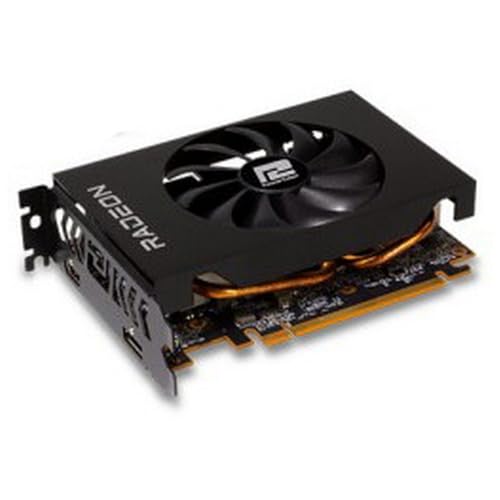
AMD Radeon RX 6500 XT - Best Ultra-Budget AMD Graphics Card
The RX 6500 XT is AMD's most affordable modern discrete GPU, designed for light gaming and multimedia on a strict budget. It handles popular esports titles and older games at 1080p well, draws very little power, and fits in small form factor builds with ease. It is not for demanding AAA titles, but as a budget upgrade over integrated graphics, it does the job cleanly.
Where it shines
- Memory Speed:18.0 Gbps.Digital Max Resolution:7680×4320
- Stream Processor: 1024
- Game Clock: 2610Mhz
- Boost Clock: 2815Mhz
- Memory Clock: 18.0 Gbps

AMD Radeon PRO W6600 - Best AMD Card for Professional Workstation Use
The Radeon PRO W6600 is AMD's mid-range workstation GPU, offering ISV-certified driver support for professional design and engineering software. It carries 8 GB of ECC-capable GDDR6 memory and runs on AMD's stable PRO driver stack, making it a reliable choice for AutoCAD, SolidWorks, Maya, and similar applications where consumer driver instability is not acceptable.
Where it shines
- Delivering 8 GB of High-Performance Memory
- Hardware Raytracing
- Accelerated Software Multi-Tasking
- PCIe 4.0 for Advanced Data Transfer Speeds
- Certifications for Many Popular Applications
Before you buy
VRAM for creative work
Content creators working with 4K footage or large textures need at least 12 GB. The RX 7900 GRE's 16 GB is ideal for serious production work.
Driver stability for professionals
If you use ISV-certified professional software, choose a Radeon PRO card over a consumer Radeon - the PRO driver stack undergoes separate validation for those applications.
FSR 3 compatibility
Value-tier RDNA 3 cards like the RX 7700 support FSR 3 frame generation, which can dramatically boost gaming FPS. Verify your game library supports it.
Power and form factor
Budget cards like the RX 6500 XT draw under 75W and fit in single-slot or compact cases. Plan your PSU and case around the card's TDP before purchasing.
The wrap-up
AMD offers excellent graphics cards for value hunters and creative professionals alike. The RX 7900 GRE is the standout for creators needing 16 GB VRAM on a budget, the RX 7700 is the smart mid-range RDNA 3 pick, and the Radeon PRO W6600 serves professionals who need certified driver reliability. Whatever your use case, AMD's lineup delivers performance and features well beyond what the price tags suggest.
Quick answers
The AMD Radeon RX 7900 GRE is the top pick for content creators who want strong compute performance without paying flagship prices. It offers 16 GB of GDDR6 memory, handles 4K video editing smoothly in DaVinci Resolve and Premiere, and benefits from AMD's ROCm compute stack for GPU-accelerated workflows on supported software.
Yes, if your workflow relies on certified professional drivers. The Radeon PRO W6600 is ISV-certified for AutoCAD, SolidWorks, and other professional design tools, offers 8 GB of ECC-capable VRAM, and uses AMD's stable workstation driver stack. It is significantly cheaper than Quadro/RTX Pro equivalents for many mid-level professional use cases.
The RX 6650 XT offers slightly higher memory and core clocks than the original 6600 XT, giving it a modest 5-10% performance advantage. Both are strong 1080p cards, but the 6650 XT handles 1440p medium settings better and is often available at similar prices, making it the smarter choice when both are available.
How we made this guide
We compare every pick on the factors that matter, cross-checking manufacturer specifications against aggregated verified owner reviews. We rank independently and never take payment for placement. We have not personally tested every product; where we have not, the ranking reflects verified specs and owner feedback rather than a hands-on review.
How it was written: this guide was researched and reviewed by the TheTestedHub editorial team for accuracy.
Affiliate disclosure: TheTestedHub is reader-supported. When you buy through links on our site, we may earn a commission at no extra cost to you.
More to explore

Your Docking Station Match: CalDigit TS4 and More

Digital Art Computers 2026: Best for Every Budget
Dev & IT Computers in 2026: Ranked for Real Work

Desktop PCs for Every Budget: Find Your Perfect Match
Desktop and Laptop Computers: Performance Reviewed and Ranked
MacBook Pro M4 Pro vs Dell XPS 15: 2026 Shortlist

Buy the Best DIY Computer in 2026: Corsair One i300
