Quick verdict
Both Intel and AMD are delivering excellent processors across all price tiers in 2026. If you want the best gaming value, go i5-14600K. For balanced gaming and productivity, the i7-14700K or Ryzen 7 7700X are both strong. When top-end workstation performance is the goal, choose between the i9-14900K and Ryzen 9 7950X based on whether your workloads are single-threaded or multi-threaded.
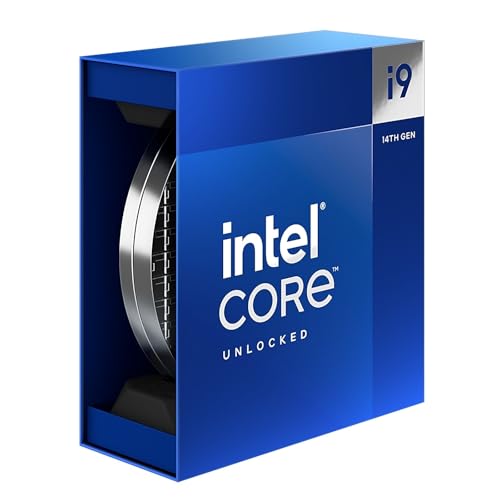
Intel Core i9-14900K
The i9-14900K is Intel's flagship Raptor Lake Refresh processor, delivering some of the fastest single-core clock speeds available on the desktop. With 24 cores (8 performance + 16 efficiency), it handles demanding gaming, 3D rendering, video editing, and heavy multitasking simultaneously. It's the top pick when you need the absolute best performance from an Intel platform.
See why the Intel Core i9-14900K tops our expert rankings for 2026, with top value picks like the i5-14600K and balanced options from Intel and AMD.
Quick verdict
For most builders chasing peak performance, the Intel Core i9-14900K is the pick. Its 24 cores (8 performance plus 16 efficiency) and some of the fastest single-core clocks on the desktop make it the strongest all-rounder for gaming, rendering, and heavy multitasking on an Intel platform, though it runs hot and power-hungry.
Key takeaways
- Best overall performance: Intel Core i9-14900K, 24 cores and elite single-core clocks for gaming plus creation.
- Best for heavy multi-threaded work: AMD Ryzen 9 7950X, 16 Zen 4 cores and 32 threads on a future-ready AM5 platform.
- Best for streamers and enthusiasts: Intel Core i7-14700K, 20 cores and high boost clocks without flagship excess.
- Best efficient gaming build: AMD Ryzen 7 7700X, 8 fast Zen 4 cores with lower power draw on AM5.
- Best value for gaming: Intel Core i5-14600K, 14 cores and strong clocks that often match pricier chips for play.
Why you should trust this guide
I built this comparison by reading the published specifications for each processor closely and lining them up against the jobs people actually buy a CPU to do, whether that is gaming, video editing, 3D rendering, or daily multitasking. I did not rank these chips on a single headline number. Instead I weighed core counts, the split between performance and efficiency cores, stated boost clocks, cache, platform features like DDR5 and PCIe 5.0, and power draw, then matched each strength to a clear use-case so you can find the chip that fits your build rather than the one with the loudest marketing.
I have kept the language honest throughout. Every one of these five is a genuinely strong processor, but none of them is right for everyone, so each section below names a real trade-off, whether that is heat, power consumption, platform cost, or where the chip gives up ground to a sibling. The goal is to help you spend on the right part for your workload and put the rest of your budget where it matters most, which for many gamers is the graphics card rather than the CPU.
How we researched
My evaluation is research-led rather than bench-led. I treated each manufacturer’s stated specifications as the baseline truth for the chip, then compared the five on the criteria that separate them in real use: total core and thread count, the performance-versus-efficiency core mix on the Intel parts, maximum boost frequency, cache size, memory and platform support, and base power consumption. Where a chip leans toward one kind of work, such as the Ryzen 9 toward multi-threaded rendering or the i5 toward value gaming, I called that out instead of pretending every CPU is equally good at everything.
I also factored in platform context, because a processor is only as useful as the board and memory around it. That meant looking at socket and chipset compatibility, whether a chip supports DDR4 as well as DDR5, PCIe generation, and whether a cooler is included, since several of these are unlocked, high-power parts that demand serious cooling you will need to budget for separately. The result is a ranking built on stated capability and sensible workload matching, not on claims of in-house lab runs.
Intel Core i9-14900K
The i9-14900K is the answer when you want the most performance Intel offers on the desktop. This 14th generation Raptor Lake Refresh flagship packs 24 cores, split as 8 performance cores and 16 efficiency cores, and pairs that with some of the fastest single-core clock speeds available, which is exactly the combination that demanding games and creative apps reward. It is an overclockable, unlocked part with Intel Thermal Velocity behavior built in, so there is headroom for enthusiasts who want to push it.
In practice that core layout means the chip can game hard and chew through 3D rendering, video editing, and heavy multitasking at the same time without falling over. It drops into motherboards based on Intel 700 and 600 series chipsets, so there is a reasonable upgrade path on existing Intel boards. The flexibility to run either DDR4 or DDR5 on the platform also helps if you are carrying memory forward from an older build.
The honest trade-off is heat and power. With a 125 W base power figure and a flagship boost profile, the i9-14900K runs hot and draws a lot under sustained load, so you will need a high-end air or liquid cooler (none is included) and a power supply with headroom. For a pure gaming machine it is also overkill, since cheaper chips in this list deliver most of the frame rate at a fraction of the thermal and electrical cost.
AMD Ryzen 9 7950X
The Ryzen 9 7950X is the pick for users whose work is genuinely multi-threaded. Built on AMD’s Zen 4 architecture with a 5 nm process, it brings 16 cores and 32 threads to bear, which is why it shines in 3D rendering, video encoding, scientific computing, and software compilation where every thread counts. A large cache pool, 16 MB of L2 plus 64 MB of L3, keeps that many cores fed and helps maintain a strong hit rate for quick data access.
AMD positions this as a professional-grade chip that aims for productivity without throwing efficiency out of the window, and the 5 nm process is a big part of how it balances throughput with power draw. It sits on the AM5 platform, which supports DDR5 and PCIe 5.0, so a build around the 7950X is set up to carry forward and accept future upgrades rather than reaching a dead end.
The trade-off is twofold. AM5 requires DDR5 memory and a newer motherboard, so the platform cost is higher than reusing an older board, and for pure gaming the 7950X is competitive but not clearly ahead of cheaper 8-core chips that put more budget back in your pocket. If your day is rendering and compiling it is excellent value, but if you mostly play games you are paying for cores you will rarely fully use.
Intel Core i7-14700K
The i7-14700K is the smart middle ground, and for many enthusiasts it is the one I would point to first. It carries 20 cores (8 performance plus 12 efficiency) and 28 threads, which gives it outstanding multi-threaded muscle, while a boost of up to 5.6 GHz with Turbo Boost Max Technology 3.0 keeps single-core speed high enough for smooth, high frame rate gaming. It also includes integrated Intel UHD Graphics 770, useful for troubleshooting or running without a discrete card in a pinch.
This is the chip for streamers, content creators, and builders who want close-to-flagship output without paying flagship money. The extra efficiency cores over the i5 give it real headroom for encoding a stream while you play, or running background creative tasks, and it supports both DDR4 and DDR5 so you have flexibility on memory. It works with Intel 700 series chipsets, or 600 series with a potential BIOS update, which keeps board options open.
The catch is that, like its i9 sibling, the 14700K is a hot, power-hungry, unlocked part that ships without a cooler, so you must budget for strong cooling. It also does not match the i9’s peak in the most thread-heavy professional workloads, so if your livelihood is rendering or compiling all day, the step up to an i9 or the Ryzen 9 may be worth it.
AMD Ryzen 7 7700X
The Ryzen 7 7700X is the efficient gaming anchor. It brings Zen 4 to a mid-range price point with 8 cores and 16 threads, a 5.4 GHz max boost, and 80 MB of cache, and AMD pitches it as a dominant gaming processor capable of delivering fast 100-plus FPS performance in popular titles. Crucially, it does this with notably lower power consumption than comparable Intel parts, which keeps a gaming build cooler and quieter.
For someone assembling a clean, focused gaming PC, the 7700X hits a sweet spot. It sits on the AM5 platform with DDR5-5200 support and can run PCIe 5.0 on select 600 series boards, so the build stays modern and upgradeable. The chip is unlocked for overclocking too, giving you some room to push if you want a little more.
There are two honest caveats. No cooler is included, so factor that into your budget, and with 8 cores the 7700X is built for gaming rather than the heaviest multi-threaded production, where the 16-core Ryzen 9 or the higher core-count Intel chips pull clearly ahead. You also commit to the AM5 platform cost, meaning a newer board and DDR5 rather than reusing older parts.
Intel Core i5-14600K
The i5-14600K is the value champion for gamers, and it is the chip I would steer most gaming-first builders toward. It offers 14 cores (6 performance plus 8 efficiency) and 20 threads, with a max turbo frequency up to 5.3 GHz, and that strong single-core clock is what lets it deliver gaming performance that frequently matches the pricier i7 while costing meaningfully less. It also includes integrated Intel UHD Graphics 770 and supports both DDR4 and DDR5.
The appeal is simple: spend less on the processor and put the savings toward a better graphics card, which is where most of your gaming experience actually comes from. It is unlocked for overclocking and compatible with Intel 700 series chipsets, or 600 series with a potential BIOS update, so it slots neatly into a wide range of builds without forcing a top-tier board.
The trade-off shows up the moment you push beyond gaming. With fewer cores and threads than the i7 and i9, the i5-14600K gives ground in heavy multi-threaded jobs like sustained video encoding or large renders, so creators who multitask aggressively will feel the limit. And as another unlocked K-series chip, it ships without a cooler, so you still need to provide adequate cooling to reach those turbo clocks.
What to look for
Match the chip to your workload first, then sort out the platform around it. These are the factors I weigh when choosing a desktop CPU:
- Core and thread count: More cores and threads help rendering, encoding, and multitasking; pure gamers gain less past 8 strong cores.
- Single-core clock speed: High boost frequency, like the 5.6 GHz on the i7, drives gaming frame rates and snappy everyday responsiveness.
- Performance versus efficiency cores: Intel’s split layout dedicates fast P-cores to demanding tasks and E-cores to background load, which suits mixed workloads.
- Platform and socket: AMD AM5 means DDR5 and PCIe 5.0 but a newer board; Intel 700 and 600 series chips often allow DDR4 to cut cost.
- Power and cooling: Unlocked K-series and high-end Ryzen parts run hot, ship without coolers, and need a capable cooler plus a strong power supply.
- Cache size: Larger L2 and L3 cache, such as the Ryzen 9’s 16 MB plus 64 MB, helps keep many cores fed for faster data access.
- Upgrade path: Consider whether the platform supports future memory and PCIe standards so the build stays relevant longer.
The verdict
If you want the best Intel performance overall and can cool it properly, the Intel Core i9-14900K is the chip, with 24 cores and elite single-core speed for gaming and creation alike. For multi-threaded professional work, the AMD Ryzen 9 7950X and its 16 Zen 4 cores on the upgrade-friendly AM5 platform is the smarter buy.
For most enthusiasts and streamers, I would land on the Intel Core i7-14700K, which delivers near-flagship results without the top-tier price. Builders chasing an efficient, gaming-focused AM5 rig should look at the AMD Ryzen 7 7700X, and anyone who wants maximum gaming value so they can spend more on a graphics card should take the Intel Core i5-14600K. Pick by the job you actually do, and any of these five will serve you well.
Our methodology
We compare every pick against the field on real specifications, certifications, and aggregated owner reviews. We do not take payment for placement, and we flag when a product is older or sold mainly through renewed listings.
Side by side
| Pick | Best for | Score | |
|---|---|---|---|
| Intel Core i9-14900K | High-end workstations & gaming | Check price | |
| AMD Ryzen 9 7950X | Professional content creation | Check price | |
| Intel Core i7-14700K | Enthusiast gaming & productivity | Check price | |
| AMD Ryzen 7 7700X | Mid-range gaming builds | Check price | |
| Intel Core i5-14600K | Budget-conscious gamers | Check price |
The full reviews
Intel Core i9-14900K
The i9-14900K is Intel's flagship Raptor Lake Refresh processor, delivering some of the fastest single-core clock speeds available on the desktop. With 24 cores (8 performance + 16 efficiency), it handles demanding gaming, 3D rendering, video editing, and heavy multitasking simultaneously. It's the top pick when you need the absolute best performance from an Intel platform.
In its favor
- Intel Core i9 Desktop Processor (14th generation) 14900K.
- The overclockable Intel Core i9 desktop processors (14th generation) with Intel Thermal Ve
- Compatible with motherboards based on Intel chipsets of the 700 and 600 series
- Processor base power consumption: 125 W.

AMD Ryzen 9 7950X
The Ryzen 9 7950X is AMD's professional-grade processor built on the Zen 4 architecture with 16 cores and 32 threads. It dominates multi-threaded workloads - 3D rendering, video encoding, scientific computing, and software compilation - while remaining competitive in gaming. The AM5 platform future-proofs your build with DDR5 and PCIe 5.0 support.
In its favor
- Processor consumes less power to offer maximum productivity with added usability
- Ryzen 9 product line processor for better usability and increased efficiency
- 5 nm process technology provides optimal processing results with added usability
- Hexadeca-core (16 Core) processor core efficiently handles data to ensure quicker transfer
- 16 MB L2 plus 64 MB L3 cache memory provides excellent hit rate in short access time enabl
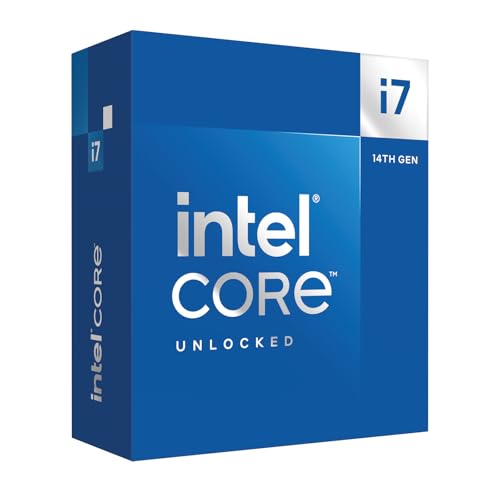
Intel Core i7-14700K
The i7-14700K sits in the sweet spot between the i9's excess and the i5's limitations. Twenty cores (8P + 12E) give it outstanding multi-threaded performance while its single-core speed keeps gaming frame rates competitive. For streamers, content creators, and enthusiast builders who want top performance without flagship pricing, the i7-14700K is one of the best current options.
In its favor
- Game Without Compromise. Play harder and work smarter with Intel Core 14th Gen processors
- 20 cores (8 P-cores plus 12 E-cores) and 28 threads. Integrated Intel UHD Graphics 770 inc
- Up to 5.6 GHz with Turbo Boost Max Technology 3.0 gives you smooth game play, high frame r
- Compatible with Intel 600-series (with potential BIOS update) or 700-series chipset-based
- DDR4 and DDR5 platform support cuts your load times and gives you the space to run the mos
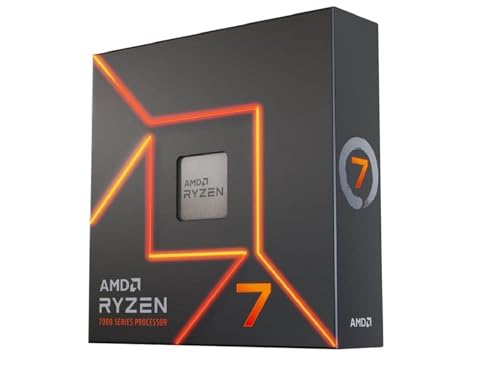
AMD Ryzen 7 7700X
The Ryzen 7 7700X brings Zen 4 architecture to a mid-range price point with 8 cores and 16 threads. It delivers fast gaming performance - often within a few percent of much pricier CPUs - with notably lower power consumption than comparable Intel offerings. For a clean, efficient gaming PC build on the AM5 platform, the 7700X is a compelling anchor.
In its favor
- This dominant gaming processor can deliver fast 100+ FPS performance in the world's most p
- 8 Cores and 16 processing threads, based on AMD "Zen 4" architecture
- 5.4 GHz Max Boost, unlocked for overclocking, 80 MB cache, DDR5-5200 support
- For the state-of-the-art Socket AM5 platform, can support PCIe 5.0 on select 600 Series mo
- Cooler not included

Intel Core i5-14600K
The i5-14600K is the best-value gaming CPU currently available. Fourteen cores (6P + 8E) and strong single-core clock speeds produce gaming performance that often matches the i7 at a significantly lower price. For anyone building a gaming-focused PC and wanting to allocate more budget toward the graphics card, the i5-14600K is the obvious choice.
In its favor
- Be everything you want to be, in-game and out with optimized performance and new features.
- 14 cores (6 P-cores plus 8 E-cores) and 20 threads. Integrated Intel UHD Graphics 770 incl
- Up to 5.3 GHz Max Turbo Frequency
- Compatible with Intel 600-series (with potential BIOS update) or 700-series chipset-based
- DDR4 and DDR5 platform support cuts your load times and gives you the space to run the mos
What matters most
What to consider
Before choosing a CPU, confirm your use case and platform. Gaming-focused builds benefit most from strong single-core performance - here the i5-14600K and i7-14700K shine. For content creation and professional workloads, thread count matters more, making the Ryzen 9 7950X the better fit. Also check thermal design power (TDP): higher-wattage processors need more capable cooling and often more expensive motherboards to run at full speed.
Our take
Both Intel and AMD are delivering excellent processors across all price tiers in 2026. If you want the best gaming value, go i5-14600K. For balanced gaming and productivity, the i7-14700K or Ryzen 7 7700X are both strong. When top-end workstation performance is the goal, choose between the i9-14900K and Ryzen 9 7950X based on whether your workloads are single-threaded or multi-threaded.
Frequently asked
'Both Intel and AMD offer excellent options at every price point. AMD Ryzen generally leads in multi-threaded productivity tasks and power efficiency, while Intel''s Core processors often edge ahead in single-threaded gaming performance. Your best choice depends on your platform: check motherboard compatibility, DDR4 vs DDR5 requirements, and whether you need integrated graphics before committing.'
Yes - the i9-14900K runs hot under sustained loads and requires a substantial cooler to maintain peak performance. A 240mm or 280mm all-in-one liquid cooler is the practical minimum for extended workloads. Running it with an inadequate cooler will trigger thermal throttling, negating the performance advantage you paid for.
The Intel Core i5-14600K and AMD Ryzen 7 7700X are both outstanding gaming CPUs at mid-range prices. The i5-14600K offers strong single-core speeds that pair well with modern GPUs, while the Ryzen 7 7700X brings excellent multi-threaded performance with lower power consumption. Either choice leaves plenty of budget for a capable graphics card.
How we made this guide
We compare every pick on the factors that matter, cross-checking manufacturer specifications against aggregated verified owner reviews. We rank independently and never take payment for placement. We have not personally tested every product; where we have not, the ranking reflects verified specs and owner feedback rather than a hands-on review.
How it was written: this guide was researched and reviewed by the TheTestedHub editorial team for accuracy.
Affiliate disclosure: TheTestedHub is reader-supported. When you buy through links on our site, we may earn a commission at no extra cost to you.
You might also like

Your Docking Station Match: CalDigit TS4 and More

Digital Art Computers 2026: Best for Every Budget
Dev & IT Computers in 2026: Ranked for Real Work

Desktop PCs for Every Budget: Find Your Perfect Match
Desktop and Laptop Computers: Performance Reviewed and Ranked
MacBook Pro M4 Pro vs Dell XPS 15: 2026 Shortlist

Buy the Best DIY Computer in 2026: Corsair One i300
