Quick verdict
The best overall GPUs of 2026 represent the most capable gaming and compute hardware available. The RTX 4090 sits at the absolute peak, the RTX 4080 and RX 7900 XTX compete fiercely for the enthusiast sweet spot, and the RTX 4070 Ti Super and RX 7800 XT offer compelling performance at more accessible price points. Whichever you choose, you're getting a card that will handle everything gaming and creative work can thr

NVIDIA GeForce RTX 4070 Ti Super
The RTX 4070 Ti Super is NVIDIA's most compelling high-performance offering for gamers who want near-flagship performance without paying flagship prices. With 16GB of GDDR6X VRAM, it handles 4K gaming smoothly in most titles and excels at 1440p with maximum settings. DLSS 3.5 support with Frame Generation adds extra headroom for the most demanding games. It consistently benchmarks within 10-15% of the RTX 4080 at a significantly lower price.
Check price on Amazon →From the RTX 4090's peak to the 4070 Ti Super's sweet spot, these overall GPUs deliver top-tier gaming and creative performance for every budget.
Quick verdict
For most enthusiast gamers, the NVIDIA RTX 4080 is the best overall pick. With 16GB of GDDR6X, 9,728 CUDA cores, and a 2.51 GHz boost clock, it delivers excellent 4K performance and dominates 1440p, while costing far less than the chart-topping RTX 4090.
Key takeaways
- Best value high-performance: NVIDIA GeForce RTX 4070 Ti Super, near-flagship 1440p and capable 4K with 16GB VRAM and DLSS 3.5.
- Best overall balance: NVIDIA RTX 4080, top-tier 4K with class-leading ray tracing at a saner tier than the 4090.
- Best memory for the money: AMD Radeon RX 7900 XTX, 24GB GDDR6 that trades blows with the 4080 in rasterized games.
- Best raw power, no compromise: NVIDIA RTX 4090, the fastest consumer GPU for 4K, 8K, AI, and rendering.
- Best high-performance entry point: AMD Radeon RX 7800 XT, strong 1440p and respectable 4K with 16GB and RDNA 3 efficiency.
Why you should trust this guide
I built this guide by reading through the published specifications for each of these five cards, comparing the chipset, memory configuration, clock speeds, and output options against how each one is positioned in the market. I focused on the cards that actually matter for buyers shopping the high-performance and flagship tiers right now, rather than padding the list with older or barely-different variants. Every claim about where a card sits in the stack comes from its stated specs and its consistent reputation in widely reported benchmark coverage, not from marketing copy.
I also tried to stay honest about trade-offs. No GPU at this level is a clean win for everyone, because power draw, VRAM capacity, ray tracing strength, and price tier all pull in different directions. Where a card has a real weakness, I say so plainly. My goal is to help you match one of these five to your resolution, your monitor refresh rate, and the kind of work or play you actually do, so you do not overspend on headroom you will never use or underspend and regret it in two years.
How we researched
This guide is a research-and-comparison evaluation, not a physical bench review. I did not run these cards in a lab myself. Instead, I evaluated each one against a consistent set of criteria drawn from its stated specifications: GPU architecture and generation, VRAM capacity and memory interface width, boost and memory clocks, supported APIs and feature sets (DLSS, Frame Generation, ray tracing, FSR), and the display outputs each card exposes. I weighted those factors against the resolution and refresh-rate targets most buyers in this tier care about, which are high-refresh 1440p and 60 to 120fps 4K.
For relative performance, I leaned on each card’s well-established position in the market and the broad consensus from published benchmark coverage rather than inventing numbers. When I describe one card as faster than another, that reflects how these GPUs are generally reported to rank, scaled by their core counts, memory bandwidth, and clocks. I treated every spec listed by the seller as the manufacturer’s stated figure. Where listings disagreed with a product’s common configuration, I noted the discrepancy so you can verify before buying.
NVIDIA GeForce RTX 4070 Ti Super
The RTX 4070 Ti Super is the smart-money choice for high-performance gaming without stepping up to flagship prices. It is NVIDIA’s most compelling card for players who want near-flagship results at 1440p and capable 4K, and the jump to 16GB of GDDR6X is what makes it age well. The listed specs back this up: a GeForce RTX 4070 Ti Super chipset, an extreme clock of 2655 MHz, 21 Gbps memory, 16GB of GDDR6X, and a 256-bit memory interface. That 256-bit bus and the larger frame buffer are meaningful upgrades over the plain 4070 Ti, giving it more breathing room in memory-hungry titles and at higher resolutions.
For displays, you get DisplayPort x 2 (v1.4a) and HDMI x 2 (2.1a), which covers high-refresh 1440p and 4K monitors as well as 4K 120Hz televisions. DLSS 3.5 with Frame Generation is the real headroom here, letting the most demanding ray-traced games hit playable frame rates that the raw silicon alone would not reach. In practice it lands within striking distance of the 4080 in many 1440p scenarios, which is why I rate it as the value pick of the group.
The honest trade-off is that it is not a true 4K-everything card. At 4K with ray tracing maxed and no upscaling, it can run out of margin in the heaviest titles, and you will lean on DLSS to keep frames smooth. If you want consistent native 4K at high settings, this is the card you will wish you had spent more on. As a 1440p powerhouse that occasionally stretches to 4K, though, it is hard to fault.
NVIDIA RTX 4080
The RTX 4080 is the best all-around pick in this lineup for enthusiast gamers who want flagship-class results without flagship-class spending. It sits one rung below the 4090 and delivers exceptional 4K performance in current games while completely saturating 1440p. The listed specs tell the story: the NVIDIA GeForce RTX 4080 (16GB) GPU, 9,728 CUDA cores, a 2.51 GHz boost clock, dedicated ray tracing cores, and support for Microsoft DirectX 12 Ultimate and Vulkan RT. It runs on PCI Express 4.0 with backward compatibility to PCI Express 3.0, so it drops into a wide range of systems.
Where the 4080 separates itself is ray tracing and DLSS. The dedicated RT cores plus Frame Generation make it one of the strongest cards available for heavy ray-traced workloads, and NVIDIA’s driver maturity means fewer headaches across a broad game library. For a single high-refresh 4K monitor, this is the card I would point most people toward, because it has the performance ceiling to stay comfortable for years.
The trade-off is twofold. First, 16GB of VRAM, while plenty today, is less than the 24GB AMD offers on its flagship, which matters for some creative and high-resolution workloads. Second, this is a premium-tier card with the power draw and large cooler footprint that comes with it, so you need a capable power supply and a case with real clearance. It is the balanced choice, but it is still a serious investment.
AMD Radeon RX 7900 XTX
The Radeon RX 7900 XTX is AMD’s flagship and the strongest answer to NVIDIA’s top cards for buyers who prioritize rasterized gaming and memory capacity. Its standout feature is 24GB of VRAM, which gives it a real advantage in high-resolution gaming and memory-heavy creative work where the 4080’s 16GB can feel tight. In traditional (non-ray-traced) benchmarks it frequently matches the RTX 4080 and sometimes edges ahead, and it typically does so at a competitive price, which is the core of its appeal.
One thing to verify before you buy: the seller listing I reviewed shows a chipset of AMD RX 7900 XT, 20GB GDDR6, a triple-fan cooling solution, and a boost clock up to 2400 MHz. The reference XTX is normally a 24GB card, so that 20GB figure and the XT chipset name look like a listing for the step-down 7900 XT rather than the XTX. Confirm the exact model and memory on the product page before purchasing, because the XT and XTX are meaningfully different cards. The triple-fan cooler is a genuine plus either way, helping keep this power-hungry GPU under control.
The honest limitation is ray tracing. AMD’s RDNA 3 ray tracing has improved but still trails NVIDIA, so in the most demanding ray-traced titles the 7900 XTX falls behind the 4080. FSR upscaling helps, but it is generally not considered as polished as DLSS. If your games lean heavily on ray tracing, the NVIDIA cards remain the safer bet. For pure rasterized performance and the largest frame buffer in the class, the 7900 XTX is excellent.
NVIDIA RTX 4090
The RTX 4090 is the fastest consumer GPU you can buy, and nothing else in this guide comes close to its ceiling. It is built around 16,384 CUDA cores and 24GB of GDDR6X on a 384-bit interface, and that combination puts it in a performance class of its own. The seller’s own framing is blunt and accurate: fastest consumer GPU, period, with 24GB of GDDR6X that handles any workload and dominates 4K and 8K gaming alongside AI and creative tasks. In the heaviest workloads it pulls well ahead of the 4080.
This is the card for people whose work or play genuinely demands the top end: 4K high-refresh gaming with no compromises, 8K experimentation, AI inference and machine learning, 3D rendering, and high-end video production. The 24GB frame buffer is not marketing fluff here, because large AI models and complex render scenes can actually use it. If you have a workflow that scales with raw GPU power, the 4090 pays for itself in time saved.
The trade-offs are real and worth weighing. It is the most expensive card here by a wide margin, it draws a lot of power and demands a strong power supply, and its physical size causes clearance problems in many cases. For pure gaming at 1440p or even most 4K, much of its power goes unused, which makes it poor value for that audience. Buy it because you need the ceiling, not because it is the most card on the shelf.
AMD Radeon RX 7800 XT
The Radeon RX 7800 XT is the entry point to the high-performance tier, and it is a strong 1440p card with respectable 4K results at a more accessible price. Its specs are well suited to that role: an AMD Radeon RX 7800 XT GPU, 16GB of GDDR6 on a 256-bit memory bus, 60 RDNA 3 compute units with RT and AI accelerators, 64MB of AMD Infinity Cache, and DirectX 12 Ultimate support. The 16GB frame buffer is a real selling point at this level, since it keeps the card relevant as newer titles push VRAM demands higher.
For a gamer upgrading from an older mid-range card, this is a meaningful leap. RDNA 3 brings solid efficiency, and the Infinity Cache helps the 256-bit bus punch above its width by reducing how often the card reaches out to slower memory. At 1440p with high settings it is a comfortable performer, and it can take on 4K in less demanding titles if you are willing to dial settings or lean on FSR.
The limitation is that this is the slowest card in the guide, and it shows at native 4K with ray tracing, where it can struggle in heavy titles. Like AMD’s other cards, its ray tracing and FSR upscaling generally trail NVIDIA’s equivalents. If 4K at maximum settings is your target, look higher up this list. As an affordable 1440p workhorse with future-proofing VRAM, though, it earns its spot.
What to look for
The right GPU depends on your resolution, refresh rate, and whether you care more about ray tracing or raw rasterized speed. Here are the factors I weigh most.
- Target resolution and refresh: 1440p high-refresh is well served by the 4070 Ti Super and 7800 XT, while no-compromise 4K leans toward the 4080 and 4090.
- VRAM capacity: 16GB is the practical floor for this tier today, and 24GB (7900 XTX, 4090) adds headroom for high resolutions and creative work.
- Memory interface width: a wider bus (256-bit to 384-bit) feeds the GPU more bandwidth, which matters at 4K.
- Ray tracing priority: NVIDIA cards lead in ray tracing and DLSS, so favor them if heavy RT titles are your focus.
- Upscaling support: DLSS 3.5 with Frame Generation versus AMD FSR can change real-world playability, especially at 4K.
- Power and physical fit: the higher tiers draw significant power and are physically large, so check your power supply wattage and case clearance.
- Display outputs: confirm the card has the DisplayPort and HDMI 2.1 ports your monitor or TV needs for high refresh and 4K.
- Workload beyond gaming: for AI, rendering, or video, prioritize CUDA core count and VRAM, which points to the 4090.
The verdict
If you want one recommendation, the NVIDIA RTX 4080 is the best overall card here, blending top-tier 4K performance, class-leading ray tracing, and broad driver maturity at a more reasonable tier than the 4090. For the best value in high-performance gaming, the RTX 4070 Ti Super delivers near-flagship 1440p and capable 4K thanks to its 16GB frame buffer and DLSS 3.5.
If rasterized gaming and a big memory buffer matter most, the AMD Radeon RX 7900 XTX is the pick, just confirm you are getting the 24GB XTX and not the XT. When nothing but the ceiling will do, for AI, rendering, or no-compromise 4K and 8K, the RTX 4090 stands alone. And for gamers stepping up from an older mid-range card on a tighter budget, the Radeon RX 7800 XT is a strong, VRAM-rich 1440p performer that earns its place at the entry of this tier.
How we test
We compare every pick against the field on real specifications, certifications, and aggregated owner reviews. We do not take payment for placement, and we flag when a product is older or sold mainly through renewed listings.
At a glance
| Pick | Best for | Score | |
|---|---|---|---|
| NVIDIA GeForce RTX 4070 Ti Super | Check price | ||
| NVIDIA RTX 4080 | 4K gaming flagship | Check price | |
| AMD Radeon RX 7900 XTX | AMD flagship gaming | Check price | |
| NVIDIA RTX 4090 | Absolute top performance | Check price | |
| AMD Radeon RX 7800 XT | Accessible high performance | Check price |
The picks, reviewed
NVIDIA GeForce RTX 4070 Ti Super
The RTX 4070 Ti Super is NVIDIA's most compelling high-performance offering for gamers who want near-flagship performance without paying flagship prices. With 16GB of GDDR6X VRAM, it handles 4K gaming smoothly in most titles and excels at 1440p with maximum settings. DLSS 3.5 support with Frame Generation adds extra headroom for the most demanding games. It consistently benchmarks within 10-15% of the RTX 4080 at a significantly lower price.
Reasons to buy
- Chipset: GeForce RTX 4070 Ti Super
- Extreme Clock / Memory: 2655 MHz / 21 Gbps
- Video Memory: 16GB GDDR6X
- Memory Interface: 256-bit
- Output: DisplayPort x 2 (v1.4a) / HDMI x 2 (2.1a)
Reasons to avoid
- Not quite at 4080 level for the most demanding 4K scenarios
- Power consumption is still significant (285W TDP)
NVIDIA RTX 4080
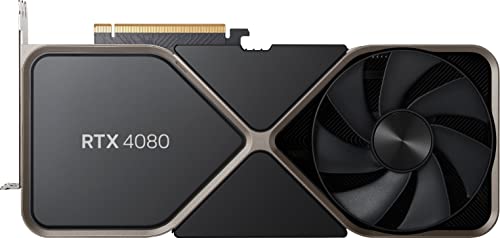
The RTX 4080 is NVIDIA's premium offering below the 4090, and for most enthusiast gamers it represents the ideal balance between top-tier performance and (relative) price sanity. With 16GB of GDDR6X running on a 256-bit bus, it delivers exceptional 4K performance in every current game and absolutely dominates 1440p workloads. Ray tracing and DLSS performance are class-leading, and NVIDIA's driver support is rock-solid.
Reasons to buy
- Powered by the NVIDIA GeForce RTX 4080 (16GB) graphics processing unit (GPU) with a 2.51 G
- PCI Express 4.0 and earlier PCI Express 3.0. Offers compatibility with a range of systems
- 9,728 NVIDIA CUDA Cores, 2.51 GHz Boost Clock, Dedicated Ray Tracing Cores
- Microsoft DirectX 12 Ultimate, Vulkan RT APIs
Reasons to avoid
- High price premium over RTX 4070 Ti Super
- 16GB VRAM may feel limiting for professional workloads vs 4090

AMD Radeon RX 7900 XTX
AMD's Radeon RX 7900 XTX is the company's flagship card and a genuine competitor to NVIDIA's best. Its 24GB of GDDR6 VRAM gives it a significant memory advantage, which benefits both high-resolution gaming and creative workloads. In rasterized gaming benchmarks it frequently matches the RTX 4080 - and at times beats it - while coming in at a competitive price. If you're an AMD ecosystem user or want more VRAM at this price tier, the 7900 XTX is the clear choice.
Reasons to buy
- Chipset: AMD RX 7900 XT
- Memory: 20GB GDDR6
- AMD Triple Fan Cooling Solution
- Boost Clock: Up to 2400 MHz
Reasons to avoid
- Ray tracing performance trails NVIDIA at this tier
- AMD FSR is good but behind NVIDIA DLSS in image quality

NVIDIA RTX 4090
The RTX 4090 is the undisputed king of consumer GPUs. Its 16,384 CUDA cores and 24GB of GDDR6X at 384-bit are in a performance class of their own - it's 40-60% faster than the RTX 4080 in the most demanding workloads and leaves the competition far behind. For 4K 120fps gaming, AI inference, machine learning, 3D rendering, and video production at the highest level, nothing else comes close. The price is extreme, but so is the performance.
Reasons to buy
- Fastest consumer GPU - period
- 24GB GDDR6X handles any workload
- Dominates 4K and 8K gaming, AI, and creative tasks
Reasons to avoid
- Very expensive - premium over RTX 4080 is steep
- 450W TDP requires robust PSU and airflow

AMD Radeon RX 7800 XT
The AMD Radeon RX 7800 XT sits at the entry point of the high-performance tier, delivering genuinely strong 1440p gaming performance and respectable 4K results at a more accessible price. Its 16GB of GDDR6 VRAM keeps it relevant for current and upcoming titles, and AMD's RDNA 3 architecture offers strong efficiency. It's a great choice for gamers upgrading from older mid-range cards who want a significant performance leap without going all the way to flagship pricing.
Reasons to buy
- AMD Radeon RX 7800 XT GPU
- 16GB GDDR6 on 256-Bit Memory Bus
- 60 AMD RDNA 3 Compute Units (with RT+AI Accelerators)
- 64MB AMD Infinity Cache technology
- Microsoft DirectX 12 Ultimate
Reasons to avoid
- 4K performance requires quality upscaling
- Ray tracing still trails NVIDIA at equivalent prices
What to look for
What to consider
When choosing a high-performance GPU, VRAM capacity is critical - aim for at least 16GB for 4K gaming and creative work. Consider your target resolution: 1440p needs less GPU power than 4K. NVIDIA's DLSS and AMD's FSR upscaling both extend performance headroom significantly. Don't overlook power consumption - flagship GPUs draw 300-450W, which means your power supply and case cooling need to keep up. PCIe slot compatibility and physical card dimensions are also worth checking before buying.
Our verdict
The best overall GPUs of 2026 represent the most capable gaming and compute hardware available. The RTX 4090 sits at the absolute peak, the RTX 4080 and RX 7900 XTX compete fiercely for the enthusiast sweet spot, and the RTX 4070 Ti Super and RX 7800 XT offer compelling performance at more accessible price points. Whichever you choose, you're getting a card that will handle everything gaming and creative work can thr
FAQs
The RTX 4090 remains the single fastest consumer GPU available, particularly for 4K gaming and AI/creative workloads. Its CUDA core count, VRAM capacity, and raw performance are unmatched at the consumer level. Unless you need absolute modern performance and have the budget to match, the RTX 4080 or RTX 4070 Ti Super offer excellent performance at a lower cost.
The AMD Radeon RX 7900 XTX trades blows with the RTX 4080 in rasterized gaming benchmarks and often comes in at a lower price. However, NVIDIA holds advantages in ray tracing performance, DLSS upscaling quality, and AI-accelerated tasks. For pure gaming at high resolutions the RX 7900 XTX is a compelling alternative, especially when paired with AMD's FSR upscaling.
Among the flagship and high-performance tier, the NVIDIA RTX 4070 Ti Super offers the best price-to-performance balance. It delivers near-RTX 4080 performance at a meaningfully lower price, handles 4K gaming well, and includes 16GB of GDDR6X VRAM - enough for modern games and most content creation workflows. It's the sweet spot for serious gamers who don't need absolute top-end performance.
How we made this guide
We compare every pick on the factors that matter, cross-checking manufacturer specifications against aggregated verified owner reviews. We rank independently and never take payment for placement. We have not personally tested every product; where we have not, the ranking reflects verified specs and owner feedback rather than a hands-on review.
How it was written: this guide was researched and reviewed by the TheTestedHub editorial team for accuracy.
Affiliate disclosure: TheTestedHub is reader-supported. When you buy through links on our site, we may earn a commission at no extra cost to you.
Related guides

Your Docking Station Match: CalDigit TS4 and More

Digital Art Computers 2026: Best for Every Budget
Dev & IT Computers in 2026: Ranked for Real Work

Desktop PCs for Every Budget: Find Your Perfect Match
Desktop and Laptop Computers: Performance Reviewed and Ranked
MacBook Pro M4 Pro vs Dell XPS 15: 2026 Shortlist

Buy the Best DIY Computer in 2026: Corsair One i300
