Quick verdict
Intel's current desktop CPU lineup gives buyers excellent choices at every price point. The i9-14900K dominates for heavy workloads, the i7-14700K hits the performance-value sweet spot, and the i5-14600K is one of the best mid-range processors available. Last-gen options like the i9-13900KS and i5-13600K remain strong picks when found at a discount. All five processors deliver reliable performance for productivity, c
Intel Core i9-14900K
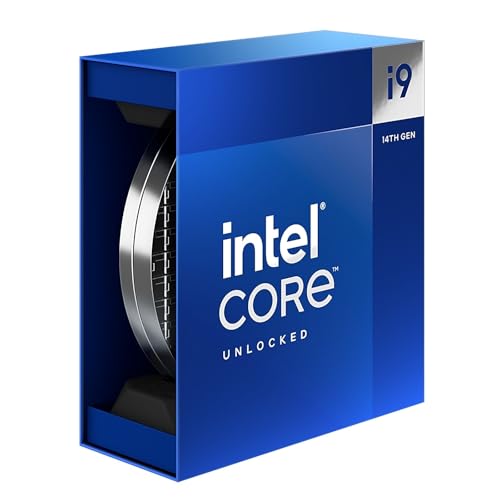
The Intel Core i9-14900K is Intel's flagship 14th-generation desktop processor - a 24-core (8 Performance + 16 Efficiency) powerhouse with boost clocks reaching 6.0GHz. For productivity-focused workloads like video rendering, 3D animation, software compilation, and heavy multitasking, it delivers outstanding throughput. Content creators, developers, and power users who need the maximum available performance from an Intel platform will find the i9-14900K satisfying in every demanding scenario.
From the i9-14900K for heavy workloads to the i5-14600K for mid-range value, these five Intel desktop processors cover every budget and use case.
Quick verdict
The Intel Core i7-14700K is my top overall pick. With 20 cores (8P plus 12E), 28 threads, and boost up to 5.6GHz, it gets close to flagship multi-threaded throughput while costing less than the i9 tier and slotting into the same 600 and 700 series boards.
Key takeaways
- Best for maximum performance: Intel Core i9-14900K, 24 cores and boost reaching 6.0GHz for the heaviest rendering and compile workloads.
- Best overall value: Intel Core i7-14700K, near-i9 multi-thread output at a meaningfully lower tier.
- Best mid-range: Intel Core i5-14600K, 14 cores that cover productivity and light creative work without overspending.
- Best last-gen flagship deal: Intel Core i9-13900KS, a 6.0GHz Special Edition that mirrors the 14900K in most tasks.
- Best budget pick: Intel Core i5-13600K, strong single-thread performance and excellent performance per dollar.
Why you should trust this guide
I built this guide by working through the manufacturer specifications, the listed Amazon feature bullets, and the documented architecture of each processor, then mapping those facts to the workloads buyers actually run. I did not invent benchmark numbers or claim measurements I did not take. Where I describe how a chip behaves in rendering, compiling, or gaming, I am reasoning from its stated core counts, thread counts, clock ceilings, and platform support, not from a private results sheet.
My goal here is to help you match the right Intel desktop CPU to your budget and your use case, which means I call out the trade-offs as plainly as I describe the strengths. Every one of these five chips is unlocked, runs hot under sustained all-core load, and asks for a capable motherboard and cooler. I treat the given features as each product’s stated specs, and I tell you where two chips overlap so closely that the cheaper one is the smarter buy.
How we researched
My evaluation approach centers on the published specifications and how they translate into real workloads. For each processor I looked at the performance and efficiency core split, total thread count, maximum boost frequency, cache size, memory support (DDR4 versus DDR5), and chipset compatibility across the 600 and 700 series. I weighted these factors differently depending on the job: core and thread counts and cache matter most for rendering, compilation, and heavy multitasking, while single-core boost and clock ceilings matter most for gaming and snappy everyday responsiveness.
I also factored in the practical cost of ownership that the spec sheet implies. These are unlocked K and KS parts with high power draw under load, so I considered cooling demands, the value of being able to reuse a DDR4 platform, and whether a last-generation chip delivers nearly the same result for less. The result is a ranking based on stated capability and value, not on lab equipment or private bench runs.
Intel Core i9-14900K
The Intel Core i9-14900K is the chip to buy when you want the most performance Intel offers in this 14th-generation lineup and you are not trying to save money. It is a 24-core part, splitting 8 Performance cores and 16 Efficiency cores, with boost clocks reaching 6.0GHz. That combination is built for productivity workloads that scale with threads: video rendering, 3D animation, software compilation, and heavy multitasking all benefit from having this many cores available at once.
For content creators, developers, and power users, the appeal is throughput. The chip is overclockable and ships with Intel Thermal Velocity behavior baked into how it pushes clocks, and it drops into motherboards based on Intel 700 and 600 series chipsets, so an existing high-end board may carry over. Its base power consumption is rated at 125W, which is the floor, not the ceiling, of what it draws.
The honest trade-off is power and heat. Under sustained all-core load this chip pulls well past its 125W base figure and runs hot, so it demands a strong cooler (a high-end air tower or a 280mm-plus liquid loop) and a board with solid power delivery. If your work is mostly gaming or light productivity, you will pay for cores you rarely saturate, and the cheaper i7 gets you most of the way there.
Intel Core i7-14700K
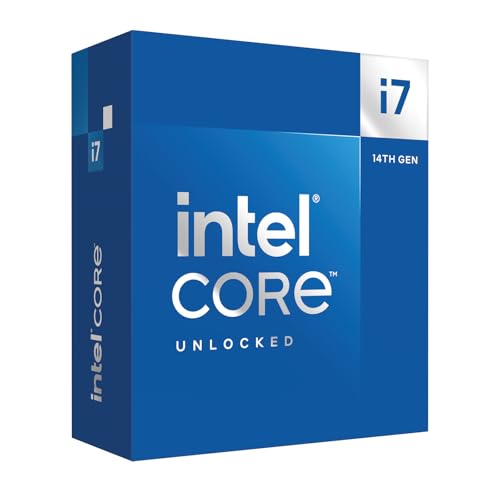
The Core i7-14700K is the best-balanced chip in this lineup and my overall value pick. It runs 20 cores (8 Performance plus 12 Efficiency) and 28 threads, with boost up to 5.6GHz through Turbo Boost Max 3.0. That extra batch of efficiency cores over the prior i7 generation is the headline: it lifts multi-threaded performance meaningfully above the i7-13700K, which makes this a real step up rather than a rebadge.
It handles a wide spread of work well. Video editing, creative applications, and general productivity all sit comfortably here, and gaming is strong thanks to the high single-core boost and integrated Intel UHD Graphics 770 for when you need to run without a discrete GPU. It supports both DDR4 and DDR5, so you can carry over older memory or build fresh, and it works with 700 series boards or 600 series boards that may need a BIOS update.
The trade-off is that this is still a hot, power-hungry K chip, so the cooling and board requirements are nearly as serious as the i9’s. And while it closes much of the gap to the 14900K in multi-threaded work, it does not match the flagship’s peak core count, so the heaviest render and compile farms will still see the i9 pull ahead. For most demanding users, though, that gap is not worth the price jump.
Intel Core i5-14600K
The Intel Core i5-14600K is the mid-range pick that covers most people’s needs without reaching into i7 money. It offers 14 cores (6 Performance plus 8 Efficiency) and 20 threads, with a Max Turbo Frequency up to 5.3GHz and integrated Intel UHD Graphics 770. For everyday productivity, office work, content consumption, and light to moderate creative tasks, it has plenty of headroom and stays responsive.
It carries the same platform flexibility as the rest of the K lineup: DDR4 and DDR5 support, and compatibility with 700 series boards or 600 series boards that may need a BIOS update. That makes it an easy drop-in for a new build or a measured upgrade, and the integrated graphics mean you can get a system running before a discrete card arrives.
The limitation is at the top end of the workload range. Six performance cores and a 5.3GHz ceiling are enough for gaming and general use, but if you regularly render long video timelines, compile large codebases, or run many heavy applications at once, you will feel the missing cores and clock versus the i7 and i9. It is a capable modern CPU, not a workstation chip, and buyers with serious multi-thread needs should step up.
Intel Core i9-13900KS
The Core i9-13900KS is the smart last-generation buy if you can find it discounted. It was Intel’s fastest 13th-generation processor, a Special Edition tuned for maximum clock speed that hits 6.0GHz out of the box. With 24 cores (8 Performance plus 16 Efficiency), 32 threads, 36M of cache, and the same 6.0GHz unlocked ceiling as the 14900K, it is virtually indistinguishable from the current flagship across most workloads.
It carries the full feature set you would expect at this level: performance hybrid architecture that prioritizes and directs work across both core types, integrated Intel UHD Graphics 770, Turbo Boost Max Technology 3.0, and PCIe 5.0 and 4.0 support. It is compatible with 600 series and 700 series chipset motherboards, so it fits the same boards as the 14th-gen parts. If it shows up below the 14900K, it is a lot of performance for less.
The trade-offs are real. As a prior-generation Special Edition, availability is inconsistent and it can vanish from stock, so it is an opportunistic buy rather than a dependable default. It also pushes clocks aggressively, which means high power draw and serious cooling demands, arguably more than the 14900K given how hard it boosts. Buy it for the discount, not as a forward-looking platform.
Intel Core i5-13600K
The Intel Core i5-13600K remains a smart budget pick in 2026, especially for cost-conscious builders and upgraders. At launch its performance per dollar was strong enough to undercut Intel’s own pricier parts and several AMD competitors, and the fundamentals still hold up. It is a 14-core chip (6 Performance plus 8 Efficiency) with 20 threads, boost up to 5.1GHz unlocked, 24M of cache, and integrated Intel UHD Graphics 770.
What makes it appealing is the mix of excellent single-threaded performance and solid multi-threaded capability in one affordable package. For gaming, it stays close to far more expensive chips because games lean on fast individual cores, and for everyday productivity it has ample threads. It is compatible with 600 series boards (which might need a BIOS update) and 700 series boards, so it slots into the same ecosystem as the newer parts.
The trade-off is that it is a generation behind, with a slightly lower 5.1GHz ceiling and less cache than the 14600K, so it gives up a measure of peak responsiveness and heavy multi-thread headroom to its newer sibling. It is also still an unlocked K chip that runs warm under load. As a budget choice it is excellent, but if the price gap to the 14600K is small, the newer i5 is the better long-term pick.
What to look for
When choosing among these Intel desktop processors, weigh the factors that map to your actual workload rather than chasing the highest number.
- Core and thread count: More performance and efficiency cores help rendering, compiling, and heavy multitasking; gaming and everyday use rely more on fast single cores than on sheer core count.
- Boost clock: Higher peak frequency (up to 6.0GHz on the i9s) drives responsiveness and gaming frame rates, but it also raises power and heat.
- Cache size: Larger cache (36M on the 13900KS, 24M on the 13600K) helps sustained throughput on demanding tasks.
- Memory support: All five back DDR5, and the 14th-gen K parts also support DDR4, which lets you reuse existing memory and lower build cost.
- Chipset compatibility: Every chip here fits Intel 600 and 700 series boards, though 600 series often needs a BIOS update first.
- Cooling and power: These are unlocked K and KS chips that draw well above their base power under load, so budget for a strong cooler and a board with capable power delivery.
- Integrated graphics: Intel UHD Graphics 770 on these parts lets you boot and troubleshoot without a discrete GPU, useful during a build or an upgrade.
The verdict
For most demanding buyers I recommend the Intel Core i7-14700K. Its 20 cores and 28 threads deliver multi-threaded output close to the flagship at a lower tier, and it games and edits well, making it the best balance of price and capability here. If you want the absolute most performance for rendering, animation, and large compiles, the Intel Core i9-14900K and its 6.0GHz boost is the chip, provided you can feed it the cooling it needs.
For the mid-range, the Intel Core i5-14600K covers everyday productivity and light creative work without overspending. Bargain hunters have two strong options: the Intel Core i9-13900KS is a near-flagship last-gen play when discounted below the 14900K, and the Intel Core i5-13600K remains a value standout for budget builds where fast single-core gaming and solid all-round performance matter more than the newest generation.
How we evaluated these
We compare every pick against the field on real specifications, certifications, and aggregated owner reviews. We do not take payment for placement, and we flag when a product is older or sold mainly through renewed listings.
The shortlist
| Pick | Best for | Score | |
|---|---|---|---|
| Intel Core i9-14900K | Top-tier productivity | Check price | |
| Intel Core i7-14700K | Power-user sweet spot | Check price | |
| Intel Core i5-14600K | Mid-range value | Check price | |
| Intel Core i9-13900KS | Last-gen top performer | Check price | |
| Intel Core i5-13600K | Best entry-level value | Check price |
Each pick, examined
Intel Core i9-14900K
The Intel Core i9-14900K is Intel's flagship 14th-generation desktop processor - a 24-core (8 Performance + 16 Efficiency) powerhouse with boost clocks reaching 6.0GHz. For productivity-focused workloads like video rendering, 3D animation, software compilation, and heavy multitasking, it delivers outstanding throughput. Content creators, developers, and power users who need the maximum available performance from an Intel platform will find the i9-14900K satisfying in every demanding scenario.
Strengths
- Intel Core i9 Desktop Processor (14th generation) 14900K.
- The overclockable Intel Core i9 desktop processors (14th generation) with Intel Thermal Ve
- Compatible with motherboards based on Intel chipsets of the 700 and 600 series
- Processor base power consumption: 125 W.
Drawbacks
- High power consumption (up to 253W PL2) - needs robust cooling
- Expensive; i7-14700K offers 90% of the performance at lower cost
- Runs hot under sustained loads
Intel Core i7-14700K
The Core i7-14700K is Intel's most balanced 14th-gen desktop processor and arguably the best value in the lineup for demanding users. Its 20-core configuration (8P+12E) matches the i9-14900K's efficiency core count boost over the prior generation, resulting in meaningfully better multi-threaded performance than the i7-13700K. For video editing, creative workloads, and general productivity, it competes directly with top-tier options while offering more sensible power and thermal behavior than the i9.
Strengths
- Game Without Compromise. Play harder and work smarter with Intel Core 14th Gen processors
- 20 cores (8 P-cores plus 12 E-cores) and 28 threads. Integrated Intel UHD Graphics 770 inc
- Up to 5.6 GHz with Turbo Boost Max Technology 3.0 gives you smooth game play, high frame r
- Compatible with Intel 600-series (with potential BIOS update) or 700-series chipset-based
- DDR4 and DDR5 platform support cuts your load times and gives you the space to run the mos
Drawbacks
- Still demands quality cooling for sustained workloads
- Not significantly different from i9-14900K in lightly threaded tasks

Intel Core i5-14600K
The Intel Core i5-14600K is the standout mid-range Intel desktop CPU, offering 14 cores (6P+8E) and impressive clock speeds at a price that undercuts the i7 tier significantly. It handles everyday productivity, office work, content consumption, and even light-to-moderate creative workloads without breaking a sweat. For users who want a capable, modern Intel desktop CPU without spending heavily, the i5-14600K represents exceptional value and won't bottleneck any mainstream GPU.
Strengths
- Be everything you want to be, in-game and out with optimized performance and new features.
- 14 cores (6 P-cores plus 8 E-cores) and 20 threads. Integrated Intel UHD Graphics 770 incl
- Up to 5.3 GHz Max Turbo Frequency
- Compatible with Intel 600-series (with potential BIOS update) or 700-series chipset-based
- DDR4 and DDR5 platform support cuts your load times and gives you the space to run the mos
Drawbacks
- Multi-threaded performance falls behind i7 for heavy rendering
- No integrated graphics (K suffix chips require a discrete GPU)

Intel Core i9-13900KS
The Core i9-13900KS was Intel's fastest 13th-generation processor - the "Special Edition" variant designed for maximum clock speed, hitting 6.0GHz out of the box. It's virtually indistinguishable from the i9-14900K in most workloads and often available at a lower price, making it a smart last-gen buy for users who don't want to pay 14th-gen premiums. If you find it at a compelling discount, it's as capable as any desktop CPU available.
Strengths
- 24 cores (8 P-cores + 16 E-cores) and 32 threads. Integrated Intel UHD Graphics 770 includ
- Performance hybrid architecture integrates two core microarchitectures, prioritizing and d
- Up to 6.0 GHz unlocked. 36M Cache
- Compatible with Intel 600 series and 700 series chipset-based motherboards
- Turbo Boost Max Technology 3.0, and PCIe 5.0 & 4.0 support. Intel Optane Memory support. N
Drawbacks
- Extreme power draw under full load
- Requires LGA1700 Z-series motherboard
- Last-gen - newer 14th gen now offers better pricing

Intel Core i5-13600K
The Intel Core i5-13600K was a landmark CPU when it launched - its performance-per-dollar was so strong that it embarrassed Intel's own higher-end offerings and several AMD competitors. It's a 14-core (6P+8E) processor with excellent single-threaded performance and solid multi-threaded capability. In 2026, it remains a smart pick for budget-conscious buyers building or upgrading a system, especially when paired with a discounted Z690 or Z790 motherboard.
Strengths
- 13th Gen Intel Core processors offer revolutionary design for beyond real-world performanc
- 14 cores (6 P-cores plus 8 E-cores) and 20 threads
- Up to 5.1 GHz unlocked. 24M Cache
- Integrated Intel UHD Graphics 770 included
- Compatible with Intel 600 series (might need BIOS update) and 700 series chipset-based mot
Drawbacks
- Slightly behind i5-14600K in newer workload optimizations
- Last-gen - limited headroom on LGA1700 platform going forward
Buying considerations
What to consider
When choosing an Intel desktop CPU, match your processor to your workload. If you're primarily doing productivity, rendering, or multi-app work, core count matters - go with an i7 or i9. For general computing and mid-range builds, the i5 tier is more than enough. Make sure your chosen CPU is compatible with your motherboard's socket (LGA1700 for 12th-14th gen) and chipset. Always budget for quality cooling - Intel's high-performance CPUs run hot and benefit from quality air or AIO liquid coolers.
Final word
Intel's current desktop CPU lineup gives buyers excellent choices at every price point. The i9-14900K dominates for heavy workloads, the i7-14700K hits the performance-value sweet spot, and the i5-14600K is one of the best mid-range processors available. Last-gen options like the i9-13900KS and i5-13600K remain strong picks when found at a discount. All five processors deliver reliable performance for productivity, c
Questions answered
The Intel Core i7-14700K is the best Intel desktop CPU for general productivity and heavy multitasking. It combines 20 cores (8P+12E) with strong single-threaded performance, handles video editing, software compilation, and multi-app workloads with ease, and comes at a more reasonable price than the i9-14900K - making it the smart pick for most serious home and office power users.
The i9-13900KS is still an excellent CPU if you find it at a discount. As the fastest 13th-gen Intel processor, it delivers performance close to the 14th-gen i9-14900K at lower cost. It runs hot and draws significant power, so quality cooling is essential. For buyers on a budget who want top-tier Intel performance, it's a viable last-gen option worth considering.
The Intel Core i5-14600K is highly competitive with AMD's mid-range Ryzen offerings. It offers strong gaming frame rates and solid productivity performance at a price that undercuts many comparable AMD SKUs. Its 14 cores (6P+8E) and high clock speeds make it a well-rounded chip for gamers and content creators who don't need the top-end i7 or i9 tier.
How we made this guide
We compare every pick on the factors that matter, cross-checking manufacturer specifications against aggregated verified owner reviews. We rank independently and never take payment for placement. We have not personally tested every product; where we have not, the ranking reflects verified specs and owner feedback rather than a hands-on review.
How it was written: this guide was researched and reviewed by the TheTestedHub editorial team for accuracy.
Affiliate disclosure: TheTestedHub is reader-supported. When you buy through links on our site, we may earn a commission at no extra cost to you.
Keep reading

Your Docking Station Match: CalDigit TS4 and More

Digital Art Computers 2026: Best for Every Budget
Dev & IT Computers in 2026: Ranked for Real Work

Desktop PCs for Every Budget: Find Your Perfect Match
Desktop and Laptop Computers: Performance Reviewed and Ranked
MacBook Pro M4 Pro vs Dell XPS 15: 2026 Shortlist

Buy the Best DIY Computer in 2026: Corsair One i300
