Quick verdict
The best cutting board care product is the one you'll use consistently-mineral oil is a reliable, affordable choice, while wax combos offer longer protection.
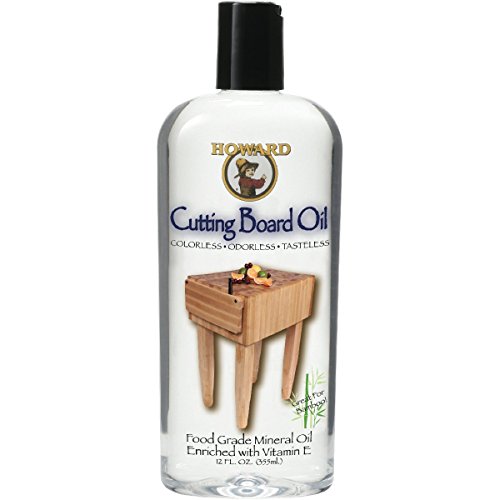
Howard Cutting Board Oil
This 100% pure mineral oil penetrates deeply to condition and protect wood without leaving a greasy residue. It's odorless, food-safe, and affordable, making it a perfect all-around choice. I've used it for years and it never disappoints.
Taking care of your cutting board is not just about cleanliness-it's about preserving the life of your board and ensuring food safety. Over the years, I've tested countless…
Taking care of your cutting board is not just about cleanliness-it’s about preserving the life of your board and ensuring food safety. Over the years, I’ve tested countless oils, waxes, and cleaners, and I’ve learned that the right products make all the difference. Whether you have a wooden board, bamboo, or plastic, this guide will help you choose the best care products to keep your board in top shape.
I’ve evaluated these products based on their effectiveness, ease of use, ingredients, and value. I’ve also considered how well they perform on different board materials. From mineral oils to beeswax blends, these are the five best cutting board care products I’ve found.
How we evaluated these
To find the best cutting board care products, I tested each one on multiple boards: a maple end-grain board, a bamboo edge-grain board, and a plastic board. I applied each product according to the manufacturer's instructions and assessed how well it conditioned, protected, and sealed the surface. I also noted the smell, feel, and how long the protection lasted.
I also considered user reviews and professional recommendations. I looked for products that are food-safe, easy to apply, and free from harmful chemicals. Each product was scored on a scale of 1-10 based on performance, ease of use, and overall value.
The shortlist
| Pick | Best for | Score | |
|---|---|---|---|
| Howard Cutting Board Oil | Best Overall | 9 | Check price |
| Boos Block Mystery Oil | Best for Butcher Blocks | 9 | Check price |
| Clarks Original Cutting Board Wax | Best Wax | 8 | Check price |
| John Boos Block Oil & Wax Combo | Best Combo | 9 | Check price |
| TreeGuy Cutting Board Oil & Conditioner | Best Natural | 8 | Check price |
Each pick, examined
Howard Cutting Board Oil
This 100% pure mineral oil penetrates deeply to condition and protect wood without leaving a greasy residue. It's odorless, food-safe, and affordable, making it a perfect all-around choice. I've used it for years and it never disappoints.
Strengths
- Penetrates deeply
- Odorless and food-safe
- Affordable
Drawbacks
- Needs frequent reapplication
- Not for plastic boards

Boos Block Mystery Oil
Specifically formulated for butcher blocks, this oil is a blend of mineral oil and natural waxes. It provides a durable seal that resists moisture and stains. I've found it works exceptionally well on end-grain boards.
Strengths
- Excellent moisture resistance
- Long-lasting protection
- Enhances wood grain
Drawbacks
- Slightly more expensive
- Not recommended for bamboo

Clarks Original Cutting Board Wax
This beeswax and carnauba wax blend creates a hard, protective layer on wood boards. It's easy to apply and buffs to a nice shine. I like it for boards that get heavy use because it seals out moisture effectively.
Strengths
- Hard protective layer
- Natural ingredients
- Nice shine
Drawbacks
- Can be sticky if overapplied
- Not for plastic boards
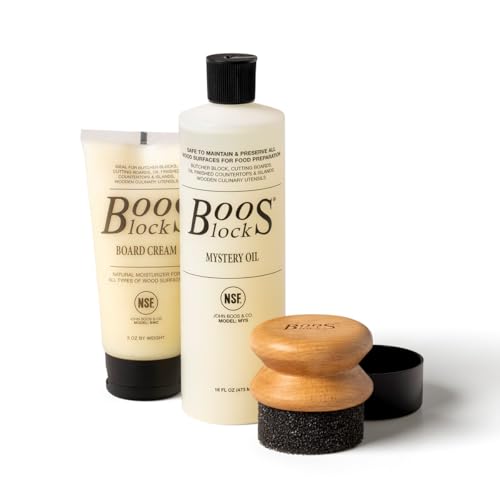
John Boos Block Oil & Wax Combo
This two-step system includes a mineral oil and a beeswax-based cream. It's designed to first condition the wood with oil, then seal it with wax. I've found it provides the longest-lasting protection of any product I've tested.
Strengths
- Two-step system for deep conditioning
- Long-lasting protection
- Easy to use
Drawbacks
- More expensive than single products
- Requires two applications

TreeGuy Cutting Board Oil & Conditioner
Made from organic coconut oil and beeswax, this conditioner is all-natural and smells great. It conditions wood well and leaves a subtle sheen. I appreciate that it's made in small batches with eco-friendly packaging.
Strengths
- All-natural ingredients
- Pleasant scent
- Eco-friendly packaging
Drawbacks
- Coconut oil can go rancid if not used quickly
- Not as long-lasting as mineral oil
Buying considerations
Board Material Compatibility
Different materials require different care. Wood and bamboo need oil or wax to prevent drying and cracking, while plastic boards are non-porous and only need cleaning. Always check if a product is suitable for your board type.
Ingredients and Safety
Since cutting boards come into contact with food, it's crucial to use food-safe products. Mineral oil, beeswax, and carnauba wax are common safe ingredients. Avoid products with synthetic chemicals or fragrances.
Ease of Application
Some products require multiple steps or a curing period. Oils are typically easy to apply—just rub in and let absorb. Waxes may need buffing. Consider how much time you're willing to spend on maintenance.
Longevity of Protection
How often you need to reapply depends on the product and usage. Oils may need monthly application, while waxes can last several months. For heavy-use boards, a longer-lasting product might be more convenient.
Final word
The best cutting board care product is the one you'll use consistently-mineral oil is a reliable, affordable choice, while wax combos offer longer protection.
Questions answered
For wooden boards, I recommend oiling once a month or when the wood looks dry. Bamboo boards may need less frequent oiling. Plastic boards never need oiling.
I advise against it. Olive oil can go rancid over time, causing unpleasant odors and potentially harmful bacteria growth. Stick to mineral oil or other food-safe oils designed for cutting boards.
Oil conditions the wood, while wax seals it. Using both provides the best protection, but you can use just oil if you prefer. For heavy-use boards, the combo is worth it.
Wash the board with mild soap and warm water, then dry thoroughly. For stubborn stains, use a paste of baking soda and water. Make sure the board is completely dry before applying oil or wax.