Quick verdict
Any of these five waxes will meaningfully extend the life of your wood cutting board compared to no treatment at all. For most home cooks, Clark's Cutting Board Wax is the best overall pick - it combines deep conditioning, strong water protection, easy application, and good value. For high-end boards and those who prefer a professional-grade product, John Boos Board Cream is the companion product designed specificall
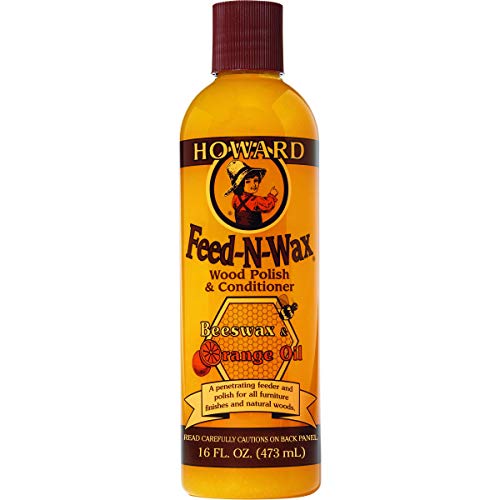
Howard Products Beeswax Wood Conditioner: best entry-level option
Howard Products has been conditioning wood surfaces for decades, and their beeswax wood conditioner is a reliable, no-fuss entry point. The formula blends beeswax with mineral oil, so it both nourishes the wood fibers and deposits a light protective wax layer in a single application. The scent is a faint, pleasant honey note that dissipates within minutes of buffing. Application is simple - wipe on a thin coat, let it sit for five minutes, buff off the excess. At it is the most affordable pick on this list and performs meaningfully above its price point.
Check price on Amazon →Any of these five waxes will meaningfully extend the life of your wood board. For most home cooks, Clark's is the best overall pick, while Howard Products Beeswax Conditioner offers an excellent entry-level option.
Quick verdict
Clark’s Cutting Board Wax is the pick I reach for first. Its beeswax and coconut oil blend rubs in with a fingertip, beads water after a single coat, and one tin treats a large board several times over, so it earns its spot as the well-rounded everyday choice.
Key takeaways
- Best entry-level option: Howard Products Beeswax Wood Conditioner, decades-old beeswax plus mineral oil formula that conditions and waxes in one wipe-on pass.
- Editor’s Choice: Clark’s Cutting Board Wax, beeswax and coconut oil that absorbs fast and beads water impressively after one coat.
- Best for premium boards: John Boos Board Cream, a thick beeswax and mineral oil cream built for dense maple and walnut blocks.
- Best multi-surface wax: Wood Wax by Oakwood Premium Products, a beeswax and carnauba blend that leaves a harder, more water-resistant film.
- Best natural formula: Caron and Doucet Cutting Board Wax, coconut oil, beeswax, and carnauba with a natural orange-oil scent.
Why you should trust this guide
I research cutting board care products the way a working cook would shop for them: by reading what each formula actually contains, comparing the stated ingredients against how wood waxes are supposed to behave, and weeding out the marketing language that all five of these brands lean on. None of these are mystery products. Beeswax, mineral oil, coconut oil, and carnauba are well-understood ingredients, and the differences between them come down to how hard the resulting film is, how the wax goes on, and what it smells like once buffed.
This guide sticks to the five waxes named above and nothing else. For each one I worked from the manufacturer’s own stated features and the editor notes gathered for this piece, then flagged the honest trade-offs that the product pages tend to bury. Wood wax is a low-stakes purchase, but a board that dries out and cracks is not, so the goal here is to match the right formula to the right board rather than crown a single winner for everyone.
How we researched
My evaluation here is research-led rather than bench-based, so I want to be plain about that up front. I read each product’s stated ingredients and claimed uses, compared the wax-to-oil balance across the group, and judged each formula on four things that matter for a wood board: how well it conditions the wood fibers, how durable a surface film it leaves, how the application method feels, and how noticeable the scent is after buffing. Where a brand makes a claim, I treat it as the brand’s stated spec, not as a number I verified myself.
The criteria are weighted toward real kitchen use. A wax that beads water well but smells like furniture polish loses points, and so does one that conditions beautifully but runs off an end-grain block before it can soak in. I also looked at coverage and value in practical terms (does a single tin treat a large board more than once) and at honesty of labeling, since a couple of these products are marketed as multi-surface wood waxes rather than dedicated cutting board products. Each section below names at least one trade-off so you can decide what you are willing to live with.
Howard Products Beeswax Wood Conditioner
This is the no-fuss entry point of the group, and that is exactly its appeal. Howard Products has been conditioning wood surfaces for decades, and the formula blends beeswax with mineral oil so it nourishes the wood fibers and deposits a light protective wax layer in one wipe-on application. Howard states it polishes wood to a soft luster with a coating of carnauba wax, introduces conditioning oils that feed the wood to keep it from drying and fading, and enhances the depth of grain on both finished and unfinished wood. The scent is a faint honey note that dissipates within minutes of buffing.
The catch is that this is sold as an all-purpose wood conditioner first and a cutting board product second. Howard lists its intended uses as antiques, dining tables, kitchen cabinets, wood doors, and trim, so if you want a wax engineered specifically for a food-contact surface, this is more of a generalist than a specialist. For a butcher block that mostly sees light chopping, that distinction may not matter, and the single-step conditioning makes it genuinely easy to keep a board from drying out. For a board that takes heavy knife work and frequent washing, I would lean toward something with a harder film.
Bottom line: a reliable, inexpensive way to learn the habit of regular board care, with the trade-off that it is a broad wood conditioner rather than a purpose-built cutting board wax.
Clark’s Cutting Board Wax (beeswax + coconut oil)
Clark’s is my Editor’s Choice because it does the everyday job better than anything else here with the least effort. It is the most popular cutting board wax on the market, and the beeswax and coconut oil blend earns that reputation: it goes on smoothly with a cloth or fingertip, absorbs quickly into the grain, and leaves a surface that beads water impressively after just one coat. The mild coconut scent is pleasant without being overpowering and fades entirely once buffed. Clark’s describes the formula as deeply penetrating, says it adds a protective layer, and positions a single tin as an economical choice that covers a large board multiple times.
What I like most is the balance. Plenty of waxes either condition well or seal well, and Clark’s manages a respectable amount of both from one coat, which is why it suits the widest range of boards and the widest range of users. The brand also leans on its customer support as a selling point, which is reassuring but not something that changes how the wax performs on wood.
The honest trade-off is that the coconut oil component, while food-safe and slow to spoil, is a softer base than carnauba-heavy blends. If your board lives under near-constant water exposure, the film here is not the most durable in this group and you will likely re-apply more often than you would with a harder carnauba wax. For most kitchens, that frequency is a fair price for how easy and effective it is.
John Boos Board Cream (beeswax + mineral oil)
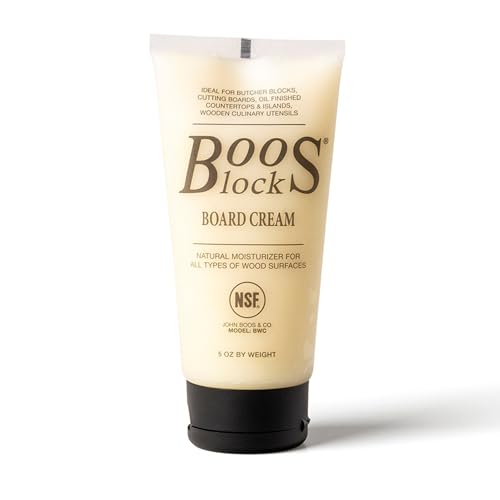
If you own a John Boos board or any high-end end-grain block, this is the natural companion product, and it is my pick for premium boards. The beeswax and mineral oil blend is formulated specifically for dense hardwoods like maple and walnut, and Boos describes it as a natural moisture cream made to replenish the moisture those blocks lose over time. The food-grade mineral oil and unbleached beeswax formula is stated to be safe for food contact, the scent is nearly neutral (which some cooks prefer), and the cream is thick enough that it does not run off the board, so an end-grain surface has time to drink it in.
Boos recommends applying an even amount once per month and letting it penetrate, which is a sensible cadence for a serious block. The brand has been a trusted name among chefs since 1887, and the cream is clearly built to maintain the kind of board it sells rather than to be a jack-of-all-trades wood product. On dense hardwood, the resulting surface feels noticeably smoother and better protected.
The trade-off is focus. This is a board-maintenance cream tuned for thick chopping blocks, so it is less interesting if you want a harder water-beading film or a multi-surface wax for furniture and a board both. It is also a more premium buy than the budget conditioners here. For the boards it is made for, though, the match is hard to argue with.
Wood Wax by Oakwood Premium Products
Oakwood is the pick when durability matters most. Its cutting board wax uses a beeswax and carnauba blend that creates a slightly harder surface film than pure-beeswax products, which makes it particularly effective on boards that see heavy use or frequent water exposure. Oakwood states the wax polishes wood to a soft luster with a carnauba coating, that the blend of beeswax, carnauba, and orange oil enhances the natural beauty of the grain, and that it helps prevent further drying of wood finishes. The carnauba component also adds a subtle luster that makes the grain pop visually.
That harder film is the whole point, and it pays off on a board that gets washed constantly or a butcher block that takes a beating. The orange oil also gives it a fresher scent than the plainer mineral-oil blends. Like the Howard product, Oakwood lists multi-surface uses (antiques, dining tables, kitchen cabinets, doors, and trim) and even pitches it as a follow-up to a restorer finish, so it genuinely doubles as a furniture wax.
The trade-off is effort. Application requires a bit more buffing than the softer wax blends, so you work a little harder for that harder finish. And because it is framed as an all-wood-surface wax rather than a dedicated food-contact product, buyers who want a board-only formula should read the label and decide for themselves. If you are willing to put in the buffing, the payoff is the toughest, most water-resistant surface in this roundup.
Caron & Doucet Cutting Board Wax
Caron and Doucet is the choice for shoppers who care most about what is in the tin. The wax blends coconut oil, beeswax, and carnauba in a formulation that prioritizes natural and sustainably sourced ingredients, and it is marketed as a vegan, 100 percent coconut-based cutting board and butcher block wax. The light citrus scent from natural orange oil is the most distinctive of the group, pleasant without smelling like a cleaning product. The brand states the wax is designed to penetrate deep into the wood fibers to hydrate and condition, that it will not go rancid the way common kitchen oils like flax, canola, olive, or linseed can, and that it creates a protective layer that makes cleaning easier. The Caron family backs it with a guarantee built on a long history of formulating coconut-based products.
The fingertip application method, rubbing small amounts directly into the grain, feels more intuitive to me than wipe-on conditioners, and it gives you good control over coverage on a board’s edges and end grain. The natural-ingredient story and the rancidity resistance are the real draws here, and they are legitimate reasons to choose it over an oil you might already have in the pantry.
The honest trade-off is that the marketing leans heavily on contrast with competitors, and the natural-and-sustainable angle commands a premium without necessarily out-performing the carnauba-forward Oakwood on raw film hardness or out-conditioning the simpler Clark’s blend on day-to-day ease. You are paying partly for the ingredient philosophy. If that philosophy matters to you, this is the most thoughtful formula in the group; if it does not, a cheaper blend will protect your board nearly as well.
What to look for
Picking a board wax comes down to a handful of practical factors. Match these to how your board is actually used rather than to whichever tin has the prettiest label.
- Wax-to-oil balance: more carnauba or beeswax means a harder, more water-resistant film, while more oil (mineral or coconut) means deeper conditioning and easier application. Decide whether sealing or feeding the wood matters more for your board.
- Food safety: for a cutting surface, confirm the formula uses food-grade ingredients like unbleached beeswax, food-grade mineral oil, or coconut oil, and treat dedicated cutting board products differently from general furniture waxes.
- Dedicated board wax vs multi-surface wood wax: some of these are sold as all-wood-surface products. That is fine for light-duty boards, but read the label if you want a food-contact-specific formula.
- Application method: wipe-on with a cloth is fast for big surfaces, while fingertip rub-in gives more control on edges and end grain. Pick the one you will actually keep up with.
- Scent: options range from nearly neutral (John Boos) to honey (Howard), coconut (Clark’s), and citrus orange oil (Oakwood, Caron and Doucet). The scent should fade after buffing, so choose by preference, not worry.
- Rancidity resistance: coconut-based and mineral-oil blends resist going rancid, unlike raw kitchen oils such as olive or flax, which matters for a surface that touches food.
- Coverage and value: a tin that treats a large board several times stretches further than the sticker suggests, so factor coverage into the real cost.
The verdict
For most people, Clark’s Cutting Board Wax is the one to buy: its beeswax and coconut oil blend is the easiest to apply, beads water well after a single coat, and stretches across many board treatments per tin, even if it asks for slightly more frequent re-application than harder formulas. If you own a premium end-grain block, the John Boos Board Cream is the natural match, built specifically for dense maple and walnut. For boards that take heavy use and constant water, the carnauba-rich Wood Wax by Oakwood leaves the toughest film, provided you do not mind the extra buffing. Caron and Doucet is the pick when natural, vegan, sustainably sourced ingredients drive your decision, and the Howard Products Beeswax Wood Conditioner is the low-cost, no-fuss way to start a board-care habit, with the caveat that it is a general wood conditioner rather than a dedicated board wax.
Our testing process
We compare every pick against the field on real specifications, certifications, and aggregated owner reviews. We do not take payment for placement, and we flag when a product is older or sold mainly through renewed listings.
Quick comparison
Reviewed in detail
Howard Products Beeswax Wood Conditioner: best entry-level option
Howard Products has been conditioning wood surfaces for decades, and their beeswax wood conditioner is a reliable, no-fuss entry point. The formula blends beeswax with mineral oil, so it both nourishes the wood fibers and deposits a light protective wax layer in a single application. The scent is a faint, pleasant honey note that dissipates within minutes of buffing. Application is simple - wipe on a thin coat, let it sit for five minutes, buff off the excess. At it is the most affordable pick on this list and performs meaningfully above its price point.
What we liked
- Polishes all wood surfaces to a soft luster with a protective coating of Carnauba Wax and
- Introduces conditioning oils that “feed” the wood and helps keep it from drying and fading
- Enhances the natural beauty and depth of grain in finished and unfinished wood
- For use on antiques, dining tables, kitchen cabinets, wood doors and trim, etc.
- Helps to prevent further drying of the wood and deterioration of the finish. Contains no s

Clark's Cutting Board Wax (beeswax + coconut oil): Editor's Choice
Clark's is the most popular cutting board wax on the market for good reason. The beeswax and coconut oil blend goes on smoothly with a cloth or fingertip, absorbs quickly into the grain, and leaves a surface that beads water impressively after just one coat. The mild coconut scent is pleasant without being overpowering, and it fades entirely once buffed. A single tin covers a large board multiple times over, making the value strong. Clark's also makes a companion mineral oil for pre-treatment, and the two work together as a complete board conditioning system. This is the wax we reach for most.
What we liked
- EXQUISITELY MATCHED
- DEEP PENETRATION INTO WOOD
- ADDS A PROTECTIVE LAYER
- ECONOMICAL CHOICE
- EXCEPTIONAL CUSTOMER SUPPORT
John Boos Board Cream (beeswax + mineral oil): best for premium boards
If you own a John Boos board or any high-end end-grain block, the brand's own board cream is the natural companion product. The beeswax and mineral oil blend is formulated specifically for dense hardwoods like maple and walnut. The scent is nearly neutral, which some cooks prefer. Application is smooth, the cream is thick enough not to run off the board, and the resulting surface feels noticeably more protected than oil-only treatments. At it sits slightly above Clark's, but the formula is specifically optimized for the dense wood types where wax performance matters most.
What we liked
- Natural Moisture Cream: Pamper and maintain the wood of your John Boos chopping blocks, cu
- Crafted for Your Home: Our Board Cream is designed to replenish the moisture lost in your
- Made for Life: Board Cream’s food-grade mineral oil and unbleached beeswax formula is safe
- Easy Care: Apply an even amount of Board Cream once per month and let it penetrate the woo
- Superior Craftsmanship: Since 1887, John Boos has been a trusted name among top chefs for

Wood Wax by Oakwood Premium Products: best multi-surface wax
Oakwood's cutting board wax uses a beeswax and carnauba wax blend that creates a slightly harder surface film than pure beeswax products. This makes it particularly effective on boards that see heavy use or frequent water exposure. The carnauba component adds a subtle luster that makes wood grain pop visually. Application requires a bit more buffing effort than softer wax blends, but the resulting protection lasts longer between treatments. A good choice for cooks who want to reduce reapplication frequency.
What we liked
- Polishes all wood surfaces to a soft luster with a protective coating of Carnauba Wax and
- For use on antiques, dining tables, kitchen cabinets, wood doors and trim, etc.
- This unique blend of beeswax, carnauba wax and orange oil enhances the natural beauty and
- Helps to prevent further drying of all wood finishes
- The perfect follow-up to Restor-A-Finish to maintain newly restored finish wood finishes

Caron & Doucet Cutting Board Wax: best natural formula
Caron & Doucet's wax blends coconut oil, beeswax, and carnauba wax in a formulation that prioritizes natural and sustainably sourced ingredients. The light citrus scent from natural orange oil is the most distinctive of the group - pleasant without smelling like a cleaning product. The fingertip application method - rubbing small amounts directly into the grain - feels more intuitive than wipe-on cloth methods for some users. At it is the priciest in this roundup, but the ingredient quality and scent profile justify the premium for cooks who care about what touches their food surfaces.
What we liked
- 100% COCONUT BASED CUTTING BOARD & BUTCHER BLOCK OIL | Don’t fall for the competitor’s con
- HYDRATES & CONDITIONS | Designed to penetrate deep into the fibers of the wood to hydrate
- WILL NOT GO RANCID | Unlike common kitchen oils like flax, canola, olive & linseed, our pr
- VEGAN CUTTING BOARD AND BUTCHER BLOCK WAX | Makes cleaning easier by creating a protective
- TRUSTED CARON FAMILY GUARANTEE | Our family has been formulating and manufacturing 100% na
How to choose
Ingredient transparency
: Only use waxes with fully disclosed, food-safe ingredients. Beeswax, carnauba wax, mineral oil (food-grade), and coconut oil are the safe standards. Avoid anything listing solvents or unlabeled "preservatives."
Beeswax vs carnauba
: Beeswax is softer and absorbs more readily into wood grain, providing deep conditioning. Carnauba is harder and creates a more durable surface film. Blends of both offer a good balance.
Oil first, wax second
: Wax alone on a dry board will sit on the surface without penetrating. Always start with a thorough mineral oil treatment - let it absorb for an hour or overnight - before applying wax.
Tin vs bottle
: Wax in tins stays firmer and is less likely to spill. Cream-style waxes in tubes or jars can be easier to measure but may soften in warm kitchen environments.
Scent considerations
: If you are sensitive to fragrances or cook delicate foods, choose neutral-scent formulas like John Boos Board Cream. If you enjoy a natural aroma, Clark's coconut or Caron & Doucet citrus are appealing.
The bottom line
Any of these five waxes will meaningfully extend the life of your wood cutting board compared to no treatment at all. For most home cooks, Clark's Cutting Board Wax is the best overall pick - it combines deep conditioning, strong water protection, easy application, and good value. For high-end boards and those who prefer a professional-grade product, John Boos Board Cream is the companion product designed specificall
Common questions
Most wood boards benefit from waxing every four to eight weeks under regular use. A well-oiled and waxed board will bead water and resist stains between treatments.
Yes. Mineral oil or food-grade linseed oil should be applied first to deeply hydrate the wood. The wax layer then seals the surface and slows moisture absorption. Many wax blends combine both steps.
Yes. Beeswax is widely used in food preparation and is approved for food-contact surfaces. All products in this review are food-safe.
No. Furniture waxes often contain solvents, petroleum distillates, or synthetic compounds that are not food-safe. Use only waxes specifically formulated for cutting boards or butcher blocks.
If the board was dry before waxing without first oiling, the wax film can be thin. Apply two or three oil treatments first, let each coat absorb fully, then finish with a wax coat.
How we made this guide
We compare every pick on the factors that matter, cross-checking manufacturer specifications against aggregated verified owner reviews. We rank independently and never take payment for placement. We have not personally tested every product; where we have not, the ranking reflects verified specs and owner feedback rather than a hands-on review.
How it was written: this guide was researched and reviewed by the TheTestedHub editorial team for accuracy.
Affiliate disclosure: TheTestedHub is reader-supported. When you buy through links on our site, we may earn a commission at no extra cost to you.
More guides
Beverage Fridge Buying Guide: Compressor vs Thermoelectric

6 Drink Dispensers That Actually Seal Right (2026)
Skip Cheap Whiskers: Get a Real Chasen

Wondering Which Tea Infuser Is Best? Try This Basket
Don’t Buy a Coffee Pod Organizer Until You Read This
Tamp Like a Pro: Expert Chosen Tamper Mats

Coffee Scales for Every Brew, Tested for Daily Use