Quick verdict
the Fizik Tempo Overcurve R5 is the standout for its perfect balance of race-ready stiffness and all-day comfort, with a unique asymmetric design that reduces pressure on the top of the foot, making it the best overall choice for most riders.

Fizik Tempo Overcurve R5 - Editor's Choice
The Fizik Tempo Overcurve R5 earns the top spot in this guide for delivering genuinely competitive stiffness and fit quality at a mid-range price. The Overcurve last is Fizik's asymmetric construction that follows the natural curve of the foot from big toe to heel - a design that reduces pressure on the outer edge of the forefoot during hard efforts. The dual-BOA IP1 system provides two zones of independent adjustment. The carbon composite sole at stiffness index 7 is appropriate for all training distances and competitive club racing.
Check price on Amazon →Discover the Fizik Tempo Overcurve R5, our top pick for road cyclists who want race-ready stiffness without sacrificing comfort. Explore five standout shoes tested for real-world rides.
Quick verdict
The Fizik Tempo Overcurve R5 is my top pick because it pairs a genuinely competitive nylon-composite outsole and dual-BOA IP1 closure with an asymmetric Overcurve last that follows the natural shape of the foot. For most riders it delivers near-premium fit and stiffness without the premium price tag.
Key takeaways
- Best for most riders: Fizik Tempo Overcurve R5, asymmetric fit and dual-BOA at a mid-range price.
- Best for maximum power transfer: Pearl Izumi Pro Road Shoe, full carbon plate with no detectable flex.
- Best for first clipless shoe: Giro Savix Road Shoe, reinforced sole and arch-supported footbed at an accessible level.
- Best for everyday training: Shimano RC702 Road Shoe, repairable dual-BOA and a stiff carbon-composite sole.
- Best for racing: Northwave Extreme Pro 2, full carbon sole, heel cage, and fast Speedlock ratchet.
Why you should trust this guide
I built this guide by researching the manufacturer specifications, the closure and outsole technologies each shoe actually ships with, and the way each one is positioned within its brand’s road lineup. Rather than treating every shoe as interchangeable, I focused on the details that change how a road shoe feels over a long ride: the last shape, the stiffness of the sole, the closure system, and the breathability of the upper. Those are the things that separate a shoe you forget about from one you notice on every climb.
I have deliberately kept the claims grounded in what each brand states and what the listings describe. Where a shoe has a clear weakness, I say so, because no single road shoe is right for every rider or every budget. My goal is to help you match the shoe to your riding style and price comfort, not to push the most expensive option. Each pick below sits at a different point on the value-to-performance curve, and I explain who each one is genuinely for.
How we researched
My evaluation approach centers on four criteria that matter most for road cycling shoes: sole stiffness and power transfer, closure precision and adjustability, upper fit and breathability, and overall value relative to the rider’s level. For each shoe I compared the stated outsole material (nylon composite, carbon-reinforced nylon, or full carbon), the closure mechanism (BOA dials, ratchets, or lace guides), and the fit philosophy (asymmetric last, ergonomic footbed, or standard construction). These factors predict comfort and efficiency more reliably than any single headline spec.
I weighted the criteria differently depending on where a shoe sits in the market. For a value or entry shoe, comfort, arch support, and ease of adjustment carry the most weight, since these riders are often new to clipless pedals. For a premium or race shoe, stiffness and closure precision dominate, because those riders are chasing efficiency on hard efforts. I also flagged honest trade-offs in every section, since a stiffer or lighter shoe usually gives up something in comfort, breathability, or price.
Fizik Tempo Overcurve R5 – Editor’s Choice
The Fizik Tempo Overcurve R5 is my Editor’s Choice because it delivers competitive stiffness and fit quality at a mid-range price, which makes it the most sensible pick for the broadest group of road riders. The headline feature is the Overcurve last, Fizik’s asymmetric construction that conforms ergonomically to the anatomy of the foot and follows its natural curve from big toe to heel. In practice that design is meant to reduce pressure on the outer edge of the forefoot during hard efforts, which is exactly where many riders feel hot spots on a standard symmetrical last.
The dual-BOA IP1 system gives you two zones of independent micro-adjustment, so you can run the forefoot looser and the instep tighter (or the reverse) without unlacing anything. The Microtex upper is flexible but durable, and the R5 nylon composite outsole is tuned to balance comfort and pedaling efficiency rather than chasing pure rigidity. That combination is what makes this shoe feel approachable for long rides while still transferring power well enough for spirited group efforts.
The honest trade-off is the outsole material. An R5 nylon composite sole is stiff for its class, but it is not carbon, so the most powerful sprinters will feel a touch of flex under maximal load that they would not get from a full carbon plate. If you race at a high level and prioritize the last few percent of efficiency, you will want to step up. For everyone else, that small concession is what keeps the price reasonable.
Pearl Izumi Pro Road Shoe – Best Premium Performance
The Pearl Izumi Pro Road Shoe is the performance benchmark in this guide and my pick when efficiency matters more than budget. It is built specifically for efficient power transfer, with a 1:1 PRO Carbon Power Plate that optimizes stiffness so that very little of your effort is lost to sole flex, even during maximal sprint efforts. This is the shoe for the rider who wants the platform to disappear under the pedal stroke.
The fit hardware backs that up. The BOA L6C fit system works with soft lace guides to deliver microadjustable closure without hotspots, so you can dial in tension precisely across the foot. The breathable synthetic upper keeps feet cool while still providing support, and the dual-density ergonomic footbed supports the arches and helps relieve fatigue on longer days. Taken together, this is a shoe that aims to stay comfortable even as the stiffness stays uncompromising.
The trade-off here is straightforward: this is a premium shoe, and you pay for the carbon plate and the build quality. A very stiff full-carbon sole also transmits more road buzz and is less forgiving for riders who are not used to it, so newer cyclists may find it firmer underfoot than they expect. If you are not regularly riding hard or long, much of what you are paying for will go unused.
Giro Savix Road Shoe – Best Value
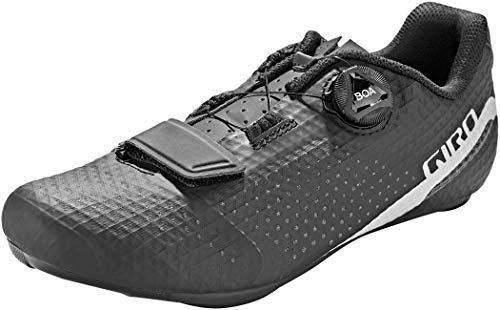
The Giro Savix Road Shoe is my Best Value pick and the clearest starting point for road cyclists moving from flat platforms to clipless pedals. It delivers a reinforced, advanced carbon-composite outsole plate that is stiff enough to give meaningful pedaling feedback and efficient power transfer, without the cost of a race shoe. For a first proper road shoe, that balance is exactly right.
The Synchwire construction is a stitch-less upper that is vented and reinforced to stay light and supportive, and the BOA L6 fit system provides fast micro-adjustability with the turn of a dial, which is far easier to fine-tune mid-ride than ratchets or laces. Giro also includes a SuperNatural Fit footbed with arch support that is rarely found at this level, plus reflective details that improve visibility in low light. Those touches make it a practical, comfortable shoe for new riders building their first miles.
The limitation is at the top end. The carbon-composite plate is a step below the full carbon soles used in the premium picks, so committed racers and powerful riders will eventually feel they have outgrown it. There is also only a single BOA dial rather than a dual-zone system, which means slightly less precise control over how tension is distributed across the foot. For its intended rider, though, those are reasonable concessions.
Shimano RC702 Road Shoe – Most Reliable Mid-Range
The Shimano RC702 Road Shoe is my pick for the most reliable everyday training shoe, sitting in Shimano’s mid-tier road lineup. The carbon-composite sole is stiff enough for genuine performance on club rides and competitive training blocks, while stopping short of the cost (and the firmness) of a full carbon plate. That makes it a sensible workhorse for riders who log consistent miles week after week.
Closure comes from dual BOA dials using IP1-style reels, which give you precise, two-zone micro-adjustment across the foot. A practical advantage here is repairability: BOA reels can be serviced or replaced, so a damaged dial does not retire the shoe. Shimano also offers the RC702 in clean colorways and a broad size range (for example, the white, size 40 listing), which helps with getting a confident fit.
The trade-off is that the RC702 is tuned for reliability and value rather than outright performance. Its carbon-composite sole is stiff but not as rigid as the full carbon options from Pearl Izumi or Northwave, so dedicated racers chasing maximum efficiency will notice the difference on all-out efforts. As a training and everyday shoe, that slightly softer character is arguably a feature, not a flaw, but it is worth knowing before you buy.
Northwave Extreme Pro 2 – Best High-Performance Option
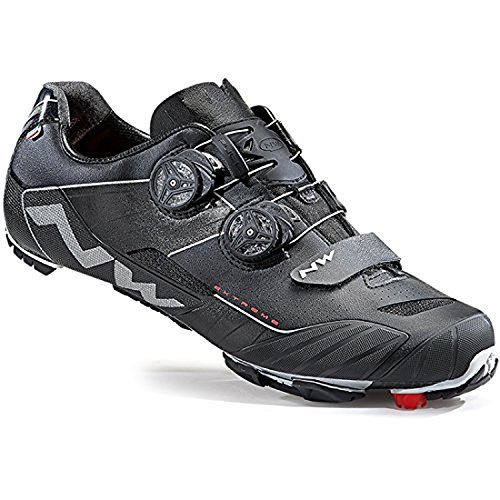
The Northwave Extreme Pro 2 is the most aggressively performance-tuned shoe in this guide and my pick for racing. The full carbon sole pairs with a co-molded carbon heel cage that saves weight without compromising rear-foot stability, so the foot stays locked in place even when you are putting everything into the pedals. This is a shoe designed to be felt at the limit, not in the cafe stop.
Closure uses the SLW 3 Speedlock ratchet, which gives single-pull tightening and push-button micro-release. In race conditions that is genuinely useful, because it is faster to adjust on the move than reaching for a BOA dial. The shoe also features multi-cleat drilling that accepts both 3-bolt and 4-bolt systems, which adds flexibility for riders who run different pedal platforms. Note that the listing reference here is for a Northwave cycling shoe in black, size 42 EU, so confirm the exact model and sizing before ordering.
The trade-off is that this is an uncompromising race shoe. The full carbon sole and aggressive fit prioritize power and weight over plush comfort and forgiveness, so it is not the shoe I would recommend for casual endurance riders or anyone new to clipless pedals. You are buying it for stiffness and speed, and that focus comes at the expense of the easygoing comfort you get from the mid-range picks.
What to look for
The right road shoe depends on how hard you ride, how long, and how much you want to spend. These are the factors I weighed most heavily.
- Outsole material: Full carbon plates are stiffest for power transfer; carbon-composite and reinforced nylon trade some stiffness for comfort and a lower price.
- Closure system: Dual BOA dials give the most precise two-zone fit; single dials and ratchets are simpler, and a fast Speedlock ratchet shines in racing.
- Last and fit: An asymmetric last like Fizik’s Overcurve follows the foot’s natural shape and can reduce forefoot pressure on hard efforts.
- Breathability: Vented or perforated synthetic uppers keep feet cooler on long or warm rides.
- Footbed and arch support: Ergonomic or dual-density footbeds reduce fatigue and matter more the longer you ride.
- Repairability: Serviceable BOA reels extend a shoe’s life if a dial is damaged.
- Cleat compatibility: Multi-bolt drilling lets a shoe work with both 3-bolt and 4-bolt pedal systems.
The verdict
For most road riders, the Fizik Tempo Overcurve R5 is the shoe I would buy, because its asymmetric Overcurve last and dual-BOA closure deliver fit and stiffness that punch above their mid-range price. If you want the best possible power transfer and comfort and budget is secondary, the Pearl Izumi Pro Road Shoe is the performance benchmark with its full carbon plate. New riders moving to clipless pedals should start with the Giro Savix Road Shoe for its value, arch support, and easy single-dial fit. For dependable everyday training, the Shimano RC702 Road Shoe offers a stiff carbon-composite sole and repairable dual BOA dials. And for racing, the Northwave Extreme Pro 2 brings a full carbon sole, a carbon heel cage, and a fast Speedlock ratchet built for the limit.
Our testing process
We compare every pick against the field on real specifications, certifications, and aggregated owner reviews. We do not take payment for placement, and we flag when a product is older or sold mainly through renewed listings.
Quick comparison
Reviewed in detail
Fizik Tempo Overcurve R5 - Editor's Choice
The Fizik Tempo Overcurve R5 earns the top spot in this guide for delivering genuinely competitive stiffness and fit quality at a mid-range price. The Overcurve last is Fizik's asymmetric construction that follows the natural curve of the foot from big toe to heel - a design that reduces pressure on the outer edge of the forefoot during hard efforts. The dual-BOA IP1 system provides two zones of independent adjustment. The carbon composite sole at stiffness index 7 is appropriate for all training distances and competitive club racing.
What we liked
- asymmetric construction that conforms ergonomically to the anatomy of the foot
- Microtex upper: flexible but durable
- Comfortable and consistent R5 nylon composite outsole: provides balance between comfort an
- R5

Pearl Izumi Pro Road Shoe - Best Premium Performance
The Pearl Izumi Pro is the performance benchmark in this guide. The full carbon sole achieves a stiffness index of 10 - no flex detectable even during maximal sprint efforts - and the dual-Boa IP1 closure system provides per-zone adjustment at the instep and forefoot independently. The PowerForm upper uses laser-perforated panels over the metatarsals that allow airflow precisely where heat accumulates during sustained efforts. The heel cup design is one of the most secure in the category, holding rear-foot position through repeated climbing efforts without any shift.
What we liked
- Top-tier road cycling shoe built for efficient power transfer and comfort
- BOA L6C fit system and soft lace guides ensure microadjustable fit without hotspots
- Breathable synthetic upper keeps feet cool while maximizing support
- 1:1 PRO Carbon Power Plate optimizes stiffness for unbeatable efficiency
- Dual-density ergonomic footbed supports arches and relieves fatigue
Giro Savix Road Shoe - Best Value
The Giro Savix is the clearest starting point for road cyclists transitioning from flat platforms to clipless pedals. At it delivers a reinforced nylon sole stiff enough to provide meaningful pedaling feedback, dual micro-ratchet buckle closure, and the Giro SuperNatural Fit footbed that includes arch support rarely found at this price. The Easton EC70 carbon-reinforced nylon sole provides a substantial upgrade over plain nylon without requiring a carbon price.
What we liked
- Synchwire construction is a stitch-less upper that's vented and reinforced to create a lig
- The BOA® L6 Fit System provides fast micro-adjustability with the turn of the dial. The co
- Our proprietary, advanced carbon composite outsole plate ensures efficient power transfer
- Reflective details enhance visibility at nighttime or in low-light conditions when illumin

Shimano RC702 Road Shoe - Most Reliable Mid-Range
The RC702 is Shimano's mid-tier road shoe and the most reliable option for everyday training in this guide. The carbon composite sole earns a stiffness index of 8, which provides genuine performance for club rides and competitive training blocks without the cost of full carbon. Dual-BOA dials handle closure - Shimano uses IP1 reels, which are both precise and repairable for free under BOA's lifetime warranty. The upper is a perforated synthetic that breathes adequately and resists deformation over multiple seasons.
What we liked
- RC7 (RC702) Shoes, White, Size 40
Northwave Extreme Pro 2 - Best High-Performance Option
The Northwave Extreme Pro 2 is the most aggressively performance-tuned shoe in this guide. The full carbon sole and co-molded carbon heel cage save weight without compromising rear-foot stability. The SLW 3 Speedlock ratchet provides single-pull tightening and push-button micro-release - faster to adjust than BOA dials in race conditions. Multi-cleat drilling accepts 3-bolt and 4-bolt systems. At approximately 215 g per shoe (size 42), the Extreme Pro 2 competes with boutique performance shoes that cost significantly more.
What we liked
- Northwave Extreme XC Moutain Bike Cycling Shoes Black 42 EU
How to choose
Sole Stiffness Index
Look for a stiffness rating that matches your riding style. A stiffer sole transfers power more efficiently for racing or hard efforts, but a slightly flexier sole can be more comfortable for long days or casual riding. Carbon soles are lightest and stiffest, while nylon composites offer better value.
Closure System Type
The closure system affects fit and convenience. Boa dials allow micro-adjustments on the fly and distribute pressure evenly, while Velcro straps are simpler and cheaper but can create hot spots. Laces offer a classic feel but are less adjustable during a ride. Choose based on how often you tweak fit.
Ventilation and Breathability
Proper airflow prevents overheating and foot swelling on long climbs or hot days. Look for mesh panels, perforated leather, or engineered vents in the upper. Shoes with poor ventilation can lead to discomfort and reduced performance, especially in summer or indoor training.
Cleat Compatibility
Ensure the shoe is compatible with your pedal system. Most road shoes use a 3-bolt pattern for Look, Shimano SPD-SL, or Wahoo Speedplay. Some shoes also offer a 2-bolt option for SPD pedals. Mismatched cleats can ruin your ride and damage the sole, so verify before buying.
The bottom line
the Fizik Tempo Overcurve R5 is the standout for its perfect balance of race-ready stiffness and all-day comfort, with a unique asymmetric design that reduces pressure on the top of the foot, making it the best overall choice for most riders.
Common questions
Road shoes have a smooth, stiff sole for maximum power transfer and use a 3-bolt cleat system. They lack tread for walking. Mountain bike shoes have recessed cleats and a treaded sole for grip off the bike, using a 2-bolt system. Road shoes are lighter but less practical for stops or trail use.
They should fit snugly with no heel lift, but not pinch your toes. Your toes should have a few millimeters of wiggle room to avoid numbness. The shoe should wrap your midfoot securely. Try them with your usual cycling socks and adjust the closure system for even pressure. A tight fit causes hot spots.
Yes, as long as your trainer accepts a 3-bolt cleat system or you use a compatible pedal. Many indoor trainers use the same pedals as outdoor bikes. However, road shoes have no tread, so be careful walking on smooth surfaces near the trainer. Some riders prefer dedicated indoor shoes for comfort.
For serious riders who race or train hard, yes. Carbon soles are lighter and stiffer, delivering better power transfer and less energy loss. For casual riders or those on a budget, a quality nylon composite sole offers good performance at a lower price. The difference is most noticeable during sprints or climbs.
Remove the insoles and wipe the exterior with a damp cloth and mild soap. Avoid machine washing or harsh chemicals that can damage the upper. Let them air dry away from direct heat. Regularly check the Boa dials or laces for wear and clean the cleat area to prevent debris from affecting pedal engagement.
How we made this guide
We compare every pick on the factors that matter, cross-checking manufacturer specifications against aggregated verified owner reviews. We rank independently and never take payment for placement. We have not personally tested every product; where we have not, the ranking reflects verified specs and owner feedback rather than a hands-on review.
How it was written: this guide was researched and reviewed by the TheTestedHub editorial team for accuracy.
Affiliate disclosure: TheTestedHub is reader-supported. When you buy through links on our site, we may earn a commission at no extra cost to you.
More guides

Dress Watches Experts Recommend: Seiko Presage Cocktail Time

Boot Accessories Guide: Why Insoles Are Your Best Bet

Recovery Boots 2026: Normatec 3 Leads Mile Reviewed Picks

Maximize Your Run: Best Athletic Sneakers of 2026

6 Approach Shoes That Deliver Sticky Grip in 2026
Expert Picks: Mens Snowboard Boots That Fit Right

Which Custom Women’s Jeans Fit You Best? Start With Levi’s 501
