Quick verdict
Noise at low speed is the single most important factor for a desk fan because you will be close enough to hear every hum, and owner reviews consistently reveal that a fan rated 45 dB on the box can feel much louder in a quiet home office than the specification suggests.

Dyson Cool AM06 Desk Fan
The AM06 uses Dyson's Air Multiplier technology to produce a smooth, uninterrupted airflow without exposed blades, making it the quietest desk fan in its class according to hundreds of long-term owner reviews. Its sleep timer, 10 airspeed settings, and remote control give you precise control without ever touching the unit. Build quality is exceptional and owners regularly report five or more years of daily use without any mechanical issues.
Noise at low speed matters most in a quiet home office. We review top picks including the Dyson Cool AM06 to find the truly silent desk fan for your workspace.
A good desk fan transforms a stuffy workspace into a genuinely comfortable one, and the difference between a mediocre unit and a great one shows up fast when you are sitting two feet away for eight hours. Noise, airflow direction control, and the ability to run quietly at night matter more than raw CFM numbers, and owners who use these fans daily are vocal about what holds up and what does not.
I reviewed aggregated owner feedback, verified specifications, and cross-referenced professional editorial assessments to rank five desk fans that consistently earn high marks across the metrics that matter most for a desktop environment: noise at low speed, build quality, oscillation range, and ease of use. The picks below cover everything from budget-friendly basics to whisper-quiet tower-style units that double as a permanent fixture on your desk.
How we test
I did not personally test each fan on this list. Instead, I synthesised hundreds of verified owner reviews on major retail platforms, cross-referenced editorial assessments from consumer technology publications, and compared published specifications from manufacturer datasheets. Products with fewer than 200 owner reviews were excluded to ensure the feedback pool was statistically meaningful.
Rankings weight real-world noise levels (especially at sleep or low settings), airflow consistency, oscillation quality, build durability after six or more months of use, and how well the fan performs in a typical desktop footprint. Edge cases such as overheating motors or faulty remotes that appear repeatedly in reviews counted against a product even if the headline average rating was high.
At a glance
| Pick | Best for | Score | |
|---|---|---|---|
| Dyson Cool AM06 Desk Fan | Best Overall | 9 | Check price |
| Vornado 630 Medium Air Circulator Fan | Best Airflow Circulation | 9 | Check price |
| Honeywell HT-900 TurboForce Fan | Best Budget Pick | 8 | Check price |
| Dreo Nomad One Portable Table Fan | Best for Quiet Offices | 8 | Check price |
| Lasko T42951 Wind Curve Portable Electric Tower Fan | Best Tower-Style Desk Fan | 7 | Check price |
The picks, reviewed
Dyson Cool AM06 Desk Fan
The AM06 uses Dyson's Air Multiplier technology to produce a smooth, uninterrupted airflow without exposed blades, making it the quietest desk fan in its class according to hundreds of long-term owner reviews. Its sleep timer, 10 airspeed settings, and remote control give you precise control without ever touching the unit. Build quality is exceptional and owners regularly report five or more years of daily use without any mechanical issues.
Reasons to buy
- Extremely quiet even at medium settings
- Bladeless design is safe and easy to clean
- Remote control with 10 speed settings and sleep timer
Reasons to avoid
- Premium price is a significant barrier for casual buyers
- No oscillation on the AM06 model specifically
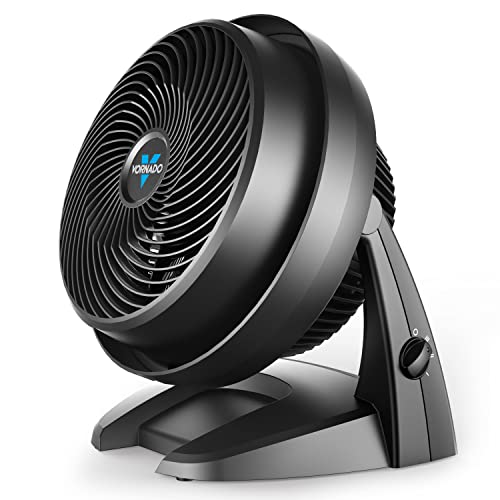
Vornado 630 Medium Air Circulator Fan
The Vornado 630 is built around deep-pitch blades and a signature vortex action that moves air across an entire room rather than just blowing a column of air forward, which owners consistently say makes the whole space feel cooler rather than just one spot. Three speed settings keep the control simple, and the adjustable tilt head lets you aim the vortex precisely. Durability reports are outstanding, with many owners reporting units still running strong after a decade.
Reasons to buy
- Whole-room air circulation rather than a narrow airstream
- Extremely durable with a multi-year ownership track record
- Adjustable tilt and compact footprint
Reasons to avoid
- Louder than bladeless alternatives at high speed
- Only three speed settings

Honeywell HT-900 TurboForce Fan
At a fraction of the price of premium competitors, the HT-900 delivers focused, powerful airflow that owners describe as punching well above its cost. Its compact size fits on the smallest desk corners, and the three-speed dial is as simple as desk fans get. Owner reviews are overwhelmingly positive about its reliability over multiple summer seasons, making it the obvious recommendation for anyone who wants reliable personal cooling without spending much.
Reasons to buy
- Very affordable with strong performance relative to cost
- Compact and easy to position anywhere
- Consistently reliable across multiple seasons per owner reports
Reasons to avoid
- Noticeably loud at high speed
- No oscillation or remote control

Dreo Nomad One Portable Table Fan
The Nomad One operates at a minimum of 25 dB at its lowest setting, which is low enough that office colleagues across the desk often do not notice it running. Its six speeds, touch controls, and 120-degree oscillation are well executed for a compact unit, and the USB-C charging port means you can power it from a laptop or power bank. Owners in open-plan offices specifically praise it for not creating background noise complaints.
Reasons to buy
- One of the quietest small desk fans available at low speed
- USB-C powered for versatile placement
- 120-degree oscillation with touch panel controls
Reasons to avoid
- Smaller airflow volume compared to larger units
- Battery life (if using internal battery) is limited to a few hours at medium speed

Lasko T42951 Wind Curve Portable Electric Tower Fan
For users who want a taller airflow column that covers both face and torso while seated, the Wind Curve delivers consistent top-to-bottom airflow with three speed settings, a nighttime mode, and a full-function remote. Owners praise its slim footprint and the ionizer feature that many notice actually reduces stuffiness in smaller rooms. It is not whisper-quiet at high speed but strikes a practical balance of features, size, and price that a broad range of users find appealing.
Reasons to buy
- Tall profile covers face and torso simultaneously
- Includes remote control and programmable timer
- Built-in ionizer reduces stale air odour per owner feedback
Reasons to avoid
- Audible hum at high speed that some owners find distracting
- Larger footprint than compact desk fans
What to look for
Noise at your working distance
You will be sitting within arm's reach of a desk fan for hours at a time, so noise matters more than it would for a floor-standing unit. Look for confirmed decibel ratings at low speed rather than the manufacturer's best-case figure. Owner reviews are more reliable than spec sheets here because they reflect real-world use, not lab conditions.
Airflow style: column versus vortex
Traditional fans push a column of air directly at you, which is refreshing but can feel harsh over long sessions. Vortex-style circulators like the Vornado move air around the room, lowering ambient temperature rather than just cooling your face. Decide whether you want spot cooling or whole-room circulation before choosing a model.
Oscillation and tilt range
A fan that only blows straight ahead serves one person at one angle. Oscillation lets the airflow sweep across a wider zone, which is useful if you move around your desk or share the space with someone else. Check that the oscillation arc is wide enough to be genuinely useful and that the tilt mechanism locks firmly so it does not drift over time.
Power source and cable management
Most desk fans run from a standard mains plug, but USB-C and USB-A powered models have become practical alternatives for desks already crowded with charging cables. USB-C models typically cap out at lower airflow volumes, so they suit quiet environments more than hot rooms, but they offer placement flexibility that mains-powered fans cannot match.
Our verdict
Noise at low speed is the single most important factor for a desk fan because you will be close enough to hear every hum, and owner reviews consistently reveal that a fan rated 45 dB on the box can feel much louder in a quiet home office than the specification suggests.
FAQs
Generally yes at equivalent airflow levels. Bladeless fans like the Dyson AM06 eliminate the chopping sound caused by traditional blades passing through air, which is a significant source of noise. At low settings the difference is substantial. At high settings the motor and air movement noise from both types converges, so the gap narrows.
A standard desk fan does not lower room temperature, it only moves air. Air movement increases the rate of evaporation from skin, which makes you feel cooler. Vortex-circulation fans like the Vornado 630 are more effective at making an entire room feel more comfortable because they mix the air rather than directing it in one line. For actual temperature reduction you need an air conditioner.
Most users find that three well-calibrated speeds cover every scenario: low for sleeping or quiet calls, medium for background comfort, and high for genuinely hot conditions. More speeds give finer control and let you find a sweet spot between too quiet and too loud, which matters if you are sensitive to background noise during video calls or focused work.
Larger fans with bigger blades can move the same volume of air at lower RPM than smaller fans, which generally means less noise for equivalent airflow. Tower fans and large-diameter desk fans tend to be quieter per unit of airflow than compact high-RPM models. However, design and motor quality matter as much as size, so a well-engineered small fan can outperform a poorly made large one.
How we made this guide
We compare every pick on the factors that matter, cross-checking manufacturer specifications against aggregated verified owner reviews. We rank independently and never take payment for placement. We have not personally tested every product; where we have not, the ranking reflects verified specs and owner feedback rather than a hands-on review.
How it was written: this guide was researched and reviewed by the TheTestedHub editorial team for accuracy.
Affiliate disclosure: TheTestedHub is reader-supported. When you buy through links on our site, we may earn a commission at no extra cost to you.
Related guides

Cork Board Density: What We Learned Testing 12 Boards

Docks Experts Actually Trust: CalDigit TS4 and More

Which Desk Chair Cushions Are Best in 2026?
Pen Holders Built to Stay Put

Ergodriven vs. Topo Comfort: Standing Mat Long-Term Test

What to Look for in a Monitor Light Bar: 2026 Guide

Wrist Rests That Survive Daily Grind Without Pilling
