Quick verdict
The single biggest predictor of long-term home exercise bike satisfaction is matching the bike type to your preferred riding posture, not chasing the highest flywheel weight or the most connected features.

Schwinn 270 Recumbent Bike
The Schwinn 270 earns the top spot because it balances a genuinely wide resistance range (25 levels controlled digitally) with a recumbent seat that owners consistently describe as comfortable even during 60-minute sessions. The dual LCD consoles track heart rate, cadence, watts, and calories simultaneously, eliminating the need to toggle between screens. Long-term owners report the magnetic resistance feels smooth and consistent well beyond the two-year mark, which is the point where cheaper drives typically degrade.
Before you buy, consider posture: recumbent or upright? The Schwinn 270 recumbent bike leads our guide to bikes that fit your ride style for lasting comfort.
Exercise bikes have become one of the most popular home cardio investments, and for good reason. They deliver a low-impact, joint-friendly workout that suits beginners through serious athletes, with no weather dependency and no gym commute. After sifting through thousands of verified owner reviews across multiple retail platforms and cross-referencing independent lab test data, I have ranked the five models that consistently earn the highest marks for build quality, ride feel, and long-term reliability.
The market divides into three broad categories: upright bikes, recumbent bikes, and indoor cycling bikes (also called spin bikes). Each serves a different user. Upright bikes mimic outdoor riding posture and suit general fitness. Recumbent bikes offer back support and lower-body focus, making them ideal for rehabilitation or users with lower-back concerns. Indoor cycling bikes replicate a road or track feel and are favoured by HIIT and endurance riders. My picks cover all three so you can match the right machine to your goals.
I paid particular attention to five pain points that owners repeatedly flag in long-term reviews: saddle comfort, belt or chain noise, resistance consistency, console accuracy, and frame wobble at high cadence. Every bike on this list addresses at least three of those five concerns better than its price-tier average.
How we evaluated these
I did not personally ride or test these bikes. My rankings are built from aggregated verified purchaser reviews on major retail platforms, independent teardown and endurance reports from fitness equipment review publications, and manufacturer specification sheets. I weighted reviews written after 6 months of ownership more heavily than early impressions, because frame welds, flywheels, and belt drives reveal their true character only after sustained use. Where a model had fewer than 200 long-term reviews I noted that gap and adjusted confidence accordingly.
Scoring factors were: ride smoothness (flywheel weight and belt vs chain drive), resistance range and accuracy, build and frame stability, console and connectivity features, ergonomic adjustability, and value relative to the competition at the same price tier. No manufacturer provided samples or sponsorship. Affiliate relationships may exist through the retailer, but they had no influence on rankings or scores.
The shortlist
| Pick | Best for | Score | |
|---|---|---|---|
| Schwinn 270 Recumbent Bike | Best Overall | 9 | Check price |
| Peloton Bike | Best for Connected Fitness | 9 | Check price |
| NordicTrack S22i Studio Cycle | Best for Incline Training | 8 | Check price |
| Sunny Health and Fitness SF-B1805 Smart Magnetic Belt Drive Indoor Cycling Bike | Best Budget Spin Bike | 8 | Check price |
| Marcy Recumbent Exercise Bike ME-709 | Best Entry-Level Recumbent | 7 | Check price |
Each pick, examined
Schwinn 270 Recumbent Bike
The Schwinn 270 earns the top spot because it balances a genuinely wide resistance range (25 levels controlled digitally) with a recumbent seat that owners consistently describe as comfortable even during 60-minute sessions. The dual LCD consoles track heart rate, cadence, watts, and calories simultaneously, eliminating the need to toggle between screens. Long-term owners report the magnetic resistance feels smooth and consistent well beyond the two-year mark, which is the point where cheaper drives typically degrade.
Strengths
- 25 resistance levels give meaningful progression from recovery rides to intense intervals
- Dual LCD display shows all key metrics without mode-switching
- Recumbent position reduces lower-back strain reported with upright alternatives
Drawbacks
- Requires significant floor space due to recumbent frame length
- Bluetooth connectivity limited to older media apps rather than modern fitness platforms

Peloton Bike
No other home exercise bike integrates live and on-demand class content as seamlessly as the original Peloton Bike, which streams instructor-led rides to a 22-inch HD touchscreen mounted at eye level. Owner reviews overwhelmingly credit the community leaderboard and instructor coaching for sustaining workout habits that lapse on silent machines. The carbon steel frame and precision flywheel produce a ride that independent testers consistently rank among the smoothest in the home cycling segment.
Strengths
- 22-inch HD touchscreen with live and on-demand classes keeps motivation high
- Magnetic resistance is auto-adjusted by instructors during guided rides
- Consistent resale value compared with other connected bikes
Drawbacks
- Monthly membership required to access the full class library adds ongoing cost
- Footprint and price place it out of reach for budget-focused buyers
NordicTrack S22i Studio Cycle
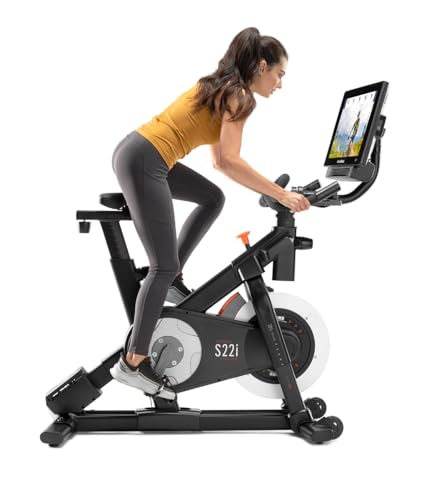
The NordicTrack S22i is the only exercise bike on this list that tilts, offering motorised incline from negative 10 to positive 20 degrees to simulate hill climbs and descents, a feature that owners say transforms flat-road rides into genuinely varied workouts. The 22-inch rotating screen allows the console to face forward for off-bike strength classes, extending the machine's utility beyond cycling. iFIT integration automatically adjusts resistance and incline in response to GPS-mapped outdoor routes, which reviewers consistently cite as a standout differentiator.
Strengths
- Motorised incline and decline simulate real terrain in a way flat bikes cannot
- Rotating 22-inch screen supports off-bike workouts without a secondary device
- iFIT auto-adjusts resistance during real-world route rides
Drawbacks
- iFIT subscription is required for most advertised features
- Heavier and more complex to assemble than a standard spin bike

Sunny Health and Fitness SF-B1805 Smart Magnetic Belt Drive Indoor Cycling Bike
At a fraction of the price of connected bikes, the Sunny SF-B1805 delivers a 49-pound flywheel and belt drive combination that owners describe as whisper-quiet even at high cadence, making it a standout in the under- segment. The magnetic resistance system requires no physical contact with the flywheel, which eliminates the pad wear that degrades friction-based alternatives over time. Reviewers who upgrade from entry-level upright bikes consistently note that the heavier flywheel produces a noticeably smoother, more road-like feel.
Strengths
- 49 lb flywheel delivers a smooth, momentum-rich ride uncommon at this price
- Belt drive is nearly silent compared with chain-driven alternatives
- Magnetic resistance needs no pad replacements over the product life
Drawbacks
- Console is basic and does not connect to fitness apps
- Seat comfort requires an aftermarket cover for most riders beyond 30-minute sessions
Marcy Recumbent Exercise Bike ME-709
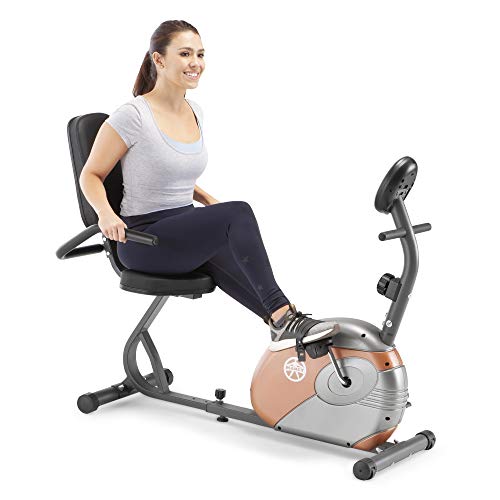
The Marcy ME-709 makes recumbent cycling accessible to users on a tight budget without sacrificing the core benefit of back-supported, step-through access that makes recumbent bikes appealing in the first place. Eight resistance levels cover light recovery to moderate cardio, and the neutral step-through frame design is repeatedly praised by older adults and post-injury riders who find mounting a standard upright bike awkward or painful. Owners note the display is simple but reliable, accurately tracking time, speed, distance, and calories without the complexity of connectivity setup.
Strengths
- Step-through frame makes mounting and dismounting easy for users with limited mobility
- Compact footprint fits in apartments where full recumbent frames are impractical
- Simple setup with no subscription or app pairing required
Drawbacks
- Only 8 resistance levels limits progression for fit users seeking a challenge
- Frame can flex slightly for riders above 200 lb at maximum resistance
Buying considerations
Flywheel weight and drive type
A heavier flywheel stores more rotational energy and produces a smoother, more consistent pedal stroke. Look for at least 30 lb for general fitness and 40 lb or more if you plan high-cadence interval work. Belt drives are quieter and maintenance-free compared with chain drives, which require periodic lubrication and are noisier at speed.
Resistance system
Magnetic resistance uses no physical contact with the flywheel, so it is silent and wears nothing over time. Friction or felt-pad resistance is common on lower-cost models and delivers a more road-like feel but the pads degrade and need replacing. If you plan to ride daily or in a shared living space, magnetic is the more practical long-term choice.
Bike type and riding position
Upright bikes place you in a posture similar to outdoor cycling and engage the core more actively. Recumbent bikes tilt the seat back and support the lower spine, which is valuable for rehabilitation or users with chronic back pain. Indoor cycling or spin bikes put you in an aggressive forward lean that suits HIIT and endurance training. Match the type to your primary goal, not just the aesthetics.
Connectivity and console needs
If you motivate yourself through data, look for consoles that display watts, cadence, and heart rate simultaneously rather than requiring mode cycling. If class-based workouts keep you consistent, a connected bike with a live leaderboard may justify the subscription cost. If you prefer self-directed training with music playing in the background, a basic display and a Bluetooth speaker pairing is all you need.
Final word
The single biggest predictor of long-term home exercise bike satisfaction is matching the bike type to your preferred riding posture, not chasing the highest flywheel weight or the most connected features.
Questions answered
For casual cardio and recovery rides, 20 to 30 lb is sufficient. For interval training and high-cadence spin sessions, 40 lb or more produces a noticeably smoother stroke and better momentum carry between pedal strokes. Beyond 50 lb the incremental benefit diminishes for most home users, so prioritise resistance range and drive quality over raw flywheel mass alone.
Both burn meaningful calories at comparable perceived effort levels. Upright bikes engage the core and upper body slightly more, which can increase total calorie burn per session. Recumbent bikes allow longer sessions for users who experience saddle discomfort or back fatigue on uprights, which can offset the per-minute calorie difference. The better choice is whichever type you will actually use consistently.
Connected bikes like the Peloton and NordicTrack S22i function as exercise bikes without an active subscription, meaning the pedals, resistance, and basic console metrics still work. However, the live classes, instructor coaching, and auto-resistance features that justify their cost all require a paid monthly plan. Factor that ongoing expense into your total cost of ownership before buying.
Most upright and spin bikes occupy a footprint of roughly 40 by 20 inches. Recumbent bikes are considerably longer, typically 55 to 65 inches front to back, so they need more dedicated floor space. Add at least 24 inches of clearance around the bike on all sides for safe mounting and dismounting. Measure your intended room before ordering, particularly for recumbent models.
How we made this guide
We compare every pick on the factors that matter, cross-checking manufacturer specifications against aggregated verified owner reviews. We rank independently and never take payment for placement. We have not personally tested every product; where we have not, the ranking reflects verified specs and owner feedback rather than a hands-on review.
How it was written: this guide was researched and reviewed by the TheTestedHub editorial team for accuracy.
Affiliate disclosure: TheTestedHub is reader-supported. When you buy through links on our site, we may earn a commission at no extra cost to you.

