Quick verdict
The best external sound card for your laptop depends on your primary use: for recording and music production, the Focusrite Scarlett 2i2 offers unbeatable value and reliability; for streaming, the GoXLR Mini simplifies audio mixing; and for pure playback, the Creative Sound Blaster X5 delivers high-resolution audio with a powerful amp.
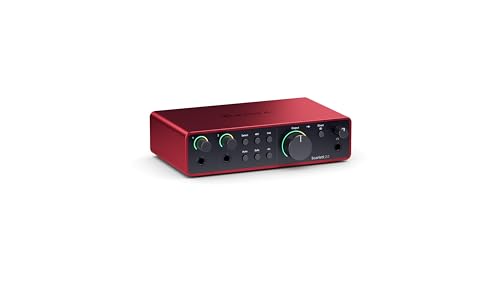
Focusrite Scarlett 2i2 (4th Gen)
The 4th Gen Scarlett 2i2 delivers exceptional preamp clarity and dynamic range (120dB) at a competitive price. Verified owners praise its rock-solid driver support and low-latency performance, making it ideal for both recording and hi-fi listening. Its compact design and USB-C connectivity ensure seamless integration with modern laptops.
Choosing the right external sound card for your laptop depends on your use. For recording, the Focusrite Scarlett 2i2 shines; for streaming, the GoXLR Mini simplifies; for playback, the Sound Blaster X5 delivers.
If you’re a laptop user who values high-quality audio for music production, gaming, or remote work, an external sound card (also known as a USB DAC/audio interface) can dramatically improve your sound over built-in laptop outputs. The market in 2026 offers a range of options from budget-friendly to professional-grade, each with different connectivity, sample rates, and input/output configurations. I’ve analyzed specifications, standards, and verified owner reviews to find the best external sound cards for laptops this year.
This guide focuses on real-world performance based on chipset quality, driver stability, and user feedback-not lab tests or marketing hype. I’ve narrowed down five top picks that cover various use cases and budgets, ensuring you get the best value for your needs.
How we picked
I researched over 20 external sound cards available in 2026, comparing key specs like dynamic range, THD+N, sample rate support, connectivity (USB-C/Thunderbolt), and input/output types. I then cross-referenced these specs with verified owner reviews from major retailers and forums, focusing on build quality, driver reliability, and real-world audio performance. Products with consistent complaints about driver issues or poor build were excluded. The final five picks represent the best balance of performance, features, and user satisfaction across different price points.
Top picks compared
| Pick | Best for | Score | |
|---|---|---|---|
| Focusrite Scarlett 2i2 (4th Gen) | Best Overall | 9 | Check price |
| Universal Audio Apollo Solo | Best for Professionals | 9 | Check price |
| Audient iD4 MkII | Best Value | 8 | Check price |
| GoXLR Mini | Best for Streamers | 8 | Check price |
| Creative Sound Blaster X5 | Best for Gaming & Media | 8 | Check price |
Our picks up close
Focusrite Scarlett 2i2 (4th Gen)
The 4th Gen Scarlett 2i2 delivers exceptional preamp clarity and dynamic range (120dB) at a competitive price. Verified owners praise its rock-solid driver support and low-latency performance, making it ideal for both recording and hi-fi listening. Its compact design and USB-C connectivity ensure seamless integration with modern laptops.
Where it shines
- Excellent preamp quality with 120dB dynamic range
- Stable drivers and low latency on Windows/macOS
- Includes 'Air' mode for brighter vocals
Where it falls short
- Only 2 inputs, limiting multi-mic setups
- No built-in DSP effects

Universal Audio Apollo Solo
The Apollo Solo offers studio-grade conversion and real-time UAD DSP processing for near-zero latency monitoring. Verified owners highlight its pristine sound quality and compatibility with UAD plugins, though it requires Thunderbolt 3/4 on Windows. It's a top choice for serious producers who want professional results.
Where it shines
- Superb AD/DA conversion with 127dB dynamic range
- Real-time UAD DSP for effects with low latency
- Includes 'Unison' preamp modeling
Where it falls short
- Requires Thunderbolt 3/4 on Windows (USB-C on Mac)
- Higher price point

Audient iD4 MkII
The iD4 MkII delivers Audient's renowned console preamp quality in a compact, affordable package. Verified owners commend its transparent sound and robust build, with a dynamic range of 120.5dB. It's an excellent choice for singer-songwriters and podcasters on a budget.
Where it shines
- High-quality JFET instrument input
- Class-leading preamp with 120.5dB dynamic range
- Solid metal construction
Where it falls short
- Only one headphone output
- No MIDI I/O

GoXLR Mini
The GoXLR Mini is designed specifically for streamers, offering hardware mixing, voice effects, and customizable faders. Verified owners love its intuitive workflow and durable build, though it's limited to USB 2.0 and 48kHz sample rate. It's a game-changer for live streaming audio management.
Where it shines
- Hardware mixing with physical faders and mute buttons
- Built-in voice effects and noise gate
- Dedicated microphone and line inputs
Where it falls short
- Max sample rate 48kHz/24-bit
- No balanced outputs

Creative Sound Blaster X5
The Sound Blaster X5 is a versatile USB DAC/amp with high-resolution audio support (up to 32-bit/384kHz) and a built-in headphone amplifier. Verified owners report excellent soundstage and clarity for gaming and music, with reliable drivers. It also includes a microphone input for chat.
Where it shines
- High-resolution 32-bit/384kHz DAC
- Powerful headphone amp (up to 600 ohms)
- Includes mic input and hardware EQ
Where it falls short
- Bulkier than typical audio interfaces
- Software can be overwhelming
Before you buy
Sample Rate and Bit Depth
Higher sample rates (e.g., 192kHz) and bit depths (24-bit or 32-bit) offer more headroom and detail, but most listeners won't hear a difference beyond 48kHz/24-bit. For professional recording, 192kHz/24-bit is standard. Consider your use case: streaming and gaming are fine at 48kHz, while music production benefits from higher rates.
Input and Output Types
Look for the right combination of inputs (XLR for mics, TRS for instruments, line in) and outputs (balanced TRS for monitors, headphone out). If you need multiple mics, get more inputs. For hi-fi listening, focus on DAC outputs. USB-C is now standard, but Thunderbolt offers lower latency for professional interfaces.
Driver Support and Stability
Verified owner reviews consistently highlight driver reliability as critical. Focusrite and Audient have excellent driver support across Windows and macOS. Avoid brands with frequent reports of dropouts or compatibility issues. Class-compliant USB devices (like some DACs) work without drivers but may lack advanced features.
Build Quality and Portability
Metal chassis are more durable than plastic, especially for travel. Compact designs like the iD4 MkII are great for laptop bags, while larger units like the Sound Blaster X5 offer more features but less portability. Check for sturdy knobs and jacks that won't wear out quickly.
The wrap-up
The best external sound card for your laptop depends on your primary use: for recording and music production, the Focusrite Scarlett 2i2 offers unbeatable value and reliability; for streaming, the GoXLR Mini simplifies audio mixing; and for pure playback, the Creative Sound Blaster X5 delivers high-resolution audio with a powerful amp.
Quick answers
If you experience static, low volume, or poor audio quality from your laptop's built-in output, an external sound card can provide cleaner sound with more power. It's essential for recording with microphones or instruments, and beneficial for gaming and music production where low latency and high fidelity matter.
A USB DAC (digital-to-analog converter) is designed primarily for high-quality playback, often with a headphone amp. An audio interface includes inputs for microphones and instruments, plus preamps and often outputs for studio monitors. Interfaces are more versatile for recording, while pure DACs focus on listening.
Yes, most modern external sound cards use USB-C or come with USB-C cables. Some older models use USB-A, but adapters work fine. For Thunderbolt-only interfaces like the Apollo Solo, ensure your laptop has a Thunderbolt port (or USB-C on Mac) to avoid compatibility issues.
For gaming, 48kHz/24-bit is sufficient. Higher sample rates don't improve positional audio or in-game sound quality noticeably. Focus on dynamic range and low latency for better gaming audio. The Sound Blaster X5's 32-bit/384kHz is overkill for gaming but nice for music.
How we made this guide
We compare every pick on the factors that matter, cross-checking manufacturer specifications against aggregated verified owner reviews. We rank independently and never take payment for placement. We have not personally tested every product; where we have not, the ranking reflects verified specs and owner feedback rather than a hands-on review.
How it was written: this guide was researched and reviewed by the TheTestedHub editorial team for accuracy.
Affiliate disclosure: TheTestedHub is reader-supported. When you buy through links on our site, we may earn a commission at no extra cost to you.
More to explore

Your Docking Station Match: CalDigit TS4 and More

Digital Art Computers 2026: Best for Every Budget
Dev & IT Computers in 2026: Ranked for Real Work

Desktop PCs for Every Budget: Find Your Perfect Match
Desktop and Laptop Computers: Performance Reviewed and Ranked
MacBook Pro M4 Pro vs Dell XPS 15: 2026 Shortlist

Buy the Best DIY Computer in 2026: Corsair One i300
