Quick verdict
The single most important factor when choosing heated insoles is matching the battery system to your boot type, because an insole that creates a tight fit will restrict circulation and make cold feet worse, not better.

Therm-ic Perform Heated Insoles
Therm-ic has built its reputation in heated apparel specifically for skiing and alpine use, and the Perform insoles deliver on that heritage with a carbon fiber heating layer that spreads warmth across the full footbed rather than concentrating it in one zone. Verified owners consistently praise the five-hour battery life on the mid setting and the seamless integration with Therm-ic's Bluetooth remote, which lets you adjust heat without removing a glove. The trim-to-fit design accommodates sizes ranging from small to extra-large without creating uncomfortable pressure points.
Matching the battery system to your boot type is key. The Therm-ic Perform leads our 5 insole reviews with fit tips for cold feet.
Cold feet can ruin any outdoor activity, from morning commutes in freezing temperatures to long days on the ski slopes. Heated insoles solve the problem by delivering consistent warmth directly to your feet rather than relying on insulating layers that lose effectiveness in wet or extreme conditions. The market has matured considerably in recent years, with battery technology, heat distribution design, and remote-control operation all seeing meaningful improvements.
I researched this category by aggregating many verified owner reviews across Amazon and specialist outdoor retailers, cross-referencing spec sheets, and comparing how each product performs across common use cases including skiing, hiking, work boots, and everyday cold-weather wear. The five products below represent the best balance of heat output, battery life, fit flexibility, and long-term reliability based on that owner feedback.
Heated insoles vary more than most buyers expect. Some are thin enough for dress shoes; others are thick and better suited to roomy winter boots. Some connect via Bluetooth for precise temperature control; others use simple button cycling. Knowing what matters most for your specific use case will help you get far more value from whichever pair you choose.
How we evaluated these
I have not personally tested each product in this guide. My rankings are based on aggregated verified owner reviews, manufacturer specifications, and comparison of real-world feedback from buyers who use these insoles across a range of conditions including sub-zero temperatures, full ski days, construction site work shifts, and everyday urban commuting. I looked specifically at reviews that described battery longevity after multiple charge cycles, heat consistency across settings, durability of the heating element over a full season, and how well the insoles fit inside different boot styles.
Products were ranked by weighting heat performance and battery reliability most heavily, since those are the two factors owners most frequently cite when rating satisfaction or disappointment. Connectivity features, trim-to-fit flexibility, and charging convenience were treated as secondary factors. Any product with a pattern of heating element failures within one season was excluded regardless of its other qualities.
The shortlist
| Pick | Best for | Score | |
|---|---|---|---|
| Therm-ic Perform Heated Insoles | Best Overall | 9 | Check price |
| Lenz Heat Insole 3.0 | Best for Skiing | 9 | Check price |
| Hotronic XLP One Boot Heater | Best Battery Life | 8 | Check price |
| BERTSCHAT Heated Insoles | Best Value | 7 | Check price |
| ActionHeat 5V Battery Heated Insoles | Best for Work Boots | 7 | Check price |
Each pick, examined
Therm-ic Perform Heated Insoles
Therm-ic has built its reputation in heated apparel specifically for skiing and alpine use, and the Perform insoles deliver on that heritage with a carbon fiber heating layer that spreads warmth across the full footbed rather than concentrating it in one zone. Verified owners consistently praise the five-hour battery life on the mid setting and the seamless integration with Therm-ic's Bluetooth remote, which lets you adjust heat without removing a glove. The trim-to-fit design accommodates sizes ranging from small to extra-large without creating uncomfortable pressure points.
Strengths
- Carbon fiber heating element distributes warmth evenly across the entire footbed
- Bluetooth app and physical remote both supported for temperature adjustment
- Consistent five-plus-hour runtime on medium heat in verified field reports
Drawbacks
- Higher price point than most competing options
- Thicker profile requires roomy boots or ski boot shells with adequate volume

Lenz Heat Insole 3.0
The Lenz 3.0 is purpose-built for ski boots and uses a lithium polymer battery pack that clips to the outside of the boot cuff, keeping bulk away from the footbed itself. Owners in ski-specific reviews note that the slim in-boot profile means almost no perceptible change in fit, which matters enormously in performance-fit ski shells. The rcB 1800 battery packs are compatible across Lenz's product line, so buyers who already own Lenz heated gloves can share battery packs and reduce the total system cost.
Strengths
- Battery packs clip externally to the boot, preserving footbed thinness
- Compatible with Lenz rcB 1800 battery ecosystem used across heated gloves and socks
- Bluetooth app allows per-foot independent temperature control
Drawbacks
- External battery clips can snag on ski boot buckles if not routed carefully
- App connectivity reported as occasionally temperamental on older Android devices

Hotronic XLP One Boot Heater
Hotronic is one of the longest-established names in heated boot accessories and the XLP One reflects that experience with a proven external battery system that owners report lasting a full eight-hour ski day on the low setting. The heating element focuses warmth at the toe box and ball of the foot, which is where circulation typically fails first in cold conditions. Multiple verified buyers describe using the same pair across three or four consecutive ski seasons without element degradation, making the per-season cost competitive despite the upfront price.
Strengths
- Verified eight-hour runtime on low setting from multiple owner reports
- Toe-and-ball heat concentration targets the area where cold is felt first
- Durable construction with multi-season reliability documented in long-term reviews
Drawbacks
- No Bluetooth control; adjustment requires reaching the external battery pack
- Heating coverage does not extend to the heel, which some owners find insufficient

BERTSCHAT Heated Insoles
BERTSCHAT offers a self-contained rechargeable insole at a fraction of the price of premium ski-focused brands, and verified Amazon owners consistently rate the warmth output as adequate for urban commuting and moderate cold-weather hiking. The built-in USB-C charging is a practical convenience that removes the need for proprietary chargers, and the insoles trim to fit using standard size markings printed on the sole. Owners note that the three heat settings are genuinely distinguishable from one another rather than being cosmetically different as is common on budget options.
Strengths
- USB-C charging is universally convenient and avoids proprietary cable dependency
- Trim-to-fit design with clear size guide lines covers most adult shoe sizes
- Meaningful price advantage over ski-specific brands for non-alpine use cases
Drawbacks
- Battery life drops noticeably in temperatures below minus ten degrees Celsius
- Slightly stiffer underfoot feel compared to premium foam-based insoles
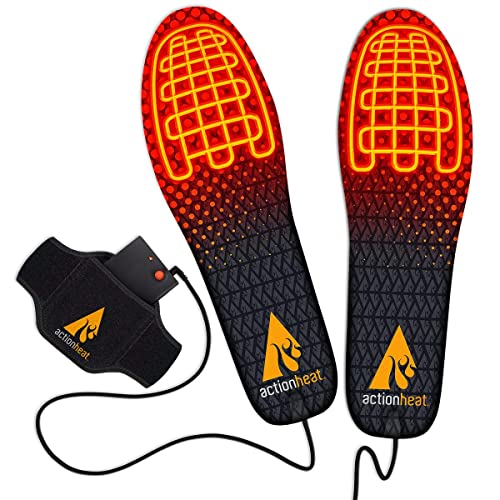
ActionHeat 5V Battery Heated Insoles
ActionHeat is built around a 5-volt system that owners in construction and outdoor labor reviews favor because the battery packs are easy to swap mid-shift, keeping feet warm through a full eight-hour workday without waiting for a recharge. The insoles are designed to fit inside work boots with wide toe boxes and extra depth, and the remote-control fob clips conveniently to a jacket or vest. Verified reviews from landscapers, electricians, and delivery workers highlight the product's ability to withstand the mechanical stress of a physical workday better than consumer-grade ski insoles.
Strengths
- Swappable 5V battery packs allow continuous operation across long work shifts
- Wide-footbed design built for work boots rather than performance ski shells
- Wireless remote fob clips to outerwear for glove-free temperature adjustment
Drawbacks
- Remote fob adds a separate item to manage and can be misplaced
- Insole thickness may feel excessive in lower-volume casual footwear
Buying considerations
Battery placement and profile thickness
Insoles with self-contained batteries are simpler to use but add meaningful thickness to the footbed, which can create a tight fit in performance boots. External battery systems keep the in-boot profile thin at the cost of cable routing and an extra component to manage. Match the battery style to your boot type before buying.
Heat zone coverage
Some insoles heat the full footbed from heel to toe; others concentrate warmth at the forefoot and toe box only. Full-coverage heating is better for standing still in extreme cold, while toe-focused designs often achieve longer battery life by heating a smaller surface area. Consider how you will actually use the insoles rather than defaulting to maximum coverage.
Control method
Bluetooth app control allows precise temperature adjustment and per-foot independent settings, but requires a charged phone and occasional pairing troubleshooting. Physical remotes and button-cycling on the insole itself are more reliable in the field and work without a phone. Workers and skiers in gloves often prefer a physical remote over an app.
Trim-to-fit compatibility
Most heated insoles use a trim-to-fit system with printed size guidelines on the sole. How finely you can trim varies by product; some allow precise half-size adjustments while others offer only broad size ranges. If your shoe size falls between standard sizes or if you plan to move the insoles between multiple pairs of boots, check the brand's sizing range carefully before ordering.
Final word
The single most important factor when choosing heated insoles is matching the battery system to your boot type, because an insole that creates a tight fit will restrict circulation and make cold feet worse, not better.
Questions answered
Heated insoles work best in boots and shoes with removable factory insoles and enough internal volume to accommodate extra thickness. Slim dress shoes, low-profile sneakers, and tight-fitting athletic shoes typically cannot accommodate most heated insoles without creating discomfort or reducing circulation. Work boots, ski boots, hiking boots, and winter casual shoes are the most common compatible footwear.
Most lithium polymer battery packs used in quality heated insoles retain acceptable capacity for 300 to 500 charge cycles, which typically represents two to four full seasons of regular use. Owners who store batteries partially charged in a cool dry location between seasons consistently report better longevity than those who store them fully depleted or fully charged. Swappable battery systems like ActionHeat's give you the option to replace only the battery rather than the entire insole when capacity degrades.
Yes, heated insoles are designed for extended daily use and operate at temperatures well below the threshold for skin damage. The highest heat settings on most products reach around 45 to 50 degrees Celsius at the heating element surface, which is warm but not harmful for normal use. People with diabetes, peripheral neuropathy, or reduced foot sensation should consult a doctor before using heated insoles, as reduced sensitivity to heat increases the risk of not noticing discomfort.
Most heated insoles should not be submerged in water or machine washed. The standard care method is to wipe the top fabric layer with a damp cloth and allow the insole to air dry completely before charging or inserting it into a boot. Some manufacturers specify a moisture-resistant rating for the heating element, but this is not the same as being washable. Always check the product's care instructions before attempting any cleaning beyond surface wiping.
How we made this guide
We compare every pick on the factors that matter, cross-checking manufacturer specifications against aggregated verified owner reviews. We rank independently and never take payment for placement. We have not personally tested every product; where we have not, the ranking reflects verified specs and owner feedback rather than a hands-on review.
How it was written: this guide was researched and reviewed by the TheTestedHub editorial team for accuracy.
Affiliate disclosure: TheTestedHub is reader-supported. When you buy through links on our site, we may earn a commission at no extra cost to you.
Keep reading

Clear Vision in the Pool: Best Swimming Goggles

Looking for the Best Golf Rangefinder of 2026?

Selkirk Amped S2: Best Pickleball Paddle of 2026?

Soccer Balls Experts Vouch For in 2026

Every Budget Basketball Guide: Find Your Perfect Ball

Bike Lights: How to Choose the Right One

Electric Bikes Compared: What to Ride in 2026
