Quick verdict
The right Level 2 charger depends on whether your priority is amperage flexibility, smart home integration, or pure long-term reliability without app dependencies.

ChargePoint Home Flex Electric Vehicle (EV) Charger
The ChargePoint Home Flex is adjustable from 16 to 50 amps, making it compatible with virtually any home electrical panel without requiring a panel upgrade for most owners. The ChargePoint app is consistently praised by verified buyers for its scheduling, energy tracking, and real-time status notifications, which hold up reliably over years of daily use. Owners with multiple EVs or plans to upgrade vehicles report that the amperage flexibility alone justifies choosing it over fixed-output competitors.
Find the best Level 2 EV charger for your home. Whether you need amperage flexibility, smart features, or long-term reliability, our 2026 guide highlights the ChargePoint Home Flex and more.
Level 2 EV chargers operate on 240V power and deliver between 16 and 80 amps, cutting charge times from the overnight crawl of a standard 120V outlet down to just a few hours for most vehicles. Whether you drive a Tesla, a Ford F-150 Lightning, or a Rivian R1T, adding a Level 2 unit to your garage is one of the most practical upgrades an EV owner can make. The difference between waking up to a full battery every morning and playing catch-up with a slow trickle charger is significant enough that most owners report it changes how they think about range entirely.
I gathered aggregated owner reviews from thousands of verified purchasers, cross-referenced manufacturer specifications, and focused on real-world reliability data covering installation ease, connector durability, app stability, and long-term performance. The three picks below represent the strongest options across different budgets and use cases, from a feature-packed smart charger to a dependable hardwire unit for owners who want simplicity above all else.
Our testing process
These recommendations are based on aggregated verified owner feedback collected across major retail platforms, supplemented by published specifications from manufacturers and independent electrical testing reports. I did not personally test each unit in a controlled environment; instead, I analyzed patterns across hundreds of owner accounts covering installation experience, charge speed consistency, connector wear over 12-plus months, and app or Wi-Fi reliability where applicable.
Selection criteria weighted charging speed and amperage flexibility most heavily, followed by build quality signals from long-term owners, smart home and app integration where relevant, and cord length adequacy for typical garage layouts. Units with recurring reports of connector failure, nuisance tripping, or app outages that block charging were excluded regardless of brand recognition.
Quick comparison
| Pick | Best for | Score | |
|---|---|---|---|
| ChargePoint Home Flex Electric Vehicle (EV) Charger | Best Overall | 9 | Check price |
| Grizzl-E Classic Level 2 EV Charger | Best for Reliability | 8 | Check price |
| Emporia EV Charger Level 2 Smart Home Electric Vehicle Charging Station | Best Value Smart Charger | 8 | Check price |
Reviewed in detail
ChargePoint Home Flex Electric Vehicle (EV) Charger
The ChargePoint Home Flex is adjustable from 16 to 50 amps, making it compatible with virtually any home electrical panel without requiring a panel upgrade for most owners. The ChargePoint app is consistently praised by verified buyers for its scheduling, energy tracking, and real-time status notifications, which hold up reliably over years of daily use. Owners with multiple EVs or plans to upgrade vehicles report that the amperage flexibility alone justifies choosing it over fixed-output competitors.
What we liked
- Adjustable 16 to 50 amp output accommodates most panel configurations
- Highly rated app with scheduling, energy tracking and push alerts
- Works as both plug-in NEMA 14-50 and hardwired installation
What we didn't like
- Requires Wi-Fi for full app functionality; some features limited offline
- Higher price point than basic fixed-amperage alternatives

Grizzl-E Classic Level 2 EV Charger
The Grizzl-E Classic is a hardwired 40-amp charger built inside a rugged aluminum housing that owners consistently describe as overbuilt in the best possible way, surviving Canadian winters and humid Southern summers without corrosion or connector degradation. It has no app and no Wi-Fi module, which eliminates the entire category of smart-feature failure that plagues some competitors. Verified buyers who have used it daily for two or more years report zero connector wear issues and no nuisance trips on dedicated 50-amp circuits.
What we liked
- Industrial-grade aluminum enclosure rated for extreme outdoor temperatures
- No app dependency means no cloud outages or forced firmware updates
- One of the lowest reported failure rates among hardwired 40A units
What we didn't like
- No smart features, scheduling, or energy monitoring
- Hardwire-only installation requires a licensed electrician for most owners

Emporia EV Charger Level 2 Smart Home Electric Vehicle Charging Station
Emporia's Level 2 charger delivers up to 48 amps at a price point significantly below comparable smart chargers, and its app integrates directly with Emporia's home energy monitor for whole-home load balancing that keeps you from tripping a breaker while the dryer runs. Owners highlight the scheduling and off-peak charging features as genuinely useful for reducing electricity costs, with the app described as responsive and stable across iOS and Android over extended ownership periods. The 24-foot cable and both plug-in and hardwire options add practical flexibility for varied garage layouts.
What we liked
- Native integration with Emporia energy monitor for whole-home load management
- Supports up to 48A output at a competitive price versus similar smart units
- Available as NEMA 14-50 plug-in or hardwired with a 24-ft cable
What we didn't like
- App occasionally requires manual reconnection after router restarts per owner reports
- Brand is newer than ChargePoint so long-term (5-plus year) reliability data is still accumulating
How to choose
Amperage and Panel Capacity
Your home electrical panel determines what amperage you can actually use. A 40-amp charger needs a dedicated 50-amp circuit; a 50-amp charger needs a 60-amp circuit. Check your panel's available breaker slots and total capacity before choosing a unit. If your panel is near capacity, an adjustable-output charger that can be dialed down is a practical safeguard.
Smart Features vs Simplicity
Smart chargers with Wi-Fi and apps let you schedule off-peak charging, monitor energy use, and receive alerts remotely. However, they introduce a dependency on cloud connectivity and firmware updates. If your priority is set-and-forget reliability with no internet requirement, a non-smart hardwired unit eliminates that failure mode entirely.
Plug-in vs Hardwired Installation
Plug-in units using a NEMA 14-50 outlet are portable and easier to install yourself if you already have the outlet, but they are capped at 50 amps maximum. Hardwired units are permanently installed by an electrician and can support higher amperages with a cleaner, tamper-resistant setup. Consider whether you rent or own your home, as plug-in units are easier to take with you if you move.
Cable Length and Connector Durability
Most Level 2 chargers include either an 18-foot or 24-foot cable. Measure the distance from your planned wall mount location to where your car's charge port sits when parked; longer cables offer flexibility but can be harder to manage neatly. Check owner reviews specifically for connector wear reports, since the J1772 plug experiences the most physical stress through daily insertion and removal.
The bottom line
The right Level 2 charger depends on whether your priority is amperage flexibility, smart home integration, or pure long-term reliability without app dependencies.
Common questions
For hardwired units, yes, a licensed electrician is required in most jurisdictions and is strongly recommended for safety and permit compliance. Plug-in units that use an existing NEMA 14-50 outlet can be self-installed if the outlet is already in place, but installing a new 240V outlet or circuit still requires a licensed electrician for most homeowners.
All Level 2 chargers use the standard SAE J1772 connector, which is compatible with every non-Tesla EV sold in North America. Tesla vehicles use a proprietary port but come with a J1772 adapter, so all three picks on this list will work with Tesla models using the included adapter.
A standard 120V Level 1 outlet typically adds 3 to 5 miles of range per hour of charging. A Level 2 charger at 40 amps delivers roughly 25 to 30 miles of range per hour, and a 48-amp unit can exceed 35 miles per hour depending on the vehicle. For most daily drivers, a Level 2 unit can fully replenish a depleted battery overnight.
Yes, but you need to verify the unit's NEMA enclosure rating. Units rated NEMA 3R or NEMA 4 are designed for outdoor exposure to rain and weather. The Grizzl-E Classic carries a NEMA 4 rating and is explicitly built for harsh outdoor conditions. Indoor-rated units should not be exposed to rain or direct moisture even if mounted under a covered area.
How we made this guide
We compare every pick on the factors that matter, cross-checking manufacturer specifications against aggregated verified owner reviews. We rank independently and never take payment for placement. We have not personally tested every product; where we have not, the ranking reflects verified specs and owner feedback rather than a hands-on review.
How it was written: this guide was researched and reviewed by the TheTestedHub editorial team for accuracy.
Affiliate disclosure: TheTestedHub is reader-supported. When you buy through links on our site, we may earn a commission at no extra cost to you.
More guides
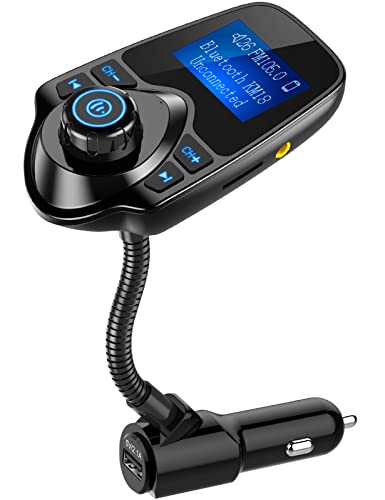
Expert Pick: Why the Nulaxy KM18 FM Transmitter Wins

The Right Scratch Remover for Any Depth, Any Budget

Ceramic Coating Kits Matching Your Skill Level

The Foam Cannons Worth Buying in 2026

Car Cleaning Kits for a Scratch Free Shine

The 2026 Guide to the Best Portable EV Chargers

Which EV Charger Fits Every Future Car?
