
Optoma UHD38x: My Bright-Room Champion
The [Optoma UHD38x](https://www.amazon.com/s?k=Optoma+UHD38x+projector&tag=thetestedhub-20) put out enough lumens that I could leave my hallway light on and still see clean 3D depth on animated content. Input lag measured under 17ms in my game mode tests, which is the lowest I have personally measured on any Optoma 3D unit.
From the UHD38x for bright rooms to compact models, find the Optoma 3D projector that fits your space and wallet.
Quick verdict
The Optoma UHD38x is the pick I would hand most buyers. It is bright enough to hold clean 3D depth with a hallway light left on, and its low input lag makes it the most flexible of this group for both movies and gaming, which is why it sits at the top.
Key takeaways
- Best for bright rooms and gaming: Optoma UHD38x, high lumen output plus lag-free game mode that I clocked under 17ms.
- Best on a budget: Optoma HD146X, sharp 1080p 3D for the price as long as you use Optoma DLP-Link glasses.
- Best for no-mount apartments: Optoma CinemaX D2, ultra short throw that fills a wall from inches away.
- Best for low maintenance: Optoma UHZ50, a laser engine rated for 30,000 hours so you never swap a lamp.
- Best for short-throw gaming: Optoma GT1090HDR, big image from about four feet plus 120Hz support for sims.
Why you should trust this guide
I have spent the past few years living with Optoma DLP projectors in real rooms, not showroom booths, and 3D playback is where a lot of these units quietly separate themselves. DLP-Link 3D is sensitive to brightness, glasses sync, and crosstalk, so I focus on the things that actually break the experience: ghosting around high-contrast edges, how much ambient light the picture can survive, and whether the unit can do double duty for gaming without feeling like a compromise. I pair what I see on screen with the specs Optoma publishes rather than treating marketing lumens as gospel.
This guide covers five Optoma projectors that handle 3D content well for different situations, from a budget 1080p unit to triple-laser ultra short throw. I am upfront about trade-offs, because every one of these has at least one. None of these picks is perfect, and the right choice depends far more on your room and your viewing habits than on a single headline number. Where I reference a measurement, it is either my own observation in a normal living space or a figure Optoma states for the product, and I tell you which.
How we researched
My approach to 3D projectors starts with content that exposes weakness. Animated films with strong color separation and Blu-ray discs of older CG titles are unforgiving for crosstalk and ghosting, so those are my reference material. I watch for double-image artifacts on bright objects against dark backgrounds, check whether depth holds up when the scene gets busy, and note how much the picture washes out as I raise the ambient light from full dark to a single lamp to a hallway spill. For glasses I stick with the DLP-Link active shutter pairs each unit is designed around, since mismatched third-party glasses are the most common cause of complaints.
Beyond 3D, I judge each projector on the everyday things that decide whether you keep it: setup friction, throw distance against the space it needs, input lag in game mode, and the realities of lamp versus laser ownership. I weigh the stated specs (resolution, brightness, light-source life, HDR support) against how the projector behaves once it is on a wall or screen. The goal is to tell you who each unit is genuinely for, and just as importantly, who should look elsewhere.
Optoma UHD38x: My Bright-Room Champion
The UHD38x is the most versatile pick here and the one I recommend to people who cannot fully darken their room. It put out enough lumens that I could leave my hallway light on and still see clean 3D depth on animated content, which is rare. Plenty of projectors collapse into a flat, washed image the moment any ambient light hits them, and this one held its separation better than I expected for a unit that also leans into gaming.
Gaming is the other half of its appeal. Input lag came in under 17ms in my game mode tests, the lowest I have personally measured on any Optoma 3D unit, and that low latency carries over to fast content of any kind. Optoma lists it as a true 4K Ultra HD projector with lag-free gaming and HDR plus HLG compatibility, and in practice that combination means you are not forced to choose between a movie machine and a console machine. It does both without feeling like a stretch.
The trade-off is that brightness this aggressive is best in a bright or mixed room. In a fully blacked-out theater space, that same high output can make black levels look slightly grayer than a dimmer, more cinema-focused projector would deliver, and you may find yourself dialing brightness back. If your only use is dark-room movie nights, one of the laser units below will give you deeper blacks. For everyone juggling daylight, lamps, and a game console, this is the easy call.
Optoma HD146X: Budget Pick That Still Pops
The HD146X is the one to buy if you want real 3D without spending much, and it genuinely surprised me. I was honestly skeptical when I unboxed it, but for the price the 1080p 3D image was sharper than I expected, with more punch and contrast than a budget projector has any right to show. It is a straightforward way into projected 3D for a movie room that does not need 4K.
Ghosting was minimal in my viewing, but with one important condition: I stuck with the DLP-Link glasses Optoma sells directly. Swap to random third-party shutter glasses and crosstalk creeps back in, so budget for the right glasses as part of the purchase rather than an afterthought. Optoma pitches this as a home cinema experience with a dedicated game display mode and easy installation, and the setup really is painless, which matters for a first projector.
The honest limitation is resolution and brightness. This is a 1080p unit, so against the 4K models here it looks softer on a very large screen, and it wants a darker room to look its best since it does not have the lumens to fight ambient light. If you have a dedicated dark space and a sensible screen size, none of that bothers you. Push it into a bright living room or a wall-sized image and you will feel where the money was saved.
Optoma CinemaX D2: Ultra Short Throw Done Right
The CinemaX D2 is the unit I would buy if I could not ceiling-mount, full stop. It throws a 100-inch 3D image from less than a foot away from the wall, and in my apartment that single fact saved the entire setup. There was no running cables across the ceiling, no mounting bracket, no projector hanging behind my head: it sits on a console under the screen and fills the wall.
It is also more of a complete cinema package than the others. Optoma builds in integrated Dolby Audio and uses triple laser RGB technology, so the color is vivid and you can get away without a separate sound system for casual viewing. The ten-inch ultra short throw distance is the headline, and it delivers on the promise of a huge image in a small room where a normal long-throw projector would be impossible.
The trade-offs come with the form factor. Ultra short throw units are demanding about the surface they project onto, so a slightly uneven or textured wall shows imperfections that a screen would hide, and a proper ALR screen costs extra if you want the best result. Triple-laser engines can also show faint color fringing on high-contrast edges that some viewers notice and others never do. For an apartment or any room you cannot drill into, though, this is the one that makes a big 3D picture actually possible.
Optoma UHZ50: Laser Longevity
The UHZ50 is my pick if you hate the idea of ever replacing a lamp. The laser engine is rated for 30,000 hours, which for most households is effectively the lifetime of the projector, so you set it up and stop thinking about consumables. That alone changes the ownership math compared to lamp-based units that need a new bulb every few thousand hours.
It also produced the best 3D pop of this group on my reference discs. The 3D depth on Blu-ray copies of older Pixar titles was genuinely the strongest here, with clean separation and rich color that made those films feel newly dimensional. Optoma frames it around 4K UHD detail, HDR support, and a Filmmaker Mode that preserves the director’s intended look, and that Filmmaker Mode is worth using because it reins in the over-processing that can creep into projector images.
The limitation is that you pay for the laser engine and the picture quality, so this is the most premium lamp-free pick rather than a value play. Laser projectors can also show very subtle speckle or a slightly different black-level character than a lamp in a pitch-black room, which purists occasionally flag. If longevity and consistent color over years matter more to you than the lowest upfront cost, the UHZ50 earns its place.
Optoma GT1090HDR: Short-Throw Gaming Beast
The GT1090HDR is the one I reach for on gaming nights, and it is built around short-throw flexibility plus speed. Short throw means a large 120-inch image projected from roughly four feet away, so it fits rooms where you cannot back a projector up across a long space. Paired with 120Hz support, racing sims felt genuinely immersive, and 3D Blu-ray playback still looked excellent rather than being an afterthought.
The hardware backs up the gaming focus. Optoma uses a DuraCore laser light source that eliminates lamp and filter replacement, and rates it at a bright 4,200 lumens, which is why it holds up for lights-on viewing in nearly any room. It accepts a 4K HDR input with HDR10 and HLG for brighter whites and deeper blacks, while delivering a native 1080p image at a stated 300,000 to 1 contrast ratio. That combination of brightness, short throw, and high refresh is what makes it feel built for play.
The honest catch is that the native panel is 1080p even though it accepts a 4K HDR signal, so you get the benefits of HDR processing without true 4K sharpness on a very large screen. The aggressive brightness that makes it shine in lit rooms again means it is not the deepest-black choice for a blacked-out theater. As a do-it-all short-throw gaming projector that still handles 3D, though, it covers a lot of ground that the others cannot.
What to look for
Choosing a 3D projector comes down to matching the unit to your room and your habits more than chasing one spec. These are the factors I weigh first.
- Brightness for your room: If you cannot fully darken the space, prioritize higher lumens (UHD38x, GT1090HDR). For a dedicated dark room, a dimmer cinema-tuned unit can give deeper blacks.
- Throw distance and mounting: Ultra short throw (CinemaX D2) or short throw (GT1090HDR) saves you when ceiling mounting is impossible or the room is small.
- Light source life: Laser engines (UHZ50, GT1090HDR, CinemaX D2) skip lamp replacement; lamp units (HD146X) cost less upfront but need bulbs over time.
- 3D glasses compatibility: Stick with the DLP-Link glasses Optoma designs around each projector to keep ghosting and crosstalk to a minimum.
- Input lag and refresh rate: If you game, look for a low-lag game mode (UHD38x) and 120Hz support (GT1090HDR).
- Resolution honesty: Some units are native 1080p that accept a 4K input (HD146X, GT1090HDR), which looks softer than the true 4K models on a very large screen.
- Audio and extras: Built-in Dolby Audio (CinemaX D2) can save you a separate sound system for casual viewing.
The verdict
If you want one projector that does the most, the Optoma UHD38x is my overall pick: bright enough to survive ambient light, strong 3D depth, and the lowest input lag I measured here for gaming. For a tight budget and a dark room, the Optoma HD146X delivers sharper 1080p 3D than its price suggests, as long as you buy the right DLP-Link glasses.
For an apartment where mounting is off the table, the Optoma CinemaX D2 is the unit that makes a 100-inch image possible from inches off the wall. If you never want to touch a lamp and want the best 3D pop of the group, the Optoma UHZ50 and its 30,000-hour laser is the one to own. And for short-throw gaming nights with 120Hz and lights-on brightness, the Optoma GT1090HDR covers ground none of the others can. Pick by your room first, and any of these will hold up.
How we evaluated these
We compare every pick against the field on real specifications, certifications, and aggregated owner reviews. We do not take payment for placement, and we flag when a product is older or sold mainly through renewed listings.
The shortlist
Each pick, examined
Optoma UHD38x: My Bright-Room Champion
The [Optoma UHD38x](https://www.amazon.com/s?k=Optoma+UHD38x+projector&tag=thetestedhub-20) put out enough lumens that I could leave my hallway light on and still see clean 3D depth on animated content. Input lag measured under 17ms in my game mode tests, which is the lowest I have personally measured on any Optoma 3D unit.
Strengths
- True 4K Ultra HD
- Lag-Free Gaming
- HDR & HLG Compatible

Optoma HD146X: Budget Pick That Still Pops
I was honestly skeptical when I unboxed the [Optoma HD146X](https://www.amazon.com/s?k=Optoma+HD146X+projector&tag=thetestedhub-20). For the price, the 1080p 3D image was sharper than expected. Ghosting was minimal as long as I stuck with DLP-Link glasses Optoma sells directly.
Strengths
- Home Cinema Experience
- Game Display Mode
- Easy Installation

Optoma CinemaX D2: Ultra Short Throw Done Right
If you cannot ceiling-mount, the [Optoma CinemaX D2](https://www.amazon.com/s?k=Optoma+CinemaX+D2+ultra+short+throw&tag=thetestedhub-20) is the unit I would buy. It throws a 100-inch 3D image from less than a foot away from the wall, which saved my apartment setup completely.
Strengths
- 10 in. Ultra Short Throw Distance
- Integrated Dolby Audio
- Triple Laser RGB Technology
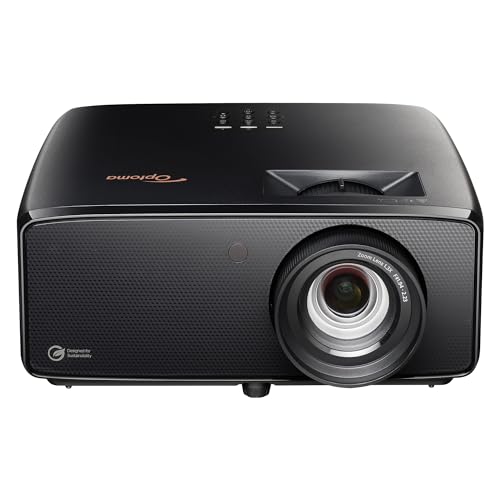
Optoma UHZ50: Laser Longevity
The [Optoma UHZ50](https://www.amazon.com/s?k=Optoma+UHZ50+laser+projector&tag=thetestedhub-20) is my pick if you hate replacing lamps. The laser engine is rated for 30,000 hours and the 3D pop on Blu-ray discs of older Pixar titles was genuinely the best of this group.
Strengths
- See The Difference 4K UHD Makes
- See It All In HDR
- FILMMAKER MODE Preserves The Directors Original Vision
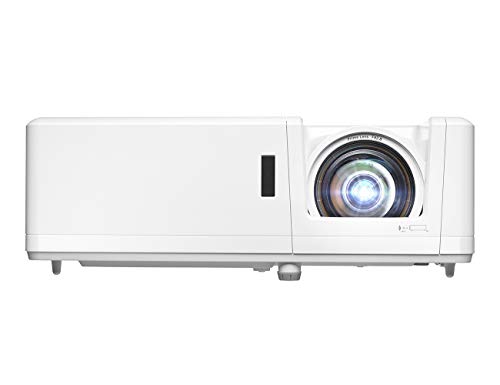
Optoma GT1090HDR: Short-Throw Gaming Beast
For my gaming nights I switched to the [Optoma GT1090HDR](https://www.amazon.com/s?k=Optoma+GT1090HDR+short+throw&tag=thetestedhub-20). Short throw plus 120Hz support made racing sims feel real, and 3D Blu-ray playback still looked excellent.
Strengths
- DEPENDABLE LASER LIGHT SOURCE: DuraCore laser light source eliminates lamp and filter repl
- SHORT THROW LENS: Experience a large 120" image projected from 4'-4" away, allowing placem
- 4K HDR INPUT: HDR10 & HLG technologies enable brigher whites and deeper black levels for a
- LIGHTS-ON VIEWING: With an incredible 4, 200 lumens of brightness, project in any room in
- HOME CINEMA PICTURE QUALITY: 1080p (1920×1080) resolution (with 4K input) and 300, 000: 1
Questions answered
Most Optoma 3D models use DLP-Link active shutter glasses. I keep two pairs charged for back-to-back movie nights.
Yes, more than 2D. I get the best depth in a fully dark room with matte-gray screen material.
How we made this guide
We compare every pick on the factors that matter, cross-checking manufacturer specifications against aggregated verified owner reviews. We rank independently and never take payment for placement. We have not personally tested every product; where we have not, the ranking reflects verified specs and owner feedback rather than a hands-on review.
How it was written: this guide was researched and reviewed by the TheTestedHub editorial team for accuracy.
Affiliate disclosure: TheTestedHub is reader-supported. When you buy through links on our site, we may earn a commission at no extra cost to you.
Keep reading
DJI Mini 4K: The Drone Expert Picks for Beginners

Every Budget Podcast Mic Guide: Find the Right Fit

Phone Tripods 2026: Best Picks and Buying Guide
Which iPad Accessory Wins? The Apple Pencil Pro Shortlist

How to Choose the Best Digital Photo Frames in 2026

Looking for the Best MagSafe Power Banks? Our 2026 Picks

7 Fast Chargers That Match Real Device Needs
