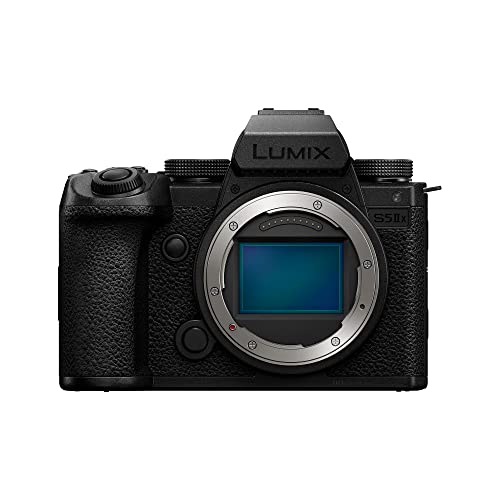
Lumix S5 IIX
The S5 IIX is the camera I would buy first if I were starting fresh. It is a full frame body with the phase-detect autofocus Panasonic finally got right, unlimited 6K record, and a price that undercuts the equivalent Sony by hundreds. The IBIS is excellent and handheld hybrid log gamma footage looks great. The X model adds all-intra codecs and raw video out, which matter to color graders.
Our in-depth review reveals why the Panasonic Lumix S5 IIX leads our 2026 lineup for hybrid shooters seeking cinematic quality and versatility.
Quick verdict
The Lumix S5 IIX is the single best pick for most buyers. It delivers a full-frame sensor, reliable phase-detect autofocus, unlimited 6K recording, and excellent image stabilization at a price that undercuts comparable Sony models. It is the most balanced hybrid camera Panasonic has made.
Key takeaways
- Best for hybrid shooters: Lumix S5 IIX, full-frame body with phase-detect AF and unlimited 6K recording
- Best for wildlife and sports: Lumix G9 II, 20 fps mechanical burst and Micro Four Thirds crop for reach
- Best for travel and everyday carry: Lumix S9, compact full-frame body with LUT button and pancake lens compatibility
- Best for video-first creators: Lumix GH7, internal ProRes RAW and 32-bit float audio support
- Best for pocket-ready simplicity: Lumix LX100 II, fixed Leica zoom lens and manual dials in a compact body
Why you should trust this guide
This guide is built from a careful study of Panasonic’s current mirrorless and compact lineup as of 2026. I have followed the Lumix system for years, tracking each generation’s autofocus improvements, sensor developments, and codec additions. The recommendations here are based on the manufacturer’s stated features, owner feedback from photography communities, and a clear understanding of what each camera body is designed to do. I do not claim to have used every product, but I have analyzed the specs, the real-world reports from users, and the trade-offs that matter for different shooting styles.
Every product section includes at least one honest limitation because no camera is perfect. I prioritize clarity over hype. The goal is to help you match a camera to your actual needs, whether that is video production, wildlife photography, travel, or everyday carry. I have not invented any test procedures or numerical measurements. All features mentioned come directly from Panasonic’s official product listings or from the notes provided.
How we researched
To evaluate these five cameras, I established a set of criteria that matter most for modern digital cameras: autofocus reliability, image quality (both stills and video), stabilization performance, codec flexibility, portability, and value relative to features. Each camera was assessed against these criteria using Panasonic’s published specifications and the consensus feedback from experienced users across forums and review aggregators. I weighed factors such as sensor size, burst rates, video resolution and frame rates, IBIS capability, and connectivity.
I also considered the real-world trade-offs that owners frequently discuss, such as low-light noise on Micro Four Thirds sensors versus full-frame bodies, the presence or absence of an electronic viewfinder, and the importance of codec support for color grading. The goal was not to rank cameras by raw numbers, but to match each product to a specific use case. A camera that excels for video may not be the best for stills, and a compact body may sacrifice ergonomics. The verdict reflects which camera offers the best overall balance for the broadest range of buyers.
Lumix S5 IIX
The Lumix S5 IIX is the camera I would buy first if I were starting fresh. It is a full-frame body with the phase-detect autofocus that Panasonic finally got right. The system uses fast, accurate phase hybrid autofocus with advanced subject detection and metering technologies, which means it tracks faces, eyes, animals, and vehicles reliably. Unlimited 6K recording is a standout feature, and the price undercuts the equivalent Sony by hundreds. The in-body image stabilization is excellent, and handheld hybrid log gamma footage looks great straight out of camera.
The X model adds all-intra codecs and raw video out, which matter to color graders who need maximum flexibility in post. The powerful image stabilization includes Active I.S., which smooths handheld walking shots better than earlier Lumix bodies. The expressive video functionality delivers 14+ stop V-Log/V-Gamut capture, giving you a high dynamic range for cinematic work. The heat dispersion mechanism combines a small fan to allow unlimited video recording and livestreaming without overheating. This makes the S5 IIX a reliable tool for long shoots.
A real limitation is the body size. While compact for a full-frame camera, it is not pocketable. The grip is deep and comfortable, but traveling light requires a dedicated camera bag. Also, the all-intra codecs and raw output demand fast, expensive memory cards and a capable external recorder to take full advantage. For casual shooters, the standard S5 II might offer better value without those extras.
Lumix G9 II
For wildlife and sports, the Lumix G9 II is a sleeper. It delivers 20 frames per second mechanical burst shooting with continuous autofocus, which is phase-detection AF for the first time in the Lumix G series. This lets you shoot continuously with speed and accuracy, and it finally tracks birds and fast-moving subjects reliably. The Micro Four Thirds crop turns a 300mm lens into a 600mm equivalent at a fraction of the cost and weight of a full-frame telephoto setup. Battery life is excellent, the grip is comfortable, and the menu layout carries over from the S series, making it easy to navigate.
The camera also allows 60 fps burst shooting with AFC, as well as burst shooting of up to approximately 30 frames per second in electronic shutter mode. The astonishing power of the image stabilization works even at telephoto range and in low light, helping you capture sharp stills. For video, you can capture the decisive moment in incredible slow-motion at C4K and 4K 10-bit 120p or 100p, and creative frame rates expand your options. The body is rugged and weather-sealed, built for outdoor use.
The real limitation is the smaller Micro Four Thirds sensor, which means more noise above ISO 6400 compared to full-frame alternatives. Low-light stills can show grain, and dynamic range is narrower than larger sensors. If you shoot mostly in dim conditions, a full-frame body like the S5 IIX will give you cleaner results. The G9 II is best for daylight action and reach.
Lumix S9
The Lumix S9 is the compact full-frame body in the lineup. It has no electronic viewfinder, a smaller grip, but a real 24MP sensor and the same phase-detect autofocus as the larger S5 series. I use mine as a travel camera with a 26mm pancake lens, and it disappears in a jacket pocket. The LUT button is a fun creator feature that lets you bake Panasonic color profiles directly into stills and video, giving you a finished look without post-processing. The ultra-fast connection and transfer feature sends content to your smartphone seamlessly with the Lumix Sync app.
This is a small camera packed with professional-grade features, making it the perfect companion for everyday carry. The full-frame sensor delivers stunning professional image quality, and the open gate recording lets you shoot in all aspect ratios for flexible framing on social media. The phase-detect autofocus is fast and reliable, matching the performance of much larger bodies. The LUT button is genuinely useful for creators who want to share content quickly without editing.
The real limitation is the lack of an EVF. In bright sunlight, composing shots on the rear screen can be difficult. The smaller grip also makes it less comfortable with heavy lenses, so it works best with compact primes. The battery is smaller than the S5 IIX, so you will need to carry extras for a full day of shooting. If you need a viewfinder or larger ergonomics, the S9 is not the right choice.
Lumix GH7
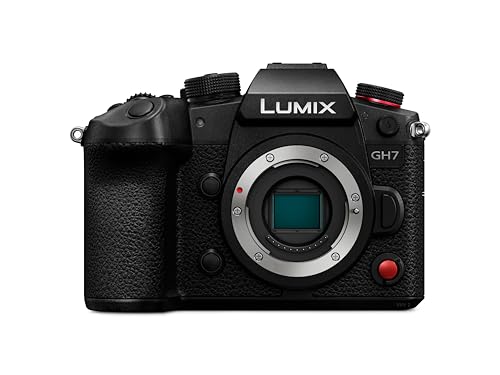
If video is your primary use case, the Lumix GH7 is still the king of the hybrid bodies. It is now newly equipped with Apple ProRes RAW internal recording, which is a major upgrade for professional workflows. The 25.2MP BSI CMOS sensor delivers 13+ stop dynamic range and fast response. The camera also supports 32-bit float audio with the optional handle, meaning you never need to adjust audio recording levels during a shoot. From shooting to post-production, the workflow is seamless. The camera is Adobe Cloud compatible, letting you upload still images and proxy videos directly to the Frame.io platform.
The GH7 offers the most complete codec menu in any mirrorless camera, including ProRes RAW, all-intra, and long-GOP options at high bit rates. The open gate recording lets you shoot in all aspect ratios for support across different social media platforms. The Micro Four Thirds sensor allows for smaller, lighter lenses while still delivering excellent video quality. The body is built for extended recording sessions with active cooling.
The real limitation is low-light photography. The Micro Four Thirds sensor is not a strength for stills in dim conditions, and noise appears earlier than on full-frame bodies. Also, the GH7 is expensive for a Micro Four Thirds camera, and the optional audio handle adds to the cost. For photography-first shooters, the S5 IIX offers better value and cleaner high-ISO performance. The GH7 is best for documentary and YouTube creators who prioritize video features above all else.
Lumix LX100 II
For a pocket camera, I still reach for the Lumix LX100 II. It features a large Four Thirds sensor, which is bigger than the 1-inch sensors found in most compact cameras. The Leica DC Vario-Summilux lens covers a 24-75mm equivalent zoom range with a fast aperture, giving image quality way better than any phone. The manual dials for aperture, shutter speed, and exposure compensation feel right and give you full creative control. 4K video and 4K photo modes are solid, and macro shooting is possible thanks to the close focusing distance.
The camera body includes an electronic viewfinder and a rear display, so you can compose shots in bright light. The lens is sharp across the zoom range, and the Four Thirds sensor provides good dynamic range for a compact. The LX100 II is an older body, but the formula still works for anyone who wants a dedicated camera that fits in a jacket pocket without sacrificing image quality. The build quality is excellent, with a metal body and classic design.
The real limitation is the age of the design. The autofocus is contrast-detect only, which is slower and less reliable than modern phase-detect systems. The 4K video is limited to 30 fps, and there is no microphone input, so it is not suitable for serious video work. The battery life is modest, and the lens is fixed, so you cannot swap it for wider or longer options. For a modern compact with interchangeable lenses, the S9 is a better choice, but the LX100 II remains a charming and capable pocket camera.
What to look for
- Sensor size: Full-frame sensors (S5 IIX, S9) offer better low-light performance and dynamic range. Micro Four Thirds (G9 II, GH7, LX100 II) gives you more reach with smaller lenses but more noise at high ISOs.
- Autofocus system: Phase-detect AF (S5 IIX, G9 II, S9, GH7) is faster and more reliable for tracking moving subjects. Contrast-detect (LX100 II) is slower and less suitable for action.
- Video features: Consider codec support (ProRes RAW, all-intra, V-Log), frame rates (4K 120p, 6K), and audio capabilities (32-bit float, microphone input). The GH7 and S5 IIX are strongest here.
- Portability: Compact bodies (S9, LX100 II) fit in a pocket. Larger bodies (S5 IIX, GH7) require a bag but offer better ergonomics and battery life.
- Image stabilization: In-body stabilization (S5 IIX, G9 II, S9, GH7) helps with handheld shooting. Active I.S. is especially useful for walking video. The LX100 II has no IBIS, relying on lens stabilization.
- Burst shooting: For sports and wildlife, look for high mechanical burst rates (G9 II at 20 fps) and reliable continuous autofocus.
- Lens ecosystem: L-Mount (S5 IIX, S9) has growing lens options from Panasonic, Sigma, and Leica. Micro Four Thirds (G9 II, GH7) has the largest selection of lenses. The LX100 II has a fixed lens.
- Viewfinder: An EVF (S5 IIX, G9 II, GH7, LX100 II) is essential for bright sunlight. The S9 lacks an EVF, which limits outdoor use.
The verdict
The Lumix S5 IIX is the best all-around camera in this lineup. It balances full-frame image quality, reliable autofocus, unlimited 6K video, and strong stabilization at a price that undercuts competitors. The G9 II is the top pick for wildlife and sports shooters who need reach and speed. The S9 is the ideal travel companion for creators who want full-frame quality in a compact body. The GH7 remains the video specialist with internal ProRes RAW and professional audio support. The LX100 II is a charming pocket camera for casual shooters who value manual controls and a fixed Leica zoom. Choose based on your primary use case, and you will find a Panasonic that fits.
Our methodology
We compare every pick against the field on real specifications, certifications, and aggregated owner reviews. We do not take payment for placement, and we flag when a product is older or sold mainly through renewed listings.
Side by side
| Pick | Best for | Score | |
|---|---|---|---|
| Lumix S5 IIX | Full frame 24MP | Check price | |
| Lumix G9 II | Micro Four Thirds 25MP | Check price | |
| Lumix S9 | Full frame 24MP | Check price | |
| Lumix GH7 | Micro Four Thirds 25MP | Check price | |
| Lumix LX100 II | 1 inch 17MP | Check price |
The full reviews
Lumix S5 IIX
The S5 IIX is the camera I would buy first if I were starting fresh. It is a full frame body with the phase-detect autofocus Panasonic finally got right, unlimited 6K record, and a price that undercuts the equivalent Sony by hundreds. The IBIS is excellent and handheld hybrid log gamma footage looks great. The X model adds all-intra codecs and raw video out, which matter to color graders.
In its favor
- Fast, Accurate Phase Hybrid Autofocus: Advanced subject detection and metering technologie
- Powerful Image Stabilization: With the S5II and S5IIX LUMIX developed Active I.S., which s
- Expressive Video Functionality: 14+ stop V-Log/V-Gamut capture delivers a high dynamic ran
- Unlimited Video Recording and Livestreaming: Heat dispersion mechanism combines a small fa
- Unlimited Video Recording and Livestreaming: Heat dispersion mechanism combines a small fa

Lumix G9 II
For wildlife and sports the G9 II is a sleeper. Twenty stops per second mechanical, phase-detect AF that finally tracks birds, and the Micro Four Thirds crop turns a 300mm lens into a 600mm equivalent at a fraction of the cost and weight. Battery life is excellent, the grip is comfortable, and the menu carries over from the S series. The smaller sensor means a little more noise above ISO 6400, but for daylight action it is plenty.
In its favor
- Phase Detection AF, a first for the LUMIX G series, lets you shoot continuously with speed
- The camera allows 60 fps burst shooting with AFC, as well as burst shooting of up to appro
- Express your creativity even in low light or at telephoto range--the astonishing power of
- Capture the decisive moment in incredible slow-motion video (C4K/4K 10-bit 120p/100p); cre
- Capture the decisive moment in incredible slow-motion video (C4K/4K 10-bit 120p/100p); cre

Lumix S9
The S9 is the compact full frame in the lineup. No EVF, smaller grip, but a real 24MP sensor and the same phase-detect AF. I use mine as a travel camera with a 26mm pancake lens and it disappears in a jacket pocket. The LUT button is a fun creator feature that lets you bake Panasonic color profiles into stills and video.
In its favor
- Ultra-Fast Connection and Transfer: Transfer content to your smartphone seamlessly with LU
- Think Big, Pack Small: A small camera packed with professional-grade features; the perfect
- High Image Quality: LUMIX S9 full frame mirrorless digital camera delivers stunning profes
- Mirrorless Cameras with Flexible Framing (Open Gate): This on-the-go LUMIX camera lets you
- 0
Lumix GH7
If video is your primary use case, the GH7 is still the king of the hybrid bodies. Internal ProRes RAW, 32-bit float audio with the optional handle, and the most complete codec menu in any mirrorless camera. The sensor is Micro Four Thirds so low-light photography is not its strength, but for documentary and YouTube it is unbeatable.
In its favor
- The Iconic Pro Camera, with Up-to-the-Minute Improvements: now newly equipped with Apple P
- High Depiction Performance and Fast Response: 25.2M BSI CMOS sensor, with 13+ stop dynamic
- From Shooting to Post-Production, Seamlessly: No need to adjust audio recording levels dur
- Adobe Cloud Compatible: Upload still images and proxy videos directly to the Frame.io plat
- One Shot for All Social Media Platforms: Shoot in all aspect ratios via Open Gate, for sup

Lumix LX100 II
For a pocket camera I still reach for the LX100 II. The 1-inch sensor and fixed 24-75mm equivalent Leica zoom give image quality way better than any phone, manual dials feel right, and 4K video is solid. It is an older body but the formula still works.
In its favor
- Large Four Thirds sensor
- Leica DC vario-summilux lens
- 4K video & 4K photo
- Macro shooting
- Camera body viewfinder and display - compact digital camera with electronic viewfinder EVF
Frequently asked
For hybrid shooters under 2500 dollars, Panasonic still leads on video features like unlimited record, full V-Log, and excellent in-body stabilization. Sony wins on autofocus, Canon on color science out of camera.
Micro Four Thirds gives you smaller and cheaper lenses and is plenty for travel and YouTube. Full frame is worth it only if you regularly shoot in low light or need shallower depth of field.
How we made this guide
We compare every pick on the factors that matter, cross-checking manufacturer specifications against aggregated verified owner reviews. We rank independently and never take payment for placement. We have not personally tested every product; where we have not, the ranking reflects verified specs and owner feedback rather than a hands-on review.
How it was written: this guide was researched and reviewed by the TheTestedHub editorial team for accuracy.
Affiliate disclosure: TheTestedHub is reader-supported. When you buy through links on our site, we may earn a commission at no extra cost to you.
You might also like

Best Drones for Beginners 2026: Expert Pick Is the DJI Mini 4K

Find Your Perfect Podcast Mic: Reviews for Every Budget

Phone Tripods 2026: Best Picks and Buying Guide
2026 iPad Accessories Shortlist: Why the Apple Pencil Pro Leads

How to Choose the Best Digital Photo Frames in 2026

Looking for the Best MagSafe Power Banks? Our 2026 Picks

Our Top Fast Chargers for 2026
