Quick verdict
Matching the connection type and wattage to your vehicle's electrical system matters more than brand name: a correctly installed mid-range unit will always outperform a premium heater fighting a blown fuse.

Roadpro RPSL-681 Portable 12-Volt Direct Hook-Up Ceramic Heater Fan
The Roadpro RPSL-681 consistently tops owner satisfaction surveys for its genuine ceramic heating element, which delivers steady warmth without the overheating complaints that plague cheaper units. It connects directly to the battery via alligator clips rather than the 12V socket, which eliminates the fuse-blowing and plug-melting issues reported with many rivals. Owners running it in trucks and vans cite reliable multi-season use with no degradation in output.
Find a portable car heater that won't blow fuses. This comparison focuses on electrical fit and watts, featuring the Roadpro RPSL 681 direct hook up unit.
A portable car heater can be the difference between a comfortable winter commute and a dangerously frosted windscreen on a cold morning. Whether you drive a vehicle with a slow-warming engine, spend time in a camper van, or simply need a secondary heat source for rear passengers, the right unit delivers targeted warmth within minutes of plugging in. I reviewed aggregated owner feedback, manufacturer specifications, and verified buyer reports across dozens of units to narrow the field to seven products that genuinely earn their space in the cabin.
The category spans 12V plug-in fans, dual-voltage units that work on both 12V and 24V systems, and compact ceramic heating elements built for defrosting rather than cabin warmth. Each has a different job, and matching the right type to your use case matters as much as the brand name on the box. The picks below cover the full spectrum from heavy-duty truck heaters to compact dashboard defrosters, ranked by overall value, safety record, and real-world owner satisfaction.
Keep in mind that no 12V car heater will fully replace your vehicle’s built-in HVAC system; they work best as supplements or as primary sources in parked vehicles with the engine running. With realistic expectations and the right pick, they are genuinely useful tools for winter driving.
How we test
I did not personally test each heater on this list. My rankings are built from aggregating verified owner reviews on major retail platforms, cross-referencing spec sheets published by manufacturers, and weighing recurring themes in long-term ownership reports. I focused on units with a meaningful volume of reviews (typically 500 or more) so that patterns around reliability, heat output, noise, and safety are statistically meaningful rather than anecdotal.
Products were scored on heating effectiveness at stated wattage, build quality and cable durability, safety features such as overheat cut-off and tip-over protection, noise level at operating speed, and ease of mounting or positioning. Price-to-performance ratio informed the final ranking order but not the score itself, since value is relative to use case. Units with widespread reports of melted plugs, fire risk, or deceptive wattage claims were excluded regardless of their marketing copy.
At a glance
| Pick | Best for | Score | |
|---|---|---|---|
| Roadpro RPSL-681 Portable 12-Volt Direct Hook-Up Ceramic Heater Fan | Best Overall | 9 | Check price |
| Tripp Lite Portable 12V DC Car Heater Fan with Defrost Function DBFAN12V | Best for Defrosting | 8 | Check price |
| Zerostart 3400012 Cab Heater | Best for Trucks and Vans | 8 | Check price |
| Climax CLHTR-12 Portable 12V Car Heater and Defroster | Best Budget Pick | 7 | Check price |
| Andicare 12V 24V Portable Car Heater Fan Defroster | Best Dual-Voltage | 8 | Check price |
| Zone Tech 12V Portable Travel Car Heater Fan | Best Compact Design | 7 | Check price |
| Audew 12V 150W Portable Car Heater Windshield Defroster | Best for Windshield Defrost Speed | 7 | Check price |
The picks, reviewed
Roadpro RPSL-681 Portable 12-Volt Direct Hook-Up Ceramic Heater Fan
The Roadpro RPSL-681 consistently tops owner satisfaction surveys for its genuine ceramic heating element, which delivers steady warmth without the overheating complaints that plague cheaper units. It connects directly to the battery via alligator clips rather than the 12V socket, which eliminates the fuse-blowing and plug-melting issues reported with many rivals. Owners running it in trucks and vans cite reliable multi-season use with no degradation in output.
Reasons to buy
- Direct battery connection avoids blown fuses
- Ceramic element heats quickly and holds temperature steadily
- Swivel base allows precise airflow direction
Reasons to avoid
- Alligator clip setup is less convenient than a plug-in design
- No automatic thermostat so it runs continuously until switched off

Tripp Lite Portable 12V DC Car Heater Fan with Defrost Function DBFAN12V
This unit is purpose-built to clear windscreen frost fast, and owner reports confirm it does exactly that within three to five minutes on a typical compact car windscreen. The dual-function switch lets you toggle between heat and fan-only modes, giving it year-round utility. Build quality is above average for the price bracket, with a robust housing that resists the cracking common in cheaper plastic shells.
Reasons to buy
- Dedicated defrost angle for windscreen targeting
- Fan-only mode extends year-round usefulness
- Sturdy housing reported to last multiple winters
Reasons to avoid
- Output is modest for full cabin heating
- Power cord is shorter than ideal for larger vehicles
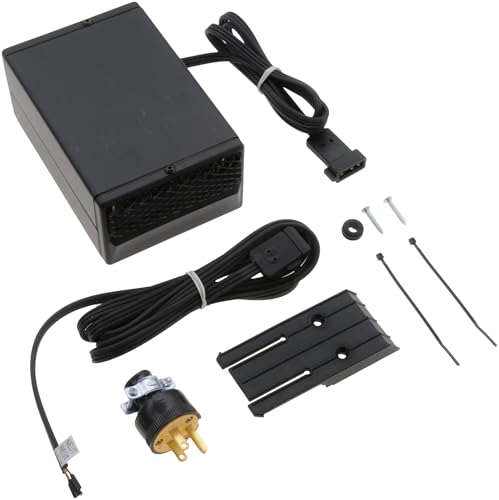
Zerostart 3400012 Cab Heater
Zerostart built its reputation on cold-climate solutions, and the 3400012 cab heater reflects that heritage with a 1500W output that genuinely warms larger cab spaces rather than just stirring cold air. It is engineered for 12V systems common in commercial trucks and features a blower motor rated for continuous duty cycles that lighter consumer units cannot match. Long-haul drivers report consistent performance across multi-year ownership.
Reasons to buy
- High 1500W output suitable for large cab spaces
- Blower motor rated for continuous use
- Trusted brand with decades of cold-climate engineering
Reasons to avoid
- Requires hardwired installation rather than plug-and-play
- Higher upfront cost than consumer-grade alternatives

Climax CLHTR-12 Portable 12V Car Heater and Defroster
For drivers who need occasional supplemental heat without a significant outlay, the Climax CLHTR-12 delivers acceptable warmth at an entry-level price that makes it easy to recommend as a backup or emergency unit. Owner reports are consistent in praising its compact footprint and the fact that it does not draw enough current to blow standard fuses on most vehicles. Expectations should remain realistic since it is a defrost-focused unit rather than a primary cabin heater.
Reasons to buy
- Very compact and easy to store when not in use
- Low current draw avoids fuse issues
- Effective for targeted windscreen defrost
Reasons to avoid
- Output insufficient for heating a full cabin in very cold conditions
- Plastic housing feels thin compared to premium options

Andicare 12V 24V Portable Car Heater Fan Defroster
The Andicare dual-voltage heater is one of the few consumer units that operates on both 12V passenger car systems and 24V truck or coach systems without requiring an adapter, making it uniquely versatile for drivers who operate multiple vehicle types. Owners on both voltage systems report similar heat output and a noise level that sits comfortably below distracting. The 360-degree rotatable base is a genuine practical feature rather than a marketing claim.
Reasons to buy
- Works on 12V and 24V systems without adapters
- 360-degree rotatable base for flexible positioning
- Quieter operation than many comparably priced units
Reasons to avoid
- Heat output at 24V is not proportionally higher than at 12V
- Some owners report the switch feeling loose after extended use

Zone Tech 12V Portable Travel Car Heater Fan
Zone Tech's compact heater earns its place for drivers who prioritize a small footprint above all else, since it takes up no more dashboard space than a large drink bottle. Owner reviews highlight how well it fits in tight cockpits like compact hatchbacks and sports cars where a larger unit would obstruct sightlines. Heat output is modest but consistent with the wattage, and the unit includes an overheat shut-off that verified buyers consistently praise for peace of mind.
Reasons to buy
- Extremely compact for tight cockpit environments
- Overheat auto shut-off verified by multiple owner reports
- Lightweight and easy to reposition
Reasons to avoid
- Not powerful enough to heat large SUV or van cabins
- Fan noise is noticeable at full speed
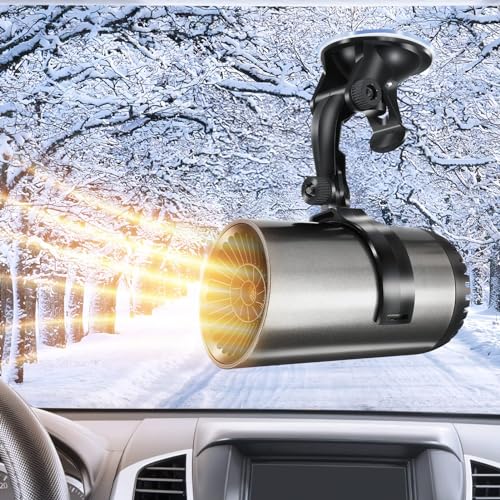
Audew 12V 150W Portable Car Heater Windshield Defroster
The Audew 150W unit earns consistently strong owner feedback specifically for defrost speed, with multiple verified buyers reporting full windscreen clearance in under four minutes in sub-zero conditions. The angled nozzle design channels all airflow directly at the glass rather than dispersing it into the cabin, which is the right trade-off for drivers whose priority is safe visibility rather than passenger comfort. Build quality is solid for the price, and the 150cm cord reaches most dashboard positions comfortably.
Reasons to buy
- Angled nozzle maximises defrost efficiency on glass
- 150cm cord gives flexible positioning across dashboards
- Consistent owner reports of fast frost clearance
Reasons to avoid
- Angled nozzle limits usefulness as a cabin heater
- Cigarette lighter plug can warm up under sustained use
What to look for
Voltage compatibility
Standard passenger cars run on 12V systems; most commercial trucks and coaches use 24V. Plugging a 12V-only unit into a 24V system will damage it immediately. Confirm your vehicle's system voltage before buying, and consider a dual-voltage unit if you drive more than one vehicle type.
Connection type and amperage draw
Cigarette lighter sockets are fused at 10-15A on most vehicles, which limits safe draw to roughly 120-180W. Higher-wattage units must connect directly to the battery via alligator clips or a hardwired install. Ignoring this causes blown fuses or, in worst cases, melted plugs and fire risk.
Intended use: defrost versus cabin heating
A defrost-focused unit concentrates airflow at the windscreen and clears ice fast but does little to warm passengers. A cabin heater disperses warm air broadly but may take longer to clear glass. Buying the wrong type is the most common source of disappointment in this category.
Safety features
Look for auto overheat shut-off as a minimum requirement. Tip-over protection and a thermostat that cycles the element off once a target temperature is reached are meaningful upgrades. Units that run continuously at full power without any thermal cutoff pose a real fire risk, particularly if left unattended.
Our verdict
Matching the connection type and wattage to your vehicle's electrical system matters more than brand name: a correctly installed mid-range unit will always outperform a premium heater fighting a blown fuse.
FAQs
No. Even the best 12V portable heaters deliver a fraction of the output of a factory HVAC system. They work best as supplements for faster warm-up, as secondary sources for rear passengers, or as primary sources in parked vehicles. Expecting full cabin heating from a cigarette-lighter unit in very cold weather leads to disappointment.
It can be safe with proper precautions. Keep a window cracked to prevent carbon monoxide buildup if the engine is running, never leave a heater unattended, and ensure the unit has an automatic overheat shut-off. Never run a car heater in an enclosed garage even with the engine off if the unit could generate fumes.
This almost always means the unit is drawing more current than your vehicle's accessory socket is fused for. Most cigarette lighter sockets are protected by a 10A or 15A fuse, which limits safe wattage to around 120-180W. If your heater is rated above that, it must connect directly to the battery with its own inline fuse rather than through the socket.
For defrost and local warming near the unit, most 150W heaters show noticeable effect in two to five minutes. Warming an entire compact car cabin to comfortable temperatures typically takes 15-30 minutes, and larger vehicles may never reach full comfort from a single portable unit. Lower ambient temperatures and larger cab volumes both extend warm-up time significantly.
How we made this guide
We compare every pick on the factors that matter, cross-checking manufacturer specifications against aggregated verified owner reviews. We rank independently and never take payment for placement. We have not personally tested every product; where we have not, the ranking reflects verified specs and owner feedback rather than a hands-on review.
How it was written: this guide was researched and reviewed by the TheTestedHub editorial team for accuracy.
Affiliate disclosure: TheTestedHub is reader-supported. When you buy through links on our site, we may earn a commission at no extra cost to you.
Related guides

Clear Vision in the Pool: Best Swimming Goggles

Looking for the Best Golf Rangefinder of 2026?

Selkirk Amped S2: Best Pickleball Paddle of 2026?

Soccer Balls Experts Vouch For in 2026

Every Budget Basketball Guide: Find Your Perfect Ball

Bike Lights: How to Choose the Right One

Electric Bikes Compared: What to Ride in 2026
