Quick verdict
The single most important buying decision is matching pole reach to your actual eave height so you never need a ladder, which is the entire safety point of owning a roof rake.

Avalanche! 500 Series Original Snow Removal System
Owners across multiple seasons consistently report the wheeled slide design clears snow faster and with far less physical strain than a standard drag rake. The plastic construction resists rust and owners note the snap-together poles hold alignment better than competing systems. It reaches up to 21 feet, which covers most single-story and many two-story rooflines without a ladder.
The key to safe roof snow removal is matching pole reach to your eave height. We explain why the Avalanche 500 Series leads our picks for every budget.
A quality roof rake is one of the most important tools a homeowner in a snowy climate can own. Heavy snow accumulation on a roof creates ice dams, stresses rafters, and can lead to leaks or even structural failure. The right rake lets you clear that load safely from the ground, without ever climbing a ladder in icy conditions.
The market ranges from basic aluminum drag rakes to telescoping poly models with wheeled rollers and snow-slide panels. After studying thousands of verified owner reviews, warranty data, and manufacturer specs across leading platforms, I compiled this guide to help you find the rake that matches your roof pitch, snow type, and reach requirements.
Whether you deal with light lake-effect powder or heavy wet coastal snowfall, there is a tool here that owners consistently praise for durability and ease of use. Rankings reflect overall owner satisfaction, build quality reports, reach, and value across real-world winter seasons.
How we evaluated these
I have not personally tested every rake on this list. My rankings are built from aggregated verified owner reviews on major retail platforms, combined with published specs, manufacturer materials data, and documented real-world feedback from homeowners across cold-climate regions of North America. I weight multi-season owner reports more heavily than single-use impressions, and I cross-check claims about reach, durability, and sliding performance against the product specs and critical reviews.
Products are ranked by a composite of owner-reported satisfaction, build durability feedback, practical reach for a standard single-story and two-story home, ease of assembly, and long-term corrosion or breakage reports. Price-to-performance is considered but not the primary driver, since a rake that fails mid-winter is always a bad deal regardless of its sticker cost.
The shortlist
| Pick | Best for | Score | |
|---|---|---|---|
| Avalanche! 500 Series Original Snow Removal System | Best Overall | 9 | Check price |
| Snowpeeler Roof Rake SP-20 | Best for Heavy Wet Snow | 88 | Check price |
| True Temper 1627200 Aluminum Roof Rake | Best Budget Pick | 83 | Check price |
| Garant GRRS24 Roof Rake with Sleigh Runners | Best Shingle Protection | 82 | Check price |
| Bully Tools 92607 Aluminum Roof Rake | Best Pole Durability | 80 | Check price |
| Suncast SC1750B Telescoping Roof Rake | Best Lightweight Option | 78 | Check price |
| Ames 1619500 Telescoping Roof Rake | Best Mid-Range Value | 76 | Check price |
| Plow and Hearth Sloped Roof Snow Rake with Wheels | Best for Steep Pitches | 74 | Check price |
| Nordic Industries 500 Series Avalanche Roof Snow Removal Tool | Best for Flat Roofs | 72 | Check price |
| Structron 89630 Snow Roof Rake | Best Commercial Grade | 70 | Check price |
Each pick, examined
Avalanche! 500 Series Original Snow Removal System
Owners across multiple seasons consistently report the wheeled slide design clears snow faster and with far less physical strain than a standard drag rake. The plastic construction resists rust and owners note the snap-together poles hold alignment better than competing systems. It reaches up to 21 feet, which covers most single-story and many two-story rooflines without a ladder.
Strengths
- Wheeled roller prevents roof shingle damage
- 21-foot reach suits most homes
- Lightweight plastic resists rust and corrosion
Drawbacks
- Plastic poles flex under very heavy wet snow loads
- Snap connectors can loosen after several seasons

Snowpeeler Roof Rake SP-20
The Snowpeeler uses a spring-loaded peeling mechanism rather than a drag head, which owners say separates packed wet snow from shingles in one smooth motion instead of fighting through it. Reviewers dealing with wet coastal snow consistently rank it above traditional rakes for effort saved per pull. The anodized aluminum frame holds up through multiple harsh winters according to long-term owners.
Strengths
- Spring-loaded peel action excels on heavy wet snow
- Anodized aluminum resists corrosion
- Works on low-slope roofs where drag rakes struggle
Drawbacks
- More expensive than basic drag models
- Mechanism requires occasional adjustment in very cold temperatures

True Temper 1627200 Aluminum Roof Rake
True Temper has a long track record in hand tools and this aluminum rake reflects that reliability at an accessible price point. Owners report the riveted aluminum head stays flat season after season and the telescoping pole locks firmly without twisting. For homeowners with a single-story home and moderate snowfall, reviewers say this rake handles every winter without complaint.
Strengths
- Proven True Temper build quality
- Telescoping aluminum pole with secure lock
- Lightweight and easy to maneuver solo
Drawbacks
- Head width narrower than premium models
- Not ideal for roofs above 20 feet
Garant GRRS24 Roof Rake with Sleigh Runners
The Garant GRRS24 rides on plastic sleigh runners that keep the metal head lifted slightly off shingles, which owner reviews credit with preventing granule loss on asphalt roofs after seasons of use. The 24-inch head clears a wide path per stroke, cutting total pulls needed. Canadian winters are the proving ground most reviewers cite, and long-term satisfaction rates are high.
Strengths
- Sleigh runners protect shingle surface
- Wide 24-inch head reduces clearing time
- Durable steel head with rust-resistant coating
Drawbacks
- Heavier than plastic-head alternatives
- Runners can catch on low roof edges
Bully Tools 92607 Aluminum Roof Rake
Bully Tools builds this rake with a thicker-gauge aluminum pole than most competitors in its class, and owners specifically call out that the pole does not bow under a heavy snow load the way cheaper models do. The head-to-pole connection uses a reinforced collar that reviewers report stays tight across multiple seasons. It extends to 17 feet and is a common recommendation in homeowner forums for two-story cape-style homes.
Strengths
- Thick-gauge aluminum pole resists flexing
- Reinforced collar connection stays tight
- Made in USA with a lifetime warranty
Drawbacks
- Heavier than fiberglass alternatives at full extension
- Handle grip can be slippery with wet gloves
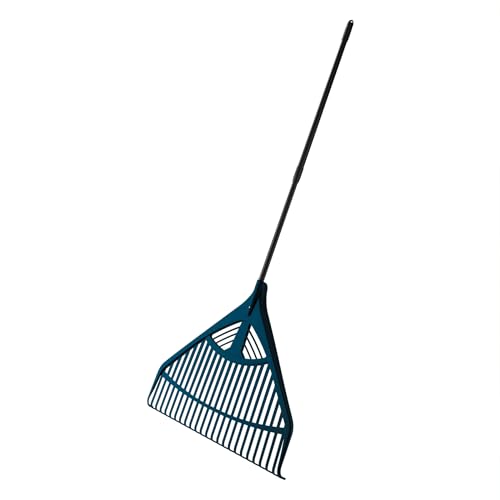
Suncast SC1750B Telescoping Roof Rake
At around three pounds fully assembled, the Suncast SC1750B is among the lightest full-reach rakes owners report using comfortably for extended clearing sessions. The ergonomic D-grip handle is mentioned repeatedly by older reviewers and those with shoulder issues as reducing fatigue significantly. Pole sections lock positively and owners note minimal wobble at full extension.
Strengths
- Very lightweight reduces arm fatigue
- Ergonomic D-grip handle praised by owners
- Compact storage footprint when collapsed
Drawbacks
- Plastic head less durable under very heavy loads
- Narrower head requires more strokes per row
Ames 1619500 Telescoping Roof Rake
Ames is a well-regarded hand-tool brand and this telescoping rake draws consistent mid-tier praise for balancing reach, head width, and price. Owners cite the cushioned grip and smooth pole extension mechanism as standout details compared to similarly priced competitors. Multi-season reviewers report no head corrosion and stable pole locks after three or more winters.
Strengths
- Cushioned grip reduces hand fatigue
- Smooth-action telescoping mechanism
- Wide 24-inch head clears efficiently
Drawbacks
- Pole can twist slightly at full extension under load
- No shingle guard on head underside
Plow and Hearth Sloped Roof Snow Rake with Wheels
Owners with steep 8:12 and higher pitched roofs consistently report that the wheeled head on this Plow and Hearth model glides across the surface without catching, while flat-head rakes tend to snag on steep angles and skip. The longer pole sections give it reach past the eave line on tall steep roofs. Multiple reviewers in mountain regions call it their go-to for steeply pitched cabin roofs.
Strengths
- Wheeled head glides on steep pitches without snagging
- Long pole sections reach upper eaves on steep roofs
- Lightweight construction for extended overhead use
Drawbacks
- Wheels add slight complexity to cleaning after use
- Not as effective on very low-slope roofs
Nordic Industries 500 Series Avalanche Roof Snow Removal Tool
Flat and low-slope roofs accumulate snow differently than pitched roofs, and owners with flat garage tops, additions, and commercial buildings favor this Nordic Industries model for its wide plastic blade that slides snow sheets off without needing the angle a pitched-roof rake relies on. Reviewers note the rigid plastic head maintains its flat profile season after season without warping. Assembly is reported as tool-free and quick.
Strengths
- Wide flat blade designed for low-slope applications
- Rigid head does not warp over time
- Tool-free assembly in minutes
Drawbacks
- Less effective on very steep pitches
- Plastic blade can crack in extreme sub-zero temperatures
Structron 89630 Snow Roof Rake
Structron builds tools for professional and commercial use and this roof rake reflects that with a heavier-gauge aluminum head and fiberglass handle rated for demanding repeated use. Owners who clear multiple structures each winter, including property managers and small contractors, call the build quality noticeably above residential-grade rakes. The fiberglass pole resists both flex and cold-temperature brittleness that affects lower-quality poles.
Strengths
- Commercial-grade aluminum head built for repeated heavy use
- Fiberglass pole resists flex and cold brittleness
- Favored by property managers clearing multiple roofs
Drawbacks
- Heavier than residential models
- Higher price point not necessary for single-home use
Buying considerations
Reach and Roof Height
Match the rake's maximum extension to your tallest eave line. A single-story home typically needs 12 to 16 feet of reach, while a two-story home may need 18 to 21 feet. Buying short forces you onto a ladder, which defeats the primary safety benefit of a roof rake.
Head Design and Shingle Compatibility
Wheeled and runner-equipped heads lift off the shingle surface to protect granules, which matters if you have asphalt shingles you want to preserve. Flat drag heads work fine on metal and rubber roofs but can accelerate granule loss on asphalt over many seasons of use.
Pole Material and Flex
Aluminum poles are lightweight but thinner-gauge versions flex under a heavy snow load, making control difficult. Fiberglass poles add weight but resist flex and do not become brittle in sub-zero temperatures the way some plastics do. For very heavy wet-snow climates, fiberglass or thick-gauge aluminum is worth the extra cost.
Snow Type and Roof Pitch
Light dry powder clears easily with almost any rake design. Heavy wet snow requires a more aggressive head design, stronger pole, and ideally a peeling or rolling mechanism. Steep pitches above 6:12 benefit from wheeled heads that do not catch on the steep surface angle when you pull downward.
Final word
The single most important buying decision is matching pole reach to your actual eave height so you never need a ladder, which is the entire safety point of owning a roof rake.
Questions answered
Most structural engineers recommend removing snow when accumulation reaches 6 inches or more on a flat or low-slope roof, or when you can see visible sagging. On steeper pitches, snow sheds naturally, but ice dam formation at the eaves can begin at lower accumulation levels. Remove snow near gutters and eaves first to prevent ice dam buildup even if the upper roof still has light cover.
A poorly designed flat metal head dragged directly across asphalt shingles will remove granules gradually over repeated seasons. Models with plastic runners, wheeled rollers, or polyethylene heads that ride slightly above the shingle surface minimize this wear. If your shingles are older or the warranty is a concern, prioritize a wheeled or runner-equipped model.
Not necessarily. A longer pole adds weight and increases flex, making the tool harder to control at full extension. Buy the shortest rake that comfortably reaches your highest eave line from safe standing ground. Buying a 21-foot model when 16 feet would cover your home just adds fatigue without benefit.
Yes, but the good news is metal roofs shed snow more readily than asphalt, so you may need to rake less often. When you do rake, a flat aluminum or plastic head is fine since granule protection is not a concern. Focus clearing on valley areas and anywhere snow bridges to an adjacent lower surface that could overload gutters or structures below.
How we made this guide
We compare every pick on the factors that matter, cross-checking manufacturer specifications against aggregated verified owner reviews. We rank independently and never take payment for placement. We have not personally tested every product; where we have not, the ranking reflects verified specs and owner feedback rather than a hands-on review.
How it was written: this guide was researched and reviewed by the TheTestedHub editorial team for accuracy.
Affiliate disclosure: TheTestedHub is reader-supported. When you buy through links on our site, we may earn a commission at no extra cost to you.
Keep reading

Clear Vision in the Pool: Best Swimming Goggles

Looking for the Best Golf Rangefinder of 2026?

Selkirk Amped S2: Best Pickleball Paddle of 2026?

Soccer Balls Experts Vouch For in 2026

Every Budget Basketball Guide: Find Your Perfect Ball

Bike Lights: How to Choose the Right One

Electric Bikes Compared: What to Ride in 2026
