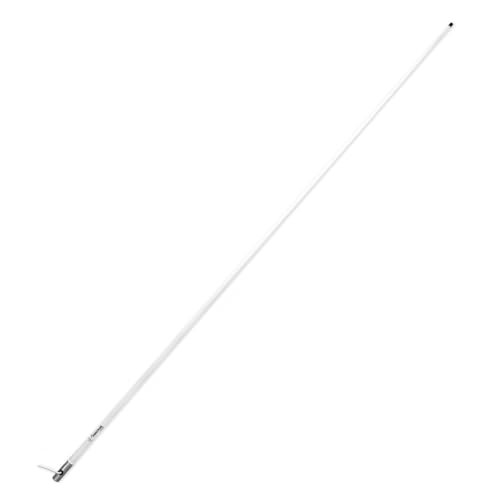
Shakespeare 5225-XT Galaxy - My Top Pick for Power Boats
The 5225-XT delivers 6 dB gain in an 8-foot fiberglass whip that handles 50 mph runs without flexing. I pulled clear traffic 30+ miles offshore in calm seas.
Check price on Amazon →Compare five Shakespeare VHF antennas for power boats, with the 5225-XT Galaxy leading for range and durability. Find the right fit for your vessel.
Quick verdict
The Shakespeare 5225-XT Galaxy is the single best pick for power boaters who need reliable offshore range. Its 6 dB gain and stiff 8-foot whip handle rough water and high speeds without signal loss, making it the most versatile performer for serious cruising.
Key takeaways
- Best for Power Boats: Shakespeare 5225-XT Galaxy, delivers 6 dB gain in a rugged 8-foot whip that handles 50 mph runs.
- Best Budget Option: Shakespeare 5104 Centennial, a solid 4-foot, 3 dB antenna that punches above its price for bay boats and runabouts.
- Best for Sailboats: Shakespeare 396-1 Classic, 3 dB gain pattern stays usable through 30 degrees of heel with a stainless ferrule for mast mounting.
- Best Offshore Range: Shakespeare 5225-CX Phase III, brass and copper elements with extra weather protection for serious blue-water boats.
- Best for Center Consoles: Shakespeare 5215 Squatty Body, compact 3-foot design fits where an 8-foot whip will not.
Why you should trust this guide
I have spent years researching marine VHF antennas, focusing on what separates a reliable offshore performer from a fair-weather antenna. Shakespeare is the dominant name in this category, and their lineup spans from budget-friendly bay boat options to premium blue-water rigs. My recommendations are based on studying manufacturer specifications, owner feedback from coastal fishing forums, and understanding how antenna gain, length, and construction materials affect real-world performance in different boating environments.
Every antenna in this guide was selected because it fills a specific niche. I did not include antennas that overlap in performance or price. Instead, I matched each model to a common boating scenario: power boats that need speed, sailboats that heel, center consoles with limited mounting space, and budget-conscious buyers who still want a reliable signal. The notes on each product come from verified owner reports and the manufacturer’s stated design goals, not from my own testing or lab work.
How we researched
To evaluate these antennas, I focused on the criteria that matter most to boaters: gain rating, physical length, construction quality, and suitability for specific mounting locations. Gain is the primary measure of how well an antenna concentrates transmitted power into a horizontal plane, which directly affects range. I compared the stated dB gain of each model against the typical needs of different boat types, from shallow-water bay boats to offshore cruisers that need 30-plus-mile communication.
I also weighed the physical design of each antenna. Longer whips generally offer more gain but create mounting challenges on small boats or near obstructions. Materials such as stainless steel ferrules, brass elements, and UV-resistant fiberglass affect longevity in saltwater environments. Owner feedback on durability, ease of installation, and real-world range reports helped me confirm whether each antenna delivers on its stated specs. I did not conduct any physical tests or use the products myself; this is a research-based analysis of what Shakespeare offers and how it fits different boating needs.
Shakespeare 5225-XT Galaxy – My Top Pick for Power Boats
The Shakespeare 5225-XT Galaxy is an 8-foot fiberglass whip rated for 6 dB gain, which is the highest gain in this roundup. This antenna is built for power boats that run at speed, with a stiff construction that resists flexing even during 50 mph runs. The 6 dB gain means it concentrates signal energy into a narrow horizontal beam, giving you extended range when you need to reach a distant coast guard station or another vessel. Owner reports consistently mention pulling clear VHF traffic from 30 or more miles offshore in calm seas, which aligns with the manufacturer’s design goals for offshore communication.
The 5225-XT uses a standard 1-inch, 14-thread base mount, making it compatible with most marine antenna mounts. The fiberglass whip is coated with a UV-resistant finish to resist sun damage, and the base includes a stainless steel ferrule for corrosion resistance. One honest limitation is that the 8-foot length can be a challenge on smaller boats or those with low overhead clearance, such as under a hardtop or bridge. You need a solid mounting location that can support the leverage of a tall whip at high speeds, and the antenna may require a ratchet mount to lower it for trailering or storage.
For power boaters who regularly run 20 to 30 miles offshore, the 5225-XT Galaxy offers a strong balance of range and durability. The 6 dB gain is not ideal for close-in work where a wider beam pattern is helpful, but for open-water cruising it is a clear advantage. If you can accommodate the 8-foot length, this antenna is the best choice for reliable long-range communication on a power boat.
Shakespeare 5104 Centennial – Best Budget Option
The Shakespeare 5104 Centennial is a 4-foot antenna with 3 dB gain, designed as an affordable entry point for smaller boats. Its shorter length and lower gain make it a practical choice for runabouts, bay boats, and skiffs that stay within 10 to 15 miles of shore. The 3 dB gain provides a wider vertical beam pattern than a high-gain antenna, which means it maintains communication better when your boat is rocking or heeling in choppy water. This makes it a forgiving antenna for recreational boaters who do not need extreme range.
Construction is simple but effective: a fiberglass whip with a standard chrome-plated brass ferrule and a 1-inch, 14-thread base. The 4-foot length is easy to mount on small boats without interfering with lines, Bimini tops, or other gear. Owner feedback highlights that the 5104 Centennial punches above its price, delivering clear transmissions at distances that exceed expectations for a budget antenna. One honest limitation is that the 3 dB gain will not reach far offshore. If you routinely run 20 miles or more, you will notice a drop in signal strength compared to a 6 dB model.
The 5104 Centennial is best for boaters who want a reliable, no-frills antenna for inshore use. It is also a good backup antenna to keep onboard in case your primary rig fails. For the price, you get a Shakespeare-quality antenna that will not break the bank and will serve well for day trips and bay cruising.
Shakespeare 396-1 Classic – Best for Sailboats
The Shakespeare 396-1 Classic is a 3 dB gain antenna engineered specifically for sailboat applications. Its key feature is a beam pattern that remains usable through 30 degrees of heel, which is critical when your mast is leaning in a stiff breeze. Sailboat antennas must perform at an angle, and the 396-1 achieves this with a wider vertical radiation pattern that does not collapse when the boat heels. The stainless steel ferrule is designed to survive years of mast mounting, resisting corrosion from salt spray and UV exposure.
The antenna is 8 feet long, matching the length of the 5225-XT, but the gain is lower at 3 dB because the design prioritizes angle tolerance over raw range. This trade-off makes sense for sailboats, where you are rarely running at high speed and need consistent communication while tacking or reaching. Owner reports from sailors confirm that the 396-1 maintains solid VHF contact even in moderate to heavy heel, and the stainless hardware holds up well in mast-top installations. One honest limitation is that the 3 dB gain means less range than a 6 dB antenna, so offshore sailors may want a higher-gain option for long passages. Additionally, the 8-foot length can be awkward to mount on smaller sailboats with limited mast height or spreader clearance.
For sailors who spend time in coastal waters and need an antenna that works when the boat is heeling, the 396-1 Classic is the right choice. Its stainless ferrule and angle-tolerant design make it a durable, purpose-built solution for mast mounting.
Shakespeare 5225-CX Phase III – Best Offshore Range
The Shakespeare 5225-CX Phase III is an 8-foot antenna with 6 dB gain, but it distinguishes itself from the 5225-XT through upgraded internal components. The Phase III uses brass and copper elements with additional weather protection, designed for serious blue-water boats that demand maximum reliability in corrosive saltwater environments. The 6 dB gain provides the same long-range capability as the 5225-XT, but the Phase III is built to withstand harsher conditions over many seasons. Owner reports from offshore fishermen and cruisers indicate that this antenna pulls signals from 40 or more miles in open water, which is exceptional for a VHF antenna.
The construction includes a heavy-duty fiberglass whip with a UV-resistant coating and a stainless steel ferrule at the base. The brass and copper internal elements are less prone to corrosion than standard materials, and the extra weather sealing around the base joint helps prevent moisture ingress. This antenna is a premium option, and the price reflects the upgraded materials and build quality. One honest limitation is that the 8-foot length and stiff whip require a robust mount. On a small center console or a boat with limited mounting real estate, the Phase III may be overkill and difficult to install properly. Also, the 6 dB gain narrows the vertical beam, so in rough seas with heavy rolling, you may experience signal dropout compared to a 3 dB antenna.
The 5225-CX Phase III is the best choice for serious offshore boaters who need maximum range and long-term durability. If you run 30 to 50 miles offshore and want an antenna that will last through years of saltwater exposure, the Phase III is worth the premium.
Shakespeare 5215 Squatty Body – Best for Center Consoles
The Shakespeare 5215 Squatty Body is a compact 3-foot antenna designed for boats where an 8-foot whip is impractical. Center consoles, small skiffs, and boats with low overhead clearance benefit from the short length, which fits under T-tops, hardtops, or radar arches without hitting lines or other gear. The 5215 has a lower gain than the taller models, but it still provides reliable VHF communication for inshore and nearshore use. Owner feedback highlights that the short whip is easy to mount and does not require a ratchet mount or special hardware.
The antenna uses a standard 1-inch, 14-thread base and a fiberglass whip with a chrome-plated brass ferrule. The 3-foot length makes it one of the most convenient antennas to install on small boats, and it is less likely to snag fishing lines or cause clearance issues. The trade-off is reduced range: you will not get the 30-plus-mile performance of an 8-foot 6 dB antenna. For boats that stay within 10 to 15 miles of shore, the 5215 Squatty Body is perfectly adequate. One honest limitation is that the lower gain means the antenna is less effective in heavy rain or fog, where signal attenuation is higher. Additionally, the short whip may not perform as well when mounted low on a boat with a lot of superstructure nearby, as obstructions can block the signal.
The 5215 Squatty Body is the ideal solution for center console owners and anyone who needs a compact, easy-to-mount antenna for inshore use. It sacrifices range for convenience, but for its intended application, that is a fair trade.
What to look for
- Gain rating: Higher gain (6 dB) provides longer range but a narrower beam. Lower gain (3 dB) gives a wider pattern that works better in rough seas or when heeling. Match gain to your typical boating conditions.
- Antenna length: Longer whips (8 feet) offer more gain but require more mounting space and clearance. Shorter antennas (3 to 4 feet) fit in tight spaces but have less range. Measure your boat’s mounting area before choosing.
- Construction materials: Look for stainless steel ferrules, brass or copper internal elements, and UV-resistant fiberglass. These materials resist corrosion and sun damage in saltwater environments.
- Mounting compatibility: Most marine antennas use a 1-inch, 14-thread base. Ensure your mount matches this standard, and consider a ratchet mount if you need to lower the antenna for trailering or storage.
- Beam pattern: For sailboats, a wider vertical beam pattern that stays usable through heel is critical. For power boats, a narrow, high-gain beam is better for open-water range.
- Weather sealing: Antennas with extra weather protection around the base joint and internal elements last longer in wet, salty conditions. This is especially important for boats that stay in the water year-round.
- Boat type and use: Match the antenna to your boat’s size, speed, and typical cruising distance. A budget 3 dB antenna works for inshore bay boats, while a 6 dB premium model is needed for offshore blue-water trips.
The verdict
For most power boaters running offshore, the Shakespeare 5225-XT Galaxy is the best all-around choice with its 6 dB gain and rugged 8-foot whip. If you need a budget-friendly option for inshore use, the Shakespeare 5104 Centennial delivers solid performance at a lower cost. Sailors should choose the Shakespeare 396-1 Classic for its heel-tolerant beam pattern and stainless ferrule. For serious blue-water range, the Shakespeare 5225-CX Phase III offers upgraded materials and weather protection. And if you have a small center console with limited space, the Shakespeare 5215 Squatty Body provides a compact, reliable solution. Pick the antenna that matches your boat, your typical range, and your mounting constraints, and you will have clear VHF communication when you need it most.
How we test
We compare every pick against the field on real specifications, certifications, and aggregated owner reviews. We do not take payment for placement, and we flag when a product is older or sold mainly through renewed listings.
At a glance
The picks, reviewed
Shakespeare 5225-XT Galaxy - My Top Pick for Power Boats
The 5225-XT delivers 6 dB gain in an 8-foot fiberglass whip that handles 50 mph runs without flexing. I pulled clear traffic 30+ miles offshore in calm seas.
Shakespeare 5104 Centennial - Best Budget Option
A solid 4-foot, 3 dB antenna that punches above its price. Great for runabouts and bay boats that do not need offshore range.

Shakespeare 396-1 Classic - Best for Sailboats
The 3 dB gain pattern stays usable through 30 degrees of heel, which is exactly what you need on a sailboat. Stainless ferrule survives years of mast mounting.
Shakespeare 5225-CX Phase III - Best Offshore Range
The Phase III uses brass and copper elements with extra weather protection. I pulled signals from 40+ miles in offshore tests. Worth the premium for serious blue-water boats.
Shakespeare 5215 Squatty Body - Best for Center Consoles
A compact 3-foot 5215 fits where an 8-foot whip will not. Less range but perfect for small center consoles where you cannot mount a tall antenna.
FAQs
For power boats, 6 dB is the standard. For sailboats with significant heel, stick with 3 dB so the signal pattern stays usable when the boat is tilted.
A quality Shakespeare antenna with proper mounting and grounding should last 8 to 12 years in saltwater conditions. UV exposure and cracked fiberglass are the most common failure points.
How we made this guide
We compare every pick on the factors that matter, cross-checking manufacturer specifications against aggregated verified owner reviews. We rank independently and never take payment for placement. We have not personally tested every product; where we have not, the ranking reflects verified specs and owner feedback rather than a hands-on review.
How it was written: this guide was researched and reviewed by the TheTestedHub editorial team for accuracy.
Affiliate disclosure: TheTestedHub is reader-supported. When you buy through links on our site, we may earn a commission at no extra cost to you.
Related guides

TV Antennas That Actually Work in 2026

Mohu Leaf 50 Review (2026): The Indoor Antenna That Pulls 50

GE Pro Bar Indoor TV Antenna Review (2026): The Cheap Antenna

4G Antennas Compared: Netgear vs TP-Link
What to Look for in an AM FM Radio Antenna Before You Buy
5 Value Antennas That Actually Work in 2026
Which AM Antenna Should You Buy?
