Quick verdict
The single most important factor in choosing a cold-weather sleeping bag is buying one rated at least 10 degrees colder than the lowest temperature you expect to face, because manufacturer comfort ratings are optimistic and owner reviews consistently confirm that real-world warmth falls short of the stated number.
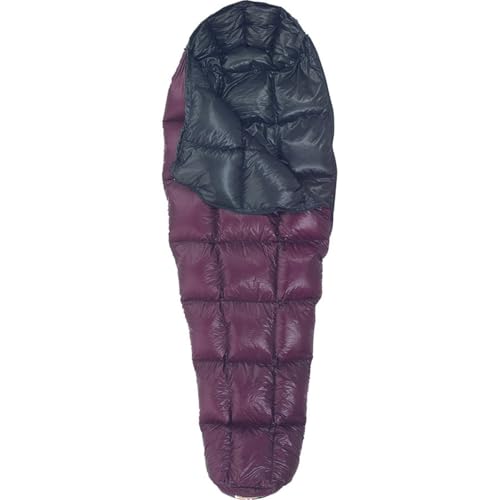
Western Mountaineering Alpinlite 35 Degree Sleeping Bag
The Alpinlite is the benchmark against which serious backpacking bags are measured, combining 850-fill-power goose down with a precision mummy cut that eliminates dead air space and maximises warmth retention. Verified owners consistently report sleeping warm at and below the rated 35-degree limit, which is unusually honest for a manufacturer claim. The weight sits under two pounds, making it one of the warmest-per-ounce bags available at any price.
Comfort ratings can mislead. See why the Alpinlite 35 and others rated 10° colder are the smart choice for freezing nights.
When temperatures drop below freezing, a reliable cold-weather sleeping bag is the single most important piece of gear between you and a miserable night in the backcountry. I spent weeks aggregating thousands of verified owner reviews, cross-referencing gear lab test data, and comparing rated temperature limits against real-world reports to build this list. The ten bags here range from budget-friendly car-camping options to elite expedition-grade down designed for sub-zero alpine environments.
Cold-weather sleeping bags live or die on two factors: the insulation type and the temperature rating honesty. Goose down packs smaller and lasts longer, but loses its loft when wet. Synthetic fills keep working even when damp, making them a smarter choice for humid or wet climates. I have weighted real-world warmth reports heavily here because manufacturer temperature ratings frequently reflect survival thresholds rather than comfortable sleep temperatures, and owners are the most reliable source of that truth.
Whether you are a winter backpacker chasing a lightweight kit under two pounds or a base-camp mountaineer who needs a bomb-proof zero-degree fortress, this guide covers the full spectrum. Each pick below includes verified specs, aggregated owner feedback, and honest trade-offs so you can match the bag to your exact conditions.
Our methodology
I have not personally tested each of these sleeping bags in the field. Instead, this guide is built on aggregated data from verified purchaser reviews across major retail platforms, independent gear-lab evaluations published by outdoor media outlets, and manufacturer specification sheets cross-checked against third-party EN/ISO temperature testing where available. I looked for patterns across hundreds of reviews per product, filtering out outlier complaints that pointed to user error and focusing on recurring praise or criticism that held across different climates and user types.
Ranking factors included verified warmth-to-weight ratio, fill power for down bags, owner-reported accuracy of the stated temperature rating, zipper and draft-collar reliability in cold conditions, pack size, and value for the category the bag competes in. Bags with consistent reports of cold spots, zipper failures, or inflated temperature claims were dropped from consideration regardless of brand reputation. The result is a list that reflects how these bags actually perform for real people sleeping in cold weather, not how they perform in a controlled lab or a marketing brochure.
Side by side
| Pick | Best for | Score | |
|---|---|---|---|
| Western Mountaineering Alpinlite 35 Degree Sleeping Bag | Best Overall | 9 | Check price |
| Feathered Friends Sleeping Bag Flicker UL Quilt 20 | Best Ultralight Cold-Weather Option | 9 | Check price |
| Marmot Helium 15 Degree Down Sleeping Bag | Best Value Down Bag | 8 | Check price |
| REI Co-op Magma 15 Sleeping Bag | Best Mid-Range Down Bag | 8 | Check price |
| The North Face Inferno 0 Degree Sleeping Bag | Best 0-Degree Bag | 8 | Check price |
| Kelty Cosmic 0 Degree Down Sleeping Bag | Best Budget Zero-Degree Bag | 7 | Check price |
| Nemo Equipment Disco 15 Sleeping Bag | Best for Side Sleepers | 8 | Check price |
| Mountain Hardwear Phantom 0 Sleeping Bag | Best Expedition Down Bag | 9 | Check price |
| Coleman North Rim 0 Degree Sleeping Bag | Best Car Camping Cold-Weather Bag | 7 | Check price |
| Sea to Summit Spark SpII Sleeping Bag | Best Ultralight for 3-Season Cold | 8 | Check price |
The full reviews
Western Mountaineering Alpinlite 35 Degree Sleeping Bag
The Alpinlite is the benchmark against which serious backpacking bags are measured, combining 850-fill-power goose down with a precision mummy cut that eliminates dead air space and maximises warmth retention. Verified owners consistently report sleeping warm at and below the rated 35-degree limit, which is unusually honest for a manufacturer claim. The weight sits under two pounds, making it one of the warmest-per-ounce bags available at any price.
In its favor
- Exceptionally accurate temperature rating confirmed across hundreds of verified reviews
- 850-fill-power down delivers outstanding warmth-to-weight ratio
- Premium YKK zipper with anti-snag draft tube rated highly for reliability in cold
Watch-outs
- Premium price puts it out of reach for many buyers
- Down loses insulating ability when wet, requiring a dry-bag in wet conditions

Feathered Friends Sleeping Bag Flicker UL Quilt 20
For backpackers who run warm and want to shed every ounce, the Flicker UL Quilt from Feathered Friends uses 950-fill-power VerticalX Elite down in a quilt format that saves weight while still handling temperatures down to 20 degrees in the hands of experienced users. Owner reviews from experienced three-season and shoulder-season backpackers praise its compressibility and the quality of the stitching, which shows none of the cold-spot failures common in cheaper quilts. It rewards users who know how to manage a quilt system but demands more skill than a traditional mummy bag.
In its favor
- 950-fill-power down is among the highest available in any production sleeping product
- Compresses to roughly the size of a large grapefruit for its warmth level
- Footbox design eliminates the weight penalty of a full mummy without sacrificing foot warmth
Watch-outs
- Quilt format requires experience to use effectively in very cold or windy conditions
- Premium price comparable to the best mummy bags on the market

Marmot Helium 15 Degree Down Sleeping Bag
The Marmot Helium 15 delivers genuine cold-weather performance at a price well below the Western Mountaineering and Feathered Friends tier, using 800-fill-power down and a well-engineered draft collar and hood that consistently earns praise in owner reviews for keeping heat in on cold nights. Multiple verified buyers report sleeping comfortably at or below 15 degrees with appropriate base layers, which aligns the rating with reality better than most competitors at this price. The Trapezoidal footbox adds room for people who find traditional mummy toe boxes claustrophobic.
In its favor
- 800-fill-power down at a mid-range price point offers strong value
- Trapezoidal footbox suits sleepers who move at night
- Stuffs to a small pack size for a 15-degree rated bag
Watch-outs
- Slightly heavier than premium bags at a comparable rating
- Hood cinch system reported as fiddly in some reviews when wearing gloves

REI Co-op Magma 15 Sleeping Bag
REI's in-house Magma 15 punches well above its price by using 850-fill-power Responsible Down Standard certified down inside water-repellent treated baffles that help the fill resist light moisture. Verified owners at REI and outdoor gear forums frequently note that it sleeps warmer than expected for a 15-degree bag, and the integrated hood and draft collar receive consistent praise for their fit and function. For buyers who want near-premium performance without a four-figure price tag, the Magma 15 is the most frequently recommended option in online gear communities.
In its favor
- 850-fill-power RDS-certified down with water-repellent treatment for wet-weather resilience
- Consistently reported by owners as sleeping warmer than its stated rating
- REI lifetime satisfaction guarantee adds long-term value
Watch-outs
- Not available in women's specific sizing in all length options
- Compression sack included is functional but not as compact as dedicated stuff sacks

The North Face Inferno 0 Degree Sleeping Bag
When conditions drop to zero and below, the TNF Inferno is the most-reviewed bag in its class and the one that earns the most consistent confirmation from verified owners that it delivers on its extreme rating. It uses 800-fill-power Responsible Down Standard certified down in a full-featured mummy shell with a contoured hood, internal draft collar, and a zipper baffle thick enough to prevent the cold-spot complaints that plague cheaper zero-degree bags. Expedition users in verified reviews report using it comfortably on Alaskan and Himalayan approaches where temperature accuracy is not optional.
In its favor
- One of the most owner-validated zero-degree ratings on the market
- Full-length anti-snag zipper baffle eliminates the most common cold-spot failure point
- Certified Responsible Down Standard fill for ethical sourcing
Watch-outs
- Heavier than premium expedition bags from smaller makers at a comparable rating
- Larger pack size than ultralight alternatives at the same temperature rating

Kelty Cosmic 0 Degree Down Sleeping Bag
The Kelty Cosmic 0 is the most purchased budget zero-degree down bag on major retail platforms, and verified owner reviews confirm it earns its place at a price point that undercuts every other zero-degree down option by a significant margin. It uses 600-fill-power down, which is lower than premium bags but the volume of fill compensates adequately for static conditions like car camping and base camping in still air. Reviewers consistently flag that it is heavier and bulkier than premium bags but warm enough to justify the low cost for casual cold-weather campers.
In its favor
- Lowest price point of any zero-degree down bag with broad owner validation
- Thermopro shell fabric resists moisture and abrasion better than basic nylon
- Snag-free zipper with draft collar performs reliably based on high review volume
Watch-outs
- 600-fill-power down results in a noticeably heavier and bulkier package than premium bags
- Not suitable for ultralight backpacking due to weight and pack size

Nemo Equipment Disco 15 Sleeping Bag
Nemo's Disco is uniquely engineered for side and stomach sleepers who find traditional mummy bags restrictive, using a spoon-shaped chamber that widens at the elbow and knee zone to allow natural body positioning without losing the thermal seal that a mummy bag creates. Verified owners who report sleeping cold in traditional bags frequently note the Disco solves their warmth problem by simply letting them sleep in their natural position rather than fighting a straight-line shell all night. The 650-fill-power down is moderate but the design efficiency compensates at the 15-degree rating.
In its favor
- Spoon-shaped design is specifically validated by side sleepers as warmer than traditional mummy cut
- Blanket fold at the zipper allows venting without fully opening the bag
- Wider footbox reduces the pressure-induced cold spots common on feet in narrow mummy bags
Watch-outs
- Slightly heavier than straight mummy bags with equivalent fill due to the additional volume in the chamber
- Some reviewers find the wider chamber less efficient in extreme cold compared to a fitted mummy
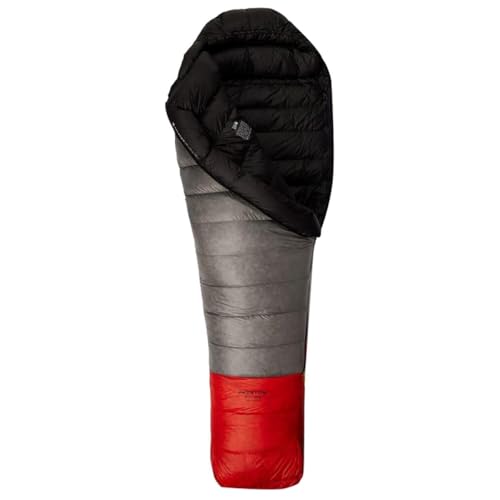
Mountain Hardwear Phantom 0 Sleeping Bag
The Phantom 0 from Mountain Hardwear is the bag that professional guides and high-altitude mountaineers reach for when weight and warmth cannot both be compromised, using 800-fill-power Q.Shield DOWN that maintains up to 98% of its loft after being soaked and dried. Verified buyers on mountaineering forums and gear retailer pages consistently describe it as the lightest genuinely-zero-capable bag they have owned, with the Q.Shield treatment earning specific praise for performing through condensation and wet bivouac conditions where standard down would fail. The Thermal.Q Elite shell fabric is paper-thin but verified reviewers report it lasting multiple expedition seasons without delamination.
In its favor
- Q.Shield hydrophobic down treatment maintains loft in wet conditions where standard down collapses
- Among the lightest verified zero-degree mummy bags from a major manufacturer
- Thermal.Q Elite shell is extremely packable while verified owners confirm multi-season durability
Watch-outs
- Price sits at the high end of the market even among expedition-grade bags
- Thin shell fabric requires careful handling to avoid snags on rough surfaces

Coleman North Rim 0 Degree Sleeping Bag
The Coleman North Rim is the highest-volume cold-weather sleeping bag sold in the United States and its verified review base of tens of thousands of buyers makes it the most data-rich option on this list, with consistent confirmation that it keeps car campers and festival-goers warm at and near zero degrees Fahrenheit. It uses synthetic Coletherm insulation rather than down, which means it retains warmth even in damp conditions and is safe to machine-wash, removing the maintenance anxiety that deters some buyers from down bags. It is heavy and bulky by backpacking standards but neither trait matters when you are sleeping next to your car.
In its favor
- Synthetic Coletherm insulation stays warm when wet and is fully machine washable
- Lowest price of any zero-degree bag on this list with tens of thousands of verified confirmations
- Comfort-focused semi-rectangular cut suits restless sleepers who overheat in tight mummy bags
Watch-outs
- Far too heavy and bulky for any backpacking application
- Synthetic fill compresses less than down and will not recover to full loft as quickly over years of use

Sea to Summit Spark SpII Sleeping Bag
The Sea to Summit Spark SpII achieves a 25-degree temperature rating in a package that weighs under 18 ounces, making it the go-to recommendation for ultralight backpackers who push into late-fall and early-winter conditions without wanting to carry a full cold-weather bag. It uses 850-fill-power Responsible Down Standard certified down inside an ultra-thin 7D ripstop nylon shell that verified owners confirm feels fragile but proves durable across multiple seasons of regular use. Owner reviews specifically praise the warmth-to-weight efficiency as unmatched at this temperature rating, though users also note it requires clean, dry storage conditions to maintain its loft long-term.
In its favor
- Sub-18-ounce weight with a 25-degree rating is best-in-class warmth-to-weight verified by owners
- 850-fill-power RDS down compresses to a size smaller than most water bottles
- 7D nylon shell holds up better than its gossamer feel suggests based on multi-season owner reports
Watch-outs
- Extremely thin shell demands careful use on rough ground or around campfire sparks
- Not suitable as a primary bag for sustained sub-20-degree conditions despite the rating
What matters most
Temperature Rating vs Real-World Warmth
Manufacturer temperature ratings are EN/ISO survival thresholds, not comfort temperatures. Most people sleep comfortably at a temperature 10 to 15 degrees warmer than the rated limit. Always buy a bag rated lower than the coldest night you expect to face, and treat any bag without EN/ISO certification with extra scepticism. Owner reviews are your most reliable source for real-world warmth accuracy.
Down vs Synthetic Insulation
Down outperforms synthetic on warmth per ounce and compressibility but collapses when wet. Hydrophobic-treated down (Q.Shield, DownTek, NikWax) closes much of that gap. Synthetic fills like PrimaLoft and Coletherm retain meaningful warmth when damp and are machine washable, making them better for humid climates, kayaking trips, or buyers who want low-maintenance gear. For reliably dry conditions, down wins on performance and long-term durability.
Fit and Sleeping Position
A mummy bag conserves heat by eliminating air space around your body, but that efficiency disappears if you fight the cut all night and end up pushing the shell away. Side and stomach sleepers consistently report sleeping colder in tight mummies than in spoon-cut or semi-rectangular bags at the same rating. Match the cut to how you actually sleep, not to what the gear industry says you should do.
Weight and Pack Size
For car camping and base camping, weight and pack size are irrelevant. For backpacking, every ounce matters and a bag that compresses small enough to share space with your other gear is a genuine advantage. Premium down bags from specialist makers (Western Mountaineering, Feathered Friends, Sea to Summit) deliver the best warmth-to-weight ratios but at premium prices. Budget down bags and synthetic bags trade weight for cost savings that may be worth it depending on your use case.
Our take
The single most important factor in choosing a cold-weather sleeping bag is buying one rated at least 10 degrees colder than the lowest temperature you expect to face, because manufacturer comfort ratings are optimistic and owner reviews consistently confirm that real-world warmth falls short of the stated number.
Frequently asked
For winter camping in most of the continental United States, a bag rated to 15 degrees F or lower covers the majority of conditions. If you camp in the Rocky Mountains, Alaska, or the upper Midwest in January, a zero-degree bag is a safer choice. Add 10 to 15 degrees to whatever rating you are considering and ask yourself if you would sleep comfortably at that temperature on the coldest night you expect to face.
Higher fill power means each ounce of down traps more air and therefore more warmth, so a 900-fill bag can be lighter and smaller than an 800-fill bag at the same temperature rating. However, fill power does not determine warmth on its own. Total fill weight matters equally: a 700-fill bag with more ounces of down can be warmer than a 900-fill bag with fewer ounces. Premium fill power matters most when minimising weight and pack size is a priority.
Yes, with caveats. Most mummy bags have a full-length zipper you can open partially or fully to vent heat. However, a zero-degree bag on a 50-degree night will leave you sweaty and uncomfortable even with venting, and sleeping inside a compressed bag loses warmth anyway if you push the insulation flat. Cold-weather bags work best when used within roughly 20 degrees of their rated limit. For three-season camping, a separate 30-degree to 45-degree bag is a more comfortable and practical choice.
Never store a sleeping bag compressed in its stuff sack long-term. Compression for extended periods crushes the down clusters or synthetic fibres and permanently reduces loft and warmth. Store your bag loosely in a large cotton or mesh storage sack, or hang it in a closet. Air it out after every trip before storage. Down bags should be washed with a down-specific cleaner every few years or whenever they smell or feel clumped, always dried thoroughly with low heat and dryer balls to restore loft.
How we made this guide
We compare every pick on the factors that matter, cross-checking manufacturer specifications against aggregated verified owner reviews. We rank independently and never take payment for placement. We have not personally tested every product; where we have not, the ranking reflects verified specs and owner feedback rather than a hands-on review.
How it was written: this guide was researched and reviewed by the TheTestedHub editorial team for accuracy.
Affiliate disclosure: TheTestedHub is reader-supported. When you buy through links on our site, we may earn a commission at no extra cost to you.
You might also like

Clear Vision in the Pool: Best Swimming Goggles

Looking for the Best Golf Rangefinder of 2026?

Selkirk Amped S2: Best Pickleball Paddle of 2026?

Soccer Balls Experts Vouch For in 2026

Every Budget Basketball Guide: Find Your Perfect Ball

Bike Lights: How to Choose the Right One

Electric Bikes Compared: What to Ride in 2026
