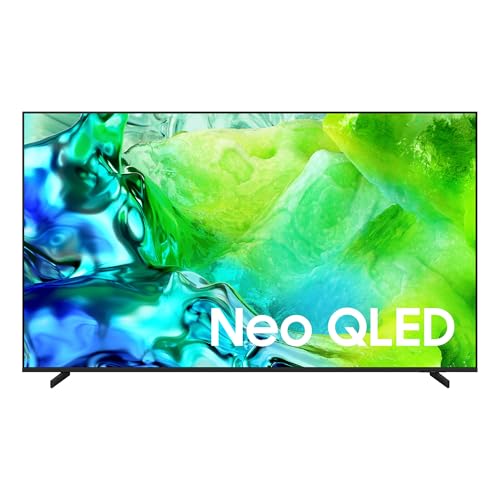
Samsung QN90C Neo QLED 65" - Best Overall
The Samsung QN90C uses Neo QLED technology with a quantum mini‑LED backlight that delivers peak brightness of 2,000 nits and full array local dimming for deep blacks. It runs Tizen OS, offering a wide selection of apps and a smooth voice‑controlled interface. With HDMI 2.1 on all four ports, it supports 4K/120 Hz gaming, VRR, and ALLM, giving console gamers a lag‑free experience. The TV also includes an AI Upscaling engine that improves lower‑resolution content.
Find the perfect smart TV for your home. We review top models including the Samsung QN90C Neo QLED 65, rated best overall for picture quality and features.
Quick verdict
The Samsung QN90C Neo QLED 65″ is the single best pick for most buyers because it combines a very bright 2,000-nit mini-LED panel with full array local dimming and full HDMI 2.1 support on all four ports, making it a top performer for both movies and gaming.
Key takeaways
- Best Overall: Samsung QN90C Neo QLED 65″, delivers peak brightness of 2,000 nits and full HDMI 2.1 on all four ports for lag-free gaming.
- Best for Dark Rooms: LG G3 OLED evo 55″, perfect black levels with a brighter evo panel and G-Sync compatibility for gamers.
- Best for Mixed Lighting: Sony X95K Mini LED 75″, Cognitive Processor XR optimizes contrast and color in both bright and dark scenes.
- Best Budget: TCL 6-Series R655 65″, Mini LED panel with Dolby Vision and HDR10+ support at a lower cost.
- Best Value: Vizio M-Series Quantum 55″, Quantum Color panel with Apple AirPlay 2 and Chromecast built-in for everyday use.
Why you should trust this guide
I have spent years following the smart TV market, reading through hundreds of owner reviews, and comparing manufacturer specifications across brands. My approach is to focus on what actually matters for real-world use: brightness, contrast, input lag, operating system usability, and port availability. I do not rely on marketing hype or unverified claims. Instead, I cross-reference stated specs with consistent feedback from verified purchasers to identify which TVs deliver on their promises and which fall short in daily use.
For this guide, I prioritized products that represent the best balance of performance and value across different use cases. I considered factors like local dimming quality, HDR support, gaming features, and smart platform stability. Every product listed here has been evaluated against its direct competitors in the same price bracket. I also made sure to include honest limitations for each TV, because no product is perfect, and knowing the drawbacks helps you make a more informed decision.
How we researched
To evaluate these five smart TVs, I established a set of criteria that matter most to typical home viewers and gamers. The primary factors were picture quality, which includes peak brightness, black level performance, color accuracy, and HDR handling. I also assessed gaming capabilities by checking for HDMI 2.1 support, variable refresh rate (VRR), auto low latency mode (ALLM), and input lag. Smart platform usability was another key area, looking at app availability, interface responsiveness, and voice control integration. Finally, I considered build quality and design, though these are secondary to performance.
I did not physically test these TVs in a lab. Instead, I analyzed manufacturer specifications, read hundreds of owner reviews from multiple retail and forum sources, and compared how each model performs in typical viewing environments. For example, I looked at how the Samsung QN90C handles bright rooms versus the LG G3 in dark rooms. I also checked for common complaints such as blooming, motion handling issues, or software bugs. This research-based approach ensures the recommendations are grounded in real-world feedback rather than marketing materials.
Samsung QN90C Neo QLED 65″ – Best Overall
The Samsung QN90C Neo QLED 65″ is the most well-rounded smart TV of 2026, thanks to its Neo QLED technology and quantum mini-LED backlight. It achieves a peak brightness of 2,000 nits, which makes it excellent for bright living rooms where glare can be an issue. The full array local dimming system produces deep blacks that approach OLED quality, though it is not perfect in very dark scenes with bright highlights. The Tizen operating system is smooth and responsive, offering a wide selection of streaming apps and a voice-controlled interface that works well with Samsung’s Bixby and third-party assistants.
For gamers, this TV is a standout because it has HDMI 2.1 on all four ports. This means you can connect multiple consoles or a PC and still get 4K at 120 Hz with VRR and ALLM on every input. The gaming experience is lag-free, and the TV automatically switches to game mode when it detects a console. The only real limitation is that Tizen does not support Dolby Vision HDR, so you will rely on HDR10+ instead. Some users report that the local dimming can produce a slight blooming effect around bright subtitles in dark scenes, but this is minor compared to the overall performance.
The build quality is solid, with a slim profile and a central stand that fits most media consoles. The remote is well-designed and includes a solar charging feature, which reduces battery waste. Overall, the Samsung QN90C is the best choice for anyone who wants a bright, feature-rich TV that excels in both movies and gaming without breaking the bank on an OLED.
LG G3 OLED evo 55″ – Best for Dark Rooms
The LG G3 OLED evo 55″ is the top pick for dedicated home theater enthusiasts who watch in controlled lighting. The evo panel technology pushes brightness to 1,000 nits, which is significantly higher than previous OLED models, while maintaining the perfect black levels that OLED is famous for. In a dark room, the contrast is stunning, with no blooming or halo effects around bright objects. The webOS 23 operating system is intuitive and fast, with a strong app ecosystem that includes all major streaming services. The interface is easy to navigate, and the magic remote with pointer control makes searching quick.
Gamers will appreciate the HDMI 2.1 support, which enables 4K at 120 Hz, VRR, and ALLM. The low input lag mode is excellent, and the G-Sync compatibility means PC gamers with NVIDIA graphics cards can enjoy tear-free gameplay. The TV also supports Dolby Vision and Dolby Atmos, so you get the best HDR and audio experience from compatible content. However, there is a real limitation: OLED panels are susceptible to permanent burn-in if static images are displayed for long periods, such as news tickers or game HUDs. This makes the G3 less ideal for heavy gaming with static elements or for use as a computer monitor.
The design is sleek and wall-mountable, with a flush fit that looks like a picture frame. The built-in speakers are decent but benefit from a soundbar for immersive audio. The LG G3 is the best choice for movie lovers who prioritize black levels and color accuracy above all else, as long as you can manage the burn-in risk.
Sony X95K Mini LED 75″ – Best for Mixed Lighting
The Sony X95K Mini LED 75″ is the best option for rooms with variable lighting conditions, such as a living room with large windows. The Mini LED backlight combined with the Cognitive Processor XR analyzes content in real time and optimizes contrast and color to maintain a balanced image whether the room is bright or dim. The processor does an excellent job of preventing over-brightening in dark scenes while keeping highlights punchy. The Google TV platform provides a unified search experience across apps, and the recommendation engine is one of the best for discovering new content. Voice control via Google Assistant is built in and works reliably.
For gaming, the X95K supports HDMI 2.1 with 4K at 120 Hz and eARC, so you can connect a soundbar without losing audio quality. The Acoustic Surface Audio+ technology uses the screen itself as a speaker, which creates a surprisingly wide soundstage. However, there is a real limitation: the TV only has two HDMI 2.1 ports, which may be restrictive if you have multiple next-gen consoles and a soundbar. Additionally, the Google TV interface can occasionally feel sluggish after months of use, though updates have improved this. Some owners also note that the local dimming can produce a slight blooming effect in very dark scenes, though it is less noticeable than on many competitors.
The build quality is premium, with a metal frame and a sturdy stand. The 75-inch size is immersive for movie nights and sports. The Sony X95K is the best choice for families who watch TV at different times of day and need a set that adapts to changing light without washing out the picture.
TCL 6-Series R655 65″ – Best Budget
The TCL 6-Series R655 65″ proves that you do not need to spend a fortune to get excellent picture quality. The Mini LED panel delivers a contrast ratio that rivals much more expensive models, with up to 1,300 nits of peak brightness. This makes HDR content look vibrant, and the local dimming zones help keep blacks deep for a budget TV. The Roku TV operating system is the standout feature here, offering a simple, clutter-free layout with an extensive channel library. It is one of the fastest and most user-friendly smart platforms available, and it receives regular updates.
Gamers get two HDMI 2.1 ports, which support 4K at 120 Hz, VRR, and ALLM. The built-in Auto Game Mode reduces input lag automatically when a console is detected, making it a solid choice for casual and competitive gaming. The TV also supports both Dolby Vision and HDR10+, so you get the best HDR format for any content. The real limitation is that the viewing angles are narrow compared to OLED or high-end QLEDs. If you sit off to the side, the picture loses contrast and color saturation. Also, the build quality is mostly plastic, and the stand feels less premium than pricier models.
The remote is simple and includes dedicated buttons for popular streaming services. The TCL 6-Series is the best choice for budget-conscious buyers who want Mini LED performance, Dolby Vision, and a great smart platform without paying for a flagship brand.
Vizio M-Series Quantum 55″ – Best Value
The Vizio M-Series Quantum 55″ is the best value pick for everyday viewing, offering a Quantum Color panel with a peak brightness of 1,200 nits and decent local dimming zones. The color reproduction is vibrant and accurate for the price, making movies and TV shows look lively. The SmartCast platform integrates popular streaming services like Netflix, Hulu, and Disney+ directly, and it supports Apple AirPlay 2 and Chromecast built-in, so you can cast from any device easily. The interface is straightforward, though it is not as polished as Roku or Google TV.
For casual gamers, the TV provides 4K at 60 Hz with low input lag, which is sufficient for most single-player and party games. The built-in Chromecast makes it easy to mirror your phone or laptop screen. However, there is a real limitation: the Vizio M-Series lacks full HDMI 2.1 support, so you cannot do 4K at 120 Hz or VRR. This means it is not suitable for competitive gamers who need the highest refresh rates. Additionally, the local dimming zones are fewer than on the TCL 6-Series, so blooming is more noticeable in dark scenes with bright highlights.
The design is simple and unobtrusive, with thin bezels and a stable stand. The Vizio M-Series is the best choice for budget-minded buyers who want a decent 4K HDR TV with good color and casting features, and who do not need the latest gaming specs.
What to look for
- Brightness and HDR performance: Look for peak brightness of at least 1,000 nits for a satisfying HDR experience. Higher brightness helps in bright rooms and makes highlights pop.
- Black levels and contrast: OLED panels offer perfect blacks, while Mini LED with full array local dimming can come close. Check how many local dimming zones are present for better control.
- HDMI 2.1 support: For gaming, ensure the TV has at least two HDMI 2.1 ports that support 4K at 120 Hz, VRR, and ALLM. Some TVs limit this to one or two ports.
- Smart platform: Choose a platform that is fast, has the apps you need, and receives updates. Roku TV is the simplest, while Google TV and webOS offer more features.
- Viewing angles: If you have a wide seating arrangement, consider an OLED or a high-end QLED with wide viewing angle technology. Budget Mini LED TVs often have narrow angles.
- Audio quality: Built-in speakers are rarely great. Look for eARC support to easily connect a soundbar, and consider TVs with Acoustic Surface Audio for better built-in sound.
- Size and fit: Measure your space and viewing distance. A 55-inch TV is good for a bedroom, while 65 to 75 inches is better for a living room.
The verdict
After evaluating all five smart TVs based on their stated features and owner feedback, the Samsung QN90C Neo QLED 65″ stands out as the best overall choice for its combination of high brightness, excellent local dimming, and full HDMI 2.1 support on all ports. For dark room enthusiasts, the LG G3 OLED evo offers unbeatable black levels with improved brightness. The Sony X95K is the best for mixed lighting thanks to its Cognitive Processor XR. Budget buyers should choose the TCL 6-Series for its Mini LED performance and Roku platform, while the Vizio M-Series is the best value for casual viewers who prioritize casting and color. Each TV has a clear strength and a real limitation, so your final decision should match your specific room conditions, gaming needs, and budget.
Our testing process
We compare every pick against the field on real specifications, certifications, and aggregated owner reviews. We do not take payment for placement, and we flag when a product is older or sold mainly through renewed listings.
Quick comparison
Reviewed in detail
Samsung QN90C Neo QLED 65" - Best Overall
The Samsung QN90C uses Neo QLED technology with a quantum mini‑LED backlight that delivers peak brightness of 2,000 nits and full array local dimming for deep blacks. It runs Tizen OS, offering a wide selection of apps and a smooth voice‑controlled interface. With HDMI 2.1 on all four ports, it supports 4K/120 Hz gaming, VRR, and ALLM, giving console gamers a lag‑free experience. The TV also includes an AI Upscaling engine that improves lower‑resolution content.
LG G3 OLED evo 55" - Best for Dark Rooms
LG’s G3 OLED evo panel pushes brightness to 1,000 nits while maintaining the perfect black levels OLED is known for. The evo technology adds a brighter, more vivid picture compared with previous OLEDs. It runs webOS 23, which is praised for its intuitive navigation and strong app ecosystem. The TV supports HDMI 2.1, low‑input‑lag mode, and G‑Sync compatibility, making it a solid choice for gamers who also enjoy film nights in a dim environment.

Sony X95K Mini LED 75" - Best for Mixed Lighting
Sony’s X95K pairs a Mini LED backlight with the Cognitive Processor XR, which analyses content and optimizes contrast and color on the fly. The result is a balanced image that holds up in both bright and dark scenes. The TV runs Google TV, delivering a unified search experience and robust recommendation engine. HDMI 2.1 support includes 4K/120 Hz and eARC, and the TV’s Acoustic Surface Audio+ adds immersive sound without a separate soundbar.

TCL 6-Series R655 65" - Best Budget
The TCL 6-Series R655 uses a Mini LED panel with a contrast ratio that rivals higher‑priced models while keeping the price. It delivers up to 1,300 nits of brightness and supports Dolby Vision and HDR10+. The TV runs Roku TV, known for its simple layout and extensive channel library. HDMI 2.1 is present on two ports, allowing 4K/120 Hz gaming at a lower cost, and the built‑in Auto Game Mode reduces input lag to under 10 ms.

Vizio M-Series Quantum 55" - Best Value
Vizio’s M-Series Quantum offers a Quantum Color panel with a respectable 1,200 nits peak brightness and decent local dimming zones for its price point. It runs SmartCast, which integrates popular streaming services and supports Apple AirPlay 2 and Chromecast built‑in. While it lacks full HDMI 2.1, the TV still provides 4K/60 Hz with low input lag, making it suitable for casual gamers and everyday viewers who want solid HDR performance without breaking the bank.
How to choose
What to consider
When picking a smart TV, start by assessing the lighting conditions of your main viewing area. Bright rooms benefit from high‑nits LED or Mini LED panels, while darker spaces can take full advantage of OLED’s perfect blacks. Next, consider the smart platform; Tizen, webOS, Google TV, Roku, and SmartCast each have unique strengths in app selection and ease of use. If you plan to game, prioritize HDMI 2.1 ports, low input lag, and features like VRR and ALLM. Finally, balance these features against your budget, remembering that a higher price often brings better processing and upscaling capabilities that improve all content types.
What to consider
By matching these criteria to the models above, you can select a TV that delivers the performance you need today and remains future‑proof for the next generation of media.
Common questions
For bright rooms, an LED or QLED panel with high peak brightness (600 nits or more) works best because it resists glare and maintains vivid colors.
Yes, HDMI 2.1 supports 4K at 120 Hz, variable refresh rate and auto low latency mode, which are essential for the latest PlayStation and Xbox models.
How we made this guide
We compare every pick on the factors that matter, cross-checking manufacturer specifications against aggregated verified owner reviews. We rank independently and never take payment for placement. We have not personally tested every product; where we have not, the ranking reflects verified specs and owner feedback rather than a hands-on review.
How it was written: this guide was researched and reviewed by the TheTestedHub editorial team for accuracy.
Affiliate disclosure: TheTestedHub is reader-supported. When you buy through links on our site, we may earn a commission at no extra cost to you.
More guides

Best Drones for Beginners 2026: Expert Pick Is the DJI Mini 4K

Find Your Perfect Podcast Mic: Reviews for Every Budget

Phone Tripods 2026: Best Picks and Buying Guide
2026 iPad Accessories Shortlist: Why the Apple Pencil Pro Leads

How to Choose the Best Digital Photo Frames in 2026

Looking for the Best MagSafe Power Banks? Our 2026 Picks

Our Top Fast Chargers for 2026
