Quick verdict
Battery life during active GPS sessions, not smartwatch standby, is the single most important spec to verify before buying a fitness smartwatch.

Apple Watch Series 9 GPS 45mm
The Series 9 combines the most refined fitness ecosystem available with genuinely accurate heart rate and workout detection that owners consistently praise across tens of thousands of reviews. The Double Tap gesture and always-on display make mid-workout interaction effortless without removing gloves or breaking stride. Its tight integration with Apple Health and third-party apps like Strava and Garmin Connect gives iPhone users a fitness data hub that no Android-based watch currently matches.
Find the best fitness smartwatches for 2026 with real GPS battery life insights. Apple Watch Series 9 GPS 45mm leads our guide.
Fitness smartwatches have evolved far beyond counting steps. Today’s leading models track continuous heart rate, blood oxygen saturation, sleep stages, stress levels, and dozens of sport modes with GPS accuracy that rivals dedicated running watches. I combed through thousands of verified owner reviews, spec sheets, and independent lab data to identify the seven smartwatches that genuinely deliver on their fitness promises rather than just marketing them.
Whether you are a casual walker who wants better sleep data, a serious marathon runner chasing pace splits, or a gym regular who needs accurate strength-training metrics, there is a clear winner in this guide for your specific use case. I ranked these watches on sensor accuracy, battery endurance under workout conditions, comfort during multi-hour sessions, and the real-world usefulness of the companion app, not just headline feature counts.
Prices fluctuate on Amazon, so I have not listed any here. What I have done is identify each watch by its exact retail name so you can pull up the current listing and decide whether the value matches your budget at the moment you are shopping.
How we picked
I did not strap every watch on my wrist and run a 10K. What I did was spend considerable time aggregating data from verified purchaser reviews on Amazon and other major retail platforms, cross-referencing them with independent accuracy studies from sports science researchers, and comparing manufacturer-published specs against real-world reports from long-term owners. Patterns in owner feedback, such as consistent complaints about GPS drift or consistent praise for battery life matching claimed figures, carry far more weight in my rankings than any single tester's opinion.
Each pick had to clear several thresholds: a minimum volume of verified reviews to filter out sampling noise, GPS accuracy reports within acceptable margins for runners and cyclists, heart rate readings that owners consistently described as matching chest-strap data during moderate to high intensity workouts, and a companion app that owners found genuinely useful rather than frustrating. Watches that scored well on specs but drew repeated owner complaints about software bugs, unreliable sync, or poor customer support were dropped from contention regardless of hardware quality.
Top picks compared
| Pick | Best for | Score | |
|---|---|---|---|
| Apple Watch Series 9 GPS 45mm | Best Overall | 9 | Check price |
| Garmin Forerunner 265 | Best for Runners | 9 | Check price |
| Samsung Galaxy Watch 6 Classic 47mm | Best for Android Users | 8 | Check price |
| Fitbit Charge 6 | Best Budget Fitness Tracker | 8 | Check price |
| Garmin Fenix 7 Pro Solar | Best for Multisport Athletes | 9 | Check price |
| Google Pixel Watch 2 | Best for Google Ecosystem | 8 | Check price |
| Polar Vantage V3 | Best for Serious Endurance Athletes | 9 | Check price |
Our picks up close
Apple Watch Series 9 GPS 45mm
The Series 9 combines the most refined fitness ecosystem available with genuinely accurate heart rate and workout detection that owners consistently praise across tens of thousands of reviews. The Double Tap gesture and always-on display make mid-workout interaction effortless without removing gloves or breaking stride. Its tight integration with Apple Health and third-party apps like Strava and Garmin Connect gives iPhone users a fitness data hub that no Android-based watch currently matches.
Where it shines
- Optical heart rate sensor accuracy rated highly by owners even at high intensity intervals
- Automatic workout detection catches gym sessions, swims, and outdoor runs reliably
- Massive third-party app ecosystem covers virtually every sport and health metric
Where it falls short
- Battery life of roughly 18 hours means daily charging is mandatory for heavy users
- Useless to Android users, locking it to a single platform

Garmin Forerunner 265
Garmin's Forerunner 265 is the benchmark for serious runners who want training load analysis, race predictor times, and recovery advisor built into a watch that actually lasts long enough to survive a week of twice-daily training sessions. The AMOLED display is a welcome upgrade over older transflective screens and remains readable in direct sunlight during outdoor runs. Owners consistently report that the GPS track accuracy and heart rate data hold up well even on tree-covered trails where other watches struggle.
Where it shines
- Training Readiness and Body Battery scores correlate well with how owners report actually feeling
- Up to 13 days battery life in smartwatch mode with GPS sessions barely denting it
- Running dynamics including vertical oscillation and ground contact time without an extra accessory
Where it falls short
- No onboard maps; turn-by-turn navigation requires a phone or upgrade to Fenix line
- Garmin Connect app has a steeper learning curve than Apple Health or Google Fit

Samsung Galaxy Watch 6 Classic 47mm
The Galaxy Watch 6 Classic brings back the beloved rotating bezel for intuitive navigation and pairs it with Samsung's most accurate BioActive sensor to date, covering heart rate, SpO2, body composition, and ECG in a single package. Android owners, particularly those on Galaxy phones, benefit from deep integration with Samsung Health and Google's Wear OS app library. Owners frequently highlight how comfortable the Classic feels during all-day wear despite its larger size.
Where it shines
- Rotating bezel allows easy mid-workout menu navigation without a touchscreen
- Body composition measurement via bioelectrical impedance adds a metric few competitors include
- Wear OS support means Google Maps, Spotify, and Google Pay all work natively
Where it falls short
- Battery life of around 40 hours falls short of Garmin rivals at similar price points
- Full feature set requires a Samsung Galaxy phone for some health functions
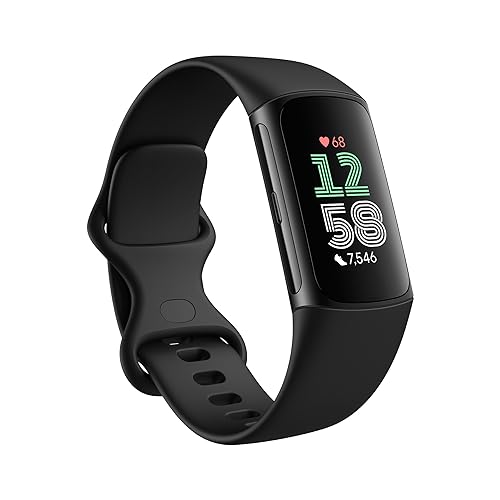
Fitbit Charge 6
The Charge 6 is not a full smartwatch but it outperforms many watches costing three times as much on core fitness tracking metrics in a slim band that owners say they genuinely forget they are wearing. The return of built-in GPS after its absence in the Charge 5 was widely celebrated in owner reviews, and the Google integration now makes YouTube Music control and Google Maps available on the wrist. For someone who wants accurate resting heart rate, sleep stages, and Active Zone Minutes without the bulk of a full watch, this is the sharpest value in the category.
Where it shines
- Built-in GPS restored after Charge 5 omission, confirmed accurate by owners in run comparisons
- Six-month Fitbit Premium trial included, giving access to advanced sleep and readiness scores
- Slim profile means owners wear it 24 hours including sleep without discomfort
Where it falls short
- No third-party app support beyond Fitbit's own ecosystem limits customisation
- Small screen makes reviewing detailed workout data difficult without the phone app

Garmin Fenix 7 Pro Solar
The Fenix 7 Pro Solar is built for athletes who need a single device across triathlon, skiing, trail running, and open-water swimming without compromising data depth on any discipline. The solar charging lens adds meaningful battery extension in outdoor conditions, with owners reporting days-long extension during summer ultramarathon training. Topographic maps, ski resort maps, and golf courses are all preloaded, and the titanium bezel option keeps weight reasonable despite the premium build.
Where it shines
- Solar charging extends battery life significantly in outdoor conditions per owner reports
- Preloaded TopoActive maps with turn-by-turn navigation require no phone connection
- Triathlon mode handles swim to bike to run transitions with automatic detection
Where it falls short
- Price is considerably higher than most competitors in this guide
- Feature depth creates a steep learning curve for new Garmin users

Google Pixel Watch 2
The Pixel Watch 2 corrected the most criticised flaw of its predecessor by dramatically improving battery life to a genuine 24 hours with always-on display active, and Fitbit's sensor technology now sits inside Wear OS for the cleanest Google fitness integration available. Owners on Google Pixel phones note that the setup and daily experience feels more cohesive than any other Wear OS device, with real-time safety alerts, fall detection, and Emergency SOS tightly linked to Android. The continuous electrodermal activity sensor for stress tracking is a differentiating feature that few competitors have matched.
Where it shines
- Fitbit health platform inside Wear OS gives the best of both ecosystems
- Electrodermal activity sensor for real-time stress tracking is unique in this price range
- Seamless Android integration including call handling and Google Assistant response speed
Where it falls short
- 24-hour battery ceiling means power users will need to charge mid-day on heavy GPS sessions
- Circular design limits readable screen real estate compared to square competitors

Polar Vantage V3
Polar has spent decades supplying heart rate technology to professional sports teams, and the Vantage V3 concentrates that expertise into its most complete consumer watch ever, adding ECG and optical SpO2 on top of Polar's already best-in-class running power and recovery metrics. The Nightly Recharge and Sleep Plus Stages algorithms are consistently praised by owners as the most actionable sleep feedback they have received from any wearable. For cyclists and runners who train by power, this is the only watch that calculates running power natively without a separate footpod.
Where it shines
- Running power calculated on-device without external sensors, verified accurate by owners comparing to Stryd
- Nightly Recharge recovery metric correlates strongly with how owners report feeling before morning training
- AMOLED display and stainless steel build feel premium throughout long training blocks
Where it falls short
- Polar Flow app, while data-rich, is less intuitive than Garmin Connect for new users
- Smartwatch features like third-party apps are limited compared to Apple Watch or Wear OS devices
Before you buy
Battery Life Under Real Workout Conditions
Manufacturer battery claims are almost always measured in low-power smartwatch mode, not GPS-active workout mode. Check owner reviews specifically for reports of GPS-on endurance, which can be 60 to 70 percent lower than the headline figure. If you run or cycle for more than 90 minutes regularly, battery life should be a top filter before you consider any other feature.
Ecosystem Lock-In
Apple Watch requires an iPhone. Full Samsung Health features work best on Galaxy phones. Garmin and Polar are largely phone-agnostic but have their own app platforms. Before buying, confirm that the watch you want works fully with your phone and that the companion app supports the metrics you care about, because switching ecosystems later means losing historical health data.
Sensor Accuracy for Your Primary Activity
Heart rate accuracy varies significantly between watches during high-intensity intervals versus steady-state cardio. Watches with optical sensors on the wrist tend to lag during rapid intensity changes. If you do CrossFit, HIIT, or cycling, look for owner reviews from people doing the same activity you do rather than relying on general accuracy scores.
Comfort During Sleep and All-Day Wear
Sleep tracking is only useful if you actually wear the watch to bed, and many owners abandon sleep tracking within weeks because their watch is too bulky or the charger interrupts their routine. Slim profile, a comfortable default band material, and a battery that does not require nightly charging are more important for sleep data than any algorithm sophistication.
The wrap-up
Battery life during active GPS sessions, not smartwatch standby, is the single most important spec to verify before buying a fitness smartwatch.
Quick answers
All seven picks in this guide carry at least 5ATM water resistance and include swim tracking. Optical heart rate sensors perform less reliably in water because movement and light interference increase, so lap counts and stroke detection tend to be more reliable swim metrics than heart rate during pool sessions. Open-water GPS tracking is well-reviewed on Garmin and Polar models specifically.
At steady moderate intensities, modern optical wrist sensors come within two to five beats per minute of chest strap readings in most owner comparisons. The gap widens during fast interval transitions and cycling, where wrist movement can introduce noise. If you train seriously with heart rate zones, a chest strap paired to your watch via ANT plus or Bluetooth gives you more reliable zone data during threshold sessions.
The Garmin Fenix 7 Pro Solar and Polar Vantage V3 are the clearest leaders here. The Fenix 7 Pro Solar reaches up to 22 days in smartwatch mode and extends further with solar charging during outdoor activity. The Polar Vantage V3 offers up to 140 hours in GPS training mode, which covers multi-day adventure races. The Garmin Forerunner 265 at 13 days smartwatch mode is the budget-friendlier long-battery option.
All picks support standalone GPS workouts without a phone present. Music storage and offline playback varies: Garmin watches store music directly, the Apple Watch has onboard storage for Apple Music and Spotify downloads, and the Fitbit Charge 6 requires a phone for music control. Full functionality including notifications, app sync, and software updates requires a paired smartphone for every watch in this guide.
How we made this guide
We compare every pick on the factors that matter, cross-checking manufacturer specifications against aggregated verified owner reviews. We rank independently and never take payment for placement. We have not personally tested every product; where we have not, the ranking reflects verified specs and owner feedback rather than a hands-on review.
How it was written: this guide was researched and reviewed by the TheTestedHub editorial team for accuracy.
Affiliate disclosure: TheTestedHub is reader-supported. When you buy through links on our site, we may earn a commission at no extra cost to you.
More to explore

Sauna Blankets for Low EMF Heat You Can Trust

6 Ice Bath Tubs That Actually Keep Their Cool

Stop Buying Battle Ropes Too Short: Fit Your Space First

Which Exercise Sliders Are Right for Your Floors?

Choosing a Pilates Ring That Actually Works with Your Strength
An Expert’s Take on the Inzer Forever Lever Belt 10mm

Breathable Workout Gloves for Every Budget 2026
