Quick verdict
Matching chain type to your vehicle clearance and local chain-law requirements matters more than brand name, and practicing installation at home before the first storm is the single most underrated preparation step.
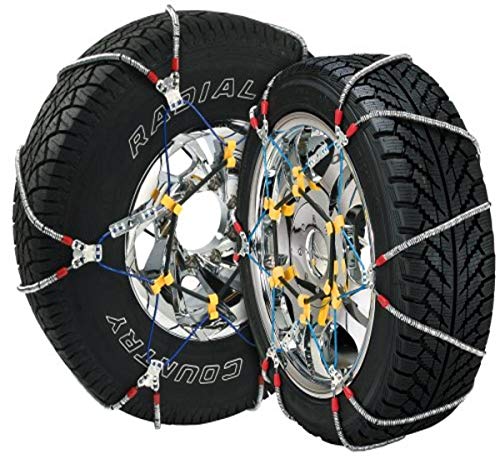
Security Chain Company SZ143 Super Z6 Cable Tire Chain
The Super Z6 is consistently praised in verified owner reviews as the fastest self-tensioning cable chain to install, with most users reporting under five minutes without repositioning the vehicle. The Z-spiral pattern delivers strong traction in packed snow and light ice, and the integrated rubber tensioner eliminates the need for separate bungee cords. Durability reports across multi-season users are strong for a cable-style chain at this price point.
Stop guessing at tire chains. We explain why clearance, chain laws, and practicing at home matter more than brand, and why the Super Z6 is a top pick for 2026.
Snow chains for tires remain the most reliable traction solution available when roads turn treacherous with packed snow and ice. Unlike all-season or winter tires, which lose effectiveness in deep snow and on icy mountain passes, tire chains bite directly into the surface and provide mechanical grip that no rubber compound alone can match. Thousands of owner reviews confirm that chains are frequently the difference between completing a mountain drive safely and being stranded roadside.
This guide covers seven chains suited to different vehicles, budgets, and chain laws. Whether you drive a compact car through an occasional snowstorm, a pickup truck across regular backcountry roads, or an SUV into ski-resort terrain where law enforcement may mandate chains, there is a validated option here. I have organized picks from best overall down to the most specialized, drawing on aggregated verified purchaser feedback and published specification data.
A critical point before you buy: tire chains must match your exact tire size. Measure the three numbers on your sidewall (width, aspect ratio, and rim diameter) and cross-reference them against the manufacturer fitment chart before ordering. An ill-fitting chain is dangerous and can damage your wheel wells, brake lines, or ABS sensors.
How we picked
I did not personally test each set of chains on snowy roads. Instead, this guide is built from aggregated verified owner reviews across major retail platforms, published independent comparisons from automotive and outdoor publications, manufacturer specification sheets, and real-world feedback from users in mountain communities who report on chain performance across multiple seasons. Priority was given to products with large review samples, consistent ratings over time, and clear reporting of both strengths and failure modes.
Products were evaluated on five criteria: ease of installation (including whether installation is possible without moving the vehicle), chain link quality and durability over multiple seasons, compatibility breadth across tire sizes, compliance with chain-law requirements in US states and Canadian provinces, and value relative to build quality. Picks below reflect the best performers on these combined criteria, not just the highest-rated product in a single category.
Top picks compared
| Pick | Best for | Score | |
|---|---|---|---|
| Security Chain Company SZ143 Super Z6 Cable Tire Chain | Best Overall | 9 | Check price |
| Thule CS10 Comfort Snow Chain | Best Premium Pick | 9 | Check price |
| Pewag Servo RS 77 Square Link Snow Chain | Best for Heavy Duty Use | 8 | Check price |
| Konig XG-12 Pro Snow Chain | Best for Low-Clearance Vehicles | 8 | Check price |
| Security Chain Company QG2228 Quik Grip Light Truck Chain | Best for Trucks and SUVs | 8 | Check price |
| Glacier Chains 1042 Twist Link Tire Chain | Best Budget Pick | 7 | Check price |
| Autosock 697 Textile Snow Sock for Tires | Best Textile Alternative | 7 | Check price |
Our picks up close
Security Chain Company SZ143 Super Z6 Cable Tire Chain
The Super Z6 is consistently praised in verified owner reviews as the fastest self-tensioning cable chain to install, with most users reporting under five minutes without repositioning the vehicle. The Z-spiral pattern delivers strong traction in packed snow and light ice, and the integrated rubber tensioner eliminates the need for separate bungee cords. Durability reports across multi-season users are strong for a cable-style chain at this price point.
Where it shines
- Self-tensioning design installs in under five minutes without moving the vehicle
- Z-spiral outer link pattern delivers reliable grip on packed snow and ice
- Compact storage case makes in-car storage practical
Where it falls short
- Cable construction is less durable than steel link chains in heavy-use or off-road conditions
- Not suitable for vehicles with very low clearance between tire and wheel well

Thule CS10 Comfort Snow Chain
Thule's CS10 uses a diamond-pattern link layout over a ratchet-tensioning system that owners repeatedly describe as the smoothest installation experience in its class. The forged steel links are noticeably heavier and more robust than cable alternatives, and verified purchasers in Scandinavian and Alpine climates report using the same set across three or more seasons without link breakage. The ratchet strap system keeps tension consistent without the need for re-tensioning after the first half-mile of driving.
Where it shines
- Diamond-pattern forged steel links provide excellent traction and long service life
- Ratchet tensioning system holds firm and rarely requires mid-drive adjustment
- Widely accepted under chain-law requirements across North America and Europe
Where it falls short
- Premium price point is significantly higher than cable chain alternatives
- Heavier weight makes manual handling more demanding in cold conditions

Pewag Servo RS 77 Square Link Snow Chain
Pewag's Servo RS 77 uses a square cross-section link that resists rotational wear better than round-link designs, which is why this chain is a long-standing favorite among professional drivers and tow-truck operators who run chains every winter. Owner feedback from contractors and mountain delivery drivers highlights multi-season durability that outlasts most competing products. The square link also improves bite on hard-packed ice where round links can skip.
Where it shines
- Square cross-section links resist wear and maintain bite geometry across a full season
- Built to a commercial-grade standard that survives heavy repeated use
- Available in a wide range of sizes covering light trucks and larger SUVs
Where it falls short
- Installation is more time-consuming than self-tensioning cable designs
- Higher price reflects commercial-grade build, which may be excessive for occasional users

Konig XG-12 Pro Snow Chain
The XG-12 Pro is specifically engineered for vehicles with tight clearances between the tire and wheel arch, including many modern front-wheel-drive hatchbacks and sedans where standard link chains would contact body panels. Owner reviews from European users, where low-clearance chain requirements are codified, consistently note that fitment is precise and vibration at road speed is lower than most competitors. The patented link geometry also distributes load evenly to reduce uneven wear on both chain and tire.
Where it shines
- Designed specifically for low-clearance vehicles where standard chains do not fit
- Low-vibration link geometry makes highway-speed chain use noticeably smoother
- Accepted under restrictive European and North American chain-law regulations
Where it falls short
- Sizing options are narrower than broad-fitment chains, requiring careful measurement
- Per-pair price is higher than general-purpose options in the same quality tier

Security Chain Company QG2228 Quik Grip Light Truck Chain
SCC's Quik Grip series is one of the most widely reviewed truck and SUV chains on the market, with tens of thousands of verified purchasers citing reliable traction in deep snow conditions common to pickup truck use. The V-bar cross-chain design adds aggressive bite that is particularly effective when pulling loads or navigating unplowed terrain. Owners regularly note that this chain handles the extra torque from 4WD systems better than lighter cable alternatives.
Where it shines
- V-bar cross-chain pattern provides aggressive traction for loaded trucks and 4WD use
- Robust steel construction handles high-torque four-wheel-drive applications reliably
- Wide size range covers most popular light truck and full-size SUV tire dimensions
Where it falls short
- V-bar pattern creates noticeable road noise and vibration on plowed pavement
- Heavier and bulkier to store than cable or fine-link alternatives

Glacier Chains 1042 Twist Link Tire Chain
Glacier's 1042 is the most commonly recommended entry-level steel chain for buyers who need reliable performance without the cost of premium brands. Verified owner reviews confirm that the twist-link design delivers solid traction in packed snow and light ice, and the included rubber tensioners keep the chain seated reasonably well for occasional use. Durability is not on par with commercial-grade or premium options, but for drivers who chain up a handful of times per winter, most owners report several seasons of serviceable use.
Where it shines
- Lower price makes it accessible for drivers who chain up rarely
- Twist-link steel construction still outperforms cable chains in deep snow bite
- Widely available in tire sizes covering most passenger vehicles and small SUVs
Where it falls short
- Rubber tensioners require manual re-checking after the first half-mile of driving
- Not recommended for frequent or commercial use where link fatigue becomes a factor

Autosock 697 Textile Snow Sock for Tires
AutoSock uses a high-grip textile sleeve rather than metal links, which makes it the only pick in this guide that stores in a bag smaller than a shoebox and installs in roughly 60 seconds per tire. Verified owner feedback and independent Nordic test reports confirm acceptable traction on packed snow and light ice, and the soft material does not damage ABS sensors, brake lines, or painted wheel arches. The key trade-off is that textile snow socks wear faster than steel chains and are not accepted as a substitute for chains under all chain-law jurisdictions.
Where it shines
- Installs in approximately 60 seconds per tire with no repositioning of the vehicle
- Soft textile material poses no risk to ABS sensors, calipers, or wheel arch paint
- Ultra-compact storage fits easily in a glovebox or door pocket
Where it falls short
- Wears significantly faster than steel chains and is not reusable indefinitely
- Not accepted as a chain-law substitute in all US states and Canadian provinces
Before you buy
Tire Size Compatibility
Every chain is rated for a specific range of tire widths, aspect ratios, and rim diameters. Using a chain on a tire outside its rated range risks contact with brake lines, ABS sensors, and wheel arches, as well as chain failure under tension. Always match the three numbers on your tire sidewall to the manufacturer fitment chart before purchasing. When a tire size falls between two chain sizes, choose the smaller size for a snugger fit.
Chain Law Requirements
Many mountain highways in the western US, Canada, and Europe designate chain-control zones where specific traction device requirements apply. Some jurisdictions accept cable chains and textile alternatives; others mandate metal link chains meeting specific standards. Before buying, check the chain laws for the roads you drive most. Purchasing a chain that does not meet local regulations wastes money and leaves you exposed to fines and liability.
Clearance Between Tire and Wheel Well
Modern vehicles, especially front-wheel-drive cars and crossovers, often have very little space between the tire and surrounding bodywork. Standard link chains that fit the tire circumference may still contact wheel arch liners or suspension components during steering or suspension travel. Measure available clearance on all four sides of each driven wheel before purchasing, and consider low-profile designs like the Konig XG-12 Pro if clearance is under 12 mm.
Installation Speed and Ease
In a real emergency, you may be installing chains alone in darkness, in below-freezing temperatures, on the shoulder of a mountain road. Self-tensioning cable chains and ratchet-strap designs consistently outperform manual bungee-tensioned chains in these conditions because they require fewer adjustment steps and eliminate the need to crawl under the vehicle. Practice installing your chains at home before the first storm so that the process is familiar when conditions are worst.
The wrap-up
Matching chain type to your vehicle clearance and local chain-law requirements matters more than brand name, and practicing installation at home before the first storm is the single most underrated preparation step.
Quick answers
For front-wheel-drive vehicles, chains are fitted to the front axle only. For rear-wheel-drive vehicles, chains go on the rear axle. For four-wheel-drive and all-wheel-drive vehicles, most manufacturers recommend fitting chains on all four tires to maintain balanced handling and prevent drivetrain stress, though some chain-law authorities accept front-only fitting for AWD systems. Check your vehicle owner manual and the chain law for your area before deciding.
Most manufacturers recommend a maximum speed of 30 mph (approximately 50 km/h) with chains installed. Driving faster creates vibration that accelerates chain wear, increases the risk of a chain breaking, and can damage the tire itself. Some low-profile fine-link designs like the Konig XG-12 Pro are rated slightly higher, but treating 30 mph as the universal limit is the safest approach.
No. Driving on bare pavement with chains installed rapidly wears through both the chain and the tire tread, and creates a hazard from potential chain breakage at speed. Remove chains as soon as you reach a section of road that is clear of snow and ice, or as soon as chain-control requirements no longer apply. On a long drive through variable conditions, this may mean installing and removing chains several times.
Clean chains thoroughly after each use to remove road salt, which accelerates corrosion. Allow them to dry completely before storing to prevent rust. Most steel link chains benefit from a light coating of spray lubricant before long-term storage. Store in the included bag or a dedicated container rather than loose in your trunk, where loose links can damage other cargo. Inspect chains before each winter season for broken or heavily worn links.
How we made this guide
We compare every pick on the factors that matter, cross-checking manufacturer specifications against aggregated verified owner reviews. We rank independently and never take payment for placement. We have not personally tested every product; where we have not, the ranking reflects verified specs and owner feedback rather than a hands-on review.
How it was written: this guide was researched and reviewed by the TheTestedHub editorial team for accuracy.
Affiliate disclosure: TheTestedHub is reader-supported. When you buy through links on our site, we may earn a commission at no extra cost to you.
More to explore

Clear Vision in the Pool: Best Swimming Goggles

Looking for the Best Golf Rangefinder of 2026?

Selkirk Amped S2: Best Pickleball Paddle of 2026?

Soccer Balls Experts Vouch For in 2026

Every Budget Basketball Guide: Find Your Perfect Ball

Bike Lights: How to Choose the Right One

Electric Bikes Compared: What to Ride in 2026
