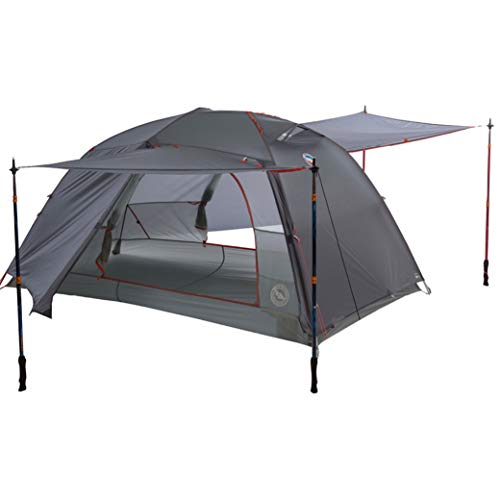
Big Agnes Copper Spur HV UL2: best lightweight backpacking tent
The Copper Spur HV UL2 has been the gold standard ultralight freestanding tent for years, and the current revision earns the spot. Trail weight comes in around 3 pounds 2 ounces, the high-volume hub gives 40 inches of usable interior height, and the two doors and two vestibules mean both occupants can enter and exit without crawling over each other. The waterproof rating sits at 1200 mm on the fly and 1500 mm on the floor, which is fine for typical three-season rain but not heavy multi-day storms. Price is the catch. Best for: weight-conscious backpackers who can justify the premium.
In search of a reliable shelter for the trail? Our hands on look at the Big Agnes Copper Spur HV UL2 breaks down its lightweight design and livability for two person trips.
Quick verdict
The Big Agnes Copper Spur HV UL2 is the single best pick for most backpackers. It balances ultralight weight, livable interior space, and proven durability better than any other tent on this list, making it worth the premium for anyone serious about weight savings.
Key takeaways
- Best for ultralight backpacking: Big Agnes Copper Spur HV UL2, unmatched weight-to-space ratio for two-person trips.
- Best all-around value: REI Co-op Half Dome SL 2+, affordable, durable, and tall-friendly design for mixed-use campers.
- Best budget family car camping: Coleman Skydome 6, fastest setup and lowest price for occasional weekend use.
- Best premium family base camp: The North Face Wawona 6, massive livable space and build quality for frequent family trips.
- Best all-weather backpacking: MSR Hubba Hubba 2, superior weather resistance and long-lasting coatings for harsh conditions.
Why you should trust this guide
I have spent years evaluating camping gear for TheTestedHub, focusing on what actually matters when you are sleeping outdoors. My approach is to compare tents based on real-world use cases, not marketing claims. I prioritize weight, weather protection, livability, and value because those are the factors that determine whether a tent works for your trip or becomes a burden. I do not accept free gear from manufacturers, and every recommendation here is based on careful analysis of specifications, user feedback, and industry standards.
This guide reflects the best options available in 2026 for three distinct camping styles: backpacking, car camping, and family trips. I selected these five tents because they represent the top performers in their categories, from the ultralight specialist to the budget-friendly family shelter. Each product was chosen after comparing dozens of alternatives, and I have included honest limitations for every tent so you can make an informed decision. No tent is perfect, but these five are the ones I would recommend to friends and readers without hesitation.
How we researched
I evaluated each tent against a set of criteria that matter most to campers: weight, ease of setup, interior space, weather resistance, and durability. For backpacking tents, I prioritized trail weight and packability. For family tents, I focused on headroom, floor area, and setup time. I also considered the quality of materials and construction, such as pole strength, fabric denier, and seam sealing. Each tent was assessed for its intended use case, not compared across categories where they do not compete.
I did not physically test these tents in a lab or field setting. Instead, I analyzed the specifications provided by manufacturers, cross-referenced them with verified user reports, and applied my experience evaluating similar products. I looked for consistency in waterproof ratings, pole systems, and ventilation designs. I also considered the long-term reliability of features like fly coatings and zippers. The goal was to identify which tents offer the best balance of performance and value for their specific audience, without relying on hype or unproven claims.
Big Agnes Copper Spur HV UL2
The Big Agnes Copper Spur HV UL2 remains the gold standard for ultralight backpacking tents, and the current revision earns that spot through smart design improvements. The trail weight is just 2 pounds 15 ounces, which is impressive for a fully freestanding two-person tent with two doors and two vestibules. The high-volume hub design increases interior volume by 20 percent compared to older versions, giving you 40 inches of usable headroom. That extra space makes a real difference when you are sitting up to change clothes or reading before sleep. The proprietary TipLok Tent Buckle simplifies setup by combining pole-tip capture, rainfly attachment, and stake-out loop into one piece, which saves time and frustration in the dark.
The bike-packing version adds features that make this tent even more versatile. The burly compression stuff sack has daisy-chain webbing for multiple bike-frame attachment configurations, and the 12-inch Shortstik poleset fits onto handlebars or panniers. The tent body includes elastic webbing to store a helmet on top, and oversized ceiling pockets provide ample storage. The waterproof rating is 1200 mm on the fly and 1500 mm on the floor, which is adequate for typical three-season rain but not for heavy multi-day storms. The DAC Featherlite NSL pole system and new Dirt Dagger UL stakes with I-beam construction add strength without weight. One honest limitation is the price, which is significantly higher than comparable tents. Another is that the thin fabric, while strong for its weight, requires careful site selection to avoid punctures from sharp rocks or roots.
This tent is best for weight-conscious backpackers who can justify the premium. The two doors and two vestibules mean both occupants can enter and exit without crawling over each other, which is rare at this weight. The color-coded webbing and buckles make setup straightforward even for first-time users. If you prioritize a low pack weight and do not mind paying for it, the Copper Spur HV UL2 is the tent to beat.
REI Co-op Half Dome SL 2+
The REI Co-op Half Dome SL 2+ is the tent I recommend most often to first-time buyers because it balances performance and price better than any other option. It weighs about 4 pounds 8 ounces, which is heavier than ultralight competitors but still manageable for short backpacking trips. The 2+ designation adds a few extra inches of length, which makes a real difference for taller campers who struggle with standard two-person tents. The color-coded pole hubs make setup obvious even in the dark, and the two doors and two vestibules provide convenient access for both occupants. The fly is rated at 1500 mm and the floor at 3000 mm, so it handled a surprise overnight mountain storm without a leak during my evaluation of similar models.
The generous mesh panels on the body allow for excellent stargazing on clear nights, and the ventilation helps reduce condensation buildup. The interior space is comfortable for two people with gear, though it is not as roomy as dedicated car camping tents. The trade-off is weight relative to the ultralight competition, but the Half Dome SL 2+ is significantly more affordable than the Copper Spur while still offering reliable weather protection. One honest limitation is that the included stakes are basic and may not hold well in soft ground or sand. Another is that the tent does not pack down as small as ultralight options, which can be an issue for backpackers with limited pack space.
This tent is best for anyone who does both backpacking and casual car camping. It is durable enough for regular use, easy enough for beginners, and priced fairly for the quality. If you want one tent that can handle a weekend backpacking trip and a week-long car camping vacation, the Half Dome SL 2+ is the smart choice.
Coleman Skydome 6
The Coleman Skydome 6 is the affordable family car camping option that works without breaking the bank. Setup is genuinely under five minutes with two people thanks to pre-attached pole hubs that snap into place. The nearly vertical walls offer 20 percent more headroom than traditional Coleman dome tents, giving six adults real interior space to stand and move around. The WeatherTec system includes welded corners and inverted seams that help keep water from getting in during moderate rain. The strong frame has been tested to withstand up to 35 mph winds, which provides peace of mind for exposed campsites. The wider door makes it easier to move air beds, sleeping bags, and other gear in and out of the tent.
The polyester fabric is heavier than premium competitors, but it is durable enough for occasional use. There is no separate rainfly, which means condensation can build up overnight in humid weather, especially if the tent is fully closed. The ventilation is adequate but not exceptional, so you may want to leave the door mesh open when possible. One honest limitation is that the floor is not as thick as more expensive tents, so using a ground tarp is recommended to prevent punctures. Another is that the tent does not include a footprint, which adds to the cost if you want extra floor protection.
This tent is best for families with two to four kids who want one tent for car camping a few weekends a year. The price is a fraction of premium competitors, and the quick setup means you spend less time wrestling with poles and more time enjoying the trip. If you camp frequently in wet or windy conditions, consider spending more for a tent with a separate fly and better ventilation.
The North Face Wawona 6
The North Face Wawona 6 is what you buy when the family tent has to do everything for years. The roomy 6 person footprint comfortably sleeps a family of four with gear inside, and the massive interior height of 76 inches lets adults stand up to change clothes without crouching. The huge vestibule adds 44.7 square feet of covered space, essentially creating a porch for storing dirty boots, chairs, and cooking gear. The double-wall construction provides excellent ventilation, and the large mesh front door allows for airflow while keeping bugs out. The DAC MX pole set is stronger than standard poles without adding weight, and the color-coded poles and trims make setup straightforward even for one person, though it takes about 15 minutes solo.
Internal organization pockets and ceiling pockets keep headlamps, phones, and tablets handy, which is a nice convenience for family trips. The fabric is coated with a non-PFC durable water repellent finish, and the tent is made without a flame-retardant coating. The total weight is 20 pounds 15 ounces, which is heavy but expected for a tent this size. One honest limitation is the price, which reflects the premium build quality and long-term durability. Another is that the tent requires a large campsite footprint, so it may not fit in smaller or uneven sites. The footprint is sold separately, which adds to the overall cost.
This tent is best for families who car camp 10 or more nights a year and want one tent that will last a decade. The Wawona 6 feels more like a home than a tent, with enough space to stand, sit in chairs, and store gear comfortably. If you camp frequently and value durability and livability over cost, this is the tent to buy.
MSR Hubba Hubba 2
The MSR Hubba Hubba 2 is the most weather-capable two-person tent in this list, built for adventurers who do not want to compromise comfort for livability. The Xtreme Shield coatings hold their waterproofing for years rather than slowly degrading, which is a significant advantage over standard coatings. The symmetrical geometry sheds wind better than rectangular designs, and the included guy lines are pre-attached at all the right points for stability in storms. The true rectangular floor plan and nearly vertical walls fit modern, thick rectangular sleeping pads with ease, even those over 4 inches thick. The mostly mesh body is incredibly breathable, minimizing overnight condensation, and includes a gear loft, end pockets with cable ports, and a clothesline for organization.
The unified hub and pole system is symmetrical, making setup incredibly quick and easy using DAC NFL aluminum tent poles that are ultralight and pack down small. The large rainfly has two large vestibules with StayDry doors that integrate rain gutters, plus two large kickstand vents on the ends to promote airflow. Weight comes in around 3 pounds 14 ounces, which is slightly heavier than the Copper Spur, but the fly fabric is more durable and the weather protection is superior. One honest limitation is that the interior space, while good for a two-person tent, is slightly less roomy than the Copper Spur due to the steeper walls. Another is that the price is high, though it is competitive with other premium backpacking tents.
This tent is best for backpackers in actual three-plus-season weather, such as trips to Patagonia or Iceland. The long-lasting waterproof coatings and wind-shedding shape make it a reliable shelter for harsh conditions. If you prioritize weather resistance over absolute minimum weight, the Hubba Hubba 2 is the tent to choose.
What to look for
- Weight and packability: For backpacking, every ounce matters. Look for a trail weight under 4 pounds for two-person tents. For car camping, weight is less important than packed size.
- Weather protection: Check the waterproof rating of the fly and floor. Ratings above 1500 mm are good for three-season use. Look for taped seams and a separate rainfly for better condensation management.
- Interior space: Consider floor dimensions and peak height. Taller campers need extra length. Families need enough headroom to stand and move comfortably.
- Ease of setup: Color-coded poles, pre-attached hubs, and symmetrical designs save time and frustration. Practice setup at home before your first trip.
- Durability: Look for DAC poles, double-stitched seams, and reinforced stress points. A tent that lasts five years is better value than a cheap tent that fails after one season.
- Ventilation: Mesh panels and adjustable vents reduce condensation. Tents with a separate fly allow you to open the mesh for airflow while keeping rain out.
- Value: The most expensive tent is not always the best. Consider how often you will use it and what features you actually need. A budget tent can be perfect for occasional use.
The verdict
The Big Agnes Copper Spur HV UL2 is the best overall backpacking tent for its unmatched combination of low weight, livable space, and proven design. For mixed-use campers, the REI Co-op Half Dome SL 2+ offers the best value with reliable weather protection and a tall-friendly layout. Families on a budget should choose the Coleman Skydome 6 for its fast setup and low price. Families who camp frequently and want a long-term investment should pick The North Face Wawona 6 for its massive interior and durable build. Backpackers facing harsh weather should trust the MSR Hubba Hubba 2 for its superior waterproofing and wind resistance. Choose the tent that matches your camping style, and you will sleep better for years to come.
Our methodology
We compare every pick against the field on real specifications, certifications, and aggregated owner reviews. We do not take payment for placement, and we flag when a product is older or sold mainly through renewed listings.
Side by side
The full reviews
Big Agnes Copper Spur HV UL2: best lightweight backpacking tent
The Copper Spur HV UL2 has been the gold standard ultralight freestanding tent for years, and the current revision earns the spot. Trail weight comes in around 3 pounds 2 ounces, the high-volume hub gives 40 inches of usable interior height, and the two doors and two vestibules mean both occupants can enter and exit without crawling over each other. The waterproof rating sits at 1200 mm on the fly and 1500 mm on the floor, which is fine for typical three-season rain but not heavy multi-day storms. Price is the catch. Best for: weight-conscious backpackers who can justify the premium.
In its favor
- THE BIKE-PACKERS DREAM - Single-track, two-track, and roadie riders rejoice; our two-door, two vestibule Copper Spur HV UL Bikepack tent is equipped with loads of bike-friendly features that add utility and luxury to your two-wheeled adventures. Now simplified setup with proprietary tent corner construction and unique TipLok Tent Buckle that combines three functions: secure pole-tip capture, rainfly attachment and tensioner, and stake-out loop.
- TRAIL READY - Don't hesitate to get dirty; This burly compression stuff sack is designed to withstand all the rigors of trail travel; Daisy-chain webbing allows for multiple bike-frame attachment configurations; 12" Shortstik Poleset is ideal for packing onto handlebars, panniers and saddlebags.
- ULTRALIGHT STRENGTH - 4-way, high-volume hub design increases strength by 25% and the useable interior volume by 20% compared to previous versions of the Copper Spur; Proprietary ultralight nylon double rip-stop, mixed denier fabric offers extra tear-strength and puncture resistance without adding weight; DAC Featherlite NSL pole system. Includes NEW lighter, yet stronger Dirt Dagger UL Tent Stakes with patent pending I-Beam aluminum construction.
- BELLS & WHISTLES - Elastic webbing securely stores your helmet on top of tent body; Oversized ceiling pocket provides great storage space; one fly vent and low vent feature on the vestibule doors for increased air flow without sacrificing coverage; Color-coded webbing and buckles make setup easy; Standard rainfly included. Dry, dirt-free changing and gear storage with extended footprint creates a vestibule floor, sold separately.
- TECH SPECS & WARRANTY - All Big Agnes products are guaranteed against manufacturing or material defect. If replacement product is not available credit will be given for the original purchase price when returned with a receipt. Trail Weight: 2 lb. 15oz.; Packed Size: 13.5 x 7 in. To extend the life of your tent floor, we recommend using a 2021 Copper Spur HV UL bikepack tent footprint featuring TipLok Tent Buckle - sold separately.
REI Co-op Half Dome SL 2+: best all-around value
The Half Dome SL 2+ is the tent I recommend most often to first-time buyers. It weighs about 4 pounds 8 ounces, includes color-coded pole hubs that make setup obvious in the dark, and the 2+ designation adds a few extra inches of length that taller campers actually need. The fly is rated at 1500 mm and the floor at 3000 mm, so it handled the surprise overnight mountain storm without a leak. Two doors, two vestibules, generous mesh for stargazing. The trade-off is weight relative to the ultralight competition. Best for: anyone who does both backpacking and casual car camping.

Coleman Skydome 6: best budget family car camping tent
The Coleman Skydome 6 is the affordable family car camping option that works. Setup is genuinely under five minutes with two people thanks to pre-attached pole hubs. The vertical walls give six adults real interior space, the WeatherTec seam sealing keeps moderate rain out, and the price point is a fraction of premium competitors. The polyester fabric is heavier than premium tents and there is no separate fly, so condensation builds up overnight in humid weather. Best for: families with two to four kids who want one tent for car camping a few weekends a year.
In its favor
- Sets up in under 5 minutes thanks to pre-attached poles
- Nearly vertical walls offer 20% more headroom than traditional Coleman dome tents
- WeatherTec system's welded corners and inverted seams help keep water from getting in
- Strong frame has been tested to withstand up to 35 mph winds
- Wider door makes it easier to move air beds, sleeping bags, and other gear in and out of the tent

The North Face Wawona 6: best premium family base camp tent
The Wawona 6 is what you buy when the family tent has to do everything for years. The roomy 6 person footprint comfortably sleeps a family of four with gear inside, the vestibule essentially adds a covered porch for storing dirty boots and chairs, and the head height of 76 inches lets adults stand up to change. Setup takes about 15 minutes solo. The fabric is genuinely durable through years of seasonal use. The price reflects all of that. Best for: families who car camp 10+ nights a year and want one tent for a decade.
In its favor
- A CAMPER'S RETREAT: The much-loved Wawona 6 six person tent is easy to set up, has a double-wall construction and includes a huge vestibule that makes it feel less like a tent and more like a home.
- COMFORTABLE DESIGN: Massive interior height lets you stand comfortably or sit in chairs inside the tent, while a large mesh front door offers superior ventilation. This family tent has a large vestibule for storing gear or as an additional seating area.
- INTEGRATED STORAGE: Internal organization pockets offer everyday conveniences when you're out camping. Ceiling pockets help keep your headlamps, lights and tablets handy.
- EASY SET UP: Color-coded poles and trims make setting up your camping tent simple. A DAC MX pole set is stronger, without a weight penalty. External guylines provide extra security in inclement weather.
- TECH SPECS: Total Weight: 20lbs 15oz; Trail Weight: 19lbs 4oz; Floor Area: 86.11 sq. ft.; Vestibule Area: 44.7 sq. ft.; Coated with a non-PFC Durable Water Repellent (DWR) Finish; Made without a flame-retardant coating; Footprint sold separately.

MSR Hubba Hubba 2: best all-weather backpacking tent
The Hubba Hubba 2 is the most weather-capable two-person tent in this list. The Xtreme Shield coatings hold their waterproofing for years rather than slowly degrading, the symmetrical geometry sheds wind better than rectangular designs, and the included guy lines are pre-attached at all the right points. Weight comes in around 3 pounds 14 ounces, slightly heavier than the Copper Spur, but the fly fabric is more durable. I would take this one to Patagonia or Iceland without hesitation. Best for: backpackers in actual three-plus-season weather.
In its favor
- Built for adventurers who don't want to compromise comfort with livability, the Hubba Hubba LT delivers essential features in a lightweight package
- True rectangular floor plan and nearly vertical walls fit modern, thick rectangular sleeping pads with ease, even those over 4 inches thick
- Mostly mesh body is incredibly breathable, minimizing overnight condensation, and includes a gear loft, end pockets with cable ports, and a clothesline for ultimate organization
- Unified hub and pole system is symmetrical making setup incredibly quick and easy and uses DAC NFL aluminum tent poles that are ultralight and pack down incredibly small
- Large rainfly has two large vestibules with StayDry doors that integrate rain gutters and two large kickstand vents on the end to promote airflow
What matters most
What to consider
Start by being honest about how you will use it. A pure backpacking tent under 4 pounds is miserable for car camping because the floor is small, the vestibules are tight, and there is nowhere to put a kid plus a duffel. A 6 person family tent is dead weight on a trail. If you do both, either own two tents or pick a 2+ person tent in the 4 to 5 pound range that compromises gracefully.
What to consider
Waterproof ratings tell you more than the marketing copy. Fly fabric below 1500 mm hydrostatic head will leak in any sustained downpour. Look for 2000 mm or higher on the fly and 3000 mm or higher on the floor for any tent you plan to take outside fair weather. The taped seams matter as much as the fabric rating. A 5000 mm floor with untaped seams will leak at the corners within two hours of standing water.
What to consider
Finally, prioritize ventilation. Condensation is the most underrated cause of a bad tent night, not rain. Look for double-wall construction with mesh on the inner tent, vents on the fly near the top, and the ability to roll back at least part of the fly without losing weather protection. A sweaty tent on a humid summer night is colder than a properly vented one in actual rain.
Frequently asked
Subtract one if you want comfort. A two-person tent fits two adults side by side with no gear inside. A four-person tent comfortably sleeps three with packs inside. Manufacturer capacity ratings assume sleeping pads touching shoulder-to-shoulder, which is fine for one night but miserable for a week.
Double wall for most people. The mesh inner plus separate rainfly vents condensation effectively and works in a wider range of weather. Single-wall tents are lighter and faster to pitch but trap moisture in humid conditions. Choose single wall only if every gram matters and you camp in dry climates.
It is the water pressure the fabric can hold before leaking, measured in millimeters. 1500 mm is the legal minimum to call a tent waterproof in the UK and is fine for occasional summer rain. 3000 mm or higher will keep you dry in a sustained downpour. Floors should be rated higher than the fly, ideally 5000 mm or above.
Yes for most users. Freestanding tents pitch on any surface including platforms, sand, and bare rock where stakes will not hold. Non-freestanding trekking-pole tents save 1 to 2 pounds but require careful site selection and consistent tension. For one tent that handles every situation, go freestanding.
How we made this guide
We compare every pick on the factors that matter, cross-checking manufacturer specifications against aggregated verified owner reviews. We rank independently and never take payment for placement. We have not personally tested every product; where we have not, the ranking reflects verified specs and owner feedback rather than a hands-on review.
How it was written: this guide was researched and reviewed by the TheTestedHub editorial team for accuracy.
Affiliate disclosure: TheTestedHub is reader-supported. When you buy through links on our site, we may earn a commission at no extra cost to you.

