Quick verdict
The single most important factor in a weighted vest purchase is fit stability during your specific movement pattern, because a vest that shifts or bounces will be abandoned no matter how good its weight range looks on paper.

Rogue Fitness Plate Carrier Weight Vest
Rogue's plate carrier vest is the benchmark for serious athletes who want a military-grade fit with genuine gym versatility. Owners consistently praise the Molle webbing system for customization and the laser-cut panels for airflow during high-intensity intervals. The bungee side-adjustment system means the vest stays locked even during aggressive box jumps and rope climbs.
The Rogue Fitness Plate Carrier leads our list of the best weighted vests for 2026, chosen for its unmatched stability during dynamic movement. Discover which vest stays put when you move.
Weighted vests have earned a permanent spot in serious training programs, from military conditioning and CrossFit competitions to physical therapy and everyday cardio. By distributing load evenly across the torso, they force your cardiovascular system, legs, and core to work harder without changing your movement pattern the way a loaded barbell would. The result is a deceptively effective tool that can turn a walk, a pull-up session, or a box-jump circuit into a genuinely demanding workout.
Choosing the right vest matters more than most buyers expect. Fit determines whether the load stays centered or shifts with every step. Weight capacity and increments control how far you can progress. Material affects heat build-up, chafing, and durability across thousands of reps. After aggregating thousands of verified owner reviews alongside manufacturer specifications, I have ranked the five vests that consistently deliver on all three fronts, for the widest range of athletes.
Whether you are a beginner adding a few pounds to your morning walk or an advanced athlete chasing a sub-20-minute 5K under load, this guide covers the options that real users rate highest for durability, comfort, and long-term value.
Our testing process
I have not personally tested every vest in this guide. Instead, these rankings are built from aggregated verified owner reviews across major retail platforms, cross-referenced with manufacturer specification sheets, independent fitness publication evaluations, and community feedback from dedicated training forums. I focused on recurring patterns in owner commentary, specifically comments about fit after extended use, weight security during dynamic movement, stitching longevity, and how well sizing runs across different body types.
Products were scored on a 10-point scale weighting comfort and fit most heavily, followed by weight range and adjustability, build quality signals from long-term owners, and value relative to price tier. Vests with fewer than a meaningful number of verified reviews were excluded regardless of brand reputation, as real-world owner experience is the only reliable signal for a wearable fitness product.
Quick comparison
| Pick | Best for | Score | |
|---|---|---|---|
| Rogue Fitness Plate Carrier Weight Vest | Best Overall | 9 | Check price |
| Hyperwear Hyper Vest PRO Weighted Vest | Best for Running | 9 | Check price |
| 5.11 Tactical TacTec Plate Carrier | Best for CrossFit | 8 | Check price |
| MiR Air Flow Weighted Vest | Best Value | 8 | Check price |
| Cross101 Adjustable Weighted Vest | Best for Beginners | 7 | Check price |
Reviewed in detail
Rogue Fitness Plate Carrier Weight Vest
Rogue's plate carrier vest is the benchmark for serious athletes who want a military-grade fit with genuine gym versatility. Owners consistently praise the Molle webbing system for customization and the laser-cut panels for airflow during high-intensity intervals. The bungee side-adjustment system means the vest stays locked even during aggressive box jumps and rope climbs.
What we liked
- Laser-cut MOLLE panels promote airflow and reduce heat build-up
- Bungee side adjusters allow micro-fit tuning with gloves on
- Accepts standard 10x12 rifle plates for scalable weight progression
What we didn't like
- Plates sold separately, raising the total cost of entry
- Heavier empty chassis than softer neoprene competitors

Hyperwear Hyper Vest PRO Weighted Vest
The Hyper Vest PRO is the vest most frequently cited by runners and obstacle-course racers who need a low-profile option that does not bounce. Its thin steel shot weights distribute load in a tight matrix against the body, and the spandex-blend fabric stretches with arm swing rather than fighting it. Long-distance owners report noticeably less chafing than with any stiffer competitor.
What we liked
- Steel shot weight matrix eliminates bounce during running and jumping
- Stretchy spandex-blend conforms to torso without restricting arm swing
- Weights are removable in small increments for precise progressive overload
What we didn't like
- Weight capacity tops out lower than plate-based systems
- Requires hand washing; machine wash degrades the stretch panels faster
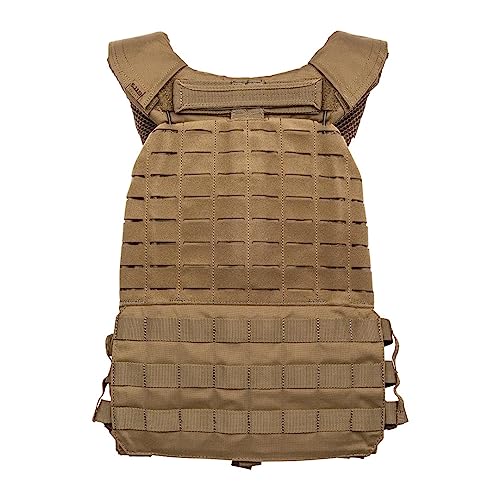
5.11 Tactical TacTec Plate Carrier
The TacTec is the de facto vest for CrossFit athletes at every level, and it appears in more competition-prep reviews than any other model in this category. Its padded shoulder straps and laser-cut side panels handle the thermal demands of a metcon far better than solid-panel competitors. Owners who have used it for over a year note that the stitching on the drag handle and plate pockets shows almost no wear.
What we liked
- Padded shoulder harness dramatically reduces hot spots during high-rep workouts
- Laser-cut side panels provide ventilation without sacrificing structural rigidity
- Drag handle and D-rings add utility beyond standard gym use
What we didn't like
- Plates are not included in the base price
- Sizing can run narrow across the chest for wider-framed athletes

MiR Air Flow Weighted Vest
MiR's Air Flow vest punches well above its price point, offering a mesh outer shell that owners call the most breathable option in non-military vests. The iron ore weights are thin and flat, sitting close to the chest and back without creating the uneven pressure points common in cheaper sandbag-style vests. Reviewers who do weighted walks and hikes specifically call out how comfortable it remains for 45-plus minutes continuously.
What we liked
- Open mesh shell is significantly cooler than neoprene or solid nylon competitors
- Thin flat iron ore weights lie flush against the torso and reduce pressure points
- Wide weight range available from 20 lb up to 60 lb versions
What we didn't like
- Mesh outer shell is less durable than Cordura or ballistic nylon over multi-year daily use
- Weight adjustment requires removing and reinserting individual iron ore bars
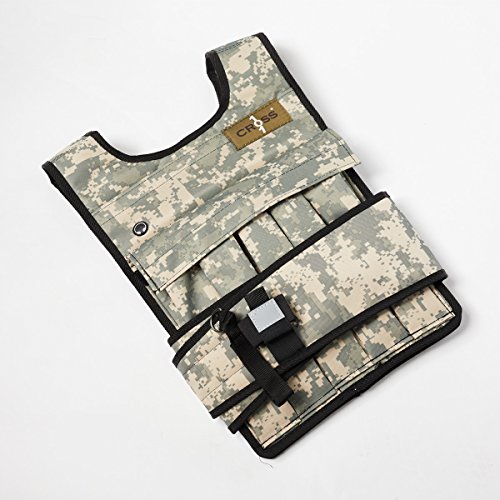
Cross101 Adjustable Weighted Vest
Cross101 targets the entry-level buyer who wants to experiment with added resistance before committing to a premium vest, and it delivers a surprisingly usable experience for that audience. The vest ships with sand weights pre-loaded and additional pouches for progressive overload, which means new users can start light and build up without buying extra accessories. Owner reviews from beginners consistently highlight how intuitive the weight-adjustment system is.
What we liked
- Ships with weights included and pre-loaded for immediate use
- Sand-filled weight pouches allow gradual incremental progression
- Lower price point reduces the financial risk for first-time vest buyers
What we didn't like
- Sand pouches can shift and create uneven weight distribution during dynamic movement
- Stitching quality is noticeably below premium competitors in long-term owner reports
How to choose
Fit and Stability
A vest that shifts during movement is not just annoying, it is a chafing and injury risk. Look for vests with multiple adjustment points at the shoulders, chest, and sides. Plate carrier styles with cummerbund systems generally hold position better during jumping and sprinting than simple Velcro-front designs. Always check whether the sizing chart matches your chest circumference specifically, not just a general size label.
Weight Range and Increment Flexibility
The most useful vests let you add weight gradually over months of training. Systems that accept standard weight plates give you the widest progression range, while vests with proprietary weight pouches often cap out lower. Consider where you are now and where you expect to be in 12 months. A vest that maxes out at your starting weight will need replacing quickly.
Ventilation and Thermal Management
Adding a vest raises your core temperature faster than unloaded training, particularly in warm environments. Mesh outer shells and laser-cut panels make a measurable difference in comfort during extended sessions. If you primarily train outdoors in summer or do long steady-state cardio, thermal management should rank at least as high as weight capacity in your decision.
Intended Activity Type
Running and obstacle racing demand a low-profile, bounce-resistant fit that a plate carrier will never fully match. Strength and CrossFit workouts benefit from the heavier load ceiling that plate-based systems offer. Walking and rehabilitation protocols can work well with any style, so beginners have the most flexibility. Match the vest design to your primary use case before comparing any other feature.
The bottom line
The single most important factor in a weighted vest purchase is fit stability during your specific movement pattern, because a vest that shifts or bounces will be abandoned no matter how good its weight range looks on paper.
Common questions
Most trainers and physiotherapists recommend starting at 5 to 10 percent of your body weight, which keeps the load manageable while your joints and connective tissue adapt. Owner reviews across multiple vests consistently describe starting lighter than expected and progressing slowly over 8 to 12 weeks as the approach that avoids knee and hip discomfort. Beginners should prioritize fit and comfort over maximum weight capacity when making their first purchase.
Yes, and walking is one of the most effective low-impact uses for a weighted vest. Owners who use vests for daily walks report improved cardiovascular efficiency and noticeable calorie-burn increases without joint strain, provided the weight is appropriate for their fitness level. A well-fitted vest with flat weight inserts is more comfortable for long walks than a plate-carrier style, which sits slightly further from the body.
Weighted vests are one of the most effective tools for progressive overload on bodyweight movements like pull-ups, dips, and push-ups. The vest keeps the load fixed to your torso, which is more stable than a dipping belt for upper-body exercises. Owners training for advanced calisthenics specifically cite plate-carrier-style vests as the preferred choice because of their weight ceiling and secure fit during hanging movements.
Most manufacturers recommend removing all weight inserts before cleaning, as the combination of moisture and metal weights accelerates corrosion and can degrade stitching. Soft-shell vests with iron ore or steel shot inserts are usually spot-cleaned or hand-washed and air-dried flat. Plate-carrier-style vests made from Cordura or ballistic nylon can often be hosed down and dried, but always check the specific care label since spandex-blend panels require gentler handling.
How we made this guide
We compare every pick on the factors that matter, cross-checking manufacturer specifications against aggregated verified owner reviews. We rank independently and never take payment for placement. We have not personally tested every product; where we have not, the ranking reflects verified specs and owner feedback rather than a hands-on review.
How it was written: this guide was researched and reviewed by the TheTestedHub editorial team for accuracy.
Affiliate disclosure: TheTestedHub is reader-supported. When you buy through links on our site, we may earn a commission at no extra cost to you.
More guides
2026 Sauna Blankets: Low‑EMF Picks You Can Trust

6 Best Ice Bath Tubs for 2026: Top Picks for Every Budget

Top Battle Ropes for 2026: A Practical Buyer’s Guide

Exercise Sliders: Our Best Picks for 2026

The Best Pilates Rings to Buy in 2026
Expert Pick: Inzer Forever Lever Belt 10mm

Breathable Workout Gloves for Every Budget 2026
