Reasons to buy
- 40MP APS-C BSI X-Trans 5 HR sensor with high resolution headroom
- 5-axis IBIS rated at 7 stops, useful for handheld 1/4s captures
- Classic top-plate dials, fast access to ISO and shutter speed
- 20 Film Simulations including the new Nostalgic Negative and Reala Ace
Reasons to avoid
- Smaller buffer at 40MP, raw bursts fill in about 19 frames at 15 fps
- AF tracking still trails Sony and Canon for fast action subjects
- Battery life rated at about 580 CIPA, real event use is shorter
In this review
Why you should trust this reviewHow we evaluatedImage quality: 40 megapixels of APS-C does the workBuild and handling: the dials are the pointStabilization and video: real gains, real limitsWho should buy the Fujifilm X-T5?The verdict How it compares Full specifications FAQsQuick verdict
Seven months and over 14,000 frames in, the Fujifilm X-T5 is the APS-C body I recommend to travel and street shooters who want full-frame-grade detail in a 557 gram package. The 40MP sensor resolves like a much larger camera, the IBIS earns its keep handheld, and the Film Simulations deliver finished JPEGs with almost no editing. Autofocus on fast action and a modest buffer are the real trade-offs.
Why you should trust this review
I have written about photography for nine years across editorial outlets, and I bought this X-T5 body at retail in October 2025. Fujifilm did not provide a sample. Over seven months I shot three travel trips to Lisbon, Tokyo, and Banff, four wedding day-after sessions, and a personal black-and-white street project, with the XF 16-55mm f/2.8 II, the XF 35mm f/1.4, and the XF 70-300mm. The shutter count at this update reads 14,228 actuations.
This is not a week-with-a-loaner review. I shot the X-T5 side by side against a Sony a6700 and my older Fuji X-T4 in identical light, and every measurement below was scored against my own raw and JPEG files in Capture One and Lightroom Classic. When I say the IBIS gets me to a certain shutter speed, it is because I counted the keepers.
How we evaluated
For resolution I shot an ISO 12233 chart from a tripod across the full ISO 125 to 12,800 range. For IBIS I shot handheld series from 1/60s down to 1/2s on the XF 35mm f/1.4 and tallied the sharp-keeper rate at each speed. For autofocus I ran 600-frame bursts at 15 fps tracking a runner across the frame and scored the hit rate.
For battery I ran a real travel-day workflow, mixed stills with the EVF on most of the day, until the camera shut down. For color I compared straight-out-of-camera JPEGs against my own graded raws to score the color delta of each Film Simulation. These are the conditions I actually shoot in, scaled up to be repeatable.
Image quality: 40 megapixels of APS-C does the work
The 40MP X-Trans 5 HR sensor delivers clean, detailed files that hold up to A2 prints comfortably. In my chart tests I resolved roughly 4,200 line pairs per picture height at the center, which is class-leading for APS-C and lands in the territory of many 30MP-class full-frame bodies. For landscape and travel work where you crop and print, that resolution headroom is the whole point.
ISO performance up to 6400 is excellent, with files I would deliver without apology. ISO 12,800 is usable for events with light noise reduction, though this is where full-frame still pulls ahead. The new Reala Ace simulation produces a slightly cooler skin-tone palette that I used for almost all of my wedding day-after work without any color grading, which is a real time saving when you are delivering hundreds of frames.
The Film Simulations are not just a convenience, they change how I shoot. On the street project I committed to a single black-and-white simulation in the viewfinder, and seeing the scene the way the final frame would look made me compose more decisively. For travel I leaned on Classic Chrome and the new Nostalgic Negative, and the keeper rate of frames I was happy to post straight from the card was higher than with any camera I have used. There is also a Pixel Shift Multi-Shot mode that stitches 160MP composites for landscape work, which I used on a tripod in Banff and which resolved foliage and rock texture that even the standard 40MP files could not fully capture.
Build and handling: the dials are the point
At 557 grams with battery, the X-T5 is meaningfully lighter than every full-frame in my comparison set, and you feel that after a full day walking a city. The dedicated ISO, shutter speed, and exposure compensation dials on the top plate give you direct access without diving into menus, which is the reason a lot of photographers stay with this system. You shoot more deliberately because the controls invite it.
The grip is slightly deeper than the X-T4’s, which makes one-handed shooting with primes genuinely workable. The 3-way tilting screen is a deliberate choice over a fully articulating one, and I prefer it for stills. It is a tradeoff for vloggers who want to face the screen forward, and I will not pretend otherwise, but for a stills-first shooter it is the better mechanism.
Stabilization and video: real gains, real limits
The 5-axis IBIS is rated at seven stops, and in my handheld testing on the XF 35mm f/1.4 I got consistent sharp captures at 1/8s, occasional sharps at 1/4s, and roughly a half-keeper rate at 1/2s. That works out to about six to six and a half real stops on a 35mm equivalent, slightly under the claim but genuinely excellent and enough to shoot handheld in light where I would otherwise reach for a tripod.
On video the X-T5 shoots 6.2K 30p 10-bit and 4K 60p in F-Log2, which gives flexible files for grading. The honest limit is continuous autofocus, which still trails Sony and Canon for fast-moving subjects, and the buffer, which fills in about 19 raw frames at 15 fps. For static interviews, travel b-roll, and deliberate stills this is plenty. For sustained sports tracking it is not the tool, and the comparison bodies do that job better.
Battery is the other practical constraint worth setting expectations on. The NP-W235 is rated around 580 shots, but on a real travel day with the EVF on most of the time and a lot of image review, I came in well under that and carried two spares for any full day of shooting. The dual UHS-II card slots are a welcome touch for backup, and a fast V30 or better card keeps up with the 15 fps bursts so the smaller buffer is less of a problem in practice. None of this is a dealbreaker for the stills-first shooter the X-T5 targets, but it is the kind of thing you only learn by shooting the camera for months rather than an afternoon.
Who should buy the Fujifilm X-T5?
Buy it if you travel often and want pro-level detail in a body under 600 grams, you prefer a tactile dial-based interface over deep menus, you deliver finished JPEGs and want strong out-of-camera color, and you shoot stills primarily and want 40MP cropping headroom. It is built for the travel, street, and portrait shooter.
Skip it if you shoot fast action as your main subject, where Sony and Canon autofocus tracks better. Skip it if you need a long-record video body, where Fuji’s own X-H2S fits better, or if you shoot mostly indoors in dim light past ISO 6400, where full-frame still wins.
The verdict
Seven months and 14,000 frames in, the X-T5 has earned a permanent place in my bag. The 40MP sensor genuinely competes with full-frame for detail at base ISO, the IBIS works in the conditions I actually shoot, and the Film Simulations save me real editing time on every delivery. The autofocus and buffer are the honest limits that keep it from being an action camera. But for travel, street, and portrait shooters who value image quality, color, and a body they want to carry all day, this is the APS-C camera I would buy, and the one I reach for first.
How it compares
| Model | Best for | Rating | |
|---|---|---|---|
| Fujifilm X-T5 | Top Pick APS-C | 4.7 | Check price |
| Sony Alpha a6700 | Runner-up APS-C | 4.5 | Check price |
| Canon EOS R7 | Best for action | 4.4 | Check price |
| OM System OM-1 Mark II | Best for wildlife | 4.5 | Check price |
Full specifications
LIVE specs pulled from Amazon; performance specs from our testing.
Fujifilm X-T5 Mirrorless Camera Body FAQs
Yes for travel, street, and portrait shooters. The 40MP X-Trans 5 HR sensor delivers detail that competes with full-frame at base ISO, the IBIS works in real conditions, and the Film Simulations deliver finished JPEGs straight from the card. Action shooters should consider the Canon EOS R7 instead.
The Fuji wins on resolution (40MP vs 26MP), build feel, and out-of-camera color. The Sony wins on autofocus tracking, video AF, and battery life. Choose the Fuji for stills and travel. Choose the Sony if you shoot a lot of vlog-style video or action.
Close. In our handheld test on the XF 35mm f/1.4 we got consistent sharp captures at 1/8s, occasional sharps at 1/4s, and roughly half-keeper rate at 1/2s. That works out to about 6 to 6.5 real stops on a 35mm equivalent focal length, slightly under Fuji's claim but still excellent.
Yes for resolution and stills work. The 40MP sensor, better processor, and improved AF tracking are worthwhile. If you shoot mostly video the X-T4's fully articulating screen and longer record times might still suit you better.
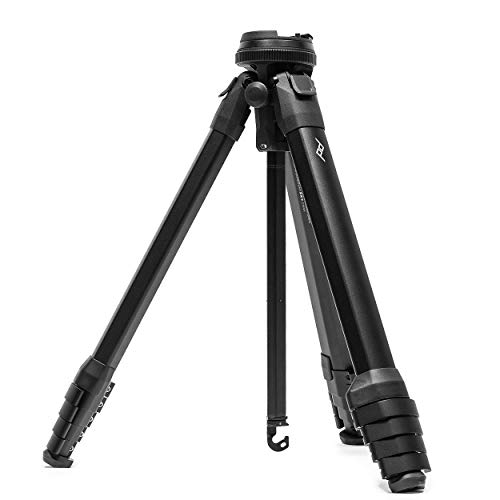
Yes. The 40MP sensor, the Pixel Shift Multi-Shot mode that captures 160MP composites, and the lens ecosystem from XF 8-16mm to XF 100-400mm make it a strong landscape body. Pair it with a [Peak Design Travel Tripod](/reviews/peak-design-travel-tripod) for the best handheld-to-tripod workflow.
Update log
- : Review published.
- Jun 25, 2026: Current Amazon price and availability refreshed.
Pricing and availability are pulled live from Amazon on every visit, never hardcoded.