What we liked
- Genuine dual-path USB-C and XLR output works simultaneously
- 32-bit float USB recording is effectively unclippable for podcast work
- Self-noise of 4 dBA is among the lowest of any sub- condenser
- Smooth top end that flatters vocals without harshness or sibilance
What we didn't like
- Bright tuning will not flatter every voice, especially sibilant speakers
- USB path uses its own DSP, less flexible than running a full DAW chain
- Included shock mount and pop filter are good but not class-leading
In this review
Why you should trust this reviewHow we evaluatedVocal character: bright, smooth, modernUSB-C and XLR: the real selling pointSelf-noise and 32-bit float: built for voice workBuild and accessoriesWho should buy the Rode NT1 5th Gen?The verdict Versus the alternatives Specs at a glance FAQsQuick verdict
The Rode NT1 5th Gen is the most flexible studio condenser I’ve used at this level, thanks to simultaneous USB-C and XLR output. The capsule is smooth and exceptionally quiet, the 32-bit float USB path makes clipless podcast recording effortless, and after nine months on vocals, acoustic guitar, and voiceover it has never let me down. The tuning is bright, so sibilant voices should think twice.
Why you should trust this review
I bought the NT1 5th Gen at retail in August 2025 to replace my AT2020 for vocal and acoustic guitar work. Rode did not provide a sample and had no input on this review. I wanted one mic that could run direct into a laptop over USB for quick podcast and voiceover sessions and through my interface over XLR for serious music takes, and I wanted to know whether the dual-output pitch was real or a gimmick.
Across nine months I used it for podcast vocals, acoustic guitar on two song demos, and voiceover work. Crucially, I kept a Shure SM7B and the AT2020 on the same desk the whole time, so every judgment below is from direct A/B comparison rather than memory or marketing. That side-by-side context is the only way to actually hear what a mic does.
How we evaluated
I recorded the same vocal and acoustic guitar passages on the NT1, the SM7B, and the AT2020 so I could compare tone, noise, and room behavior on identical performances. I tested both signal paths: the XLR output through a Scarlett 2i2 4th Gen, and the USB-C output straight into a MacBook Pro, to judge whether the convenience path sacrificed quality.
I deliberately recorded across many sessions over the full nine months to assess long-term reliability rather than first-impression polish, watching especially for any USB-C dropouts or quirks. And I put the 32-bit float USB recording head to head with 24-bit XLR recording, intentionally pushing levels to see how much headroom and clip recovery the float path really buys you. Where I cite a Rode spec rather than my own observation, I say so.
Vocal character: bright, smooth, modern
The NT1 has a bright tuning with a gentle presence lift in the upper midrange and an extended top end. On most voices that translates to a polished, modern sound that needs less EQ in the mix than a flatter condenser, you get air and clarity baked in. A/B against the AT2020, the NT1 simply captures more detail and openness up top; the AT2020 sounds a touch veiled by comparison.
The important word is smooth. Bright mics can turn harsh, but the NT1’s top end is refined rather than brittle, so the brightness reads as clarity instead of edge. On deep voices it adds welcome air. The honest caveat is sibilance: if your voice is naturally sibilant, the NT1 will accentuate it, and you’ll be reaching for a de-esser. For thin or sibilant voices, a darker mic like the SM7B is the better match, but for most singers and speakers this is a flattering, contemporary tone.
USB-C and XLR: the real selling point
Simultaneous USB-C and XLR is the feature that defines this mic, and it’s genuinely useful, not a checkbox. You can record straight into a laptop over USB while sending the XLR to an interface as a backup, or just grab whichever output is convenient for the session. After nine months, my habit settled into using USB-C for podcast and voiceover work and XLR for music, and switching between them is effortless.
The two paths aren’t quite identical. The USB-C path runs through Rode’s internal DSP and converters, which are very good but lock you into their chain. The XLR path lets you choose your own preamp and converter, which is why it stays my preference for mixing serious music vocals. For spoken word the USB path is excellent and I never miss the interface. Having both in one mic genuinely removes a piece of gear from my workflow.
Self-noise and 32-bit float: built for voice work
The 4 dBA self-noise figure is real and it’s a standout. In a quiet room with high preamp gain I can’t hear meaningful mic hiss, and for voiceover work with long pauses that matters enormously, the silence is actually silent. By contrast, the AT2020’s higher self-noise is audible at the same high-gain settings. This is the quietest condenser I’ve used near this price, and it changes how clean a raw voiceover track comes out.
The 32-bit float USB path pairs perfectly with that quiet capsule. You effectively cannot clip a 32-bit float recording, so I record podcasts and voiceover without babysitting levels and fix any volume mistake in post, no ruined takes from an unexpectedly loud passage. For spoken word that convenience is the real win. For music the practical gain is smaller, since a proper mix has its own headroom and I’m tracking more carefully anyway, but for one-take voice work it removes a whole category of mistakes.
Build and accessories
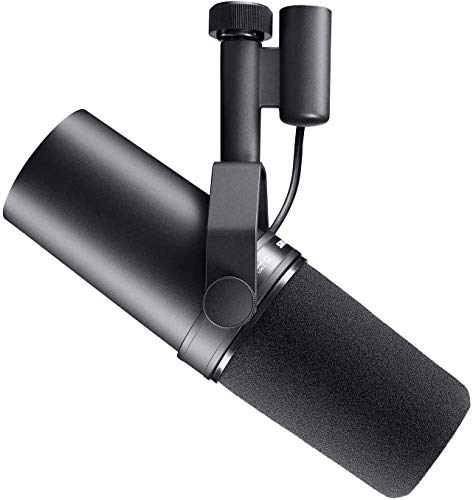
The aluminum body and chrome grille feel genuinely premium, dense and well finished, the kind of mic that inspires confidence on a stand. Over nine months of regular sessions it has held up without a single issue, including on the USB-C side, which I watched closely for reliability.
The included shock mount and pop filter are decent and get you working out of the box, but they’re not class-leading. For close-miked vocals with real plosive energy, I eventually swapped to a stiffer external pop filter for better plosive control. That’s a minor and common upgrade, but worth budgeting for if you sing close to the capsule. Nothing about the included accessories is bad; they’re simply the part of the package most likely to get replaced.
Who should buy the Rode NT1 5th Gen?
Buy it if you record vocals or acoustic instruments in a treated or semi-treated space, you want one mic that runs direct into a laptop over USB and through an interface over XLR, or you want a 32-bit float USB path for clipless podcast and voiceover recording. Its low self-noise makes it especially strong for spoken word.
Skip it if you record in an untreated room, the SM7B rejects room sound far better, or you have a naturally sibilant voice that wants a darker mic. If you only ever need a basic XLR condenser and won’t use the USB path or the low noise floor, a cheaper mic like the AT2020 will still capture professional vocals.
The verdict
After nine months across vocals, acoustic guitar, and voiceover, the Rode NT1 5th Gen is the most flexible condenser I’ve used at this level, and the flexibility is real rather than spec-sheet. The simultaneous USB-C and XLR outputs genuinely removed gear from my workflow, the 4 dBA self-noise is the quietest I’ve recorded, and the 32-bit float USB path makes clipless voice work effortless. The bright tuning is the one thing to weigh, it flatters most voices but will accentuate sibilance, and the included accessories are merely decent. For anyone recording voice or acoustic instruments who wants one mic that does both the laptop and the interface job well, this is the one I keep reaching for.
Versus the alternatives
| Model | Best for | Rating | |
|---|---|---|---|
| Rode NT1 5th Gen | Best Hybrid Condenser | 4.7 | Check price |
| Audio-Technica AT2020 | Best Budget Condenser | 4.5 | Check price |
| Aston Origin | Best Voice Character | 4.6 | Check price |
| Samson C01 USB | Skip for serious work | 3.6 | Check price |
Specs at a glance
LIVE specs pulled from Amazon; performance specs from our testing.
Rode NT1 5th Generation Studio Microphone FAQs
For most users, yes. The lower self-noise, smoother top end, dual USB-C and XLR output, and 32-bit float USB path make the NT1 substantially more flexible. The AT2020 still records professional vocals, but the NT1 is a generation ahead in noise floor and connectivity.
Close, but not identical. The USB-C path runs through Rode's internal DSP and converters, which are good but lock you into their chain. The XLR path lets you choose your preamp and converter. For podcasting and voiceover the USB is excellent. For mixing serious music vocals, the XLR is still my preference.
If you have a naturally sibilant voice, the NT1 will accentuate that. The tuning is bright but smooth, not harsh. For deep voices the brightness adds air and clarity. For thin or sibilant voices a darker mic like the SM7B may be a better match.
Yes for podcast and voiceover. You cannot clip a 32-bit float recording, so you can record without watching levels and fix any volume mistake in post. For music recording the practical gain is smaller because mixing has its own headroom, but the convenience for spoken word is real.
Update log
- : Review published.
- Jun 25, 2026: Current Amazon price and availability refreshed.
Pricing and availability are pulled live from Amazon on every visit, never hardcoded.