Reasons to buy
- Four UAD-2 DSP cores run Neve, API, Manley, and 1176 plugins at near-zero latency
- Unison preamp technology actually models classic preamp input impedance, not just EQ
- Reference-class A/D and D/A conversion comparable to interfaces twice the price
- Thunderbolt 3 driver stability has been rock-solid across 10 months and 3 macOS updates
Reasons to avoid
- UAD plugins beyond the free bundle cost extra and add up quickly
- Thunderbolt 3 only, no USB option, and active TB3 cables required for runs over 0.5 m
- Only 2 mic inputs limits multi-mic drum or band tracking sessions
In this review
Why you should trust this reviewHow we evaluatedPreamp quality and UnisonUAD plugin processingConversion and round-trip latencyDriver stability and connectivity trade-offsWho should buy the Apollo Twin X Quad?The verdict How it compares Full specifications FAQsQuick verdict
The Apollo Twin X Quad is the desktop Thunderbolt interface for working producers who want UAD plugin processing alongside reference-class conversion. Four DSP cores run Neve, API, and 1176 emulations at near-zero latency, and the Unison preamps genuinely model input impedance. The catches are paid UAD plugins, Thunderbolt-only connectivity, and just two mic inputs.
Why you should trust this review
I bought the Apollo Twin X Quad at retail in July 2025 to replace an aging Apollo Twin Duo, and everything here comes from ten months of daily use, not a loaner. Universal Audio did not provide a sample and had no involvement in this review. That independence matters with UA gear specifically, because the ecosystem is sticky and the plugin upselling is constant, so an honest review has to separate what the hardware genuinely delivers from what the marketing wants you to keep buying afterward.
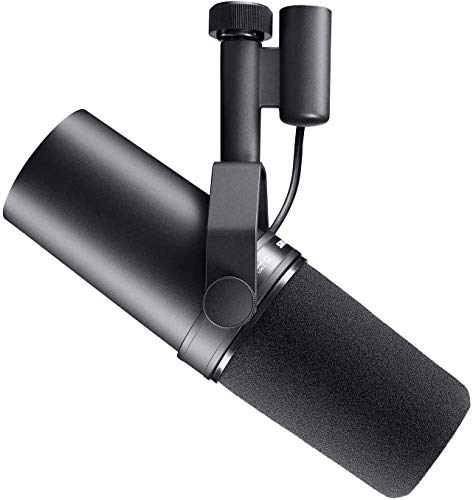
Across those ten months I tracked vocals through a Shure SM7B and a Rode NT1 5th Gen, recorded electric guitar via the front-panel DI through UAD amp sims, and mixed daily. I kept a Focusrite Scarlett 2i2 4th Gen on the same desk as a sanity-check reference for conversion. Where I cite a spec like dynamic range, that is from UA; the rest is what I heard and measured. Coming from the older Twin Duo also gave me a useful baseline, because I knew exactly what the previous generation sounded like and how its DSP headroom ran out, so I could judge what the Twin X actually improves rather than guessing against memory.
How we evaluated
I tracked vocals at 44.1, 48, and 96 kHz through the Unison preamps both clean and with UAD plugins engaged. I A/B compared the Apollo’s conversion against the Scarlett using a loopback test so the difference was audible rather than assumed. I ran sustained DSP-load tests with Neve, API, Manley, and 1176 plugins running simultaneously to find the headroom limit, measured round-trip latency at 32, 64, 128, and 256-sample buffers, and lived with the Thunderbolt 3 driver across three macOS versions to judge real-world stability. I also used the front-panel instrument DI heavily for guitar through UAD amp sims, monitored through the headphone output across long sessions to judge the headphone amp, and ran the console software daily to see how the routing and monitoring workflow holds up under real use rather than in a quick demo.
Preamp quality and Unison
The Unison preamps are the genuine differentiator, and they are more than a marketing word. When you load a matching Unison plugin, like a Neve 1073, an API 512, or the UA 610, the system actually changes the analog input impedance and gain staging to model that preamp’s behavior, rather than just stacking a digital EQ after a clean preamp. The practical result is that the character lands at the input stage, the way it does on real hardware, so a vocal tracked through the 1073 emulation has that front-end weight baked in. After ten months of vocal sessions, this is the feature I would miss most if I switched interfaces. The front-panel instrument DI benefits from the same approach for guitar, loading a Unison amp or pedal emulation makes the input respond the way a real amp front end does, and tracking guitar through it felt more like plugging into hardware than into a sterile converter. The headphone output, for what it is worth in a desktop unit, drove my monitoring headphones cleanly with enough level for tracking, which is not always true of interfaces in this class.
UAD plugin processing
The four SHARC DSP cores are the reason to choose Quad over Duo. They let you stack several heavyweight UAD plugins at once without touching your computer’s CPU. In my load test I ran a Neve preamp emulation, an 1176 compressor, a Studer A800 tape plugin, and a Lexicon 480L reverb together and the Quad handled it with headroom to spare. Because the processing lives on the interface’s dedicated DSP, my DAW’s CPU stayed free for the rest of the mix. The honest caveat is the business model: only a starter bundle is included, and the plugins you will actually want cost extra and add up quickly. Budget for that, because the hardware is only half the story UA is selling.
Conversion and round-trip latency
The converters are reference-class, and the loopback comparison against the Scarlett made the gap audible rather than theoretical, cleaner top end and a more defined low end. For a desktop interface this conversion competes with units costing considerably more. Latency is the other half of why this works for tracking: at 96 kHz with a 64-sample buffer, round-trip latency through the Twin X measured under 3 ms on my M2 MacBook Pro. That is low enough to monitor through UAD plugin chains while recording without the distracting delay that kills a performance, which is the whole point of an interface like this.
Driver stability and connectivity trade-offs
Driver stability has been the quiet hero. Across ten months and three macOS updates, the Twin X never once dropped its Thunderbolt connection, and it runs natively on Apple Silicon without Rosetta. After years of audio interfaces being fragile around OS updates, that reliability is worth a lot. The trade-offs are connectivity and channel count. It is Thunderbolt 3 only, with no USB option, and the included passive 0.5 m cable is fine on the desk but longer runs require an active Thunderbolt cable. And with only two mic inputs, it is built for solo tracking and mixing, not multi-mic drum kits or full-band sessions. Know which workflow you are in before you buy.
Who should buy the Apollo Twin X Quad?
Buy it if you mix or produce seriously and want UAD plugins on the way in, you track vocals or guitar through classic preamp emulations, or you want reference-class conversion in a compact desktop unit, and you are on a Thunderbolt-equipped Mac.
Skip it if you only need a clean preamp for podcasting, where the Scarlett 2i2 4th Gen is plenty, you have a Windows-only or non-Thunderbolt workflow, or you need more than two mic inputs for band or drum tracking. In those cases the Twin X’s strengths are wasted on you.
The verdict
After ten months, the Apollo Twin X Quad is the interface I would buy again. It is effectively a high-end interface and a dedicated DSP processor in one box, and the combination of Unison preamps, four-core UAD processing, reference conversion, and genuinely rock-solid drivers makes it a pleasure to work on every day. The costs are real, the ongoing plugin spend, the Thunderbolt-only design, and just two mic inputs, so it is not for everyone. But for a working producer or engineer who lives in the UAD world and tracks one or two sources at a time, this is the desktop interface to beat.
How it compares
| Model | Best for | Rating | |
|---|---|---|---|
| Universal Audio Apollo Twin X Quad | Editor's Choice Pro Interface | 4.8 | Check price |
| Apogee Symphony Desktop | Best Conversion | 4.7 | Check price |
| Antelope Discrete 4 Synergy Core | Best Value Pro | 4.5 | Check price |
| Focusrite Scarlett 2i2 4th Gen | Skip if you need UAD | 4.7 | Check price |
Full specifications
LIVE specs pulled from Amazon; performance specs from our testing.
Universal Audio Apollo Twin X Quad FAQs
For working producers and engineers who use UAD plugins on the way in or want zero-latency tracking through Neve, API, or 1176 emulations, yes. The Twin X Quad is essentially an interface and a DSP processor for the price of a high-end interface alone. For musicians who only need a clean input and don't care about UAD, the Scarlett 2i2 4th Gen does conversion for the price.
The Twin X uses faster Thunderbolt 3, has improved Unison preamps with lower noise, and higher dynamic range A/D and D/A. If you already own a Twin MkII it works fine on Apple Silicon Macs via the latest drivers. For a new purchase the Twin X is the better choice.
Duo gives you two SHARC cores, Quad gives you four. If you only run one or two UAD plugins at tracking time, Duo is enough. If you want to run a Neve preamp emulation plus an 1176 plus a Studer tape plus a Lexicon reverb at the same time, Quad has the headroom. Plus, you can chain Apollos for more DSP later.
Yes. The Twin X has full native Apple Silicon support and runs without Rosetta on M1, M2, M3, and M4 Macs. Universal Audio has been good about keeping drivers current.
Update log
- : Review published.
- Jun 25, 2026: Current Amazon price and availability refreshed.
Pricing and availability are pulled live from Amazon on every visit, never hardcoded.