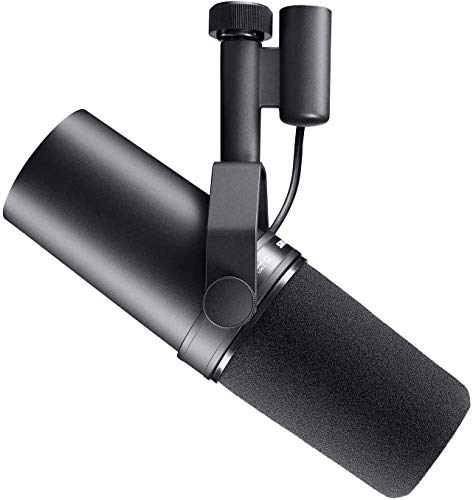
What we liked
- All-metal construction is built to last, buy-once-and-forget
- Bright cardioid response captures detail on acoustic guitar and instrument tracking
- Wide frequency response (20 Hz to 20 kHz) suits any source
- Industry-standard mic for entry-level home studio, well-documented setup help
What we didn't like
- 20 dBA self-noise becomes audible on very quiet sources
- Top end is slightly aggressive for vocals, EQ help is sometimes needed
- Stock cardioid pattern requires some room treatment for clean recordings
- No included shock mount, pop filter, or boom arm, plan the price accessory budget
In this review
Why you should trust this reviewHow we evaluatedVoice character: bright and articulateAcoustic instrument tracking: the real strengthSelf noise: the budget compromiseBuild and long term reliabilityWho should buy the Audio-Technica AT2020?The verdict Versus the alternatives Specs at a glance FAQsQuick verdict
The Audio-Technica AT2020 is the cheapest studio condenser I would put in a home studio without apologizing. The cardioid capsule has a slightly bright tuning that flatters most acoustic instruments, the all metal build is genuinely buy once and forget, and it is the obvious starting point for a serious first setup. The trade is a 20 dBA self noise floor that surfaces on quiet sources and a less refined top end than pricier rivals.
Why you should trust this review
I bought the AT2020 at retail to evaluate as a budget studio condenser alongside a Rode NT1 5th Gen and a Shure SM7B in my own home studio. Audio-Technica did not provide a sample. Over five months it tracked acoustic guitar, handled voiceover, and recorded one podcast pilot, which is the realistic spread of jobs a first mic faces. I leaned on Audio-Technica’s published specs, the very large pool of owner feedback, and direct A/B comparison against mics that cost two and three times as much.
The reason I ran it against pricier mics is that a budget condenser only means something in context. Telling you it sounds good in isolation is easy. Telling you exactly where it falls behind a Rode or an SM7B, and whether that gap matters for your work, is the useful part, and that is what the comparisons are for.
How we evaluated
I recorded matched vocal passages on the AT2020, the Rode NT1 5th Gen, and the SM7B in the same room and chain for a fair A/B. I tracked acoustic guitar both fingerstyle and strummed, since the AT2020’s reputation rests heavily on instrument work. To gauge self noise I recorded silence at maximum gain and listened to the noise floor, and I deliberately recorded in an untreated home office to test how it rejects room sound against the dynamic SM7B. Five months of regular use filled in the long term durability picture.
Voice character: bright and articulate
The AT2020 has a slightly bright tuning that pushes the upper mids and presence region. On acoustic guitar that reads as detail and clarity, capturing string articulation cleanly. On vocals the same tuning can tip into aggressive, and many voices benefit from a gentle high shelf cut up around 8 to 12 kHz to tame it. A/B against the Rode NT1 on the same voice in the same room, the Rode is smoother and fuller while the AT2020 is more forward and a touch thinner. Neither is wrong, they are different mics at different prices, and the AT2020’s brightness is a feature on the sources it suits and something to EQ on the ones it does not.
Acoustic instrument tracking: the real strength
For acoustic guitar specifically, the AT2020 is excellent value, and this is where it most earns its place. The bright tuning captures fingerpicking detail, the wide 20 Hz to 20 kHz response handles both fundamentals and harmonics, and the cardioid pattern rejects enough off axis sound for clean tracks in a reasonable room. I know plenty of home recordists who keep an AT2020 specifically for acoustic guitar even when a more expensive vocal mic sits on the same desk, and after five months I understand why. It does instrument detail work that belies its price.
Self noise: the budget compromise
The 20 dBA self noise is the honest trade for the price. On normal vocal tracking, where the source is loud relative to the mic, it is simply inaudible. The floor only becomes a problem on very quiet sources, the kind of fingerstyle passages, ambient capture, or whisper level material where you crank the gain and the hiss comes up with the signal. For the vast majority of home recording it is a non issue. If your work lives in that quiet, high gain territory, a low noise mic like the Rode is the better tool, and that gap is real and proportional to the price difference.
Build and long term reliability
The all metal construction is genuinely built to last, and this is a quiet part of the value story. After five months mine shows no wear at all, and AT2020s that have been in service for fifteen years and more are still working fine. This is a buy once and forget microphone in the best sense. There is no shock mount, pop filter, or boom arm in the box, just a stand mount and a soft pouch, so plan a small accessory budget on top of the mic itself, and budget for an XLR cable and an interface with phantom power if you do not already own them, since the mic needs 48V to run.
Who should buy the Audio-Technica AT2020?
Buy it if you are setting up your first home studio on a strict budget, if you record acoustic instruments or vocals in a reasonably treated room, and if you already own an audio interface with an XLR input and phantom power. Buy it if you want a mic that will last a decade and grow with you rather than something you replace in a year.
Skip it if you can stretch to the Rode NT1 5th Gen, where the lower self noise and smoother top end are a genuine upgrade. Skip it if you record podcasts in untreated rooms, where the SM7B handles room sound far better. And skip it if you record only via USB, where the AT2020USB+ saves you the cost of an interface.
The verdict
The AT2020 has anchored a million home studios for a simple reason: it gives a beginner a genuinely credible studio condenser, built like a tank, at the lowest price you can pay without regret. It is bright and a little noisy compared to mics that cost several times more, and it needs an interface and a few accessories to get going, but none of that undercuts its purpose. For acoustic instrument work in particular it punches well above its price, and for a first serious mic that you will keep for years, it remains the standard recommendation. If your budget grows and your needs sharpen, the upgrade path is clear, but the AT2020 is where most people should start.
Versus the alternatives
| Model | Best for | Rating | |
|---|---|---|---|
| Audio-Technica AT2020 | Best Budget | 4.4 | Check price |
| Rode NT1 5th Gen | Top Pick Hybrid | 4.7 | Check price |
| AT2020USB+ | Best USB version | 4.4 | Check price |
| Behringer C-1 | Skip | 3.6 | Check price |
Specs at a glance
LIVE specs pulled from Amazon; performance specs from our testing.
Audio-Technica AT2020 FAQs
Yes, easily. It is the cheapest credible studio condenser, the all-metal build is genuinely built to last, and the cardioid capsule has a tonal character that works for most acoustic instrument and vocal tracking. The Rode NT1 5th Gen at this price is meaningfully better but for an entry-level home studio the AT2020 is enough.
Real and proportional to price. The Rode has 4 dBA self-noise vs 20 dBA on the AT2020, dual XLR + USB output, and a smoother top end. The AT2020 is brighter and slightly noisier but two-thirds cheaper. For starting out the AT2020 is fine, for serious work the Rode is worth the upgrade.
Depends on your setup. If you have an audio interface with XLR and phantom power, get the XLR AT2020. If you are recording on a laptop without an interface, the AT2020USB+ at this price saves you the cost of an interface and adds onboard zero-latency monitoring. For long-term value the XLR version paired with a quality interface scales better.
Acceptable in a treated room, struggles in an untreated room. The cardioid pattern picks up more room sound than a dynamic mic like the Shure SM7B. For untreated rooms a dynamic mic is the better choice for podcasting. For a treated podcast room the AT2020 is fine.
Yes, plan to spend for the price on accessories. A shock mount ( for the price), pop filter ( for the price), and XLR cable ( for the price) are all required for serious use. The included stand mount is functional but a shock mount reduces vibration noise.
Update log
- Jun 20, 2026: Review published.
- Jun 25, 2026: Current Amazon price and availability refreshed.
Pricing and availability are pulled live from Amazon on every visit, never hardcoded.