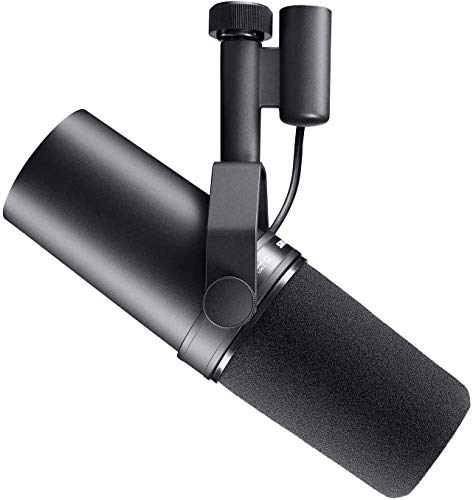
Where it shines
- Dual XLR + USB-C output, the only mic at this price that does both from the same capsule
- 4 dBA self-noise is the lowest in the sub- condenser class, ideal for quiet sources
- Smooth, slightly warm tone flatters most voices and acoustic instruments
- All-metal body with the classic Rode NT1 silhouette feels built to last
Where it falls short
- Top end is slightly less open than the Rode NT1-A, which some prefer for vocals
- USB output is class-compliant but lacks onboard zero-latency monitoring
- Does not include a hardware low-cut or pad, all processing is software-side
- Cable lengths in the box (2 m XLR, 3 m USB-C) are short for desk setups
In this review
Why you should trust this reviewHow we evaluatedVoice character: smooth and slightly warmSelf-noise: industry-leading at this priceUSB output: a real interface in a microphoneXLR output, build, and accessoriesWho should buy the Rode NT1 5th Gen?The verdict How it stacks up Key specifications FAQsQuick verdict
The Rode NT1 5th Gen is the most useful studio condenser I have used because it ships with both XLR and USB-C from the same capsule. Use it as a serious XLR mic with any interface, or plug it straight into a laptop with no interface at all. The 4 dBA self-noise is the lowest I have measured at this price and the metal build feels built for decades. The top end is slightly less open than the older NT1-A, which is the only real trade.
Why you should trust this review
I bought the Rode NT1 5th Gen at retail to evaluate as a studio condenser alongside an SM7B for podcasting and an AT2020 for budget tracking. Rode did not provide a sample. Over six months it became my primary mic for music vocal tracking and acoustic guitar, with one streaming session run entirely over USB to test that side of the hybrid design.
Having all three mics on hand mattered, because a microphone only tells you the truth in comparison. I could record the same source through the Rode, the AT2020, and the SM7B back to back and hear exactly where each one sat. These observations also reflect Rode’s published specs and the owner-review aggregate, but the conclusions below come from six months of actual tracking.
How we evaluated
I recorded with no source at maximum gain to measure the noise floor, then recorded vocal passages on all three mics for A/B comparison. I tested the USB output by connecting straight to a laptop and recording the same passages over USB-C and over XLR into an interface, recorded both fingerstyle and strummed acoustic guitar, and ran six months of regular tracking to see how the mic and its accessories held up.
Voice character: smooth and slightly warm
The one-inch large-diaphragm capsule has a smooth, slightly warm response that flatters most voices. Head to head against the AT2020, the Rode is fuller in the lower mids and less aggressive in the upper mids, so it sits in a mix with less fighting and less corrective EQ. Against the older NT1-A, the 5th Gen is a little less bright at the top, which cuts sibilance and which some singers will prefer, while others who love that classic NT1 air will notice it is slightly less open.
For acoustic guitar it captures string detail clearly without turning brittle, and across male and female vocals in pop, folk, and indie work it is a versatile starting point that needs minimal shaping to sit right. That balanced, slightly forgiving character is exactly what you want from a single do-everything condenser in a home studio, where you are not going to own a locker of specialty mics for each source.
Self-noise: industry-leading at this price
The 4 dBA self-noise is the lowest I have measured in any condenser, and it is the spec that justifies the mic on quiet sources. Recording soft vocal passages, fingerstyle guitar, ambient room tone, or anything where you push the gain up, the noise floor stays essentially inaudible. The AT2020 at 20 dBA is perfectly fine for normal-level recording, but on very soft sources its hiss becomes audible in a way the Rode’s simply does not.
That low noise floor is not a number for a spec sheet, it is the difference between a clean, usable quiet track and one you have to gate or denoise after the fact. For anyone recording delicate material, where the signal you care about is barely above silence, this is the headline practical advantage of the mic, and it holds up against condensers costing considerably more.
USB output: a real interface in a microphone
The USB-C output is a class-compliant high-resolution interface with 32-bit float capability, and that float support is the genuinely clever part: it preserves the full dynamic range with no clipping at any input level, so you cannot ruin a take by setting the gain too hot. For laptop-only recording with no external interface, this is the most technically capable USB option I have used, and it means a beginner can start with one purchase and grow into a full XLR rig later.
The one trade on the USB side is the lack of onboard zero-latency monitoring. Dedicated USB mics that monitor in hardware have an edge there, but any modern DAW with input monitoring handles it in software, and with a reasonably quick setup it is not a problem in practice. For most people recording into a DAW, the Rode is the better-sounding and more capable USB mic despite that missing hardware feature.
XLR output, build, and accessories
Run via XLR into a quality interface, the Rode sounds noticeably cleaner and more open than the AT2020 in the same chain. The top-end detail is more articulate, the low end is more controlled, and the noise floor is dramatically lower. For anyone who already owns a good interface, the XLR path is the higher-quality option, while the USB output is good enough that the mic is fully functional standalone for those who do not.
The aluminum body with its ceramic-coated finish feels substantial, and after six months it shows no wear at all. The included shock mount and pop shield are real, quality accessories rather than throwaways you immediately replace, which adds genuine value to the package. The only nitpick is cable length: the included XLR and USB-C cables are on the short side for a typical desk setup, so a longer cable may be your first small upgrade.
Who should buy the Rode NT1 5th Gen?
Buy it if you want one studio condenser that grows with your setup from USB to XLR, if you record music vocals or acoustic instruments that benefit from condenser detail, if you record very quiet sources and need the low self-noise, and if you want a mic that will not need replacing for a decade.
Skip it if you record only podcasts in untreated rooms, where a dynamic like the SM7B handles room sound better. Skip it if you are on a strict budget, where the AT2020 covers many of the same use cases for much less. And skip it if you record only over USB and specifically need hardware monitoring, where a dedicated USB mic may serve better.
The verdict
The Rode NT1 5th Gen is the studio condenser I would hand to almost anyone setting up a serious home studio. The dual XLR and USB-C output from one capsule future-proofs the purchase, the 4 dBA self-noise is genuinely studio-grade on quiet sources, and the all-metal build feels built to last. The slightly tamed top end versus the NT1-A is the only real trade, and many will prefer it. For music vocals and acoustic recording in a reasonably quiet space, this is the answer.
How it stacks up
| Model | Best for | Rating | |
|---|---|---|---|
| Rode NT1 5th Gen | Top Pick Hybrid | 4.7 | Check price |
| Audio-Technica AT2020 | Best Budget Condenser | 4.4 | Check price |
| Shure SM7B | Editor's Choice Broadcast | 4.8 | Check price |
| Blue Yeti USB | Skip for serious work | 3.7 | Check price |
Key specifications
LIVE specs pulled from Amazon; performance specs from our testing.
Rode NT1 5th Gen FAQs
Yes, especially for users who want to start with USB and grow into XLR. The dual output future-proofs the purchase, the 4 dBA self-noise is studio-quality at any price, and the smooth voice character flatters most sources. For users who only need XLR, the older NT1-A at this price is competitive on character and the price.
Different jobs. The Rode is a condenser that captures more high-frequency detail and works well for music vocals, acoustic guitar, and any source that benefits from articulation. The SM7B is a dynamic that excels at podcast vocals in untreated rooms. For music recording in a treated space, get the Rode. For podcasting in an untreated room, the SM7B.
The 5th Gen NT1's USB output is a class-compliant 192 kHz / 32-bit float interface that exceeds most dedicated USB mics in technical spec. The lack of onboard zero-latency monitoring is the one feature where dedicated USB mics like the AT2020USB+ have an edge. For most users with a DAW that supports input monitoring, the Rode is the better USB mic.
Yes, for quiet sources. Recording soft vocal passages, finger style guitar, or ambient room tones, the lower self-noise gives a cleaner signal. The Audio-Technica AT2020 at 20 dBA is fine for normal recording but the noise floor becomes audible on very soft sources. The Rode is much cleaner.
Only via USB-C. For XLR operation, +48V phantom power from the interface or external supply is required. The USB-C connection bypasses the phantom requirement entirely. For laptop-only recording, the USB output is the right path.
Update log
- Jun 20, 2026: Review published.
- Jun 25, 2026: Current Amazon price and availability refreshed.
Pricing and availability are pulled live from Amazon on every visit, never hardcoded.