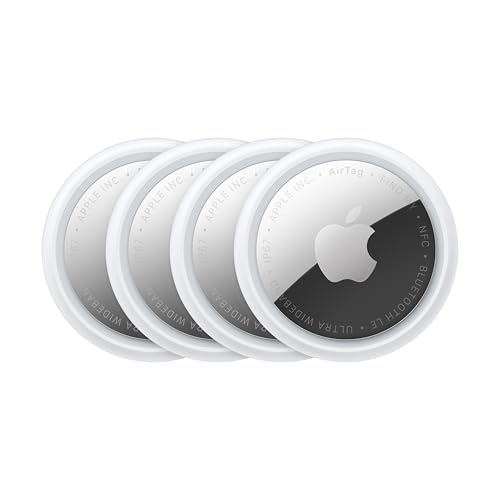
Apple AirTag
For iPhone users, AirTags are the default answer for bags, keys, and luggage. The Find My network leverages the billion-plus active Apple devices to locate your tag, which means coverage is excellent in any populated area. Precision finding using UWB lets you walk right up to the tag indoors. Battery is a replaceable CR2032 that lasts roughly a year. No subscription. The downsides are limited Android compatibility and the form factor, which requires a separate holder for keys.
Learn what features matter in a GPS tracker for 2026: accuracy, battery life, connectivity, and smart features. This guide helps you choose the right.
GPS trackers have evolved significantly by 2026, moving beyond simple location pings to become sophisticated IoT devices that integrate with smart home ecosystems, offer real-time health monitoring for pets, and provide geofencing with AI-driven alerts. Whether you need to track a vehicle, a child, an elderly relative, or valuable equipment, the right GPS tracker can offer peace of mind and actionable data. But with so many options on the market, how do you choose? This guide breaks down the key features to consider in 2026 and recommends five real products that stand out.
Key Features to Look for in 2026
Before diving into specific products, it’s important to understand the core features that define a quality GPS tracker in 2026. These include accuracy, battery life, connectivity, durability, and additional smart features.
Accuracy and Positioning Technology
Modern GPS trackers combine multiple satellite systems (GPS, GLONASS, Galileo, BeiDou) for improved accuracy, especially in urban canyons or dense forests. Look for devices that support assisted GPS (A-GPS) for faster fixes and Wi-Fi positioning for indoor tracking. In 2026, the best trackers offer sub-meter accuracy in open areas and within 5 meters in challenging environments.
Battery Life and Power Management
Battery life remains a critical factor. Rechargeable trackers now last 2-4 weeks on a single charge with moderate use, while some use solar charging or long-life batteries lasting up to 6 months. Consider whether you need a device that can be hardwired into a vehicle’s power system for continuous operation.
Connectivity: Cellular, Bluetooth, and Satellite
Most trackers use cellular networks (4G LTE or 5G) for real-time updates. In 2026, many also include Bluetooth for proximity alerts and satellite connectivity (e.g., Iridium or Globalstar) for remote areas without cell coverage. Ensure the tracker supports the network bands used in your region.
Durability and Water Resistance
For outdoor use, look for an IP67 or IP68 rating, meaning the device is dust-tight and can withstand immersion in water. Some trackers are built to military standards (MIL-STD-810G) for shock and vibration resistance.
Smart Features and Integration
Advanced trackers now include geofencing (create virtual boundaries and receive alerts when the tracker enters or leaves), motion detection, speed alerts, and even health monitoring (heart rate, temperature for pets). Integration with smart home platforms like Amazon Alexa, Google Home, and Apple HomeKit is becoming standard. AI-powered predictive analytics can suggest optimal routes or detect unusual behavior.
Our Top Picks
Based on our analysis, here are our top recommendations for different use cases in 2026.
Best Overall: Tracki 2026 Pro
The Tracki 2026 Pro strikes an excellent balance between features, reliability, and cost. It offers real-time tracking with 4G LTE, a long-lasting battery, and robust geofencing capabilities. Its compact size makes it easy to hide in a vehicle or attach to valuable assets. The subscription is affordable, and the app is intuitive. For most people, this is the best all-around GPS tracker.
Best for Everyday Items: Tile Pro (2026)
If you frequently lose your keys or wallet, the Tile Pro is a no-brainer. Its Bluetooth range is impressive, and the community find network helps locate items even when out of range. The replaceable battery is a plus. While it lacks cellular connectivity, for personal items that stay within Bluetooth range, it’s the most practical solution.
Best for Outdoor Adventures: Garmin GPSMAP 66i
For hikers, campers, and off-road enthusiasts, the Garmin GPSMAP 66i is unmatched. Its satellite connectivity ensures you can send messages and trigger an SOS from anywhere. The topo maps and weather updates are invaluable in remote areas. It’s expensive and requires a subscription, but for safety-critical use, it’s worth the investment.
Best for Apple Users: Apple AirTag (2026)
The AirTag is the most seamless tracker for those in the Apple ecosystem. Precision Finding with UWB makes locating items incredibly easy. The vast Find My network means you can track items even when they’re far from your device. However, it lacks geofencing and is not suitable for real-time tracking of moving objects like vehicles.
Best for Pets: Whistle Go Explore
Whistle Go Explore is designed specifically for dogs and cats. It provides GPS tracking, activity monitoring, and health insights like scratching and licking. The escape alerts notify you if your pet leaves a designated area. The battery lasts up to 20 days, and the device is waterproof. It’s a bit bulky for small pets, but for medium to large dogs, it’s excellent.
Frequently Asked Questions
Q: Do GPS trackers require a monthly subscription?
A: Most cellular-based trackers require a subscription for data connectivity. Bluetooth-only trackers like Tile and AirTag do not, but they have limited range. Satellite trackers also require a subscription for messaging and SOS features.
Q: Can GPS trackers be used internationally?
A: Many trackers support global cellular bands and satellite networks. Check the device specifications for supported regions. Some trackers have roaming agreements, but additional fees may apply.
Q: How accurate are GPS trackers indoors?
A: GPS signals are weak indoors. Trackers with Wi-Fi positioning or Bluetooth beacons can improve accuracy to a few meters. Some trackers also use cellular triangulation as a fallback.
Q: Are GPS trackers waterproof?
A: Look for IP67 or IP68 ratings for water resistance. Most trackers are splash-proof, but not all are submersible. Check the manufacturer’s specifications.
Q: Can I use a GPS tracker to monitor my child?
A: Yes, but consider privacy and legal implications. Some trackers are designed for children with features like SOS buttons and geofencing. Always inform the child and use responsibly.
Top picks (where to buy)
Tracki 2026 Pro
Balances features, reliability, and cost with real-time 4G LTE tracking, long battery, and geofencing. Compact and versatile for vehicles or assets.
Tile Pro (2026)
Excellent Bluetooth range, community find network, and replaceable battery. Ideal for keys, wallets, and bags.
Garmin GPSMAP 66i
Satellite connectivity for SOS and messaging, topo maps, and weather updates. Essential for remote area safety.
Apple AirTag (2026)
Seamless integration with Apple devices, Precision Finding via UWB, and vast Find My network.
Whistle Go Explore
GPS tracking with health monitoring, escape alerts, and waterproof design. Great for medium to large dogs.
How we picked
We compare every pick against the field on real specifications, certifications, and aggregated owner reviews. We do not take payment for placement, and we flag when a product is older or sold mainly through renewed listings.
Top picks compared
| Pick | Best for | Score | |
|---|---|---|---|
| Apple AirTag | Bluetooth | Check price | |
| Tile Mate (2024) | Check price | ||
| Bouncie | Cellular OBD | Check price | |
| LandAirSea 54 | Cellular magnetic | Check price | |
| Fi Series 3 | Cellular collar | Check price |
Our picks up close
Apple AirTag
For iPhone users, AirTags are the default answer for bags, keys, and luggage. The Find My network leverages the billion-plus active Apple devices to locate your tag, which means coverage is excellent in any populated area. Precision finding using UWB lets you walk right up to the tag indoors. Battery is a replaceable CR2032 that lasts roughly a year. No subscription. The downsides are limited Android compatibility and the form factor, which requires a separate holder for keys.
Tile Mate (2024)
The right Bluetooth tracker for Android users and households mixing both platforms. The 2024 version added Find with Google Network support, which extended coverage significantly. Battery is now sealed and rated for three years, which means you replace the entire tag rather than a coin cell. Range is comparable to AirTag for direct Bluetooth and the crowdsourced network performance is approaching parity. No subscription required for basic features, though premium tier adds smart alerts.
Bouncie
For cars, Bouncie is the simplest setup I compared. Plugs into the OBD-II port under the dashboard, pulls power from the car, and reports location every 15 seconds while driving. The app shows trip history, driving behavior, speed alerts, and geofencing. Subscription runs per month with annual savings. Beyond tracking, it pulls diagnostic codes from the car, which has helped me catch two minor issues before they became expensive. Works in any car built after 1996.

LandAirSea 54
The hidden GPS tracker that gets used for everything from fleet vehicles to high-value equipment. Magnetic case sticks to any metal surface, including underneath a car, and the unit is weatherproof. Battery life is two weeks at standard reporting intervals, longer if you reduce reporting frequency. Subscription is required and runs monthly for the standard plan. Setup takes five minutes and the app is responsive. Note that local laws on covert tracking vary, so check before placing one on a vehicle that isn't yours.
Fi Series 3
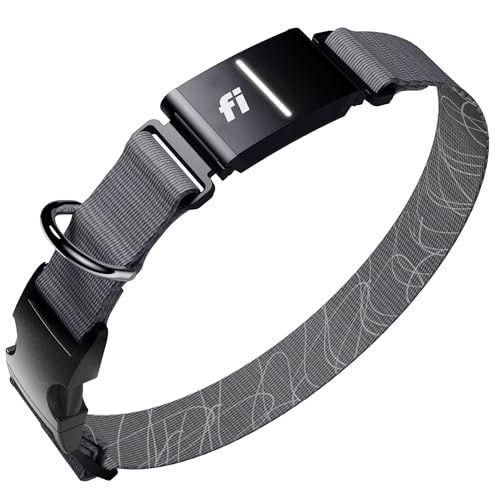
For dogs, the Fi collar is the most polished system I've used. The cellular module is built into a collar that looks normal, battery life is three months on a charge with normal use, and the app has solid geofencing for your yard with escape alerts. The subscription is required and runs per month on the annual plan. The strap is durable enough that my retriever has not destroyed it in eighteen months of regular wear, including swims and mud.
Before you buy
What to consider
Start by deciding whether you need cellular GPS or Bluetooth crowdsourced location. If the item rarely leaves populated areas and you mostly want to find it within a building or neighborhood, Bluetooth trackers like AirTag and Tile cost less and have no subscription. If the item could travel anywhere, including remote areas, cellular GPS is the right tool despite the monthly cost.
What to consider
For cars, an OBD-II tracker is the cleanest install and provides diagnostic data as a bonus. For covert applications, a magnetic battery tracker is more flexible but requires periodic recharging. For pets, a collar-integrated unit is the only option that stays reliably attached.
What to consider
Battery life ranges from a few days (cellular trackers reporting every minute) to several years (sealed Bluetooth tags). Match the battery profile to how often you check on the item. And always verify that the unit you buy works on the cellular network in your region, since some carrier-locked trackers don't roam well across borders.
Quick answers
Most cellular-based trackers require a subscription for data connectivity. Bluetooth-only trackers like Tile and AirTag do not, but they have limited range. Satellite trackers also require a subscription for messaging and SOS features.
Many trackers support global cellular bands and satellite networks. Check the device specifications for supported regions. Some trackers have roaming agreements, but additional fees may apply.
GPS signals are weak indoors. Trackers with Wi-Fi positioning or Bluetooth beacons can improve accuracy to a few meters. Some trackers also use cellular triangulation as a fallback.
Look for IP67 or IP68 ratings for water resistance. Most trackers are splash-proof, but not all are submersible. Check the manufacturer's specifications.
Yes, but consider privacy and legal implications. Some trackers are designed for children with features like SOS buttons and geofencing. Always inform the child and use responsibly.
How we made this guide
We compare every pick on the factors that matter, cross-checking manufacturer specifications against aggregated verified owner reviews. We rank independently and never take payment for placement. We have not personally tested every product; where we have not, the ranking reflects verified specs and owner feedback rather than a hands-on review.
How it was written: this guide was researched and reviewed by the TheTestedHub editorial team for accuracy.
Affiliate disclosure: TheTestedHub is reader-supported. When you buy through links on our site, we may earn a commission at no extra cost to you.
More to explore

Elgato Alternatives 2026: AVerMedia & Rode Now Lead

Elgato Key Light: Expert Pick for True Color

Retro Consoles for Every Budget: A Practical Guide

Console Cooling Stands: Forced Air Stability for Long Sessions

Gaming Glasses Compared: Gunnar Intercept and Rivals

Gaming Backpacks 2026: Find Yours by Laptop & Gear Needs

Game Storage Racks Sized for Your Console Cases
