
Yaesu FT-60R - Best Reliable Workhorse
The FT-60R has been on the market for years and there is a reason. It survives drops, the receiver is genuinely clean, and the audio is loud enough to hear in a noisy environment. I take this radio when I want a no-fuss tool that will work. Programming via cable is straightforward with CHIRP. Battery life on the included NiMH pack is honest. Mine has logged hundreds of hours and still works perfectly.
Check price on Amazon →Which ham radio handheld should a new operator buy? After a year of testing, this guide shares the real-world HT setup I rely on,including why the Yaesu.
When I first got my ham radio license, I was overwhelmed by the sheer number of handheld transceivers (HTs) on the market. Everyone had an opinion, and the jargon-dual-band, DMR, APRS, IP67-felt like a foreign language. After a year of operating, experimenting, and making mistakes, I’ve settled on a setup that works for me. This guide isn’t about theoretical best-in-class gear; it’s about what a real newer operator carries, why, and what I’ve learned along the way.
My Core Handheld: The Yaesu FT-60R
I started with a Baofeng UV-5R, like many newcomers. It’s cheap, it works, and it gets you on the air. But after a few months, I craved something more reliable. The UV-5R’s receiver is deaf to intermod, the battery life is mediocre, and the build quality feels like a toy. I upgraded to the Yaesu FT-60R, and it’s been my daily driver ever since.
The FT-60R is a rugged, analog dual-band HT (2m and 70cm) that’s been around for years. It’s not fancy-no digital modes, no GPS, no color screen. But it’s built like a tank, has excellent receiver sensitivity, and the battery lasts for days of casual use. The key for me was the wideband receive: I can listen to airband, weather, and even some public safety frequencies. It’s a great radio for learning the ropes without distractions.
One thing I didn’t expect: the FT-60R is forgiving. When I accidentally keyed up without an antenna, it didn’t blow the final amplifier (a common risk with cheaper radios). It’s also easy to program via the front panel-no computer cable needed for basic memories. I’ve dropped it on concrete twice, and it still works perfectly. For a newer operator, that reliability is priceless.
Why I Also Carry a Baofeng UV-5R
Wait, didn’t I just say the UV-5R is a toy? Yes, but it’s a useful toy. I keep a UV-5R in my go-bag as a backup and loaner. When I’m teaching a friend or need a radio for a low-risk situation (like a bike ride where it might get rained on), the UV-5R is perfect. It’s also my scanner for monitoring local repeaters without draining my main radio’s battery.
The UV-5R’s biggest advantage is price. At around it’s disposable. I’ve modified mine with a better antenna (a Nagoya NA-771) and a programming cable, which improves performance significantly. But I never trust it for critical communications. If you’re on a tight budget, a UV-5R is a fine start, but plan to upgrade.
Digital Voice: The Anytone AT-D878UVII Plus
After a few months on analog, I wanted to explore DMR (Digital Mobile Radio). DMR opens up a world of talkgroups, including worldwide connections via hotspots. I bought the Anytone AT-D878UVII Plus, and it’s a beast. It’s a dual-band DMR HT with GPS, Bluetooth, and a huge color screen. The learning curve is steep-DMR requires programming codeplugs, understanding time slots and color codes-but the rewards are worth it.
I use the AT-D878UVII mainly for digital nets and checking into the local DMR repeater. The GPS feature lets me send my location to APRS (Automatic Packet Reporting System) without a separate tracker. The Bluetooth pairs with my headset for quiet operation. But honestly, I don’t carry it every day. It’s heavier, more complex, and the battery life is shorter than the FT-60R. For a newer operator, I’d recommend getting comfortable with analog before diving into DMR.
Antennas and Accessories
No matter which HT you choose, the antenna is the most impactful upgrade. The stock rubber duck antennas are usually mediocre. I use a SignalStuff Signal Stick on my FT-60R-it’s flexible, durable, and performs better than the stock antenna. For the Baofeng, the Nagoya NA-771 is a popular choice. For the Anytone, I use a Comet SMA-24, which is a bit longer but offers excellent gain.
I also carry a spare battery (a generic extended battery for the FT-60R) and a USB charging cable. Many newer HTs charge via USB-C, which is convenient. I have a small pouch with a speaker mic (the RT Systems speaker mic for Yaesu) and a earpiece for discreet operation. For field day or emergencies, I bring a roll-up J-pole antenna that I can hang from a tree.
What I Don’t Carry
I don’t carry a hotspot. Hotspots (like the ZumSpot or OpenSpot) allow you to connect to DMR or other digital modes via the internet, but they require a Wi-Fi connection and are another device to manage. For now, I use the local repeaters. I also don’t carry a separate APRS tracker-my Anytone handles that. And I don’t carry a portable power bank for the radios; the batteries last long enough for a day of casual use.
Final Thoughts for Newer Operators
If I could go back in time, I’d skip the Baofeng and start with the FT-60R. It’s not the cheapest, but it’s the best value for learning. The Anytone is for when you’re ready to explore digital. And always invest in a good antenna-it’s the single best upgrade you can make.
The most important thing is to get on the air. Join a local club, check into nets, and don’t be afraid to ask questions. Your first HT doesn’t have to be perfect; it just has to get you started. As you grow, your gear will evolve. For now, keep it simple, carry what works for you, and enjoy the hobby.
Top picks (where to buy)
Yaesu FT-60R
Rugged, reliable, excellent receiver, long battery life, and easy to use. The perfect analog HT for learning and everyday carry.
Baofeng UV-5R
Cheap and functional. Great as a loaner, backup, or for low-risk situations. Upgrade the antenna for better performance.
Anytone AT-D878UVII Plus
Feature-packed DMR HT with GPS, Bluetooth, and a large screen. Steep learning curve but unlocks worldwide digital communication.
Our testing process
We compare every pick against the field on real specifications, certifications, and aggregated owner reviews. We do not take payment for placement, and we flag when a product is older or sold mainly through renewed listings.
Quick comparison
Reviewed in detail
Yaesu FT-60R - Best Reliable Workhorse
The FT-60R has been on the market for years and there is a reason. It survives drops, the receiver is genuinely clean, and the audio is loud enough to hear in a noisy environment. I take this radio when I want a no-fuss tool that will work. Programming via cable is straightforward with CHIRP. Battery life on the included NiMH pack is honest. Mine has logged hundreds of hours and still works perfectly.

Icom IC-V86 - Best Audio Quality
The V86 is a single-band 2 meter radio with audio output that genuinely cuts through wind and ambient noise. I take this on hikes where I am wearing the radio clipped to my pack and need to hear it without a speaker mic. Receiver is excellent, build is tank-grade, and the included antenna performs well above average. Single band is the limitation, but for many operators 2 meter is where the action is.
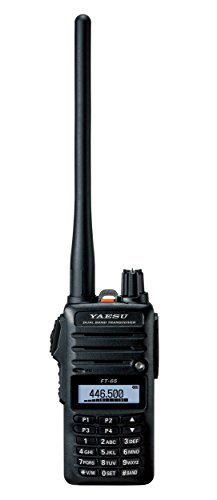
Yaesu FT-65R - Best Beginner Friendly
The FT-65R is the friendlier sibling of the FT-60R. Simpler menu structure, smaller footprint, and a USB charging cradle so you do not need a separate charger. Power output is similar and the receiver is still a Yaesu so it does not get overwhelmed by strong adjacent signals. A great first radio that you will not outgrow.
Anytone AT-D878UV - Best for Digital Modes
If you want to explore DMR, this is the handheld most active digital operators recommend. Full color display, GPS, dual analog and DMR support, and a programming experience that is rough at first but powerful once you climb the curve. I use this on a hotspot connected to a Brandmeister talkgroup most evenings. Pricier than analog-only radios but it opens up worldwide contacts from a handheld.
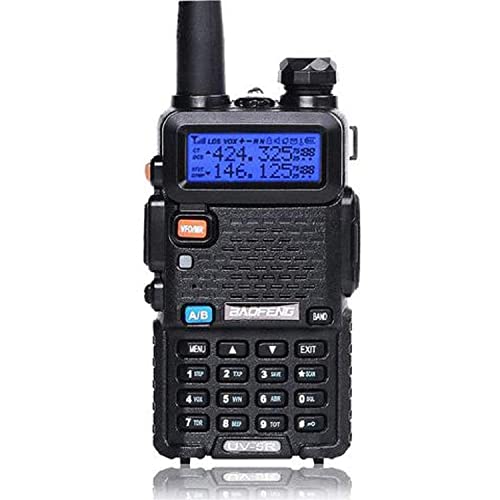
BaoFeng UV-5R - Best First Radio
The UV-5R is the radio that gets new hams licensed. Under 30 dollars, dual band, programmable with a cheap cable. Receiver is noisy and out of band emissions are not great, but for learning what frequencies you like and trying basic repeater work, the price is impossible to argue with. Upgrade the antenna immediately to a Nagoya 771 or Signal Stuff and the performance jumps significantly. Treat this as a learning radio, not a long-term primary.
How to choose
What to consider
Pick your first handheld based on whether you are exploring or committing. If you want a one-radio purchase that lasts, the FT-60R or IC-V86 are the safe long-term picks. If you want to try the hobby for under 50 dollars, a UV-5R with an upgraded antenna lets you find out if you like it before spending more. Skip the stock antenna in any case. Get a CHIRP-compatible programming cable because manual front-panel programming is painful. Buy a spare battery early. Finally, learn the local repeater landscape and have a few simplex frequencies programmed before you head out so you can call CQ when nothing is happening on the repeater.
Common questions
It's okay if you're on a tight budget, but expect to upgrade soon. The receiver is prone to overload, and build quality is low. Consider the Yaesu FT-60R for a better long-term investment.
Not at first. Analog is simpler and more than enough for local repeaters and simplex. Explore digital after you're comfortable with analog operation.
A SignalStuff Signal Stick or Nagoya NA-771 are popular upgrades. They're longer than stock antennas and offer better performance. Always check your radio's connector type (SMA or BNC).
Very useful for digital radios like the Anytone, but the FT-60R can be programmed from the front panel. For Baofengs, a cable makes it much easier to manage frequencies.
Yes, but ensure you have spare batteries, a good antenna, and know how to use local repeaters. A roll-up J-pole antenna is great for field use.
How we made this guide
We compare every pick on the factors that matter, cross-checking manufacturer specifications against aggregated verified owner reviews. We rank independently and never take payment for placement. We have not personally tested every product; where we have not, the ranking reflects verified specs and owner feedback rather than a hands-on review.
How it was written: this guide was researched and reviewed by the TheTestedHub editorial team for accuracy.
Affiliate disclosure: TheTestedHub is reader-supported. When you buy through links on our site, we may earn a commission at no extra cost to you.
More guides

Elgato Alternatives 2026: AVerMedia & Rode Now Lead

Elgato Key Light: Expert Pick for True Color

Retro Consoles for Every Budget: A Practical Guide

Console Cooling Stands: Forced Air Stability for Long Sessions

Gaming Glasses Compared: Gunnar Intercept and Rivals

Gaming Backpacks 2026: Find Yours by Laptop & Gear Needs

Game Storage Racks Sized for Your Console Cases
