A budget graphics card is the single biggest factor in how smoothly your games run, yet it does not have to drain your entire build budget. The gap between a capable entry-level GPU and a frustrating one shows up in real frame rates, texture quality, and how long your system stays relevant. With modern upscaling tech like DLSS and FSR, today’s budget cards punch far above their price tier, especially at 1080p where most players game.
When shopping, look beyond the raw model number. Memory capacity and bandwidth, power draw, cooler design, and which upscaling features the card supports all shape the real-world experience. A card with more VRAM ages better as games grow hungrier, while a newer architecture brings efficiency and feature support that older silicon cannot match. Match the card to your monitor’s resolution and refresh rate, and you will get the most value for every dollar spent.

ASUS Dual NVIDIA GeForce RTX 5060 8GB GDDR7 OC Edition (PCIe 5.0, 8GB GDDR7, DLSS 4, HDMI 2.1b, DisplayPort 2.1b, 2.5-Slot Design, Axial-tech Fan Design, 0dB Technology), 3 Year Warranty
The ASUS Dual GeForce RTX 5060 8GB OC pairs the latest NVIDIA architecture with PCIe 5.0, fast GDDR7 memory, and DLSS support for the smoothest budget experience available. Its dual-fan OC cooler keeps the card quiet and cool while delivering strong 1080p and entry 1440p performance.
- AI Performance: 623 AI TOPS
- OC mode: 2565 MHz (OC mode)/ 2535 MHz (Default mode)
- Powered by the NVIDIA Blackwell architecture and DLSS 4
- SFF-Ready Enthusiast GeForce Card

ASUS Dual NVIDIA GeForce RTX 3050 6GB GDDR6 OC Edition Gaming Graphics Card - PCIe 4.0, HDMI 2.1, DisplayPort 1.4a, 2-Slot Design, Axial-tech Fan Design, Steel Bracket, 3 Year Warranty
The ASUS Dual GeForce RTX 3050 6GB OC is a dependable previous-gen NVIDIA option that handles 1080p esports and older AAA titles with DLSS support. Its compact dual-fan design and proven reliability make it a safe choice for budget builders who do not need the newest features.
- NVIDIA Ampere Streaming Multiprocessors: The all-new Ampere SM brings 2X the FP32 throughput and improved power efficiency.
- 2nd Generation RT Cores: Experience 2X the throughput of 1st gen RT Cores, plus concurrent RT and shading for a whole new level of ray-tracing performance.
- 3rd Generation Tensor Cores: Get up to 2X the throughput with structural sparsity and advanced AI algorithms such as DLSS. These cores deliver a massive boost in game performance and all-new AI capabilities.
- Axial-tech fan design features a smaller fan hub that facilitates longer blades and a barrier ring that increases downward air pressure.

GIGABYTE GeForce RTX 5050 WINDFORCE OC 8G Graphics Card, 8GB 128-bit GDDR6, PCIe 5.0, WINDFORCE Cooling System, GV-N5050WF2OC-8GD Video Card
The GIGABYTE RTX 5050 WINDFORCE OC 8G delivers current-gen NVIDIA features and 8GB of GDDR6 memory on a 128-bit bus at an accessible entry point. Its WINDFORCE cooling keeps temperatures low, making it a smart pick for efficient, modern 1080p gaming.
- Powered by the NVIDIA Blackwell architecture and DLSS 4
- Powered by GeForce RTX 5050
- Integrated with 8GB GDDR6 128bit memory interface
- PCIe 5.0

ASRock Intel Arc B570 Challenger 10GB OC GDDR6 Graphics Card, 2600 MHz GPU, 19 Gbps Memory, Dual Fan, Metal Backplate, HDMI 2.1a, DisplayPort 2.1, 0dB Cooling
The ASRock Intel Arc B570 Challenger 10GB OC stands out with generous VRAM, a high GPU clock, and XeSS upscaling for excellent value in the budget tier. Its larger memory pool and capable ray tracing make it the most forward-looking option here for demanding games.
- Advanced Intel Arc Performance: Intel Arc B570 GPU with 10GB GDDR6 memory on 160-bit bus delivers excellent 1440p gaming and content creation performance
- Next-Gen Xe2-HPG Architecture: Features Intel Xe2-HPG architecture with Xe Matrix Extensions (XMX) for advanced AI acceleration and upscaling technology
- High Clock Speeds: GPU clock speed of 2600 MHz with 19 Gbps memory speed ensures smooth, responsive gaming experiences
- Intel XeSS 2 Technology: Supports Intel Xe Super Sampling 2 for enhanced performance and image quality through AI-powered upscaling
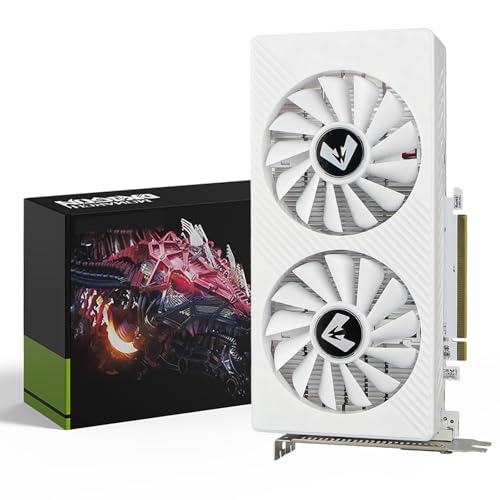
MOUGOL AMD Radeon RX 580 Gaming Graphics Card, 8GB GDDR5 256-Bit, Dual Fan Cooling, DP/HDMI/DVI Video Output, PCI Express X16 3.0, Computer GPU Support Windows 11/10/7 Desktop PC
The MOUGOL AMD Radeon RX 580 8GB offers a wide 256-bit memory bus and dual-fan cooling at the lowest entry point for casual and esports gaming. It lacks modern upscaling but remains a practical way to drive 1080p frames on the tightest of budgets.
- 【8GB GDDR5 High-Capacity VRAM】: Equipped with 8GB of Samsung GDDR5 memory and a massive 256-bit bus width, this RX 580 2048SP handles texture-heavy games and multitasking with ease. Enjoy a smoother gaming experience at 1080P resolution without worrying about memory bottlenecks.
- 【Ultimate Triple Display Connectivity】: Features a versatile output array including HDMI, DisplayPort (DP), and DVI. Whether you're connecting a high-refresh-rate gaming monitor via DP or a standard office screen via HDMI, this card supports triple-monitor setups for maximum productivity.
- 【Compact Size & Wide Compatibility】: Measuring 240x135x45mm (9.45x5.31x1.77 inches), this dual-fan RX 580 fits perfectly into standard ATX Mid-Towers, Micro-ATX (M-ATX), ideal for compact desktop PC upgrades and space-saving gaming builds.
- 【Optimized Gaming Performance】: With 2048 Stream Processors and a 1206 MHz core clock, this card delivers solid frame rates in popular titles like Fortnite, GTA V, Apex Legends, and Valorant. It’s the ideal budget-friendly GPU for entry-level to mid-range gaming rigs.
Key buying factors
Video memory determines how many textures and assets the card can hold at once. For 1080p gaming, 8GB is the comfortable baseline in 2026, while 6GB cards still handle older or lighter titles. More VRAM means better longevity as games keep raising their requirements.
A newer architecture brings better efficiency, ray tracing performance, and access to the latest upscaling features. Current-gen cards like the RTX 50-series and Intel Arc B-series outpace older silicon at similar power draw. Buying newer also means longer driver support down the road.
DLSS on NVIDIA, FSR on AMD, and XeSS on Intel can multiply your frame rates with minimal quality loss. These features are now essential for budget cards to hit high refresh rates. Check which upscaling tech a card supports before buying, as it can transform performance in supported games.
Budget cards are generally efficient, but you still need to confirm your power supply has the right connectors and wattage headroom. Lower-draw cards may even run without an extra power connector on some models. Always check the recommended PSU rating to avoid instability.
A good dual-fan cooler keeps temperatures down and noise low, which matters in small or warm cases. Measure your case clearance before buying, since some compact cards fit ITX builds while others need full-size enclosures. Better cooling also protects sustained boost clocks during long sessions.
The memory bus width and type, such as GDDR6 or the newer GDDR7, affect how quickly data moves to the GPU. A wider bus or faster memory helps at higher resolutions and with heavy textures. Pair bandwidth with capacity for the most balanced real-world performance.
Types explained
The newest NVIDIA budget cards combine PCIe 5.0, GDDR7 memory, and the latest DLSS frame generation. They offer the strongest feature set and best efficiency in the entry tier.
Best for: Gamers who want future-proof features and the smoothest upscaling for 1080p and light 1440p.Intel's Arc B-series cards bring generous VRAM and strong value, with XeSS upscaling and capable ray tracing for the price. Drivers have matured significantly, making them a serious budget contender.
Best for: Value hunters who want more VRAM and modern features without paying NVIDIA prices.Older RTX cards like the 3050 still deliver solid 1080p performance and DLSS support at a lower entry point. They are a dependable choice when the latest generation is overkill.
Best for: Budget builders who want proven NVIDIA reliability for esports and older AAA titles.Cards like the RX 580 remain popular for ultra-tight budgets, offering 8GB of memory and competent 1080p frames in less demanding games. They lack modern upscaling but stretch a dollar far.
Best for: First-time builders, retro and esports gamers, or anyone reviving an older system cheaply.Care & usage tips
After installing the card, download the latest drivers directly from NVIDIA, AMD, or Intel rather than relying on Windows defaults. Use a clean install option to remove old driver remnants, which prevents conflicts and unlocks the card's full feature set and performance.
Budget cards run cooler when your case has steady airflow, so ensure intake and exhaust fans are working. Blow out dust from the GPU fans and heatsink every few months with compressed air to maintain low temperatures and quiet operation over the card's lifespan.
Use free tools to watch GPU temperature, fan speed, and clock behavior during gaming. If you see thermal throttling or unexpected slowdowns, check case airflow and reapply settings, and confirm the power supply is delivering stable, adequate wattage.
On a tight budget, the upscaling ecosystem often matters more than raw horsepower. A card with strong frame generation and broad game support can outperform a slightly faster card that lacks those features, because most demanding titles now lean heavily on DLSS, FSR, or XeSS to hit playable frame rates. Choosing the card with the better software stack frequently delivers a smoother experience than chasing a few extra teraflops.
Match your card to your monitor first: there is no benefit buying more GPU than your display's resolution and refresh rate can show, so a 1080p 144Hz screen pairs perfectly with these entry-tier cards.
Frequently asked questions
How much VRAM do I need for 1080p gaming in 2026?+
For modern 1080p gaming, 8GB of VRAM is the comfortable target and gives you the best longevity. A 6GB card still handles esports titles and older AAA games well, but you may need to lower texture settings in the newest releases. If you plan to keep the card for several years, prioritize the higher capacity.
Is the RTX 5060 worth it over an older RTX 3050?+
Yes, if you can stretch to it. The RTX 5060 offers a newer architecture, faster GDDR7 memory, PCIe 5.0, and the latest DLSS frame generation, all of which translate to noticeably higher frame rates and better feature support. The RTX 3050 remains a fine choice for very tight budgets or lighter games.
Are Intel Arc cards good for budget gaming now?+
They have become genuinely competitive. The Arc B570 brings 10GB of VRAM, XeSS upscaling, and solid ray tracing for the budget tier, and Intel's drivers have improved dramatically. They are an excellent value pick, though a few older or niche games may still favor NVIDIA or AMD.
Do I need a high-end power supply for these cards?+
Generally no. Budget GPUs are efficient and most run comfortably on a quality mid-range power supply with the correct connectors. Always check the manufacturer's recommended PSU wattage and confirm you have the required power connectors before installing.
Will these cards handle 1440p gaming?+
The newer cards like the RTX 5060 and Arc B570 can manage entry-level 1440p with upscaling enabled, especially in less demanding titles. For consistently high frame rates at 1440p, you may need to use DLSS or FSR and adjust settings. All five cards are most at home at 1080p.