A professional drone is no longer just a flying camera. It is a complete aerial imaging system where sensor size, gimbal stability, transmission reliability, and obstacle avoidance all work together to capture footage you can actually deliver to a paying client. For commercial, real estate, mapping, and cinematic work, the gap between a hobby drone and a true professional rig shows up the moment you push files into a color grade or fly in marginal light.
When choosing a professional drone, prioritize sensor format first, because a larger 1-inch or 4/3 CMOS captures more dynamic range and cleaner low-light detail than the small sensors in entry models. After that, weigh flight time, transmission range, redundancy, and weight class, since anything under 249 grams sidesteps many registration rules while heavier flagships trade portability for image quality and stability.

DJI Air 3S Fly More Combo (RC 2 Screen Remote Controller), Drone with 1" CMOS Wide-Angle & Medium Tele Camera for Adults, 4K/60fps, Omnidirectional Sensing & 3 Batteries for Extended Flight Time
The DJI Air 3S Fly More Combo pairs a 1-inch CMOS sensor with the RC 2 screen remote, giving you flagship-grade image quality in a portable, travel-friendly body. With multiple batteries in the combo and strong obstacle sensing, it is the most versatile all-around pick for working pros.
- Enhanced Camera for Travel Shots - Air 3S's 1" CMOS primary camera delivers breathtaking shots with enriched detail in low-light scenarios like sunsets and nightscapes.
- Capture Footage with Vibrant Detail - Record cinematic 4K/60fps HDR video with up to 14 stops of dynamic range [4] to see intricate cloud textures and other details during sunrise and sunset.
- Free Panorama Mode - Create seamless panoramic shots by stitching together images. Wide-angle panos offer a wider scope for selection, medium tele panos provide high detail and less distortion.
- Safer Nighttime Flying - Forward-facing LiDAR and additional sensors enable nightscape omnidirectional obstacle sensing, allowing your drone to circumvent buildings while flying. [1]
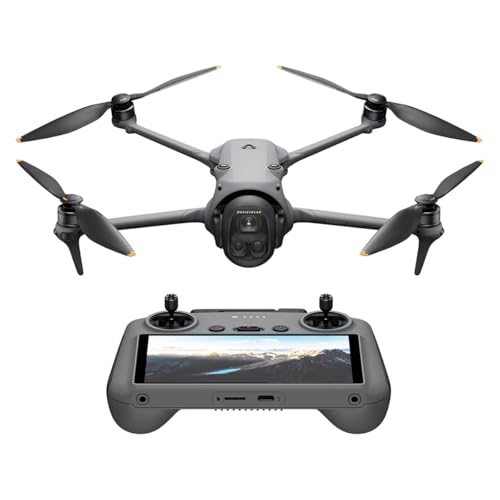
DJI Mavic 4 Pro Drone with DJI RC 2, Flagship Tri-Camera Drone with 100MP 4/3 CMOS Hasselblad Camera, for Professionals, 30km/18.6mi Video Transmission, 51-Min Max Flight Time
The DJI Mavic 4 Pro is a flagship tri-camera drone built around a 100MP 4/3 CMOS sensor, delivering the dynamic range, detail, and color depth that demanding professional work requires. Bundled with the DJI RC 2 controller, it sits at the top of the lineup for cinematic and commercial production.
- 100MP Main Camera - DJI Mavic 4 Pro’s 100MP Hasselblad camera with 6K/60fps HDR video captures stunning drone footage with vivid detail.
- Versatile Tele Images - Dual tele cameras on this drone deliver crisp, detailed zooms for professional aerial photography.
- Dynamic Angles Unleashed - The camera drone’s 360° Infinity Gimbal [4] offers dynamic camera movement for cinematic shots.
- Safe Night Flights - This drone’s 0.1-Lux Nightscape Omnidirectional Obstacle Sensing [1] detects obstacles in low light, great for night shoots.

DJI Neo 2 Motion Fly More Combo With RC Motion 3 & Goggles N3, Stable Transmission With Digital Transceiver, 4K Drone for Beginners, FPV Flying, 3 Batteries
The DJI Neo 2 Motion Fly More Combo includes RC Motion 3 and the Goggles N3 for immersive, intuitive self-flying capture with stable transmission. It is the easiest pick for creators who want effortless aerial clips without managing a traditional controller.
- Lightweight & Portable Design - Weighing just 151g [9] and C0 certified, this compact drone features full-coverage propeller guards for safer, worry-free transport and flight.
- Palm Takeoff & Landing [1], Gesture Control [2] - Enjoy easy palm takeoff and landing, plus intuitive gesture controls for hands-free operation and seamless flying experiences.
- Smooth & Reliable Tracking - ActiveTrack [3] keeps your subject in focus, while Apple Watch lets you view live feed, check flight status, or use voice control to adjust tracking [17].
- Easy Moment Capture With SelfieShot - Snap memorable moments easily with SelfieShot, allowing quick and convenient selfies anytime with just a simple tap.

DJI Mini 5 Pro Fly More Combo with DJI RC 2, Drone with Camera, 1-Inch CMOS, 4K Drone for Beginners with Omnidirectional Obstacle Sensing, ActiveTrack 360°, 225° Gimbal Rotation, 3 Batteries
The DJI Mini 5 Pro Fly More Combo squeezes a 1-inch CMOS sensor and 4K capture into a sub-249 gram body, paired with the DJI RC 2 controller. It delivers genuinely professional footage with fewer registration hurdles, making it the premium choice for portability-focused pilots.
- Ultra-Light, Palm-Sized Foldable Design - Compact and foldable, this palm-sized drone slips easily into a pocket and offers 42GB of internal storage for uninterrupted flying [7].
- 1-Inch CMOS With 4K/60fps HDR Video - 1-inch CMOS sensor captures 4K/60fps HDR video with sharp detail and vibrant colors for stunning high-quality footage.
- True Vertical Filming & 225° Flexible Gimbal Rotation - Capture creative footage with a gimbal that offers true vertical filming and 225° roll rotation from diverse angles and heights.
- Nightscape Omnidirectional Obstacle Sensing [2] - Forward-facing LiDAR and vision sensors detect obstacles in all directions, enhancing safety for night flights and return-to-home.

DJI Mini 4K, Drone with 4K UHD Camera for Adults, Under 249 g, 3-Axis Gimbal Stabilization, 10km Video Transmission, Auto Return, Wind Resistance, 1 Battery for 31-Min Max Flight Time
The DJI Mini 4K offers a 4K UHD camera and a 3-axis gimbal in an under 249 gram package built for accessible aerial capture. It is the entry point for new pilots who want stable, sharp footage without the weight class or complexity of a flagship rig.
- No Registration Needed - Under 249 g, this drone with camera for adults 4K does not require FAA registration or Remote ID for recreational use. Visit the FAA's official website for requirements related to drone registration and Remote ID. [1]
- 4K Ultra HD & 3-Axis Gimbal for Cinematic Quality Shooting - Capture stunning moments in any light-sunrises, sunsets, and night scenes with crystal-clear 4K resolution. Thanks to the 3-axis gimbal, you can achieve cinematic-quality footage with this advanced drone with camera.
- 38kph (Level 5) Wind Resistant - This drone for adults has a stable flight even in Level 5 winds. Brushless motors enhance power and allow takeoff at altitudes up to 4,000 meters.
- Due to platform compatibility issue, the DJI Fly app has been removed from Google Play. To ensure a better product usage experience, please log in to the DJI official website to download the latest version of DJI Fly.
Key buying factors
The sensor is the single biggest driver of professional image quality. A 1-inch or 4/3 CMOS captures far more dynamic range, cleaner shadows, and better low-light detail than the smaller sensors found in entry drones. For client-grade deliverables, never compromise here.
Real-world flight time determines how much you can capture per battery and how many spares you need on a shoot. Look for models rated around 40 minutes and buy a Fly More Combo so you carry multiple batteries. Cold weather and aggressive maneuvers will shorten these numbers.
A stable, long-range video feed is essential for confident framing over distance and around obstructions. DJI's latest transmission systems hold a clean signal far beyond line of sight in open areas. Reliable transmission matters more than headline maximum range numbers.
A 3-axis mechanical gimbal is non-negotiable for smooth, usable professional footage. It keeps the horizon level and removes high-frequency vibration that software stabilization cannot fully fix. Models with extended gimbal tilt also unlock unique vertical and low-angle shots.
Omnidirectional sensing protects expensive gear and lets you focus on the shot instead of the surroundings. Advanced systems detect obstacles in low light and can route around them automatically. This is critical when flying near structures, trees, or in tight urban environments.
Weight directly affects which rules you must follow before you can fly commercially. Drones under 249 grams avoid some registration requirements in many regions, making them ideal for quick or travel jobs. Heavier flagships deliver superior imaging but require registration and more planning.
Types explained
Top-tier rigs built around large 4/3 sensors, multi-camera arrays, and the most advanced flight and transmission systems. They produce the highest-quality footage and the most flexible framing for demanding professional work.
Best for: Full-time creators and commercial shoots where image quality is the priority.Mid-size drones with 1-inch sensors that balance excellent image quality against portability and value. They fit easily in a backpack while still delivering footage that holds up in a professional grade.
Best for: Working pros and serious enthusiasts who travel and want one versatile drone.Lightweight drones that slip under the 249 gram threshold yet now pack 1-inch sensors and pro-grade gimbals. They reduce regulatory friction while still capturing client-ready footage.
Best for: Pilots who need maximum portability and fewer registration hurdles.Stable, motion-controlled drones designed for quick self-flying capture and social content with goggles or simple controllers. They prioritize ease of use and safe, intuitive operation over maximum sensor size.
Best for: Content creators and beginners who want effortless aerial selfies and clips.Care & usage tips
Always run a compass and IMU calibration in a clean magnetic environment and install the latest firmware before an important flight. Check that your remote, batteries, and goggles are all on matching firmware to avoid mid-shoot disconnects. A pre-flight checklist prevents most field failures.
Store intelligent batteries at partial charge rather than full when not flying for a week or more, and avoid draining them to zero. Let them return to room temperature before charging after a cold flight. Proper cycling preserves capacity and protects your investment.
Always attach the gimbal guard during transport, since the gimbal is the most fragile part of any drone. Clean the lens with a microfiber cloth and a blower, never your fingers, and keep the propellers free of nicks. Inspect arms and motors for grit after dusty or sandy flights.
Most buyers obsess over maximum flight time and range, but the spec that actually limits professional output is sensor size paired with bit depth and color profile. A drone that records in a flat 10-bit log profile off a large sensor gives you the latitude to recover highlights and match cameras in post, while a smaller sensor with limited color depth falls apart the moment you start grading. The drone you can grade is more valuable than the drone that flies five minutes longer.
Always shoot in the flattest, highest bit-depth color profile your drone offers and bracket exposures for high-contrast scenes, so you keep maximum flexibility when you grade the footage later.
Frequently asked questions
What makes a drone professional rather than a hobby drone?+
A professional drone combines a large 1-inch or 4/3 sensor, a 3-axis mechanical gimbal, reliable long-range transmission, and flat color profiles for grading. These features let you deliver footage that holds up under client scrutiny and heavy post-production, which small-sensor hobby drones cannot match.
Do I need to register a professional drone?+
It depends on weight and how you fly. Drones over 249 grams typically require registration, and any commercial flying usually requires a remote pilot certification regardless of weight. Sub-249 gram models reduce some registration steps but commercial rules still apply, so always check your local aviation authority.
How important is sensor size for aerial video?+
It is the most important factor for professional results. A larger sensor captures more dynamic range and cleaner low-light detail, giving you recoverable highlights and shadows in the grade. This is why flagship drones use 4/3 sensors and why even compact pro models now feature 1-inch sensors.
How many batteries should I buy for professional work?+
Plan for at least three to four batteries so you can keep flying while others charge. Fly More Combos bundle multiple batteries and a charging hub, which is the most practical way to equip yourself for a full day of shooting. Real flight time also drops in cold or windy conditions, so carry extra.
Is a sub-249 gram drone good enough for professional jobs?+
Yes, modern sub-249 gram drones now include 1-inch sensors and pro-grade gimbals that produce client-ready footage. They are ideal for travel and quick jobs where you want fewer regulatory hurdles. The tradeoff is slightly less stability in strong wind and a smaller sensor than flagship models.