Clean drinking water is one of the easiest upgrades you can make at home, and the right filter removes chlorine taste, sediment, and a range of contaminants that municipal treatment may leave behind. Whether you rent an apartment or own a house, there is a filter format that fits your space, budget, and how much water your household actually drinks each day.
When choosing a water filter for home, focus on certification, filtration capacity, and ongoing filter costs rather than marketing claims. Look for WQA or NSF/ANSI certification to confirm what the filter actually reduces, then match the format (pitcher, dispenser, under-sink reverse osmosis, or whole-house) to your needs. A larger household benefits from a high-capacity dispenser or an RO system, while a single person may be perfectly served by a 10-cup pitcher.
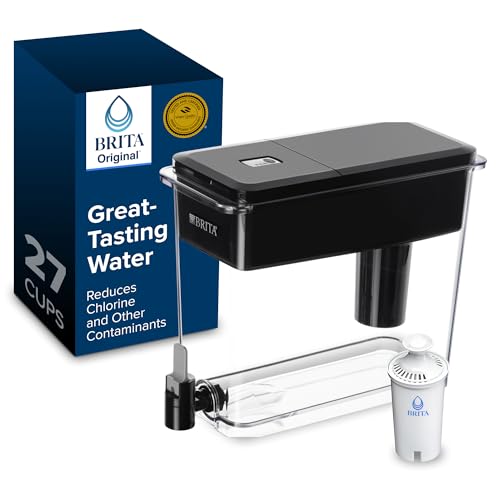
Brita Extra-Large 27-Cup Water Filter Dispenser with Standard Filter, WQA NSF/ANSI Certified, Removes Chlorine Taste & Odor, Reduces Zinc Copper & Mercury, BPA-Free, 1 Filter Included, Lasts 2 Months
The Brita Extra-Large 27-Cup Dispenser pairs a family-friendly capacity with WQA-recognized NSF/ANSI certification and a standard filter that cuts chlorine taste and odor. Its no-install design and large reservoir make it the most practical pick for the majority of households.
- WATER DISPENSER: One BPA-free, large 27-cup Brita UltraMax Filtered Water Dispenser includes one Standard filter to help remove impurities from your tap water
- CUTS OUT IMPURITIES: Brita water purifier dispenser cuts the taste and odor of chlorine and also reduces copper, mercury and other impurities
- SUSTAINABLE: By switching to a Brita water filter system, you can save money and replace up to 1,800 single-use plastic water bottles a year
- FRIDGE-FRIENDLY: Space-efficient Brita water dispenser is fridge-friendly, and it features an easy-locking lid and precision-pour spigot

iSpring RCC7AK, NSF Certified, 75 GPD, Alkaline 6-Stage Reverse Osmosis System, pH+ Remineralization RO Water Filter System Under Sink, Patented Top-Mounted Faucet Design for Easy Installation
The iSpring RCC7AK is an NSF-certified 75 GPD six-stage reverse osmosis system with an alkaline remineralization stage for the most thorough contaminant removal of the group. It delivers clean, great-tasting water on demand at the tap for homeowners who want the best.
- PATENTED DESIGN - The top-mounted fastener allows for easy countertop installation entirely from above, eliminating the hassle of tightening the nut from underneath the sink.
- MINERAL BOOST - The patent-pending natural mineral AK stage delivers spring water with a balanced, healthy pH and multiple essential minerals.
- SEE WHAT’S CAUGHT - The transparent first-stage filter housing makes it easy to monitor contaminant buildup, ensuring timely filter changes.
- NSF 58 CERTIFIED RO SYSTEM - Unlike other brands that lack NSF certification or full system certification, our RCC7AK is certified to NSF/ANSI 58 standards for the entire water filtration system.

Brita Extra-Large 27-Cup Elite Water Filter Dispenser, WQA NSF/ANSI Certified, Reduces 99% of Lead, Microplastics, & 30 Contaminants, Removes Chlorine Taste & Odor, Black
The Brita Extra-Large 27-Cup Elite Dispenser offers the same generous capacity as our top pick but steps up to the longer-lasting Elite filter with broader reduction. It is the choice for big households wanting fewer filter changes in a no-install format.
- REDUCES 99% OF LEAD + 30 CONTAMINANTS*: Brita Elite filter uses Advanced Carbon Core Technology to reduce 99% of lead and 30+ contaminants from your tap water, 4x longer than PUR** and 8x longer than ZeroWater** for unmatched long-lasting filtration
- LARGE 27-CUP CAPACITY, LASTS 6 MONTHS: This UltraMax water dispenser holds 27 cups and the Elite filter lasts 120 gallons or about 6 months, 4x longer than PUR**, meaning fewer replacement filters and more savings for your family
- BPA-FREE COUNTERTOP DESIGN: Made without BPA, the UltraMax filtered water dispenser features a convenient spigot for easy dispensing; fits on most countertops or in the fridge; space-efficient for large families
- REPLACE UP TO 900 PLASTIC BOTTLES: One Elite filter replaces up to 900 single-use 16.9 oz plastic bottles, that's 5,400 bottles replaced per year when you switch to the Brita Elite UltraMax dispenser

Brita Large 10-Cup Water Filter Pitcher, WQA NSF/ANSI Certified, Removes Chlorine Taste & Odor, Reduces Zinc, Copper & Mercury, 1 Standard Filter, Lasts 2 Months, Bright White
The Brita Large 10-Cup Pitcher is WQA NSF/ANSI certified, removes chlorine taste and odor, and fits easily in a fridge door. Its right-sized capacity and effortless use make it the smart everyday pick for individuals and small households.
- The BPA-free Everyday water pitcher with filter holds 10 cups of water, enough to fill 3 24-ounce reusable water bottles; Product reservoir and lid may vary
- Get great-tasting water without the waste; by switching to Brita, you can save money and replace 1,800 single-use plastic water bottles* a year; *16.9 oz water;**Based on IRI data;***vs. tap
- This space efficient Brita pitcher fits perfectly on refrigerator shelves, features an easy-fill locking lid and is easy to pour; Height 10.47"; Width 5.59"; Length/Depth 10.94"; Weight 2.29 pounds
- Brita is the #1 water filter** reducing chlorine (taste & odor), Mercury, Copper, Zinc and Cadmium; always get cleaner***
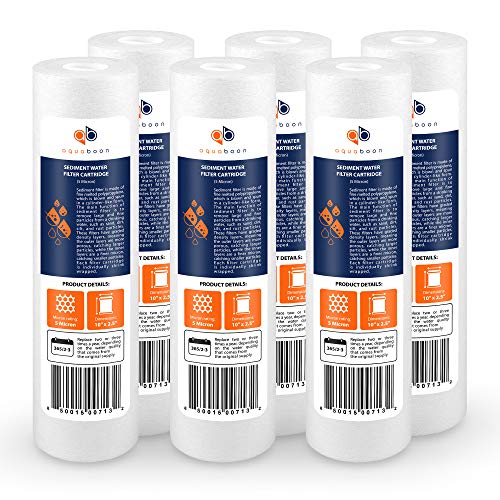
Aquaboon 5 Micron 10 x 2.5 Sediment Filter - Whole House Water Filter Replacement Compatible with Well Water Filters - P5, AP110, WHKF-GD05, 6 Pack
The Aquaboon 5 Micron 10 x 2.5 Sediment Filter is an affordable whole-house replacement cartridge that captures dirt, rust, and sand before water reaches your fixtures. It is the simplest way to protect plumbing and improve water clarity throughout the home.
- Superior Sediment Filter Performance: This 5 micron water filter captures contaminants like rust, sand, dirt, and sludge with ease. Thanks to its multi-layered design, this sediment water filter replacement ensures your water is clean and clear.
- Easy Installation & Quick Replacement: With its universal fit, the 10x2.5 water filter installs in most standard filter housings within minutes. Spend less time on maintenance and more time enjoying fresh filtered water from your home water filter.
- Premium Food-Grade Material: Crafted from food-grade polypropylene, this 5 micron sediment filter delivers high standards of safety. Its melt-blown construction ensures no fiber shedding, giving you a reliable and clean well water filtration solution.
- Continuous Water Flow with No Pressure Drop: Designed for efficiency, Aquaboon house water filter provides stable water flow without reducing pressure. Whole house water filter replacement prevents blockages, ensuring a smooth, uninterrupted water supply.
Key buying factors
Certification is the single most reliable indicator of what a filter actually removes. WQA and NSF/ANSI marks verify specific reduction claims such as chlorine, lead, or particulates through independent testing. Never rely on a brand's word alone when certified options exist.
Match the filter's volume to how much water your household drinks. A single person does fine with a 10-cup pitcher, while a busy family is better served by a 27-cup dispenser or a plumbed-in system that never needs refilling. Undersizing means constant refilling and frustration.
Different filters target different things. A standard pitcher filter handles chlorine taste and odor, while a multi-stage reverse osmosis system removes a far broader range of dissolved solids. Whole-house sediment filters tackle dirt, rust, and sand before water reaches your fixtures.
The upfront purchase is only part of the equation. Factor in how often filters need swapping and how easy they are to find. Pitcher and dispenser filters are inexpensive but frequent, while RO membranes last longer between changes.
Pitchers and dispensers need only fridge or counter space and zero installation. Under-sink RO systems require cabinet room and basic plumbing work, and whole-house filters install at the main water line. Choose based on your comfort level and available space.
Gravity-fed pitchers and dispensers filter slowly, so capacity matters for keeping up with demand. Reverse osmosis systems with a storage tank, like 75 GPD models, provide filtered water on demand at the tap. Consider how patient you are at the faucet.
Types explained
Gravity-fed units that sit in the fridge or on the counter and need no installation. Capacities range from compact 10-cup pitchers to large 27-cup dispensers for families.
Best for: Renters, small households, and anyone wanting filtered water with zero setup.Multi-stage under-sink systems that force water through a membrane to remove a broad range of dissolved contaminants. Many include alkaline remineralization stages and a storage tank for on-demand water.
Best for: Homeowners who want the most thorough contaminant removal at the kitchen tap.Cartridge filters installed at the main water line that capture dirt, rust, sand, and silt before water reaches any fixture. They protect appliances and improve water clarity throughout the home.
Best for: Homes on well water or with visible sediment and rust in their supply.Upgraded filter cartridges that reduce more contaminants and last longer than standard versions, often fitting the same pitchers and dispensers. They are a drop-in upgrade for better performance.
Best for: Existing pitcher or dispenser owners wanting broader reduction without buying new hardware.Care & usage tips
Before first use, soak or run water through a new filter to remove carbon fines and activate the media. For pitchers and dispensers, discard the first few batches; for RO systems, flush the membrane per the manual before drinking. This ensures clear, properly filtered water from the start.
Filters lose effectiveness once their capacity is exhausted, so follow the recommended swap schedule by gallons or months. Many dispensers include an electronic indicator, but a calendar reminder works just as well. Overdue filters can harbor bacteria and stop reducing contaminants.
Wash pitcher and dispenser reservoirs with mild soap and water periodically to prevent biofilm and mineral buildup. For RO systems, sanitize the tank and lines during annual filter changes. Clean housings keep your filtered water tasting fresh.
The biggest contaminant-removal gap is not the filter type but a neglected replacement schedule. An exhausted carbon filter can actually release trapped contaminants back into your water and become a breeding ground for bacteria, meaning a poorly maintained premium filter performs worse than a cheap one that is changed on time. Maintenance discipline matters more than upfront specs.
Keep a spare set of replacement filters on hand and write the install date directly on each cartridge with a marker, so you never run past the recommended swap window or scramble to find a refill.
Frequently asked questions
Do I need a reverse osmosis system or is a pitcher enough?+
It depends on your water and goals. If you mainly want to improve taste and reduce chlorine, a certified pitcher or dispenser is plenty. If you have concerns about dissolved solids, heavy metals, or want the broadest reduction at the tap, a multi-stage reverse osmosis system is the stronger choice.
What does WQA or NSF/ANSI certification actually mean?+
These are independent certifications that verify a filter performs as claimed for specific contaminants. A WQA or NSF/ANSI mark means the product was tested by a third party rather than just marketed, so it is the most trustworthy signal when comparing filters.
How often should I replace my water filter?+
It varies by type. Pitcher and dispenser filters typically need changing every couple of months, standard versions sooner than elite cartridges, while reverse osmosis membranes can last a year or more. Always follow the manufacturer's gallon or time-based guidance and replace sooner if flow slows or taste changes.
What is the difference between a sediment filter and a drinking water filter?+
A sediment filter, like a 5 micron whole-house cartridge, removes physical particles such as dirt, rust, and sand to protect plumbing and appliances. A drinking water filter focuses on taste, chlorine, and contaminant reduction at the point of use. Many homes benefit from using both together.
Can I install a water filter myself?+
Pitchers and dispensers require no installation at all. Whole-house and under-sink reverse osmosis systems involve basic plumbing connections that many handy homeowners complete themselves with the included instructions, though you can hire a plumber if you prefer.