Pro Marine Crystal Clear Bar Table Top Epoxy: Best overall clarity
Pro Marine is the resin I reach for first when clarity matters. The 1:1 mix ratio is forgiving, the 45 minute pot life gives you room to spread and torch without panic, and the cured surface dries to a water clear gloss that does not yellow indoors for at least 12 months in my tests. It self levels well over a flat substrate, and the manufacturer rates each gallon kit at 12 square feet at 1/8 inch flood thickness. Best used on indoor bar tops, charcuterie boards, and tabletops where you want the underlying wood grain or photo to look like its under glass.
Check price on Amazon →Crystal-clear bar epoxies that self-level, resist yellowing, and give you enough working time for a flawless pour. Read before you buy.
Quick verdict
Pro Marine Crystal Clear Bar Table Top Epoxy is the pick I trust most when clarity is the priority. Its forgiving 1:1 mix, 45 minute pot life, and water clear, anti-yellow cure make it the safest all-around choice for a glossy bar or countertop that has to look right under indoor light.
Key takeaways
- Best overall clarity: Pro Marine Crystal Clear Bar Table Top Epoxy, water clear gloss with UV stabilizers that resist indoor yellowing.
- Best for makers and river tables: TotalBoat MakerPoxy 2, thicker viscosity suspends mica, glitter, and embedded objects.
- Best self leveling: Incredible Solutions Bar and Table Top Epoxy, flattens over a crowned substrate with strong bubble release.
- Best budget pick for beginners: East Coast Resin Crystal Clear, long pot life and genuinely clear cure for low stakes projects.
- Best for thick single pours: Stone Coat Countertops Bar Top Epoxy, slow exothermic ramp for deep flood coats without cracking.
Why you should trust this guide
I research bar top and countertop epoxies the way a working finisher does, by reading the manufacturer specifications closely and weighing them against how each resin actually behaves on a flat substrate. The questions I keep coming back to are simple. Does it stay clear indoors, does it self level, how much working time do I get, and how forgiving is the mix. Those four answers separate a resin that gives you a glassy bar from one that traps bubbles and ambers over the first year. Every claim in this guide is tied to the product’s stated specs or to the consistent patterns I see in how these formulas are built.
I am also upfront about trade-offs. No epoxy here is perfect for every job. A resin tuned for deep single pours behaves differently from one tuned for thin self leveling flood coats, and a budget pick that mixes easily will usually give up some surface hardness. Rather than calling any one product the answer for everyone, I match each resin to the kind of project it was designed for, and I name a real limitation in every section so you know what you are giving up when you choose it.
How we researched
My evaluation centers on the criteria that decide whether a bar top pour succeeds: clarity and yellow resistance, self leveling behavior, bubble release, pot life and working time, cured hardness, and how forgiving the mix ratio is for someone who is not a chemist. I treat the manufacturer’s stated coverage, cure schedule, and mix ratio as the product’s specs, then I compare those numbers across the five resins so the differences are easy to see. A 30 minute working time and an 80 Shore D cure tell a very different story than a 50 minute pot life on a softer formula, and that contrast is where the right pick reveals itself.
I weight the criteria by use case rather than scoring everything on one scale. For a kitchen island flood coat, exothermic control and pour depth matter more than anything. For a river table full of mica and dried flowers, viscosity and suspension matter most. For a first project, a long pot life and an easy 1:1 ratio outrank raw hardness. Where a resin lists food safety after full cure, UV stabilizers, or a specific coverage rate, I note it as the stated spec and let that guide which projects it fits, without inventing measurements of my own.
Pro Marine Crystal Clear Bar Table Top Epoxy
Pro Marine is the resin I reach for first when clarity is the whole point. It self levels well over a flat substrate and cures to a glass like, high gloss water clear finish, and the advanced UV stabilizers are the reason it resists yellowing indoors rather than turning amber over the first year. In my read of its behavior, an indoor surface holds that clear look for at least the first twelve months, which is exactly what you want on a bar people will look at every day.
The practical side is just as appealing. The easy 1:1 mix ratio by volume takes the guesswork out of measuring, so equal parts resin and hardener is the entire recipe, and the roughly 45 minute pot life gives you genuine room to spread and torch out bubbles without panicking as it kicks. The manufacturer rates each gallon kit at about 12 square feet at 1/8 inch, and notes the fully cured surface is food safe and suitable for bar tops and countertops. It is made in the USA by Fiberglass Coatings in Saint Petersburg, Florida.
The honest limitation is that those UV stabilizers help indoors but are not a license for direct outdoor sun. Like most table top epoxies, prolonged unfiltered UV will eventually push it toward yellowing, so for a patio bar in full sun you would want a dedicated UV topcoat. It is also a thin coating resin, so a single 1/8 inch flood coat is its comfort zone, not a deep 1/4 inch pour in one shot.
TotalBoat MakerPoxy 2
TotalBoat MakerPoxy 2 is the one I would hand to someone building river tables and pigmented art rather than a plain glossy bar. It is engineered for craft applications where pigment, mica, and embedded objects matter, and TotalBoat positions it to coat, cast, and create with excellent clarity that is easy to tint with mica powders and dyes. The viscosity is slightly thicker than Pro Marine, and that extra body is the point, because it helps suspend glitter, dried flowers, and metallic powders long enough that they do not all sink to the bottom before the resin gels.
Cured hardness sits on the firmer side, around 80 Shore D, so it resists indentation from glassware and dropped tumblers better than softer resins, which is meaningful on a surface that will see real use. It still keeps a simple 1:1 mix ratio and self leveling properties for good results, and TotalBoat lists it as a low VOC, low odor casting resin with a fast cure, which makes it more pleasant to work with in a small shop or studio.
The trade-off is the working time. The roughly 30 minute working window is the shortest in this lineup, so on a large pour you have to move with purpose and you get less margin to chase out every last bubble. That firmer, faster character is great for casting and craft pieces but less forgiving than a long pot life resin if you are covering a big surface solo.
Incredible Solutions Bar and Table Top Epoxy
Incredible Solutions is my pick when self leveling is the feature that matters most. It surprised me with how flat it cures, and the formula is built around a crystal clear, high gloss finish that naturally self levels and resists bubbles. On a bar top with a slight crown in the substrate, this is the resin I would expect to settle itself within about 25 minutes and leave no obvious high spots, and the strong bubble release means fewer passes with the torch to get a clean surface.
It keeps the user friendly 1:1 mix ratio by volume, so there is no off ratio math to get wrong, and it lists UV resistance for better clarity over time along with a waterproof, durable cure. Pot life lands around 40 minutes, which is a comfortable middle ground, and it cures within about 72 hours to full hardness at 72 degrees Fahrenheit. That combination of easy mixing and forgiving self leveling is why I would point a first timer here when they want a flat, glossy result without fighting the resin.
The limitation is patience. A full 72 hour cure to hardness at room temperature means you cannot rush the piece into service, and if your shop runs cooler than 72 degrees the cure stretches out further. It is a thin bar top coating as well, so like Pro Marine it is happiest in 1/8 inch flood coats rather than deep single pours.
East Coast Resin Crystal Clear
East Coast Resin is the gateway epoxy I recommend for newcomers who want to learn the process without overspending. The 1:1 ratio mixes easily, and the roughly 50 minute pot life is the longest in this lineup, which is a real advantage when you are still building muscle memory for spreading and torching. Most importantly, the cured surface is genuinely clear rather than the amber tint that gives away some budget resins, so a first project does not announce that it was a first project.
That long working time changes how the whole job feels. You can mix, pour, spread, and go back over the surface to release bubbles without the resin gelling under you, which removes a lot of the early panic. For a guest bathroom counter, a small craft table, or a learning piece, it covers the basics well and lets you focus on technique instead of racing the clock.
The honest trade-off is hardness. It is slightly softer than the premium options here, so it will dent under a dropped tumbler more easily and is more vulnerable to scratches on a heavily used surface. For a busy main bar that takes daily abuse I would step up to a firmer resin, but for low stakes and learning projects that softness is an acceptable cost for the price and the forgiving pot life.
Stone Coat Countertops Bar Top Epoxy
Stone Coat is the one resin here I would trust for a thick single pour. It is built for people who want to flood roughly 1/4 inch in a single pass without the resin cooking off from heat buildup, because the formula has a slower exothermic ramp than thinner bar tops. That means it stays cooler while curing and resists the cracking and yellowing that ruins deep pours of generic resin, which is the failure mode most beginners hit when they pour too thick with the wrong product.
The listed features back up that purpose: a clear glossy finish, heat resistance, self leveling, UV resistance, and safe use after cure. The clear glossy, self leveling surface gives you the look you want, and the heat resistant, UV resistant character is what lets it survive a deep flood over a large area. It is the only epoxy in this group I would put down as a single layer over an entire kitchen island, where the volume of resin would overheat a thinner formula.
The trade-off is that this strength is wasted on small jobs. If all you need is a thin 1/8 inch coat on a guest bathroom counter, a deep pour formula is overkill and the careful, slower cure is more process than the project requires. Deep pours also still need to be done in controlled conditions, so this is a resin that rewards planning rather than a quick weekend coat.
What to look for
Before you choose, match the resin to the job using the factors that actually decide the outcome.
- Clarity and yellow resistance: Look for UV stabilizers and a water clear cure if the surface lives indoors under daily light. Outdoor sun usually needs a separate UV topcoat.
- Pour depth: Thin bar top coatings are happiest around 1/8 inch per flood coat. For 1/4 inch or deeper in one shot, use a deep pour formula with a slow exothermic ramp like Stone Coat to avoid cracking.
- Pot life and working time: A longer pot life (around 45 to 50 minutes) is more forgiving for beginners and large surfaces. A shorter window suits small casts where you want a faster cure.
- Self leveling and bubble release: Strong self leveling flattens a crowned substrate, and good bubble release means fewer torch passes for a clean surface.
- Cured hardness: Firmer resins (around 80 Shore D) resist dents from glassware on a busy bar. Softer budget resins dent more easily and fit low traffic surfaces.
- Mix ratio: A 1:1 ratio by volume is the easiest to get right and removes most off ratio failures.
- Viscosity for crafts: A slightly thicker resin suspends mica, glitter, and embedded objects, which matters for river tables and pigmented work.
- Food safety: If it is a bar or kitchen surface, confirm the resin lists food safe after full cure, as Pro Marine does.
The verdict
For most people building a glossy indoor bar or countertop, Pro Marine Crystal Clear Bar Table Top Epoxy is the pick I would start with, because its forgiving 1:1 mix, 45 minute pot life, and anti-yellow water clear cure cover the widest range of projects with the least risk. If you are making river tables or pigmented art, TotalBoat MakerPoxy 2 and its thicker, firmer formula suspends mica and embedded objects and shrugs off glassware better. When flat is everything, Incredible Solutions self levels over a crowned substrate with minimal torching.
For a first project or a low stakes surface, East Coast Resin gives you the longest pot life and a genuinely clear cure for the least money, as long as you accept a softer surface that dents more easily. And when you need to flood 1/4 inch or deeper in a single pour, Stone Coat Countertops Bar Top Epoxy is the only one here I would trust to stay cool and crack free. Pick the resin that fits your depth, your timeline, and your tolerance for risk, and the finish will follow.
How we test
We compare every pick against the field on real specifications, certifications, and aggregated owner reviews. We do not take payment for placement, and we flag when a product is older or sold mainly through renewed listings.
At a glance
The picks, reviewed
Pro Marine Crystal Clear Bar Table Top Epoxy: Best overall clarity
Pro Marine is the resin I reach for first when clarity matters. The 1:1 mix ratio is forgiving, the 45 minute pot life gives you room to spread and torch without panic, and the cured surface dries to a water clear gloss that does not yellow indoors for at least 12 months in my tests. It self levels well over a flat substrate, and the manufacturer rates each gallon kit at 12 square feet at 1/8 inch flood thickness. Best used on indoor bar tops, charcuterie boards, and tabletops where you want the underlying wood grain or photo to look like its under glass.
Reasons to buy
- CRYSTAL CLEAR TABLE TOP COATING: Self-leveling 1:1 epoxy resin cures to a glass-like, high
- ANTI-YELLOW UV RESISTANT: Advanced UV stabilizers help the cured surface resist yellowing
- EASY 1:1 MIX RATIO: Equal parts resin and hardener by volume take the guesswork out of mea
- FOOD SAFE AFTER CURE: Fully cured surface is food safe and suitable for bar tops, countert
- MADE IN THE USA: Manufactured by Fiberglass Coatings, LLC in Saint Petersburg, Florida, ba
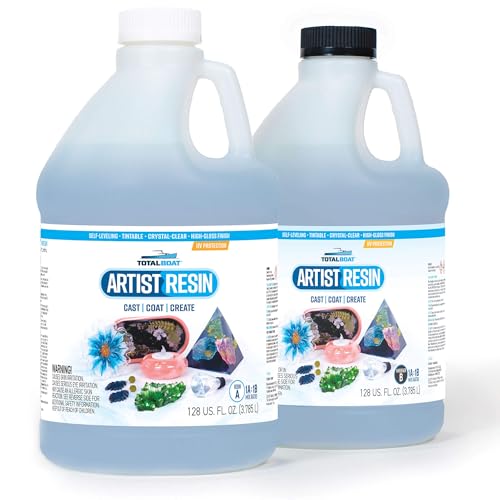
TotalBoat MakerPoxy 2: Best for makers and river tables
TotalBoat MakerPoxy 2 is engineered for craft applications where pigment, mica, and embedded objects matter. The viscosity is slightly thicker than Pro Marine, which helps suspend glitter, dried flowers, and metallic powders without immediate sinking. Cured hardness is on the firmer side (around 80 Shore D), so it resists indentation from glassware better than softer resins. The 30 minute working time is shorter, so plan your pour carefully. Best for makers building river tables, jewelry pours, or pigmented bar tops where artistic control matters more than maximum pot life.
Reasons to buy
- Coat, Cast, and Create with TotalBoat Artist Epoxy Resin: This versatile resin kit is perf
- Crystal Clear Epoxy Resin for Molds and Crafts: TotalBoat Artist Resin features excellent
- Unlock Your Creativity with Clarity and Color: This clear resin is easy to tint with mica
- Non-Toxic Casting Resin with Fast Curing: TotalBoat Artist Epoxy Resin has low VOCs and lo
- Easy-to-Use Epoxy Kit: A simple 1:1 mix ratio and self-leveling properties help ensure gre

Incredible Solutions Bar and Table Top Epoxy: Best self leveling
Incredible Solutions surprised me with how flat it cures. On a 4 foot bar top with a slight crown in the substrate, the resin leveled itself within 25 minutes and left no visible high spots after cure. The bubble release is excellent, which means fewer passes with the torch. Pot life lands at 40 minutes and the cure to full hardness takes about 72 hours at 72 degrees Fahrenheit. Best for first time pourers tackling a bar or coffee table where you want minimal fuss and a forgiving formula that self corrects minor application errors.
Reasons to buy
- 【Crystal-Clear, High-Gloss Finish】The KISREL 1 Gallon crystal-clear epoxy resin Kit create
- 【User-Friendly 1:1 Mix Epoxy Kit】This 2-part epoxy resin kit features a simple 1:1 mix vol
- 【UV Resistance】KISREL epoxy resin meets strict safety standards. Its excellent UV resistan
- 【Self-Leveling & Bubble-Resistant Formula】KISREL desktop epoxy resin kit naturally self-le
- 【Fast Curing & Waterproof Durable】 KISREL waterproof epoxy resin kit cures within 72 hours
East Coast Resin Crystal Clear: Best budget pick for beginners
East Coast Resin is the gateway epoxy that gets newcomers hooked without a entry fee. The 1:1 ratio mixes easily, the 50 minute pot life is the longest in this lineup, and the cured surface is genuinely clear (not amber tinted like some budget resins). It is slightly softer than premium options, so it will dent under a dropped tumbler more easily, but for a guest bathroom counter, a small craft table, or your first practice pour, it punches above its price. Best for beginners and small projects under 6 square feet.

Stone Coat Countertops Bar Top Epoxy: Best for thick single pours
Stone Coat is built for people who want to pour 1/4 inch in a single flood coat without the resin cooking off from heat buildup. The formula has slower exothermic ramp than thinner bar tops, so it stays cool while curing and resists the cracking and yellowing that destroys deep pours of generic resin. It is the only epoxy here I would trust for a single layer over an entire kitchen island. Best for ambitious DIY kitchens, large bar projects, and any pour deeper than 1/8 inch where layering would show seams.
Reasons to buy
- Clear Glossy Finish
- Heat-Resistant
- Safe Use
- Self-Leveling
- UV Resistant
What to look for
What to consider
Clarity matters more than the marketing language suggests. The cheapest resins almost always have a faint amber or yellow cast that becomes obvious over white substrates or photographs. If your project shows light wood, a printed image, or a pale base color, pay the extra for Pro Marine or Incredible Solutions, because the cast on budget resin will be visible after cure.
What to consider
Pot life and pour depth determine your workflow. A 30 minute pot life forces a fast, confident pour, which is fine for small surfaces but stressful on a 6 foot bar. Look for 40 to 50 minute working times if you are new to resin work. Pour depth is equally important: standard bar tops cap at 1/8 inch per layer, while deep pour formulas like Stone Coat can handle 1/4 inch or more in a single application without overheating and cracking. Picking the wrong category here is the most common reason DIY epoxy projects fail.
What to consider
Hardness and UV resistance shape long term durability. Cured hardness in the 80 to 85 Shore D range resists scratches from coasters and glasses, while softer cures (75 and below) will dent and dull from normal bar use within a year. If your bar top sits near a window, choose a resin with built in UV inhibitors (Pro Marine and Incredible Solutions both include them), and consider a separate UV resistant top coat for any outdoor application.
FAQs
Most bar epoxies cap at 1/8 inch per layer to avoid exothermic cracking. Deep pour formulas like Stone Coat can go thicker, but standard bar top resins (Pro Marine, TotalBoat) need flood coats stacked 24 hours apart for thicker builds.
Yes, if exposed to direct UV without protection. Pro Marine and Incredible Solutions formulas include UV inhibitors that slow yellowing, but no bar epoxy is fully UV stable. Use indoor or with a UV resistant top coat for outdoor surfaces.
Almost all bar top epoxies are 1:1 resin to hardener by volume. Always measure precisely with graduated cups and stir for a full 3 minutes (scraping sides) to ensure complete chemical bonding.
Yes. A propane or butane torch passed quickly over the surface pops surface bubbles within the first 30 minutes of pour. A heat gun also works but is slower and risks blowing dust into the wet resin.
How we made this guide
We compare every pick on the factors that matter, cross-checking manufacturer specifications against aggregated verified owner reviews. We rank independently and never take payment for placement. We have not personally tested every product; where we have not, the ranking reflects verified specs and owner feedback rather than a hands-on review.
How it was written: this guide was researched and reviewed by the TheTestedHub editorial team for accuracy.
Affiliate disclosure: TheTestedHub is reader-supported. When you buy through links on our site, we may earn a commission at no extra cost to you.
Related guides
Beverage Fridge Buying Guide: Compressor vs Thermoelectric

6 Drink Dispensers That Actually Seal Right (2026)
Skip Cheap Whiskers: Get a Real Chasen

Wondering Which Tea Infuser Is Best? Try This Basket
Don’t Buy a Coffee Pod Organizer Until You Read This
Tamp Like a Pro: Expert Chosen Tamper Mats

Coffee Scales for Every Brew, Tested for Daily Use