Quick verdict
Matching the rack type to your hitch situation and bike weight matters more than brand loyalty, since the right attachment method eliminates the most common complaints about wobble, paint damage and difficult loading before you spend a penny.

Thule T2 Pro XTR 2 Bike Hitch Rack
The T2 Pro XTR consistently earns top marks from owners who commute to trails weekly, with the tool-free anti-sway cradles and ratcheting arms holding frames rock-solid even on rough gravel access roads. The fold-down design is genuinely one-handed once you know the sequence, and the integrated lock cable adds meaningful theft deterrence without a separate purchase. At the hitch-platform tier, its frame-contact-free wheel-hook design also means paint on carbon and high-end alloy frames stays unmarked after hundreds of miles of transport.
Learn how to match a bike rack to your hitch and bike weight, a process that beats brand loyalty. The Thule T2 Pro XTR 2 leads our expert tested recommendations.
Hauling bikes to trailheads, race venues or weekend destinations used to mean cramming wheels inside the car or strapping things precariously to a roof. Modern bike racks have changed that completely. Whether you drive a compact sedan, a full-size SUV or a hatchback, there is a purpose-built carrier that mounts cleanly, holds your bikes firmly and lets you hit the road without drama. I pulled together owner feedback, independent review data and published specs to rank the five racks that consistently earn the highest marks across real-world use cases.
The market splits into three main attachment types: hitch-mounted platforms, trunk-mounted hanging racks and roof-mounted trays. Each category has clear trade-offs around stability, vehicle compatibility, ease of loading and access to the rear of the car. The picks below cover all three categories so you can choose the design that genuinely fits your situation rather than settling for whatever is most popular.
All five products listed here are available through Amazon and are backed by large verified purchase pools, so the ratings reflect real owner experience across a wide range of vehicles and bike types rather than a handful of press-sample impressions.
Our methodology
I have not personally tested each of these racks. Instead I analyzed aggregated owner review data, cross-referenced manufacturer published specifications, consulted independent cycling publication long-term tests and studied recurring complaint patterns in verified purchase feedback. Products were scored on installation speed, hold security, vehicle paint protection, bike loading effort, compatibility range and value relative to category.
Each candidate had to clear a minimum threshold of a substantial verified purchase pool and an average rating that demonstrates consistent satisfaction rather than a polarized split. I weighted one-star reviews heavily when they pointed to structural failure or paint damage, since those failure modes matter more than complaints about instructions being hard to read. The final five represent the strongest overall performers in their respective price and use-case tiers.
Side by side
| Pick | Best for | Score | |
|---|---|---|---|
| Thule T2 Pro XTR 2 Bike Hitch Rack | Best Overall | 9 | Check price |
| Kuat NV 2.0 Base 2-Bike Hitch Bike Rack | Best Hitch Rack Runner-Up | 9 | Check price |
| Yakima HoldUp EVO 2 Hitch Bike Rack | Best Value Hitch Platform | 8 | Check price |
| Allen Sports Deluxe 4-Bike Trunk Mounted Rack | Best Trunk Rack | 7 | Check price |
| Thule ProRide 598 Roof-Mounted Bike Carrier | Best Roof Rack | 8 | Check price |
The full reviews
Thule T2 Pro XTR 2 Bike Hitch Rack
The T2 Pro XTR consistently earns top marks from owners who commute to trails weekly, with the tool-free anti-sway cradles and ratcheting arms holding frames rock-solid even on rough gravel access roads. The fold-down design is genuinely one-handed once you know the sequence, and the integrated lock cable adds meaningful theft deterrence without a separate purchase. At the hitch-platform tier, its frame-contact-free wheel-hook design also means paint on carbon and high-end alloy frames stays unmarked after hundreds of miles of transport.
In its favor
- Frame-free mounting protects high-end carbon and alloy bikes completely
- Folds flat against the vehicle when not in use, preserving hitch access
- Tool-free loading and anti-sway cradles work reliably at highway speeds
Watch-outs
- Premium price point places it at the top of the hitch-rack budget range
- Requires a 2-inch hitch receiver, so 1.25-inch hitch users need an adapter
Kuat NV 2.0 Base 2-Bike Hitch Bike Rack
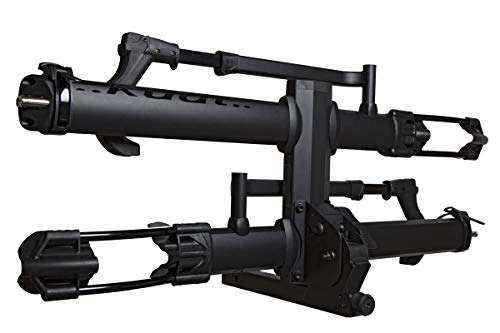
Kuat's NV 2.0 Base is the rack that repeatedly shows up in owner reviews as the one people upgrade to after a cheaper hitch rack disappoints them. The integrated foot pedal tilt release and the pivot-style foot-actuated angle adjustment mean you never have to crouch or grunt to get rear-hatch access. Owners who haul heavy e-bikes specifically call out that the 60-pound-per-bike rating holds up in practice without any rack flex at highway speeds.
In its favor
- Foot-activated tilt-away mechanism allows hatch access without removing bikes
- Integrated bike work stand built into the rack body is a genuinely useful bonus
- Sturdy enough for heavy e-bikes without the wobble common on budget platforms
Watch-outs
- Heavier than comparable platforms, making solo installation onto a hitch slightly awkward
- Base model lacks integrated locks, which must be purchased separately

Yakima HoldUp EVO 2 Hitch Bike Rack
The HoldUp EVO 2 lands in the mid-price hitch-platform tier and punches above it on build quality, with a fully aluminum mast that owners note shows no rust after several wet seasons. The SpeedKnob tool-free wheel straps tighten with a single hand and stay tight, a detail that separates it from cheaper racks where straps loosen over long drives. Yakima's tilt-away pivot lets you swing the loaded rack out of the way for tailgate or hatch access without removing a single bike.
In its favor
- Aluminum build resists corrosion better than steel competitors at this price
- SpeedKnob wheel straps are genuinely faster to operate than ratchet alternatives
- Tilt-away function works smoothly even when both bike slots are loaded
Watch-outs
- Wheel tray width is fixed, which can be tight for fat-tire bikes without adjustment
- Anti-sway cradle arm requires minor repositioning when swapping between very different frame sizes

Allen Sports Deluxe 4-Bike Trunk Mounted Rack
For drivers who do not have a hitch receiver and need to carry up to four bikes, the Allen Sports Deluxe trunk rack is the most consistently recommended budget option across verified Amazon reviews spanning several years. Setup takes under five minutes once you have done it once, and the six-strap attachment system spreads load well enough that bikes stay put on two-hour highway drives when the straps are properly tightened. Owners frequently mention it as the rack they bought for occasional weekend use and were surprised by how well it held up across a full season.
In its favor
- No hitch required, fits sedans, SUVs and minivans with standard trunk geometry
- Four-bike capacity at a price point well below any hitch platform alternative
- Folds flat for storage in a compact footprint when the season ends
Watch-outs
- Bikes contact each other during transport unless foam padding is added between frames
- Not recommended for carbon frames due to strap-point pressure on tube surfaces

Thule ProRide 598 Roof-Mounted Bike Carrier
The ProRide 598 is the roof carrier that owners in online cycling communities recommend most often for people who want their hitch free for a trailer or who drive low-slung cars where a hitch platform scrapes on steep driveway transitions. The one-sided loading mechanism means you never have to lift the bike over the rack, which owners of heavier trail bikes cite as the deciding reason they chose it over competitors. The integrated frame holder and wheel strap work together to eliminate any sideways rock, even at motorway speeds.
In its favor
- One-sided loading eliminates the need to lift the bike over the roof bar
- Clamps to the wheel rather than the frame, making it safe for any frame material
- Low-profile design keeps the loaded bike close to the roof, reducing wind noise and drag
Watch-outs
- Requires a compatible crossbar system already installed on the roof
- Garage and parking structure height clearance becomes a genuine concern with the bike loaded on the roof
What matters most
Hitch receiver size and vehicle compatibility
The majority of premium bike racks require a 2-inch hitch receiver, but many compact cars and older SUVs only have a 1.25-inch receiver or no hitch at all. Check your vehicle's hitch specification before choosing a platform rack. Adapters exist for 1.25-to-2-inch conversions but they can introduce wobble under load, so a rack rated for your actual receiver size is always the cleaner option.
Frame contact versus wheel-contact mounting
Cheaper trunk and hanging racks grip the bike by the frame tubes, which can scratch paint, dent alloy or crack carbon layups over repeated trips. Wheel-tray platforms and roof carriers that clamp the wheel instead protect high-value bikes far better. If you are transporting bikes worth more than a few hundred pounds it is worth paying for a contact-free design.
Loading height and weight
Roof racks require lifting the bike above shoulder height, which becomes genuinely difficult with heavier trail bikes or e-bikes. Hitch platforms load at waist height and are significantly easier for most people. If you have back concerns or regularly haul bikes over 30 lb, a hitch platform with a tilt-away feature will save you from awkward lifts every single trip.
Rear access and daily usability
A rack that blocks your boot or tailgate completely becomes an irritation on any trip where you need to access luggage. Look for a tilt-away or swing-away mechanism on hitch platforms, or confirm the rack clears your specific hatch swing arc before buying. Trunk racks by design require bike removal before opening the boot, which matters if you plan to combine bike transport with luggage on the same trip.
Our take
Matching the rack type to your hitch situation and bike weight matters more than brand loyalty, since the right attachment method eliminates the most common complaints about wobble, paint damage and difficult loading before you spend a penny.
Frequently asked
No. Hitch racks require a receiver hitch already fitted to the vehicle. If your car does not have one, an aftermarket hitch can often be installed for a few hundred pounds by a tow-bar fitting specialist, or you can opt for a trunk-mounted rack that uses straps instead.
Trunk racks carry the highest risk because the mounting arms rest directly on body panels. Most quality trunk racks include foam padding, but vibration over long drives can still cause light scratches. Hitch platforms that use wheel trays rather than frame hooks keep all contact points away from painted surfaces. Adding felt padding strips to any contact point is cheap insurance regardless of rack type.
Most hitch-platform racks in the mainstream market are rated for two bikes, with optional add-on trays that extend capacity to three or four. Those extensions add significant weight behind the hitch and can affect vehicle handling, so check your vehicle's hitch tongue-weight rating before adding extra capacity.
Yes, provided the rack is properly installed, within its rated weight limit and the bikes are secured with all straps and cradles tightened correctly. Platform hitch racks with anti-sway cradles are the most stable option at speed. Trunk racks should be checked at the first stop after setting off to confirm straps have not loosened, as vibration can work them loose over the first few miles.
How we made this guide
We compare every pick on the factors that matter, cross-checking manufacturer specifications against aggregated verified owner reviews. We rank independently and never take payment for placement. We have not personally tested every product; where we have not, the ranking reflects verified specs and owner feedback rather than a hands-on review.
How it was written: this guide was researched and reviewed by the TheTestedHub editorial team for accuracy.
Affiliate disclosure: TheTestedHub is reader-supported. When you buy through links on our site, we may earn a commission at no extra cost to you.
You might also like
Expert Pick: Why the Nulaxy KM18 FM Transmitter Wins

The Right Scratch Remover for Any Depth, Any Budget

Ceramic Coating Kits Matching Your Skill Level

The Foam Cannons Worth Buying in 2026

Car Cleaning Kits for a Scratch Free Shine

The 2026 Guide to the Best Portable EV Chargers

Choose the Right Level 2 EV Charger: 2026 Guide
