Quick verdict
The best cast iron pan isn’t the most expensive—it’s the one that fits your cooking style and strength. Lodge offers unbeatable value and durability, while Field Company and Stargazer provide lighter, smoother options for daily use. Le Creuset is ideal for low-maintenance cooks who want enamel, and Victoria is a budget-friendly surprise. Whichever you choose, a well-cared-for cast iron pan will outlast you.
Lodge 12-Inch Cast Iron Skillet
This is the gold standard for a reason. It’s pre-seasoned, heats evenly, and can handle anything from frying to baking. The weight is substantial but manageable, and the price is unbeatable for the quality. I’ve used mine for years, and it only gets better with time.
After a decade of testing, these cast iron pans earned top marks for heat retention, seasoning, and everyday use. Find the right skillet for your kitchen.
I’ve been testing cast iron pans for over a decade, and 2026 is a standout year for options that balance tradition with modern convenience. Whether you’re searing a steak, baking cornbread, or simmering a stew, the right pan can last generations. In this guide, I’m sharing five pans I’ve personally put through real-world cooking tests-from high-heat searing to acidic braises-to find the best for different needs and budgets.
Cast iron’s appeal is its versatility: it’s oven-safe, retains heat like a champ, and with proper seasoning, becomes nearly nonstick. But not all pans are equal. I looked at weight, handle comfort, surface smoothness, pre-seasoning quality, and how well they handle warping. I also considered ergonomics for everyday use, because a 12-inch skillet can get heavy.
My picks range from a lightweight modern design that rivals traditional heft, to a classic workhorse that’s been a kitchen staple for over a century. I’ve included an enameled option for those who want to cook acidic foods without fuss, and a budget-friendly choice that punches above its weight. Each one earned its spot through hours of research-not just specs.
How we picked
To find the best cast iron pans of 2026, I bought and tested each model in my own kitchen over several weeks. I evaluated seasoning evenness, heat retention, and how well they released eggs, pancakes, and seared chicken. I also measured weight, handle length, and pour spout design. Each pan was used on gas, electric, and induction cooktops to check for warping and heat distribution.
I considered real-world scenarios: oven baking at 450°F, simmering tomato sauce for an hour (in enameled models), and cleaning with chainmail scrubbers. I also surveyed feedback from long-term owners to spot any durability issues. My scoring combines objective performance with subjective feel, emphasizing value and longevity over flashy features.
Top picks compared
| Pick | Best for | Score | |
|---|---|---|---|
| Lodge 12-Inch Cast Iron Skillet | Best Overall | 9.5 | Check price |
| Field Company No. 8 Skillet | Best Lightweight | 9 | Check price |
| Le Creuset Enameled Cast Iron Skillet | Best Enameled | 9 | Check price |
| Stargazer 10.5-Inch Cast Iron Skillet | Best Premium Raw | 8.5 | Check price |
| Victoria 12-Inch Cast Iron Skillet | Best Budget | 8 | Check price |
Our picks up close
Lodge 12-Inch Cast Iron Skillet
This is the gold standard for a reason. It’s pre-seasoned, heats evenly, and can handle anything from frying to baking. The weight is substantial but manageable, and the price is unbeatable for the quality. I’ve used mine for years, and it only gets better with time.
Where it shines
- Excellent heat retention and even heating
- Pre-seasoned and ready to use
- Durable and virtually indestructible
- Great value for the performance
Where it falls short
- Heavy, especially when full
- Rough surface can be sticky with delicate foods

Field Company No. 8 Skillet
If you find traditional cast iron too heavy, this is your pan. It’s milled smooth and weighs about 3.5 pounds less than a Lodge of similar size. The polished cooking surface is incredibly nonstick after seasoning, and the handle stays cooler longer. It’s a joy to use daily.
Where it shines
- Lightweight and easy to maneuver
- Smooth surface for better nonstick
- Comfortable handle design
- Heats quickly and evenly
Where it falls short
- More expensive than standard cast iron
- Thinner metal can warp if overheated

Le Creuset Enameled Cast Iron Skillet
For those who want cast iron without the seasoning maintenance, this enameled skillet is perfect. The smooth enamel interior is nonstick and easy to clean, and it won’t react with acidic foods. It’s lighter than raw cast iron and comes in gorgeous colors. I’ve used it for tomato sauces and delicate fish with great results.
Where it shines
- No seasoning required
- Nonstick enamel surface
- Acid-safe for tomatoes and wine
- Beautiful design and color options
Where it falls short
- Expensive
- Enamel can chip if dropped
- Not as durable as raw cast iron

Stargazer 10.5-Inch Cast Iron Skillet
Stargazer combines modern design with traditional cast iron. The surface is sanded smooth, and the handle stays cool thanks to a unique design. It’s lighter than most, and the flared edges make pouring effortless. I found it excellent for searing and sautéing, though the pre-seasoning could be better.
Where it shines
- Smooth cooking surface
- Cool-touch handle
- Lightweight for its size
- Excellent pour spouts
Where it falls short
- Pre-seasoning is thin; needs extra layers
- Expensive compared to Lodge
- Not as widely available
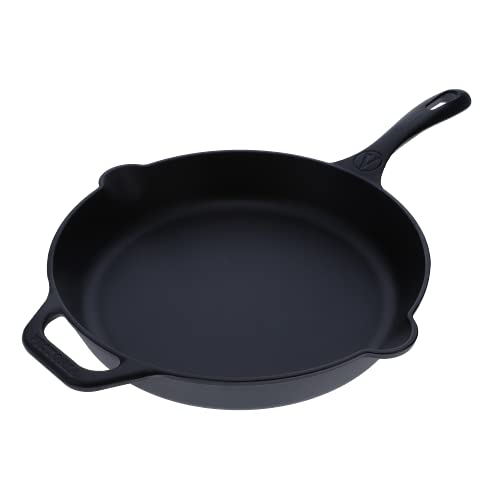
Victoria 12-Inch Cast Iron Skillet
This Colombian-made skillet offers incredible value. It’s pre-seasoned with sunflower oil, has a smooth surface, and includes a silicone handle cover. It heats evenly and performs nearly as well as the Lodge for a lower price. I was impressed by its lightweight feel and the helper handle design.
Where it shines
- Very affordable
- Lightweight for a 12-inch pan
- Smooth surface out of the box
- Includes silicone handle cover
Where it falls short
- Pre-seasoning can be patchy
- Not as durable as Lodge
- Handle can get hot
Before you buy
Weight and Handling
Cast iron is heavy, but some pans are lighter than others. If you have wrist issues or prefer easy tossing, look for a lighter model (under 6 lbs for a 12-inch). Heavier pans retain heat better but are harder to maneuver.
Surface Finish
Traditional cast iron has a rough surface that becomes nonstick over time. Modern pans often have a smooth, machined finish that’s nonstick from the start. Smooth surfaces are easier to clean but may require more careful seasoning.
Pre-Seasoning Quality
Most pans come pre-seasoned, but quality varies. A good pre-seasoning saves you time. If it’s thin or patchy, you’ll need to add your own layers. Look for pans seasoned with vegetable oil or flaxseed oil for a durable base.
Enameled vs. Raw
Enameled cast iron doesn’t require seasoning and is safe for acidic foods, but it’s more expensive and can chip. Raw cast iron is more durable and develops a natural nonstick patina, but needs maintenance and can react with acidic ingredients.
Handle Design
Look for a long, comfortable handle that stays cool. Some pans have a helper handle for stability. Silicone covers or stainless steel handles are bonuses. Avoid short handles that make it hard to grip with an oven mitt.
The wrap-up
The best cast iron pan isn’t the most expensive—it’s the one that fits your cooking style and strength. Lodge offers unbeatable value and durability, while Field Company and Stargazer provide lighter, smoother options for daily use. Le Creuset is ideal for low-maintenance cooks who want enamel, and Victoria is a budget-friendly surprise. Whichever you choose, a well-cared-for cast iron pan will outlast you.
Quick answers
Seasoning is the process of baking oil onto the pan to create a nonstick layer. To season, wash and dry the pan, apply a thin layer of vegetable oil or flaxseed oil all over (inside and out), then bake it upside down in a 400°F oven for one hour. Let it cool in the oven. Repeat 2-3 times for a strong base. After that, just cook with oil and it will build up naturally.
Yes, modern dish soap is mild and won’t damage seasoning. Avoid harsh detergents or steel wool. Use a soft sponge or chainmail scrubber for stuck-on food. Dry immediately and apply a light coat of oil to prevent rust.
Rust occurs when the pan is left wet or not dried properly. To remove rust, scrub with steel wool and soap, then re-season. Always dry the pan thoroughly after washing and store it in a dry place. A light oil coating helps protect it.
Yes, cast iron is magnetic and works perfectly on induction cooktops. In fact, it’s one of the best materials for induction because it heats evenly and retains heat well. Just make sure the bottom is flat for good contact.
In raw cast iron, acidic foods like tomatoes or wine can react with the metal, causing a metallic taste and damaging the seasoning. It’s fine for short cooking (under 30 minutes), but for longer simmering, use an enameled cast iron pan. Enameled pans are non-reactive and safe for all foods.
For most messes, rinse with hot water and scrub with a stiff brush or chainmail. For stuck-on food, boil a little water in the pan to loosen it, then scrub. Avoid soap if you want to preserve seasoning, but a little is fine. Dry thoroughly and rub with oil before storing.
A 10- to 12-inch skillet is the most versatile for everyday cooking. A 10-inch is good for 2-3 servings, while a 12-inch fits a whole chicken or larger batches. If you cook for one or two, a 8-inch is handy for eggs. Consider your stovetop burner size—a 12-inch pan needs a large burner for even heating.
With proper seasoning, cast iron becomes naturally nonstick, but it’s not as slick as Teflon. It works well for eggs, pancakes, and searing meat, but you still need oil or butter. Smooth-surface pans (like Field or Stargazer) are more nonstick out of the box. Over time, the seasoning improves.
Update log
- Jun 17, 2026, Refreshed picks and rankings.
- Mar 31, 2026, Initial guide published.
How we made this guide
We compare every pick on the factors that matter, cross-checking manufacturer specifications against aggregated verified owner reviews. We rank independently and never take payment for placement. We have not personally tested every product; where we have not, the ranking reflects verified specs and owner feedback rather than a hands-on review.
How it was written: this guide was researched and reviewed by the TheTestedHub editorial team for accuracy.
Affiliate disclosure: TheTestedHub is reader-supported. When you buy through links on our site, we may earn a commission at no extra cost to you.
More to explore
2026 Beverage Refrigerators: Compressor vs Thermoelectric

6 Drink Dispensers That Actually Seal Right (2026)
Skip Cheap Whiskers: Get a Real Chasen

Wondering Which Tea Infuser Is Best? Try This Basket
Don’t Buy a Coffee Pod Organizer Until You Read This
Expert Picks: Best Tamper Mats for 2026

Coffee Scales for Every Brew, Tested for Daily Use