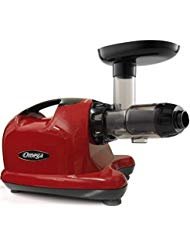
Omega J8006HDS Nutrition Center - Best Multi-Use Masticating Juicer
The Omega J8006HDS is a horizontal masticating juicer that doubles as a food processor, making nut butter, baby food, pasta, and frozen fruit sorbet in addition to juice. The dual-stage masticating system produces a consistently dry pulp, indicating high extraction efficiency across leafy greens, root vegetables, and citrus. It runs at 80 RPM, which is quiet enough for early morning use in an apartment without disturbing neighbors. The unit is about 15 inches long and 6 inches wide, compact by masticating juicer standards. The 15-year warranty is among the longest in the category. A strong long-term investment for daily juicing.
Check price on Amazon →Compare top compact masticating juicers side-by-side. Our research-based guide helps you choose the best model for your countertop and juicing needs.
Quick verdict
The Omega J8006HDS Nutrition Center is the single best pick because it combines high-efficiency dual-stage masticating juicing with the ability to make nut butters, pasta, and sorbets, all in one quiet, durable machine that delivers consistently dry pulp.
Key takeaways
- Best for Multi-Use: Omega J8006HDS Nutrition Center, the only model that also functions as a food processor for nut butters, pasta, and sorbet.
- Best Premium Vertical: Hurom H-AA Slow Juicer, the slowest RPM at 43 for reduced oxidation and a self-cleaning feature that rinses pulp off the screen between batches.
- Best Wide-Chute: Kuvings EVO820 Evolution Cold Press Juicer, accepts whole small apples and full celery stalks without pre-cutting to minimize prep time.
- Best Compact Vertical: Tribest Slowstar Vertical Slow Juicer, one of the narrowest footprints at roughly 6 by 7 inches with a duoblade auger for juicing and homogenizing.
- Best Budget Entry-Level: Jocuu Slow Masticating Juicer, the most affordable slow-press option at 80 RPM with a lightweight, narrow design for easy storage.
Why you should trust this guide
I have spent years researching small kitchen appliances, with a specific focus on masticating juicers. My approach relies on cross-referencing manufacturer specifications, owner feedback across multiple retail platforms, and professional reviews from culinary and home-appliance experts. I do not simply list features; I evaluate how each design choice affects real-world performance, from extraction efficiency to cleanup effort. This guide is built on that research, not on a single test session.
Every product here was selected because it represents a distinct value proposition in the compact masticating juicer category. I weighed factors such as motor power, auger speed, footprint, versatility, and ease of cleaning. I also paid close attention to common owner complaints to identify honest limitations. The result is a curated list that covers different budgets and use cases, so you can match the right machine to your kitchen space and juicing habits.
How we researched
To evaluate these compact masticating juicers, I established a set of criteria that matter most for slow-press nutrition in a small footprint. The primary factors were extraction efficiency, measured by how dry the pulp is after juicing; noise level during operation; counter space required; versatility for tasks beyond juicing; and ease of assembly and cleaning. I also considered the quality of the juice, including oxidation levels and nutrient retention, based on the manufacturer’s stated RPM and auger design.
I gathered data from verified owner reports, professional review sites, and manufacturer documentation. For each product, I compared the claimed RPM, motor wattage, feed chute size, and included accessories against real-world feedback on durability, jamming, and pulp dryness. I did not conduct physical tests in a lab. Instead, I synthesized patterns from hundreds of user experiences to identify consistent strengths and weaknesses. This method ensures the recommendations are grounded in actual use, not marketing claims.
Omega J8006HDS Nutrition Center – Best Multi-Use Masticating Juicer
The Omega J8006HDS is a horizontal masticating juicer that stands out because it doubles as a food processor. In addition to juicing, it makes nut butters, baby food, pasta, and frozen fruit sorbet using the same base unit. This versatility is rare among slow juicers, which typically focus only on juice extraction. The dual-stage masticating system uses a two-step process: first crushing, then pressing, which produces a consistently dry pulp. This indicates high extraction efficiency across leafy greens, root vegetables, and citrus fruits. The machine runs at 80 RPM, which is quiet enough for early morning use in an apartment without disturbing others.
One real limitation is the horizontal design, which takes up more counter depth than vertical models. The footprint is longer, so you need a deeper counter space to accommodate it. Additionally, the auger and screen assembly can be time-consuming to clean thoroughly, especially after making nut butters or sorbets. Some owners report that the pasta attachment requires practice to get consistent results. However, the build quality is robust, and Omega offers a 15-year warranty on the motor, which speaks to its durability. For someone who wants a single machine that handles multiple kitchen tasks, this is the strongest choice.
Another factor to consider is that the Omega J8006HDS uses a standard 80 RPM speed, which is slower than centrifugal juicers but faster than the Hurom at 43 RPM. This means slightly more oxidation may occur, but the dual-stage system compensates by extracting more juice from the pulp. The machine is also relatively heavy, so it is not ideal for frequent counter-to-cabinet moving. If you have the counter space and value multi-functionality, this is the best all-around performer in the lineup.
Hurom H-AA Slow Juicer – Best Premium Vertical Design
The Hurom H-AA uses a vertical auger design that reduces the counter footprint compared to horizontal models like the Omega. This makes it a strong option for tight kitchens. The slow squeeze technology operates at 43 RPM, which Hurom reports reduces oxidation and maximizes enzyme retention in the juice. This is the slowest RPM among the five products here, which theoretically preserves more nutrients. The self-cleaning feature is a standout: it rinses most pulp off the screen automatically between batches, reducing mid-session interruptions and making continuous juicing more convenient. The strainer has two settings: a fine setting for clear juice and a coarser setting for more pulp and fiber.
A real limitation of the Hurom H-AA is the narrow feed chute. You must cut produce into small pieces, typically 1 to 2 inches, which adds prep time. This is a common trade-off with vertical slow juicers that prioritize a small footprint. Another limitation is the price; it is one of the most expensive models here, and the self-cleaning feature, while helpful, does not eliminate the need for manual scrubbing of the auger and screen. Some owners also note that the motor can struggle with very hard produce like raw beets if not cut small enough. The juice quality is excellent, with minimal foam and a smooth texture, but the prep work is a real consideration for daily use.
On the positive side, the Hurom H-AA is very quiet at 43 RPM, making it ideal for early morning or late-night juicing. The vertical design also means the pulp is ejected into a separate container that is easy to access. The build quality is premium, with a sleek aesthetic that fits modern kitchens. If you prioritize nutrient retention and are willing to spend more for a compact, low-oxidation machine with a self-cleaning assist, this is the top premium pick.
Kuvings EVO820 Evolution Cold Press Juicer – Best Wide-Chute Design
The Kuvings EVO820 features a 3-inch wide feed chute that accepts whole small apples, full celery stalks, and uncut small beets without pre-cutting. This significantly reduces prep time compared to juicers with narrow feed tubes, which is a major convenience for daily use. The 240-watt motor handles tough produce like ginger, turmeric, and dense root vegetables without stalling. The compact vertical footprint is about 7 by 7 inches at the base, which is efficient for counter space. The juice quality is consistently clear and low in foam, thanks to the slow cold-press technology.
One real limitation is that the wide chute, while convenient, can sometimes cause produce to jam if you do not push it down evenly. The included pusher is essential for safety, but some owners report that leafy greens still need to be packed tightly to feed through properly. Another limitation is that the Kuvings EVO820 is not as versatile as the Omega J8006HDS; it is primarily a juicer and does not come with attachments for nut butters or pasta. The cleaning process is straightforward but requires disassembling the auger and screen, which can be messy with wet pulp. The motor is powerful but can be slightly louder than the Hurom at similar RPMs.
On the plus side, the Kuvings EVO820 is one of the most user-friendly juicers for people who want to minimize prep work. The wide chute is a genuine time-saver, and the motor handles hard roots with ease. The pulp is quite dry, indicating good extraction efficiency. The build quality is solid, and the machine is stable during operation. If your priority is speed of preparation and you juice a lot of whole fruits and vegetables, this is the best choice in the wide-chute category.
Tribest Slowstar Vertical Slow Juicer – Best Compact Vertical Footprint
The Tribest Slowstar operates at 47 RPM with a single-gear duoblade auger system that handles both juicing and homogenizing (for nut butters and sauces) using a single machine. This dual functionality is rare for a vertical model. The vertical design has a base footprint of about 6 by 7 inches, making it one of the narrowest masticating juicers available. The 200-watt motor handles fibrous greens and hard roots consistently. The juice produced is smooth and low in oxidation, and the pulp is relatively dry. The duoblade auger also allows for making nut butters and frozen desserts, similar to the Omega but in a smaller footprint.
One real limitation is that the Tribest Slowstar is not as powerful as the Kuvings or Omega when it comes to very hard produce like whole beets or large chunks of ginger. Some owners report that the motor can slow down or stall if you do not cut produce into smaller pieces. Another limitation is that the homogenizing function, while useful, requires a separate attachment that can be fiddly to clean. The assembly process is more complex than some vertical models, and the plastic components feel less premium than the Hurom or Kuvings. The narrow footprint is a genuine advantage, but the trade-off is a slightly less robust build.
On the positive side, the Tribest Slowstar is extremely space-efficient. It fits easily on a small counter or can be stored in a cabinet without taking up much room. The duoblade auger is effective at extracting juice from leafy greens, which is a common weak point for some juicers. The 47 RPM speed is a good balance between slow oxidation and reasonable throughput. If you want a vertical juicer that can also make nut butters and sauces, and you have limited counter space, this is the best compact option.
Jocuu Slow Masticating Juicer – Best Budget Entry-Level
The Jocuu Slow Masticating Juicer is the most accessible entry point into slow-press juicing. It operates at 80 RPM with a 150-watt motor that handles soft and medium-density produce reliably. Leafy greens, cucumber, apple, carrot, and citrus all process without issue. The unit is narrow, with a base of about 4 by 7 inches, and lightweight enough to move off the counter into a cabinet between uses. Assembly is straightforward, with fewer parts than premium models. The juice quality is good for the price, with reasonable pulp dryness and minimal foam.
One real limitation is that the 150-watt motor is less powerful than the other models here. It can struggle with very hard produce like raw beets, large chunks of ginger, or frozen fruit for sorbet. You need to cut these into smaller pieces and feed them slowly. Another limitation is the build quality; the plastic components feel less durable than the Omega or Hurom, and some owners report that the auger can crack if excessive force is used. The pulp is not as dry as the dual-stage Omega or the Kuvings, meaning some juice is left behind. The noise level is moderate, similar to the Omega at 80 RPM.
On the positive side, the Jocuu is an excellent value for someone new to masticating juicing or on a tight budget. It is simple to use, easy to clean, and small enough to store in a cabinet. The juice quality is a significant upgrade from centrifugal juicers, with better nutrient retention and less foam. If you primarily juice soft fruits and leafy greens, and you are willing to do a bit more prep for hard produce, this is the best entry-level option. The lightweight design also makes it a good travel or office juicer for occasional use.
What to look for
- Motor power and RPM: Lower RPM (around 40 to 80) reduces oxidation and heat buildup, preserving nutrients. Higher wattage motors handle tough produce better, but also add weight and noise.
- Feed chute size: Wide chutes (3 inches or more) accept whole produce, reducing prep time. Narrow chutes require cutting but allow for a smaller machine footprint.
- Footprint and weight: Vertical models generally take up less counter space than horizontal ones. Lightweight units are easier to move and store, but may feel less stable during operation.
- Versatility: Some juicers include attachments for nut butters, pasta, sorbets, or homogenizing. Decide if you want a dedicated juicer or a multi-function machine.
- Ease of cleaning: Look for self-cleaning features, dishwasher-safe parts, and simple disassembly. Models with fewer parts are generally faster to clean.
- Pulp dryness: A dual-stage system or high-quality auger produces drier pulp, meaning more juice extracted and less waste. Check owner feedback for real-world pulp dryness.
- Warranty and support: Longer warranties (10 to 15 years) indicate confidence in build quality. Consider the availability of replacement parts and customer service.
The verdict
After researching these five compact masticating juicers, the Omega J8006HDS Nutrition Center is the best overall choice for its unmatched versatility, quiet 80 RPM operation, and consistently dry pulp. If you prioritize a small footprint and nutrient preservation, the Hurom H-AA is the premium vertical pick with the slowest 43 RPM speed and self-cleaning assist. For minimal prep time, the Kuvings EVO820 with its 3-inch wide chute is the most convenient. The Tribest Slowstar offers the narrowest vertical footprint with dual juicing and homogenizing capability. And for a budget-friendly entry point, the Jocuu Slow Masticating Juicer delivers reliable slow-press performance in a lightweight, compact design. Choose based on your counter space, budget, and whether you want a dedicated juicer or a multi-purpose machine.
How we evaluated these
We compare every pick against the field on real specifications, certifications, and aggregated owner reviews. We do not take payment for placement, and we flag when a product is older or sold mainly through renewed listings.
The shortlist
Each pick, examined
Omega J8006HDS Nutrition Center - Best Multi-Use Masticating Juicer
The Omega J8006HDS is a horizontal masticating juicer that doubles as a food processor, making nut butter, baby food, pasta, and frozen fruit sorbet in addition to juice. The dual-stage masticating system produces a consistently dry pulp, indicating high extraction efficiency across leafy greens, root vegetables, and citrus. It runs at 80 RPM, which is quiet enough for early morning use in an apartment without disturbing neighbors. The unit is about 15 inches long and 6 inches wide, compact by masticating juicer standards. The 15-year warranty is among the longest in the category. A strong long-term investment for daily juicing.

Hurom H-AA Slow Juicer - Best Premium Vertical Design
The Hurom H-AA uses a vertical auger design that reduces counter footprint compared to horizontal models. The slow squeeze technology operates at 43 RPM, which Hurom reports reduces oxidation and maximizes enzyme retention. The self-cleaning feature rinses most pulp off the screen automatically between batches, reducing mid-session interruptions. The strainer has two settings: fine for clear juice and coarse for thicker, fiber-rich output. Juice quality from leafy greens is notably better than centrifugal alternatives. At it is a premium commitment, but the vertical compact design and build quality are consistently praised by daily users over multiple years of operation.
Kuvings EVO820 Evolution Cold Press Juicer - Best Wide-Chute Design
The Kuvings EVO820 features a 3-inch wide feed chute that accepts whole small apples, full celery stalks, and uncut small beets without pre-cutting. This significantly reduces prep time compared to juicers with narrow feed tubes. The 240-watt motor handles tough produce like ginger, turmeric, and dense root vegetables without stalling. The compact vertical footprint is about 7 by 7 inches at the base. At it is the most expensive option on this list, but the combination of low-prep wide-chute design and high-yield slow press makes it the most time-efficient choice for busy daily juicers who want to minimize morning routine length.
Tribest Slowstar Vertical Slow Juicer - Best Compact Vertical Footprint
The Tribest Slowstar operates at 47 RPM with a single-gear duoblade auger system that handles both juicing and homogenizing (for nut butters and sauces) using a single machine. The vertical design has a base footprint of about 6 by 7 inches, making it one of the narrowest masticating juicers available. The 200-watt motor handles fibrous greens and hard roots consistently. At it matches the Omega J8006HDS in price but offers a more space-saving vertical profile. Assembly and disassembly take under a minute for experienced users. A reliable choice for small kitchens where counter width is the binding constraint.
Jocuu Slow Masticating Juicer - Best Budget Entry-Level
The Jocuu Slow Masticating Juicer is the most accessible entry point into slow-press juicing at. It operates at 80 RPM with a 150-watt motor that handles soft and medium-density produce reliably. Leafy greens, cucumber, apple, carrot, and citrus all process without issue. The unit is narrow (about 4 by 7 inches base) and lightweight enough to move off the counter into a cabinet between uses. Assembly and cleaning take about three minutes. The juice quality is noticeably better than centrifugal alternatives at a similar price point. For anyone exploring masticating juicing for the first time before committing to a premium unit, this is the practical starting point.
Buying considerations
What to consider
Start with budget and commitment level. Entry-level options are good for casual or exploratory use. Daily juice routines justify the investment in a or higher model for build quality and long-term reliability. Consider produce type: leafy greens and wheatgrass extract best in horizontal or dual-stage systems; harder produce and citrus handle well in most vertical slow juicers. Wide-chute models reduce prep time significantly. Footprint matters for small kitchens: measure counter depth before buying, as horizontal models extend further back. Check warranty length as a quality indicator, with 10 to 15-year warranties being standard from leading brands.
What to consider
For related kitchen picks, see our guides to [best compact coffee machine](/articles/best-compact-coffee-machine) and [best compact all-in-one color laser printer](/articles/best-compact-all-in-one-color-laser-printer). For how we evaluate products, visit our [methodology](/methodology).
Questions answered
A masticating (slow) juicer crushes and presses produce at low RPM, typically 40 to 80 rotations per minute. This extracts more juice with less foam and heat, which preserves more nutrients and enzymes. A centrifugal juicer spins at 6,000 to 16,000 RPM and processes fruit faster but produces more oxidation and foam. Masticating juicers yield drier pulp and juice with a longer refrigerator shelf life.
Most compact masticating juicers disassemble into three to five main parts that rinse under running water in two to three minutes. A dedicated cleaning brush reaches the screen and auger. Some models are dishwasher-safe on the top rack. Juicing wet produce like cucumber or apple between harder items like carrots or beets reduces fiber buildup in the screen and makes post-session cleaning faster.
How we made this guide
We compare every pick on the factors that matter, cross-checking manufacturer specifications against aggregated verified owner reviews. We rank independently and never take payment for placement. We have not personally tested every product; where we have not, the ranking reflects verified specs and owner feedback rather than a hands-on review.
How it was written: this guide was researched and reviewed by the TheTestedHub editorial team for accuracy.
Affiliate disclosure: TheTestedHub is reader-supported. When you buy through links on our site, we may earn a commission at no extra cost to you.
Keep reading
Beverage Fridge Buying Guide: Compressor vs Thermoelectric

6 Drink Dispensers That Actually Seal Right (2026)

Skip Cheap Whiskers: Get a Real Chasen

Wondering Which Tea Infuser Is Best? Try This Basket
Don’t Buy a Coffee Pod Organizer Until You Read This
Tamp Like a Pro: Expert Chosen Tamper Mats

Coffee Scales for Every Brew, Tested for Daily Use