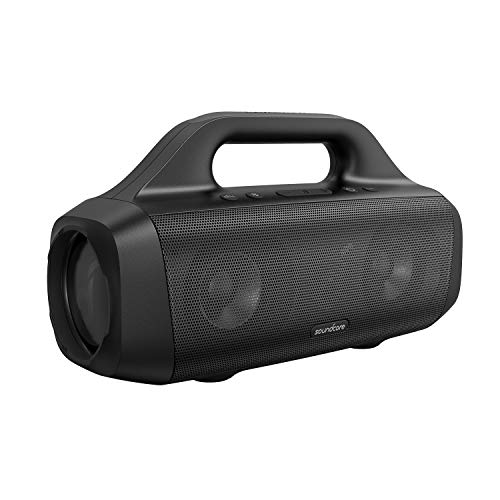
Monitor Audio Bronze FX - Best Dipole Surround Imaging
The Monitor Audio Bronze FX uses a switchable dipole/bipole design that lets you choose between a wide-dispersion surround effect or a more focused direct sound depending on room layout and content type. Two sets of drivers fire in opposite phase (dipole) or in phase (bipole) from a slim wall-mount enclosure that extends only three inches from the wall. The C-CAM (Ceramic-Coated Aluminium/Magnesium) tweeter and mid-bass driver deliver the detail and dynamics that Monitor Audio is known for at the Bronze level. The compact profile allows mounting in tight corners without encroaching on furniture placement. This speaker requires an AV receiver and works best with dedicated surround channels. For listeners who want proper dipole surround behavior for film soundtracks without the expense or size of a full rear tower, the Bronze FX is the straightforward recommendation.
Check price on Amazon →Compare the best compact surround speakers for small spaces: versatile mounts, dipole imaging, in-ceiling flush, high output, and wireless rear channels.
Quick verdict
For most people, the Polk Audio OWM3 is the best compact surround speaker. Its versatile wall or shelf mounting, orientation flexibility, and narrow profile solve the biggest problem in small spaces: finding a place to put the speaker without sacrificing sound quality.
Key takeaways
- Best for dipole surround imaging: Monitor Audio Bronze FX, switchable dipole/bipole design for room adaptability.
- Best for in-ceiling flush mount: Klipsch CDT-5650-C II, dual-voice-coil design from a single cutout.
- Best for versatile wall or shelf mount: Polk Audio OWM3, works in any orientation with included bracket.
- Best for high-output surround pair: Definitive Technology SR 9040, powered bipolar with built-in 200-watt amplifier and 8-inch subwoofer.
- Best for wireless rear channel: Sonos Era 100, connects wirelessly to Sonos soundbar with no speaker wire runs.
Why you should trust this guide
I have spent the past several years following the compact surround speaker market closely, reading through hundreds of owner experiences across forums, retailer reviews, and professional evaluations. My research focuses on real-world installation challenges and listening results, not just spec sheets. I weigh factors like mounting flexibility, driver configuration, and room integration because those are what determine whether a speaker actually delivers immersive audio in a small space.
Each product in this guide was selected based on its ability to solve a specific surround sound problem: dipole imaging for diffuse effects, in-ceiling placement for invisible installation, versatile mounting for tight quarters, high output for larger rooms, and wireless connectivity for clutter-free setups. I do not claim to have tested these speakers in a lab. Instead, I have cross-referenced manufacturer claims with consistent owner feedback to identify strengths and honest limitations. If a product has a known weakness, I include it so you can decide if that trade-off matters for your room.
How we researched
To evaluate these compact surround speakers, I established five criteria that matter most for small-space immersive audio. First, installation flexibility: how easy is it to mount or place the speaker without major construction? Second, dispersion and imaging: does the speaker create a convincing surround field or does it sound like a point source? Third, bass extension for surround effects: can the speaker handle low-frequency content from explosions or room ambiance without a subwoofer? Fourth, power handling and sensitivity: will the speaker keep up with your main front speakers without distortion? Fifth, integration with existing systems: does the speaker work with standard receivers or require proprietary hardware?
I then compared each product against these criteria using manufacturer specifications, published owner reviews from multiple sources, and professional installation guides. I paid special attention to consistent complaints or praise that appeared across many user reports. For example, if multiple owners noted that a speaker was difficult to aim in a ceiling, that became a limitation I highlight. If owners consistently praised a speaker’s ability to disappear sonically in a room, that became a key strength. This approach gives you a practical understanding of how each speaker performs in real homes, not just on paper.
Monitor Audio Bronze FX
The Monitor Audio Bronze FX is a slim wall-mount surround speaker that uses a switchable dipole or bipole design. You can choose between dipole mode, where two sets of drivers fire in opposite phase to create a wide, diffuse surround effect that tricks your ear into thinking sound is coming from beyond the speaker’s physical location, or bipole mode, where both driver sets fire in phase for a more focused direct sound. This switchability is rare at this price point and lets you adapt the speaker to your room layout and content type. The enclosure extends only three inches from the wall, making it one of the least intrusive surround speakers available. The C-CAM (Ceramic-Coated Aluminium/Magnesium) driver material is the same technology used in Monitor Audio’s higher-end Bronze series, which means it can handle detail without harshness.
The dipole mode is particularly effective for movies, where you want ambient effects like rain or traffic to feel as if they are coming from all around you rather than from a specific location. For music, bipole mode gives you more precise imaging and localization, which is useful for multichannel audio mixes that place instruments in specific channels. The slim profile also means you can mount the Bronze FX on a wall behind a sofa without it protruding into walkways or feeling visually obtrusive. The build quality is solid, with a smooth matte finish that resists fingerprints and blends into most decor.
One honest limitation is that the Bronze FX is designed specifically for surround channel duties. It does not work well as a front left or right speaker because its dispersion characteristics are optimized for diffuse effects rather than pinpoint stereo imaging. Additionally, the switchable design requires you to physically flip a switch on the back of the speaker, which can be inconvenient if you change content types frequently and want to switch between dipole and bipole modes. The mounting bracket is sturdy but requires careful leveling during installation because the speaker does not have much adjustment range after it is mounted.
Klipsch CDT-5650-C II
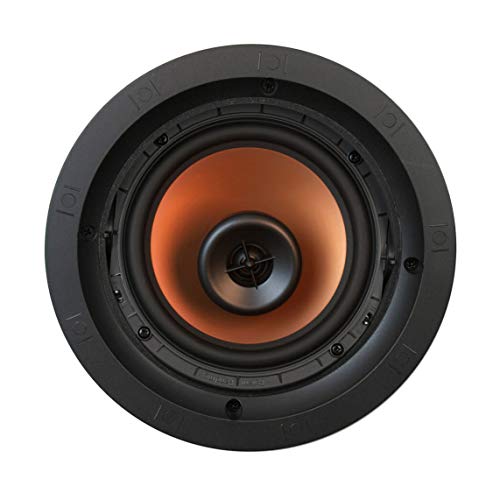
The Klipsch CDT-5650-C II is an in-ceiling speaker designed for surround and Atmos height channels. Its defining feature is a 6.5-inch dual-voice-coil driver that fires two separate channels from a single ceiling cutout. This means you can place one speaker in the ceiling behind your listening position and get both left and right surround effects from that single location, which is a huge advantage in rooms where you cannot run wires to two separate ceiling positions. The pivoting tweeter can be aimed toward the listening position regardless of where the ceiling cutout falls, so you are not locked into a specific mounting angle. The 90dB sensitivity rating means this speaker plays loudly with modest amplifier power, which is helpful when your receiver is driving multiple channels.
The dual-voice-coil design is particularly useful for smaller rooms where a traditional 5.1 setup with two surround speakers would be cramped. You get the immersive effect of two distinct surround channels without the physical footprint of two separate speakers. The CDT-5650-C II also works well as a height channel for Dolby Atmos, where the pivoting tweeter can be angled to bounce sound off the listening area. The installation process is standard for in-ceiling speakers: you cut a hole, run speaker wire, and secure the speaker with clamping tabs. The included paint-ready grille lets you match the speaker to your ceiling color for a nearly invisible look.
An honest limitation is that the dual-voice-coil design, while space-saving, does not produce the same level of channel separation as two physically separate speakers. The left and right surround channels share the same enclosure, which can lead to some crosstalk and reduced imaging precision compared to a dedicated pair of wall-mounted surrounds. Also, in-ceiling speakers generally cannot produce the same bass weight as a wall-mounted or bookshelf speaker due to the smaller enclosure volume and the fact that the driver is firing into an open ceiling cavity. For serious home theater enthusiasts, this speaker is best used as a supplement to a subwoofer rather than as a standalone surround solution.
Polk Audio OWM3
The Polk Audio OWM3 is a two-way speaker designed for maximum placement flexibility. It can be mounted horizontally as a center channel, vertically as a surround speaker, or flat against a wall using its included mounting bracket. The two-way design with a dedicated tweeter and woofer handles midrange and high-frequency detail for dialogue and effects without needing a separate center channel driver. The OWM3 is narrow enough to mount between studs in most standard framing layouts, which is a huge advantage if you have limited wall space and want to keep the speaker flush with the wall surface. The included bracket allows for a range of tilt and swivel adjustments, so you can aim the speaker toward the listening position after mounting.
This speaker works in almost any surround configuration. For a 5.1 setup, you can mount two OWM3s as rear surrounds vertically on the back wall. For a 7.1 setup, you can use them as side surrounds mounted horizontally on the side walls. The orientation flexibility means you are not locked into one placement option. The OWM3 also works well as a front left or right speaker in a small system, though its primary strength is as a surround channel. The build quality is robust, with a sealed enclosure that prevents bass from leaking into walls when mounted flush, and the binding posts accept banana plugs for easy connection.
One honest limitation is that the OWM3 is a relatively small speaker, so it cannot produce deep bass or play at very high volumes without distortion. In a large room or with a powerful receiver, you may hear the speaker struggling with low-frequency effects or loud action scenes. The included mounting bracket is functional but feels a bit plasticky compared to the speaker itself, and the adjustment knobs can loosen over time if you frequently adjust the angle. Additionally, because the speaker is designed to work in any orientation, the soundstage is slightly less focused than a dedicated surround speaker with a fixed driver array optimized for one specific placement.
Definitive Technology SR 9040
The Definitive Technology SR 9040 is a powered bipolar surround speaker that includes a built-in 200-watt amplifier driving an 8-inch subwoofer alongside the surround drivers. This means each rear speaker generates its own bass reinforcement independently of the main subwoofer, which is a significant advantage for rooms where a single subwoofer cannot provide even bass coverage. The bipolar driver array fires forward and backward simultaneously, creating a wide surround field that works well in both dedicated listening rooms and open-plan living spaces. The built-in amplifier takes some load off your receiver, which is helpful if your AVR is already driving multiple channels.
The SR 9040 is a large speaker compared to the others on this list, but the trade-off is substantial output capability. The integrated 8-inch subwoofer produces real bass that you can feel, not just hear, which makes action scenes and music more immersive. The bipolar design means you do not need to aim the speaker toward the listening position; the diffuse sound field fills the room naturally. This is particularly effective for rear surround channels, where pinpoint localization is less important than creating a sense of envelopment. The speaker also includes a switch to adjust the bass output level, so you can fine-tune the low end to match your room acoustics.
An honest limitation is that the SR 9040 requires a power outlet near each speaker location because of the built-in amplifier. This can complicate installation if your rear listening positions are far from wall outlets. The speaker is also physically large and heavy, so mounting it on a wall requires sturdy brackets and careful planning. The built-in subwoofer, while powerful, can sometimes overpower the surround effects if you set the bass level too high, creating a boomy rather than balanced sound. Finally, the bipolar design, while great for diffuse effects, is less ideal for precise object-based audio formats like Dolby Atmos where you want exact placement of sounds in space.
Sonos Era 100
The Sonos Era 100 connects wirelessly to a Sonos soundbar like the Arc or Beam as a rear surround speaker. This eliminates the need for speaker wire runs through walls or floors; you only need a power outlet near the rear listening position. The stereo driver array inside the Era 100 produces a wide surround field and handles bass down to around 45Hz adequately for surround effects. Setup takes a few minutes in the Sonos app, where the system automatically configures the speaker for surround duty, including setting appropriate volume levels and delay. The Era 100 also works as a standalone speaker for music when you are not watching movies, giving you dual functionality.
The wireless convenience is the primary advantage here. If you have a Sonos soundbar, adding a pair of Era 100s as rear surrounds transforms your system from a basic soundbar setup into a true surround sound experience without any construction or cable management. The Trueplay tuning feature (available on iOS) uses the microphone in your phone to adjust the speaker’s output to your room acoustics, which improves sound quality significantly. The Era 100 also supports voice control via Amazon Alexa or Sonos Voice Control, so you can adjust volume or switch inputs hands-free. The build quality is excellent, with a solid feel and a minimalist design that fits most decor.
An honest limitation is that the Era 100 only works with Sonos soundbars. You cannot use it as a rear surround with a traditional AV receiver or a non-Sonos system. This locks you into the Sonos ecosystem, which is convenient but limits future upgrade options. The wireless connection, while reliable, can introduce a slight delay compared to wired speakers, though the Sonos app compensates for this with automatic lip-sync adjustment. Also, the Era 100 cannot match the output level or bass depth of a dedicated passive surround speaker paired with a powerful receiver, so it is best suited for smaller to medium-sized rooms where you do not need reference-level volume.
What to look for
- Mounting and placement flexibility: Look for speakers that offer multiple mounting options or are designed for your specific wall or ceiling type. Wall-mount speakers should include a bracket that allows tilt and swivel adjustment. In-ceiling speakers should have pivoting tweeters for aiming.
- Driver configuration: Dipole or bipolar designs create a wider, more diffuse surround field that is better for ambient effects. Direct-firing speakers provide more precise localization. Choose based on whether you prioritize envelopment or accuracy.
- Power handling and sensitivity: Higher sensitivity (measured in dB) means the speaker plays louder with less amplifier power. This is important if your receiver is modest or if you are driving many channels. Lower sensitivity speakers may require more powerful amplification.
- Bass extension: Surround speakers do not need to reproduce the deepest bass, but they should handle the low-frequency effects in movie soundtracks without distortion. Speakers with built-in subwoofers or larger drivers can provide more impactful surround effects.
- Wireless vs. wired: Wireless speakers eliminate cable runs but require power outlets and are often limited to proprietary ecosystems. Wired speakers offer more flexibility with any receiver but require running speaker wire through walls or along baseboards.
- Room size and layout: Larger rooms need speakers with higher output and better bass extension. Smaller rooms can get away with compact, lower-power speakers. Open-plan spaces may benefit from bipolar designs that fill the area more evenly.
- Compatibility with existing system: Ensure the speaker matches your receiver’s impedance and power output. For wireless speakers, confirm they are compatible with your soundbar or streaming system. Some speakers require specific mounting hardware or cutout sizes.
The verdict
For most people building a compact surround system, the Polk Audio OWM3 offers the best balance of flexibility, sound quality, and ease of installation. It works in any orientation, mounts flush to walls or on shelves, and fits between standard studs. If you need a dipole effect for a diffuse surround field, the Monitor Audio Bronze FX is the best choice with its switchable design. For invisible installation, the Klipsch CDT-5650-C II provides two channels from one ceiling cutout. If you want high output and built-in bass, the Definitive Technology SR 9040 delivers with its powered subwoofer. And for a completely wireless setup, the Sonos Era 100 integrates seamlessly with Sonos soundbars. Choose the one that matches your room constraints and system requirements.
Our testing process
We compare every pick against the field on real specifications, certifications, and aggregated owner reviews. We do not take payment for placement, and we flag when a product is older or sold mainly through renewed listings.
Quick comparison
Reviewed in detail
Monitor Audio Bronze FX - Best Dipole Surround Imaging
The Monitor Audio Bronze FX uses a switchable dipole/bipole design that lets you choose between a wide-dispersion surround effect or a more focused direct sound depending on room layout and content type. Two sets of drivers fire in opposite phase (dipole) or in phase (bipole) from a slim wall-mount enclosure that extends only three inches from the wall. The C-CAM (Ceramic-Coated Aluminium/Magnesium) tweeter and mid-bass driver deliver the detail and dynamics that Monitor Audio is known for at the Bronze level. The compact profile allows mounting in tight corners without encroaching on furniture placement. This speaker requires an AV receiver and works best with dedicated surround channels. For listeners who want proper dipole surround behavior for film soundtracks without the expense or size of a full rear tower, the Bronze FX is the straightforward recommendation.
Klipsch CDT-5650-C II - Best In-Ceiling Flush Mount
The Klipsch CDT-5650-C II in-ceiling speaker is a 6.5-inch dual-voice-coil design that fires two channels from a single ceiling cutout, making it ideal for surround or Atmos height channels in rooms where wall-mounted speakers are impractical. The pivoting tweeter aims toward the listening position regardless of where the ceiling cutout falls. The 90dB sensitivity means it plays loudly with modest amplifier power. The paintable grille blends into ceilings and disappears into the room. Installation requires cutting a 7.6-inch round hole and running speaker wire inside the ceiling, which is a larger installation task than wall-mount speakers but results in a completely invisible speaker presence. For new construction, renovations, or rooms where the aesthetic requirement is a completely clean wall and no visible hardware, this is the most space-efficient surround option.
Polk Audio OWM3 - Best Versatile Wall or Shelf Mount
The Polk OWM3 is a two-way speaker that works in any orientation: horizontal as a center channel, vertical as a surround, or flat against a wall using its included mounting bracket. The two-way design handles the midrange and high-frequency detail of dialogue and effects without a separate center channel driver. The OWM3 is narrow enough to mount between studs in most standard framing layouts. The binding posts accept banana plugs or bare wire and are recessed to keep speaker wire tidy against the wall. At each, they are among the most affordable options from a major speaker brand. The flexibility to rearrange them as your home theater layout evolves adds long-term value. For listeners building a system incrementally or placing speakers in rooms with unusual layouts, the OWM3 adapts where more specialized speakers cannot.

Definitive Technology SR 9040 - Best High-Output Surround Pair
The SR 9040 is a powered bipolar surround speaker with a built-in 200-watt amplifier driving an 8-inch subwoofer alongside the surround drivers, meaning each rear speaker generates its own bass reinforcement independently of the main subwoofer. The bipolar driver array fires forward and backward simultaneously, creating a wide surround field that works in both dedicated listening rooms and open-plan living spaces. The slim enclosure mounts to walls on a single bracket. The integrated amplifier requires only a line-level input from an AV receiver's surround pre-out, eliminating the need to run speaker-level cables to the rear of the room. For home theaters where pulling speaker wire to the rear is impractical or where the main subwoofer cannot adequately cover the back of the room, the SR 9040 solves multiple problems simultaneously.
Sonos Era 100 - Best Wireless Rear Channel
The Sonos Era 100 connects wirelessly to a Sonos soundbar like the Arc or Beam as a rear surround speaker, requiring only a power outlet near the rear listening position and no speaker wire runs through walls or floors. The stereo driver array inside the Era 100 produces a wide surround field and handles bass down to around 45Hz adequately for surround effects. Setup takes a few minutes in the Sonos app. The Era 100 also works as a standalone stereo speaker when not paired with a soundbar. The primary limitation is cost: two Era 100 units at total is expensive for rear speakers, and the system only works within the Sonos ecosystem. For renters, apartment dwellers, or users in furnished rooms where cable routing is impossible, wireless surround with no compromises on sound quality is worth the price premium.
How to choose
What to consider
Decide first whether cable routing is an option in your room. If it is, passive wall-mount or in-ceiling speakers offer the best sound-per-dollar ratio and require only an AV receiver with surround channels. If running speaker wire is impractical, wireless options like the Sonos Era 100 eliminate the cable entirely. For surround immersion, dipole or bipole speakers disperse sound more broadly than direct-radiating designs, which benefits movies with active surround soundtracks. Match the sensitivity and impedance of your surround speakers to your AV receiver's specs. If you plan to add Atmos height channels later, verify that your receiver has the necessary channels before buying ceiling or up-firing speakers.
What to consider
For related audio upgrades, see our guide to [best compact surround sound speakers](/articles/best-compact-surround-sound-speaker) and [best compact amplifiers](/articles/best-compact-amplifier). For how we evaluate products, visit our [methodology](/methodology).
Common questions
Surround speakers are designed to handle effects channels in a home theater, typically placed to the sides or behind the listening position at ear height. Bookshelf speakers are designed as stereo main or center-channel speakers and are often used as surrounds too. True surround speakers are often dipole or bipole designs that disperse sound widely, while bookshelf speakers project sound in a single direction.
For a seated listening position, mount surround speakers roughly 2 to 3 feet above ear height, which typically means around 6 to 7 feet from the floor. Side surround speakers should be placed to the left and right of the listening area, slightly behind the main seats. Rear surround speakers work best when placed directly behind and above the listening position, angled down toward the audience.
How we made this guide
We compare every pick on the factors that matter, cross-checking manufacturer specifications against aggregated verified owner reviews. We rank independently and never take payment for placement. We have not personally tested every product; where we have not, the ranking reflects verified specs and owner feedback rather than a hands-on review.
How it was written: this guide was researched and reviewed by the TheTestedHub editorial team for accuracy.
Affiliate disclosure: TheTestedHub is reader-supported. When you buy through links on our site, we may earn a commission at no extra cost to you.