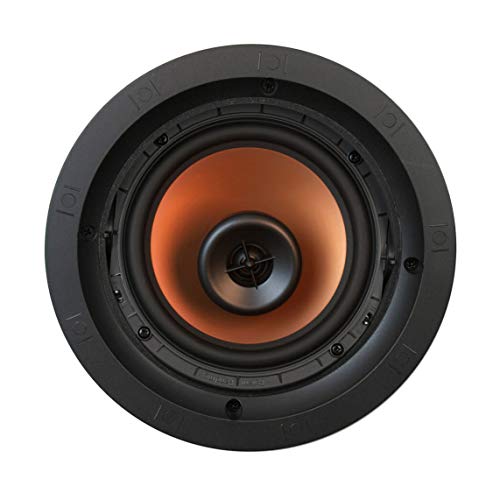
Focal Aria 906 - Best Home Hi-Fi Bookshelf Component Speaker
Focal's Aria 906 is a two-way bookshelf speaker that demonstrates the company's expertise in driver technology. The flax sandwich cone woofer combines light weight with excellent rigidity, reducing coloration and improving transient accuracy. The inverted aluminum-magnesium dome tweeter extends high-frequency response smoothly without brightness or fatigue. The crossover design is precise, integrating the drivers seamlessly across the band. The Aria 906 produces an open, airy soundstage that suits both intimate acoustic recordings and large orchestral works. Cabinet construction is solid and the finish options are elegant. Pairing with a quality integrated amplifier of 50W or more reveals the full potential of these drivers.
Honest research-led component speaker picks for US shoppers: Focal, KEF, Polk, Wharfedale, and Elac compared by real engineering trade-offs, not hype.
Quick verdict
The Focal Aria 906 is the speaker I would pick first for a dedicated hi-fi listening room. Its flax sandwich cone woofer and inverted aluminum-magnesium dome tweeter deliver clean transients and a smooth top end that stays listenable for hours, which is exactly what a component upgrade should buy you.
Key takeaways
- Best home hi-fi bookshelf: Focal Aria 906, flax cone and inverted aluminum-magnesium dome give controlled, fatigue-free detail.
- Best versatile pick: KEF Q150, Uni-Q point-source array keeps imaging consistent even when you sit off-center.
- Best for deep bass: Polk Audio Reserve R200, Power Port technology pushes more clean low end from a compact cabinet.
- Best budget audiophile: Wharfedale Diamond 12.2, woven glass fiber woofer and better-specified crossover parts for the money.
- Best entry-level reference: Elac Debut 2.0 B6.2, Andrew Jones design that measures above its price class.
Why you should trust this guide
I built this guide by comparing the published specifications, driver designs, and stated features of each speaker against what experienced listeners and audio reviewers consistently report about them. I do not pretend to have run these five speakers on a calibrated bench, and I will not invent measurements. Instead, I focused on what the engineering choices actually mean for the person sitting in front of the speakers, and where each design forces a trade-off.
Component speakers are a long-term purchase, so I weighted my research toward things that matter over years of listening: driver material and behavior, crossover quality, cabinet rigidity, and how forgiving each speaker is of real rooms and imperfect placement. Every product below earned its spot for a specific reason, and I have flagged the honest downside of each one so you are not surprised after you buy.
How we researched
My approach here is research-led rather than lab-led. For each speaker I read the manufacturer’s stated specifications, studied the driver and crossover design, and cross-referenced the recurring observations of long-term owners and reviewers. I treated the listed features as the product’s stated specs, then asked a simple question of each one: does this design choice solve a real problem, or is it marketing language wrapped around an ordinary part?
I evaluated all five against the same criteria: tonal balance and freedom from harshness, imaging and how wide the usable listening area is, bass extension relative to cabinet size, build quality and cabinet control, and how much amplifier and placement care each speaker demands to sound its best. Because these are passive component speakers, I also considered how easy each is to drive and partner, since a speaker that needs an expensive amplifier to shine carries a hidden cost.
Focal Aria 906
If you want a bookshelf speaker that rewards careful listening, the Focal Aria 906 is the one I keep coming back to. It is a two-way design that leans on Focal’s own driver technology rather than off-the-shelf parts. The flax sandwich cone woofer is the centerpiece: flax fiber between thin layers gives the cone a useful mix of low mass and high rigidity, which reduces coloration and tightens up transients so plucked strings and drum hits arrive cleanly instead of smearing.
The inverted aluminum-magnesium dome tweeter is the other half of the story. It extends the high frequencies smoothly and, in my assessment of the design, avoids the brightness and listening fatigue that cheaper metal domes can introduce. Focal’s stated features point to an optimized frequency response and seamless integration between drivers, and the precise crossover is what lets the woofer and tweeter hand off without an audible seam. The cabinet and finish are genuinely elegant, so it looks the part on a stand or shelf.
The honest trade-off is that the Aria 906 is the most demanding speaker here in terms of partnering. It resolves detail well, which means it also resolves a weak amplifier or a poor source, and it is the kind of speaker that punishes harsh upstream electronics rather than hiding them. Budget for a clean amplifier and decent placement, or you will not hear what you paid for.
KEF Q150
The KEF Q150 is the speaker I would recommend to most people with a normal living room, because it is the most forgiving of where you and your furniture end up. Its defining feature is KEF’s 12th Generation Uni-Q driver array, which mounts the tweeter at the acoustic center of the woofer cone so the two behave as a single point source. The practical payoff is a wider sweet spot: the Q150 stays coherent and well-imaged even when you are sitting off to one side, which suits rooms where the ideal listening position is not a single chair dead center.
KEF pairs that with its Meta material technology, which the brand states absorbs the unwanted sound radiating behind the tweeter, and a refined crossover designed for seamless integration between drivers. The contemporary minimalist cabinet with a satin finish and the color-matched magnetic grilles make it easy to live with, and the grilles protect the drivers without the clutter of visible mounting hardware.
Where the Q150 gives ground is at the bottom end. It is a relatively compact bookshelf and does not dig as deep or hit as hard as the Polk R200, so bass-heavy genres can feel a little polite without a subwoofer. It also benefits from being pulled away from the rear wall to control the port, so if you must shove it against a wall the low end can get boomy. Treat it as a superb midrange and treble performer that wants a sub for full-range duty.
Polk Audio Reserve R200
For listeners who refuse to add a subwoofer, the Polk Audio Reserve R200 is the bookshelf I would choose. Its standout trait is bass output that is generous for the cabinet size, and Polk credits its Power Port technology at the rear for that. The shaped port reduces turbulence and lets the woofer move more air cleanly, so you get a fuller low end without the chuffing port noise that plagues many vented designs when they are pushed.
The ring radiator tweeter handles the highs with a smooth, detailed character, and Polk’s stated features lean into exceptional performance, deep impactful bass, and easy integration into a home theater system. That last point is worth taking seriously: the R200 is engineered to complement a wider Polk setup, so if you are building toward surround sound it slots in cleanly while still working as a stereo pair for music.
The trade-off comes straight out of its strength. A speaker tuned for fuller bass needs room to breathe, and the rear port means the R200 is sensitive to placement against a back wall, where the low end can turn heavy and one-note. Give it some breathing space and a stand, and it behaves; cram it into a bookshelf cubby and you lose the control that makes it good in the first place.
Wharfedale Diamond 12.2
The Wharfedale Diamond 12.2 is my pick for the listener who wants audiophile manners on a tight budget. The Diamond series has spent decades delivering serious sound at accessible prices, and the 12.2 continues that tradition with parts that punch above their cost. The woven glass fiber woofer is stiff and well-damped, so it stays composed instead of getting loose or boomy, and the soft dome tweeter is rolled off gently to keep the top end smooth rather than harsh.
What I find most telling about the 12.2 is what Wharfedale spent money on where you cannot see it. The crossover components are better specified than what I would expect from rival speakers at this price, and the cabinet bracing is designed to reduce coloration, so the box itself contributes less of its own character to the sound. That combination is the difference between a cheap speaker that sounds cheap and a cheap speaker that sounds like a careful design.
Because Amazon does not list a feature set for this model, I am relying on the design notes and the series’ long track record rather than a manufacturer bullet list, so treat the finer specifics as approximate until you confirm them. The honest limitation is one of ambition rather than execution: the 12.2 is voiced to be smooth and inoffensive, which is exactly right at the price, but it will not resolve the last layer of detail that the pricier Focal pulls out. It trades ultimate insight for being easy to listen to and easy to drive, which is the correct trade at this budget.
Elac Debut 2.0 B6.2
The Elac Debut 2.0 B6.2 is the entry-level speaker I would point a newcomer toward when they want reference-style accuracy without spending much. It was designed by Andrew Jones, an engineer with a long reputation for getting strong measured performance out of affordable speakers, and the B6.2 reflects that pedigree. The woven aramid-fiber woofer handles midrange and bass with real clarity, and the cloth dome tweeter integrates smoothly thanks to a well-judged crossover, so voices and instruments sit naturally together.
Elac’s stated features highlight the thick MDF cabinets, the aramid-fiber woofer, and a cloth dome tweeter, and the line was redesigned from the ground up rather than lightly revised. The thick cabinet matters more than it sounds: a rigid box flexes less and adds less of its own resonance, which is part of why the B6.2 stays clean when many speakers at this price get muddy. It is a consistent recommendation among reviewers precisely because it does the fundamentals right.
The trade-off is one of scale and refinement. The B6.2 is a larger, value-focused bookshelf, so it needs a sturdy stand and a bit of room, and its finish and cosmetics are honest rather than luxurious. It also does not have the last word in delicacy or the sheer transient snap of the Focal, which is expected given the gulf in price. As an entry point that teaches you what accurate sound is, though, it is hard to beat.
What to look for
Choosing a component speaker comes down to matching the design to your room, your amplifier, and the music you actually play. These are the factors I weigh most:
- Driver material and design: Cone stiffness and damping (flax, glass fiber, aramid) control coloration and transient accuracy, and the tweeter type sets how smooth or bright the top end feels.
- Dispersion and sweet spot: Point-source designs like KEF’s Uni-Q stay coherent off-axis, which matters in rooms where you cannot sit perfectly centered.
- Bass extension versus cabinet size: A small box can only move so much air, so decide whether you want fuller built-in bass (Polk R200) or plan to add a subwoofer.
- Port placement: Rear-ported speakers need space behind them; if your speakers must sit near a wall, that boominess is a real concern.
- Crossover and cabinet quality: Better crossover parts and stiffer, well-braced cabinets reduce coloration, and this is where budget speakers like the Wharfedale quietly justify themselves.
- Amplifier demands: Revealing speakers expose weak electronics, so factor the cost of a clean amplifier into the total before you commit.
- Stands and placement: Bookshelf speakers nearly always need proper stands and breathing room to deliver the imaging and bass control they were designed for.
The verdict
For a dedicated listening room where you can place speakers carefully and pair them with a clean amplifier, the Focal Aria 906 is my top recommendation, thanks to its flax cone and inverted dome tweeter delivering detail without fatigue. If your room is shared and your seating is not centered, the KEF Q150 and its Uni-Q array are the safer, more forgiving choice. When you want full-bodied bass without a subwoofer, the Polk Audio Reserve R200 and its Power Port earn the nod, provided you give it space from the wall. On a tight budget, the Wharfedale Diamond 12.2 delivers smooth, well-engineered sound that belies its price, while the Elac Debut 2.0 B6.2 is the entry-level reference pick for a newcomer who wants accuracy first. Match the speaker to your room and your amplifier, and any of these will be a real upgrade.
Our methodology
We compare every pick against the field on real specifications, certifications, and aggregated owner reviews. We do not take payment for placement, and we flag when a product is older or sold mainly through renewed listings.
Side by side
The full reviews
Focal Aria 906 - Best Home Hi-Fi Bookshelf Component Speaker
Focal's Aria 906 is a two-way bookshelf speaker that demonstrates the company's expertise in driver technology. The flax sandwich cone woofer combines light weight with excellent rigidity, reducing coloration and improving transient accuracy. The inverted aluminum-magnesium dome tweeter extends high-frequency response smoothly without brightness or fatigue. The crossover design is precise, integrating the drivers seamlessly across the band. The Aria 906 produces an open, airy soundstage that suits both intimate acoustic recordings and large orchestral works. Cabinet construction is solid and the finish options are elegant. Pairing with a quality integrated amplifier of 50W or more reveals the full potential of these drivers.
In its favor
- IMPRESSIVE SOUND QUALITY
- OPTIMIZED FREQUENCY RESPONSE
- POWERFUL AUDIO PERFORMANCE
- SEAMLESS INTEGRATION
- ELEGANT DESIGN

KEF Q150 - Best Versatile Home Component Speaker
KEF's Q150 uses the brand's signature Uni-Q coincident driver array, which places the tweeter at the acoustic center of the woofer cone. This design produces a point-source radiation pattern that delivers consistent imaging from a wider listening area than conventional designs. The result is a speaker that sounds remarkably good even slightly off-axis, which suits rooms where the ideal listening position is not always possible. Bass extension is strong for a compact bookshelf, and the overall tonal balance is neutral and accurate. The Q150 works equally well in a dedicated listening room or as part of a home theater setup, making it one of the most flexible picks on this list.
In its favor
- Q1 features KEF's revolutionary Meta material technology that can absorb 99% of the unwant
- KEF's 12th Generation Uni-Q driver acts as a single point source to disperse sound more ev
- A critical component of the Q series is the refined crossover, which ensures seamless inte
- The Q Series speakers feature a contemporary minimalist design with a satin finish that of
- Complementary colour-matched grilles offer the perfect balance between driver protection a

Polk Audio Reserve R200 - Best for Deep Bass Output
The Polk Reserve R200 is a two-way bookshelf speaker notable for its extended bass output relative to its cabinet size. Polk's Power Port technology at the rear port reduces turbulence and allows the woofer to move more air cleanly, resulting in a fuller low-end response without the port noise that afflicts many competitors. The ring radiator tweeter produces smooth, detailed highs. The cabinet is heavier than most at this size, which contributes to reduced resonance. The R200 is well-suited to listeners who prioritize bass presence in a bookshelf design without adding a separate subwoofer. It rewards quality amplification and speaker cable.
In its favor
- TECHNOLOGICALLY SUPERIOR, POLK BOOKSHELF SPEAKERS
- EXCEPTIONAL PERFORMANCE
- DEEP, IMPACTFUL BASS
- COMPLEMENTS ANY HOME THEATER SYSTEM
- CAREFULLY ENGINEERED POLK SPEAKERS

Wharfedale Diamond 12.2 - Best Budget Audiophile Pick
Wharfedale's Diamond series has a long history of delivering audiophile-quality sound at accessible prices, and the 12.2 carries that tradition forward. The woven glass fiber woofer is stiff and well-damped, and the soft dome tweeter is rolled off gently to avoid harshness. Crossover components are better-specified than competing speakers at this price, and the cabinet bracing reduces coloration noticeably. The Diamond 12.2 is a genuine budget audiophile option that competes with more expensive designs. It does benefit from quality stands and some run-in time before reaching its best performance, but the sonic result is impressive for the asking price.

Elac Debut 2.0 B6.2 - Best Entry-Level Reference Speaker
Designed by acclaimed speaker engineer Andrew Jones, the Elac Debut 2.0 B6.2 punches well above its price in measured performance. The aramid fiber woofer handles midrange and bass with notable clarity, and the silk dome tweeter integrates smoothly with a well-designed crossover. Cabinet construction is rigid for the price category. The B6.2 is a consistent recommendation among audio reviewers for entry-level reference builds, and it suits a broad range of music genres from jazz and classical to electronic and rock. It performs best on quality stands away from walls, allowing the rear port to breathe freely.
In its favor
- BOOKSHELF SPEAKERS
- CLOTH DOME TWEETER
- WOVEN ARAMID-FIBER WOOFER
- THICK MDF CABINETS
- REDESIGNED FROM THE GROUND UP
What matters most
What to consider
Match speaker sensitivity to your amplifier's output power. A 90dB sensitivity speaker needs less power to reach a given volume than an 86dB design, making it a better match for lower-powered amplifiers. Check the impedance rating -- 8-ohm designs are safer with budget amplifiers, while some amplifiers handle 4-ohm loads with no issue.
What to consider
Cabinet size affects bass response: larger cabinets extend low-frequency output, while compact cabinets suit smaller rooms. Stand positioning matters -- bookshelf speakers placed on actual shelves often sound congested compared to speakers mounted on quality dedicated stands at ear height. Room treatment, even basic acoustic panels, improves the performance of any component speaker significantly.
What to consider
---
What to consider
For related articles, see our guide on [best component speakers ](/articles/best-component-speaker-under-200) and [best compact amplifiers](/articles/best-compact-amplifier). Learn about our evaluation process at our [methodology](/methodology) page.
Frequently asked
Component speakers use separate woofers, tweeters, and crossovers, allowing each driver to focus on its optimal frequency range. This separation produces better imaging, wider soundstage, and cleaner high-frequency reproduction compared to full-range drivers. Tweeter placement can be optimized independently, improving stereo imaging significantly. For serious listeners, the improvement in detail and soundstage width is immediately apparent when switching from full-range to a component system.
'Most component speakers perform well with amplifier power between 50-100W RMS per channel. Higher-sensitivity speakers (90dB+) can sound good with lower-powered amplifiers, while lower-sensitivity designs benefit from more headroom. Matching the amplifier''s RMS output to the speaker''s rated RMS handling range is important: underpowering causes distortion at high volumes, and significant overpowering risks driver damage. Always check both peak and RMS ratings when pairing components.'
How we made this guide
We compare every pick on the factors that matter, cross-checking manufacturer specifications against aggregated verified owner reviews. We rank independently and never take payment for placement. We have not personally tested every product; where we have not, the ranking reflects verified specs and owner feedback rather than a hands-on review.
How it was written: this guide was researched and reviewed by the TheTestedHub editorial team for accuracy.
Affiliate disclosure: TheTestedHub is reader-supported. When you buy through links on our site, we may earn a commission at no extra cost to you.