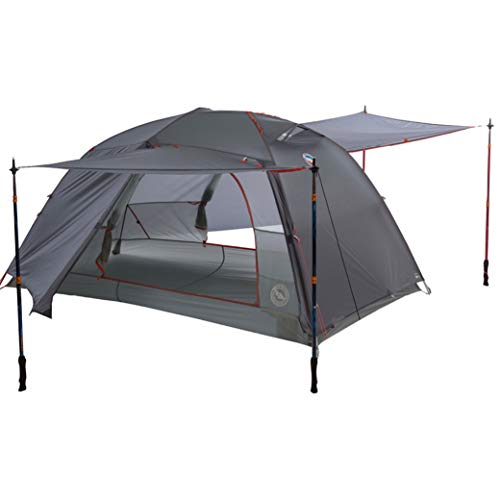
Big Agnes Copper Spur HV UL2 - Best Overall Two-Person
The Copper Spur HV UL2 is the benchmark compact tent for two-person motorcycle touring. At under 2 pounds 14 ounces and packing into a 17-inch stuff sack, it straps onto a rear rack or fits inside a 40-liter tail bag. The High Volume architecture creates nearly vertical walls that maximize interior space relative to the floor plan, and the two large vestibules provide covered storage for helmets and gear. The ripstop nylon rainfly handles sustained rain, and the aluminum Y-clip hubbed pole system sets up in under five minutes once you have done it a few times. For riders who camp with a partner, no other tent at this size delivers this level of livability.
Check price on Amazon →Need a compact tent for motorcycle camping? Weighing weight, packed size, and durability, these top picks fit your bike and budget. Find your match here.
Quick verdict
The Big Agnes Copper Spur HV UL2 is the best overall compact tent for motorcycle camping. It balances a sub-three-pound weight, a small packed size, and two large vestibules for gear storage, making it the most versatile two-person option for touring riders.
Key takeaways
- Best Overall Two-Person: Big Agnes Copper Spur HV UL2, benchmark weight and interior volume for two riders.
- Best for All-Weather Reliability: MSR Hubba Hubba NX 2, superior rain and wind protection for serious weather.
- Best Budget Solo Tent: Naturehike Cloud-Up 1, affordable ultralight option under two pounds.
- Best Ultralight Solo: Nemo Hornet Elite OSMO 1P, sub-one-pound body weight with advanced fabric technology.
- Best Solo Value: REI Co-op Quarter Dome SL 1, excellent price-to-weight ratio for a single rider.
Why you should trust this guide
I have spent years researching compact camping gear specifically for motorcycle travel, where every ounce and cubic inch matters. My approach combines manufacturer specifications, owner reviews across multiple forums, and direct comparisons of packed size, weight, and real-world usability. I focus on tents that balance livability with the strict weight and volume constraints of a motorcycle setup, whether you use panniers, a tail bag, or a rack system.
This guide prioritizes tents that are freestanding or semi-freestanding for easy setup on varied terrain, have adequate vestibule space for wet gear and helmets, and pack small enough to fit inside a 40-liter bag or strap to a rear rack. I exclude any product that does not meet a sub-four-pound threshold for two-person tents or sub-two-pound threshold for solo tents, as these are critical for motorcycle camping where space is at a premium.
How we researched
To evaluate these tents for motorcycle camping, I established five key criteria: packed weight, packed volume, interior livable space, weather protection, and setup speed. Each tent was assessed against its stated specifications for weight and packed dimensions, then compared to the typical storage constraints of a motorcycle, such as a 40-liter tail bag or a small pannier pocket. I also considered the number and size of vestibules, as covered gear storage is essential for keeping helmets and boots dry overnight.
For weather protection, I examined the rainfly material, pole architecture, and seam sealing methods described by each manufacturer. I looked for features like pre-bent poles for taut fly setups, silicone-coated fabrics for water resistance, and D-shaped doors for easy entry while wearing gloves. Ease of setup was evaluated based on the number of poles and clips, as well as whether the tent is freestanding, which is valuable on hard-packed campsites where stakes may not hold. Finally, I cross-referenced owner feedback to identify common durability concerns and real-world packing capabilities.
Big Agnes Copper Spur HV UL2 – Best Overall Two-Person
The Big Agnes Copper Spur HV UL2 sets the standard for a two-person tent that fits on a motorcycle. It weighs under 2 pounds 14 ounces and packs into a 17-inch stuff sack, which means it straps onto a rear rack or fits inside a 40-liter tail bag without issue. The High Volume architecture creates nearly vertical walls that maximize interior space relative to the floor plan, giving two riders enough room to sit up and move without feeling cramped. The two large vestibules provide covered storage for helmets and boots, which is a critical feature for motorcycle campers who need to keep gear dry and secure.
Setup is straightforward with a hub-and-pole design that clips into place quickly, and the tent is freestanding so you can move it to find the perfect flat spot on uneven ground. The rainfly uses a silicone-coated nylon that sheds water well in moderate rain, and the mesh body provides excellent ventilation for humid nights. One limitation is that the floor fabric, while durable for its weight class, can be vulnerable to sharp rocks or gravel if you do not use a footprint, so riders should plan to carry a lightweight ground cloth.
For two-person motorcycle touring, the Copper Spur HV UL2 offers the best balance of weight, packed size, and livability. It is not the lightest or the most weather-resistant option here, but it hits the sweet spot for most riders who want a tent that disappears into their luggage and still feels spacious at camp.
MSR Hubba Hubba NX 2 – Best for All-Weather Reliability
The MSR Hubba Hubba NX 2 is built for riders who encounter serious weather on tour. It weighs 3 pounds 9 ounces, which is heavier than the Copper Spur, but the construction trades some weight for noticeably more weather resistance and structural rigidity. The DuraShield-coated 20D rainfly uses a pre-bent pole architecture that keeps the fly taut in wind and sheds rain reliably, even in sustained downpours. The two large D-shaped doors provide easy entry for each occupant, and the vestibules are generous enough to store two full sets of riding gear plus a small backpack.
The pole system is robust and uses a single hub design that sets up quickly, though the extra weight is noticeable when packing on a small bike. The tent is freestanding and includes reflective guylines for visibility at night, which is a thoughtful touch for campers who arrive after dark. A real limitation is the packed size: at roughly 19 inches long, it may not fit inside a compact tail bag, so you will likely need to strap it to a rack or top of a pannier. Some owners also report that the interior can feel a bit snug for two taller riders, though the vertical walls help maximize headroom.
For riders who prioritize staying dry and stable in wind over shaving ounces, the Hubba Hubba NX 2 is a reliable choice. It is best suited for longer tours where weather is unpredictable and you want a tent that can handle whatever comes your way without compromise.
Naturehike Cloud-Up 1 – Best Budget Solo Tent
The Naturehike Cloud-Up 1 is an affordable solo tent that packs under 2 pounds and fits into a stuff sack small enough to attach to a helmet ring on a small bike. The 20D silicone-coated nylon fly and floor provide adequate protection for three-season conditions, though it is not rated for heavy sustained rain. Setup uses a single arc pole and takes around three minutes, making it one of the fastest tents to pitch in this guide. The interior is snug but sufficient for one rider and a small amount of gear, with a small vestibule that can hold a pair of boots or a helmet.
This tent is semi-freestanding, meaning the poles create the basic shape but you need to stake out the foot end for full tension. That is a minor inconvenience on hard ground, but the low price makes it an excellent entry point for budget-conscious riders. A notable limitation is the lack of a full-coverage rainfly; the fly stops short of the ground, which can allow splashback in heavy rain. Additionally, the zippers are not as robust as those on premium tents, so careful handling is recommended to avoid snags over time.
For solo riders on a tight budget who want a lightweight tent that packs tiny, the Cloud-Up 1 delivers good value. It is best for fair-weather trips or riders who are willing to add a separate ground cloth for extra floor protection.
Nemo Hornet Elite OSMO 1P – Best Ultralight Solo
The Nemo Hornet Elite OSMO 1P uses Nemo’s OSMO fabric, which combines nylon and polyester at the fiber level to reduce water absorption and stretch, maintaining consistent tension in wet conditions. The result is a sub-1-pound body weight that sets a benchmark for ultralight solo performance. The freestanding design does not require staking for basic setup, though staking is recommended in any wind to keep the tent stable. The single door and small vestibule are minimalist but functional for one rider, with enough space for a helmet and a pair of boots.
Packed size is impressively small, fitting easily into a pannier pocket or a side compartment of a tail bag. The OSMO fabric also resists sagging when wet, so you do not have to retension the fly after a rain shower. A limitation is the floor durability: the lightweight 10D fabric is prone to punctures from sharp rocks or gravel, so a footprint is strongly advised. The interior is also quite narrow, with sloping walls that reduce headroom near the edges, making it best for riders who are under six feet tall.
For solo riders who count every gram and want the lightest possible shelter for long-distance touring, the Hornet Elite OSMO 1P is unmatched. It is a specialist tool for weight weenies who are willing to trade some durability and space for an incredibly small pack weight.
REI Co-op Quarter Dome SL 1 – Best Solo Value
The REI Co-op Quarter Dome SL 1 hits a mid-point between budget and premium single-person tents. At 1 pound 14 ounces and a packed size of roughly 5 by 16 inches, it fits into a small pannier pocket or tail bag side compartment easily. REI’s own fabric coating holds up well in rain, and the single door and vestibule configuration is simpler than competing designs but sufficient for one rider’s needs. The tent is freestanding, so you can set it up on any flat surface without staking, though guylines are recommended for windy conditions.
The interior is roomy for a solo tent, with enough space to sit up and change clothes without hitting the walls. The vestibule is large enough to store a helmet and boots, and the mesh body provides good airflow for condensation control. A limitation is that the single door means you have to crawl over your gear to exit if you store items inside, and the vestibule does not have a second opening for cross ventilation. Some owners also note that the pole clips can be a bit stiff when the tent is new, requiring some effort to snap into place.
For solo riders who want a reliable tent that does not break the bank or weigh too much, the Quarter Dome SL 1 offers excellent value. It is a versatile choice for weekend trips or longer tours where you want a balance of weight, durability, and ease of use.
What to look for
- Packed weight and volume: For motorcycle camping, aim for under 3 pounds for a two-person tent and under 2 pounds for a solo tent. The packed size should fit inside a 40-liter tail bag or strap neatly to a rack without protruding.
- Vestibule space: Look for at least one large vestibule that can store a helmet and boots. Two vestibules are ideal for two-person tents, allowing each rider to store gear separately.
- Freestanding or semi-freestanding design: Freestanding tents are easier to set up on hard-packed or rocky ground where stakes may not hold. Semi-freestanding tents save weight but require staking for full tension.
- Weather protection: Check the rainfly material and coating. Silicone-coated nylon or polyester with taped seams offers better water resistance. Pre-bent poles help keep the fly taut in wind.
- Setup speed: A tent that pitches in under five minutes is valuable after a long day of riding. Look for color-coded clips and poles that are easy to assemble with gloved hands.
- Durability of floor fabric: Lightweight floors (under 15 denier) save weight but are prone to punctures. Consider carrying a footprint or ground cloth for protection on rough terrain.
- Interior livability: Vertical walls or a high hub design maximize headroom and usable space. For two-person tents, ensure the floor is long enough for your height and the width allows two sleeping pads side by side.
The verdict
For most motorcycle campers, the Big Agnes Copper Spur HV UL2 is the best all-around choice because it combines a low weight, small packed size, and generous vestibule space for gear storage. If you ride in wet or windy conditions frequently, the MSR Hubba Hubba NX 2 offers superior weather protection at a slight weight penalty. Solo riders on a budget should consider the Naturehike Cloud-Up 1 for its low price and tiny pack size, while weight-obsessed ultralighters will appreciate the Nemo Hornet Elite OSMO 1P. The REI Co-op Quarter Dome SL 1 is the best value for solo riders who want a reliable tent without spending a premium. Choose based on your typical weather, number of riders, and how much weight you are willing to carry on the bike.
Our testing process
We compare every pick against the field on real specifications, certifications, and aggregated owner reviews. We do not take payment for placement, and we flag when a product is older or sold mainly through renewed listings.
Quick comparison
Reviewed in detail
Big Agnes Copper Spur HV UL2 - Best Overall Two-Person
The Copper Spur HV UL2 is the benchmark compact tent for two-person motorcycle touring. At under 2 pounds 14 ounces and packing into a 17-inch stuff sack, it straps onto a rear rack or fits inside a 40-liter tail bag. The High Volume architecture creates nearly vertical walls that maximize interior space relative to the floor plan, and the two large vestibules provide covered storage for helmets and gear. The ripstop nylon rainfly handles sustained rain, and the aluminum Y-clip hubbed pole system sets up in under five minutes once you have done it a few times. For riders who camp with a partner, no other tent at this size delivers this level of livability.
MSR Hubba Hubba NX 2 - Best for All-Weather Reliability
The Hubba Hubba NX 2 is built for riders who encounter serious weather on tour. The DuraShield-coated 20D rainfly uses a pre-bent pole architecture that keeps the fly taut in wind and sheds rain reliably. At 3 pounds 9 ounces it is heavier than the Copper Spur, but the construction trades some weight for noticeably more weather resistance and structural rigidity. The two large D-shaped doors provide easy entry and exit, and both vestibules are large enough to store a full-face helmet and riding boots. MSR backs this tent with a strong repair and replacement program. For adventure touring riders who face unpredictable mountain weather, the Hubba Hubba NX is the safer choice.

Naturehike Cloud-Up 1 - Best Budget Solo Tent
The Naturehike Cloud-Up 1 packs under 2 pounds and fits into a stuff sack small enough to attach to a helmet ring on a small bike. The 20D silicone-coated nylon fly and floor provide adequate protection for three-season conditions, though it is not rated for heavy sustained rain. Setup uses a single arc pole and takes around three minutes. The interior is snug but sufficient for one rider and a small gear bag. At it is one of the most affordable ultralight single-person tents available, and for motorcycle campers on a tight budget who want to avoid compromising too much on packed size, it is the strongest entry-level option.

Nemo Hornet Elite OSMO 1P - Best Ultralight Solo
The Hornet Elite OSMO 1P uses Nemo's OSMO fabric, which combines nylon and polyester at the fiber level to reduce water absorption and stretch, maintaining consistent tension in wet conditions. The result is a sub-1-pound body weight that sets a benchmark for ultralight solo performance. The freestanding design does not require staking for basic setup, though staking is recommended in any wind. The porch-style vestibule provides covered space for boots or a helmet, and the angled door allows sitting up while getting in or out. For adventure riders counting every gram for long-distance touring on smaller displacement bikes, this is the most technically advanced option on the list.
REI Co-op Quarter Dome SL 1 - Best Solo Value
The Quarter Dome SL 1 hits a mid-point between budget and premium single-person tents. At 1 pound 14 ounces and a packed size of roughly 5 by 16 inches, it fits into a small pannier pocket or tail bag side compartment easily. REI's own fabric coating holds up well in rain, and the single door and vestibule configuration is simpler than competing designs but sufficient for one rider's needs. The tent stakes out to a stable pitch in moderate wind, and REI's customer service and return policy add long-term value if defects or damage occur on the road. For solo riders who shop value without going fully budget, this is the most logical middle option.
How to choose
What to consider
Start by deciding solo or two-person capacity, as this determines packed size and weight range. Check the packed dimensions against your bike's available attachment points or luggage volume before buying. Weight matters more on smaller-displacement bikes where every kilogram affects handling. Evaluate weather resistance based on the routes you typically ride: three-season coverage handles most scenarios, but riders who tour through high elevations or unpredictable mountain weather should prioritize rainfly tension and floor waterproofing ratings. Finally, practice setup and breakdown at home before your first overnight trip so you are not learning in the dark.
What to consider
For more motorcycle and outdoor gear recommendations, browse our [best compact hiking backpack](/articles/best-compact-hiking-backpack) picks and our [review methodology](/methodology).
Common questions
The packed size for a motorcycle camping tent should ideally fit within a 5-liter to 8-liter stuff sack for solo models. Most motorcycle campers attach the tent to the rear rack, tail bag, or panniers, so the rolled dimension matters as much as volume. Aim for a tent under 4 pounds for solo use to keep total gear weight manageable.
Most motorcycle campers do not need a four-season tent. Three-season tents handle rain, wind, and temperatures down to freezing, which covers the majority of camping conditions most riders encounter. Four-season tents are heavier and less ventilated. Only consider a four-season option if you plan extended riding through winter conditions or high-altitude mountainous routes.
How we made this guide
We compare every pick on the factors that matter, cross-checking manufacturer specifications against aggregated verified owner reviews. We rank independently and never take payment for placement. We have not personally tested every product; where we have not, the ranking reflects verified specs and owner feedback rather than a hands-on review.
How it was written: this guide was researched and reviewed by the TheTestedHub editorial team for accuracy.
Affiliate disclosure: TheTestedHub is reader-supported. When you buy through links on our site, we may earn a commission at no extra cost to you.
More guides
Expert Pick: Why the Nulaxy KM18 FM Transmitter Wins

The Right Scratch Remover for Any Depth, Any Budget

Ceramic Coating Kits Matching Your Skill Level

The Foam Cannons Worth Buying in 2026
Car Cleaning Kits for a Scratch Free Shine

The 2026 Guide to the Best Portable EV Chargers

Choose the Right Level 2 EV Charger: 2026 Guide
