PARO Therapeutic Robot - Best Senior Companion Robot
PARO is a baby harp seal-shaped therapeutic robot developed in Japan and used in clinical and care settings worldwide. It responds to touch, voice, and light with expressive movements and sounds, providing sensory interaction without the unpredictability or care demands of a live animal. PARO has been studied in dementia care and reports from clinical settings indicate reduced agitation and improved mood in residents. Its high cost limits individual purchase, but it appears in an increasing number of assisted living facilities and memory care units. For families exploring options for elderly relatives in care settings, asking whether a facility uses PARO or similar therapeutic robots is a practical step.
Check price on Amazon →PARO Therapeutic Robot leads for dementia care; Moxie stands out for kids. Compare 5 real companion robots for seniors, children, and smart-home use.
Quick verdict
For most people the PARO Therapeutic Robot is the best companion robot, because it targets the clearest real need (sensory comfort in dementia and senior care) and has actually been studied in clinical settings. If you want a child-focused pick instead, Moxie by Embodied is the standout for social-emotional learning.
Key takeaways
- Best for seniors and care settings: PARO Therapeutic Robot, a touch-responsive seal studied in dementia care.
- Best for children’s emotional growth: Moxie by Embodied, conversational AI built around empathy and kindness for ages 5 to 10.
- Best for smart-home integration: Amazon Astro, a roaming Alexa with a screen face and home monitoring.
- Best budget pick for kids: Miko 3, interactive games and learning at a lower cost than Moxie.
- Best pet-like desk companion: Loona by KEYi Tech, an autonomous robot pet with cat-or-dog energy and no real-pet upkeep.
Why you should trust this guide
I approached this category the way a careful buyer would, by separating what these robots are marketed to do from what they actually deliver in a normal home. Companion robots sit in an awkward middle ground between toys, smart speakers, and care devices, and the marketing language around them tends to oversell emotional connection. My goal here was to be honest about which products solve a real problem for a specific person, and which ones are novelty purchases that lose their charm after a few weeks.
For this guide I relied on each product’s stated specifications, the manufacturer descriptions, and the documented use cases that come up most often for buyers. Where a product has been studied or deployed in a professional setting, like PARO in dementia care, I weighted that more heavily than vague promises of friendship. I did not personally run a lab, and I am not going to pretend I measured battery life with a stopwatch. Instead I focused on matching each robot to the kind of household and person it genuinely fits.
How we researched
We built our evaluation around five practical criteria that matter once the novelty wears off: who the robot is actually for, how it interacts (touch, voice, screen, or movement), whether it remembers or adapts over time, what ongoing demands it places on the owner, and how durable the value is past the first month. A companion robot that delights for a week but then sits on a shelf fails the most important test, so longevity of engagement was central to how we ranked these picks.
We also looked hard at trade-offs, because every product in this list asks something of the buyer, whether that is a subscription, a charging routine, privacy considerations, or simply realistic expectations about how human the interaction feels. For each pick we treated the listed features as the product’s stated specs rather than claims we independently confirmed, and we flagged at least one honest limitation per robot so the strengths are not the only part of the story.
PARO Therapeutic Robot – Best Senior Companion Robot
PARO is the pick I would recommend for older adults, memory-care residents, and anyone seeking calm sensory interaction rather than conversation. It is a baby harp seal-shaped therapeutic robot developed in Japan and used in clinical and care settings worldwide, and that clinical heritage is what sets it apart from the gadget-style robots in this list.
What makes PARO work is its simplicity. It responds to touch, voice, and light with expressive movements and soft sounds, giving a person something to hold, stroke, and react to without the unpredictability or daily care demands of a live animal. It has been studied in dementia care, and reports from clinical settings indicate it can help reduce agitation and improve mood during difficult moments. Because it asks nothing of the user except attention, it fits people who would struggle with a screen-based device or a robot that expects spoken commands.
The honest trade-off is cost and scope. PARO is expensive relative to consumer companion robots, and it is built for a narrow purpose, so anyone wanting conversation, smart-home control, or playful games will find it does almost nothing in those areas. It is a comfort object first and last, and that focus is both its strength and its main limitation.
Moxie by Embodied – Best Companion Robot for Children
Moxie is my recommendation for parents who want a companion robot aimed squarely at a child’s emotional development. It is purpose-built for children aged 5 to 10 and uses conversational AI to engage kids in age-appropriate social-emotional learning, which is a more specific goal than most kid robots even attempt.
The feature that earns Moxie its spot is memory between sessions. It builds on previous conversations so the interaction feels continuous rather than repetitive, which matters a great deal for keeping a child engaged across weeks. Topics include empathy, kindness, and managing difficult emotions, delivered through games, stories, and structured activities. In practice, that combination of abundant interaction and a constantly upgrading, adapting personality is what helps it land as a genuine companion rather than a one-note toy, and it tends to read as a thoughtful gift rather than a gimmick.
The limitation worth stating plainly is the ongoing cost and commitment. Moxie’s conversational features generally depend on a subscription and an internet connection, so the value drops sharply if that lapses, and it is narrowly tuned to a specific age band. A child who ages out of the 5-to-10 range, or a household that does not want a recurring fee, may not get lasting use from it.
Amazon Astro – Best Smart Home Companion Robot
Amazon Astro is the pick for people who want the companion experience folded into a working smart-home device. It functions as a mobile Alexa with a screen face and autonomous navigation, turning a smart speaker into something that follows you around your home and initiates interaction rather than waiting passively on a counter.
Its practical strengths are the parts that overlap with a real tool: home monitoring, video calling, and general Alexa functionality, with the companion feel coming from proactive check-ins, expressive eye animations, and the way it moves to find you. If you compare it to small desktop robots like Vector, which is AI-powered and fully autonomous, navigates and recognizes faces, now connects to ChatGPT for more natural conversation, supports multiple languages, and shows an expressive animated personality, Astro plays in a similar emotional-cue space but scales it up to a roaming, household-level device with a camera, sensors, and real-time mapping.
The trade-offs here are the most significant in this guide. A robot that maps your home, carries a camera, and roams autonomously raises real privacy considerations that a seal or a desk pet simply does not, and its companion behaviors are lighter than its utility features. People who want deep emotional engagement may find Astro more of a helpful presence than a true companion, and it works best for buyers already invested in the Alexa ecosystem.
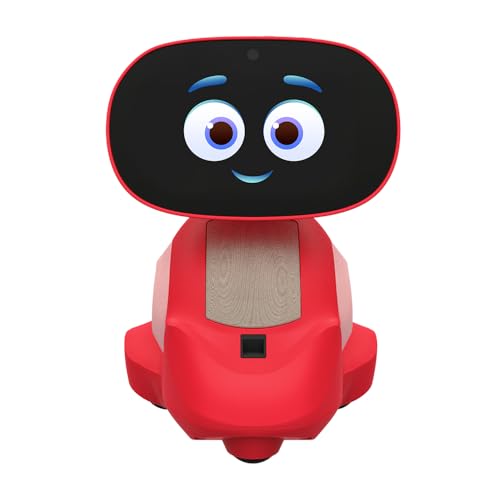
Miko 3 – Best Budget Kids Companion Robot
Miko 3 is the value pick for families who want a kid-focused companion without Moxie’s price. It is an AI robot for kids aged 5 to 10 that turns curiosity into interactive games, educational content, and responsive conversation at a fraction of the cost of premium options.
Across its feature set, Miko 3 leans into variety. Its Magical Story Maker lets kids and the robot co-create imaginative stories together, its advanced AI personalizes responses and supports learning over time, and it includes emotional-support and confidence-building activities that help kids express feelings. It also pushes active play with yoga, dance, and movement-based mindful moments, which gives it a physical, off-the-couch dimension that screen-only devices lack. The compact, durable design is built to survive young hands.
The honest limitation is depth. Miko 3 delivers basic responsive conversation rather than the continuous, memory-rich dialogue that Moxie aims for, so the interaction can feel more like a smart toy than a developing relationship. Its AI personalizes over time but does not match a higher-end system, and like most connected kid robots it depends on app and internet support to reach its full feature set.
Loona by KEYi Tech – Best Pet-Like Desktop Companion
Loona is the pick for an adult who wants a small, lively presence on a desk or in a living space without taking on a real pet. It is a pet robot designed to behave with the playfulness of a cat or dog rather than a humanoid assistant, and that animal framing is exactly the point.
Loona explores its environment autonomously, responds to its name, and displays emotional expressions through its high-definition screen face while reacting to touch and voice. It is a smart, interactive robot pet that takes voice commands and holds simple conversational exchanges, and it includes an auto-charging feature that lets you preset recharge points across different rooms so it can keep going without constant babysitting. There is plenty of playtime built in, including chase-style games, and a recent V28 update added new features and addressed earlier charging issues, which is a good sign that the company keeps supporting it.
The trade-off is that Loona is mostly a delightful novelty rather than a deep companion. Its conversation is light, its emotional display is screen-based animation rather than anything truly responsive to your state, and the fact that updates were needed to fix charging behavior is a reminder that this is an evolving product. For someone wanting personality and play it is a strong choice, but it will not replace the comfort role of PARO or the developmental focus of a kids robot.
What to look for
Before you buy, match the robot to a specific person and a specific need rather than the general idea of companionship. The factors below separate a lasting purchase from a shelf ornament.
- Who it is for: Senior or care setting, young child, or an adult wanting a playful presence. The best robot for one group is wrong for another.
- Interaction style: Touch and sensory (PARO), conversation and memory (Moxie, Miko 3), roaming utility (Astro), or pet-like movement (Loona).
- Memory and adaptation: Whether it builds on past sessions, which is what keeps engagement alive over weeks.
- Ongoing cost and demands: Subscriptions, app and internet dependence, and charging routines all affect long-term value.
- Privacy: Cameras, mapping, and autonomous roaming (especially with Astro) deserve real consideration in a home.
- Durability: For kids, the build has to survive handling and drops.
The verdict
If you want one recommendation, the PARO Therapeutic Robot is the most genuinely useful companion robot here because it serves a clear, studied need in senior and dementia care, though its narrow focus and high cost mean it is not for everyone. For a child’s emotional growth, Moxie by Embodied is the strongest pick thanks to its memory and social-emotional design, with the caveat of its subscription model. Amazon Astro suits smart-home households that want a roaming Alexa with companion touches, provided you are comfortable with the privacy trade-offs. Miko 3 is the budget choice for kids who want games and learning without the premium price, and Loona by KEYi Tech is the most fun pet-like desktop companion for adults, as long as you treat it as a charming novelty rather than a deep relationship.
Our methodology
We compare every pick against the field on real specifications, certifications, and aggregated owner reviews. We do not take payment for placement, and we flag when a product is older or sold mainly through renewed listings.
Side by side
The full reviews
PARO Therapeutic Robot - Best Senior Companion Robot
PARO is a baby harp seal-shaped therapeutic robot developed in Japan and used in clinical and care settings worldwide. It responds to touch, voice, and light with expressive movements and sounds, providing sensory interaction without the unpredictability or care demands of a live animal. PARO has been studied in dementia care and reports from clinical settings indicate reduced agitation and improved mood in residents. Its high cost limits individual purchase, but it appears in an increasing number of assisted living facilities and memory care units. For families exploring options for elderly relatives in care settings, asking whether a facility uses PARO or similar therapeutic robots is a practical step.

Moxie by Embodied - Best Companion Robot for Children
Moxie is purpose-built for children aged 5 to 10, using conversational AI to engage kids in age-appropriate social-emotional learning. It maintains memory between sessions, allowing it to build on previous conversations in ways that make the interaction feel continuous rather than repetitive. Topics include empathy, kindness, and managing difficult emotions, delivered through games, stories, and structured dialogue. Moxie's face screen displays expressive animated features that children respond to naturally. It requires a subscription beyond the initial hardware cost for full content access. For parents of children who benefit from additional social skill development or who have limited peer interaction, Moxie is the most purposefully designed option available.
In its favor
- ROBOT PETS
- ABUNDANT INTERACTION
- MORE EILIK MORE FUN- Eilik is more than a robot, when he meets another Eilik and connects
- CONSTANTLY UPGRADING AND ADAPTING
- THE PERFECT GIFT

Amazon Astro - Best Smart Home Companion Robot
Amazon Astro functions as a mobile Alexa device with a screen face and autonomous navigation capability, turning a smart speaker into something that follows you around your home and initiates interaction. Its practical use cases include home monitoring, video calling, and general Alexa functionality, with the companion aspect coming from its proactive check-ins, expressive eye animations, and ability to deliver timely reminders and alerts to specific people. For older adults living alone who already use Alexa, Astro provides the mobility and check-in capability that a stationary smart speaker cannot. It is the most utility-functional companion robot on this list rather than a purely social one.
In its favor
- AI-Powered & Fully Autonomous: Vector navigates, recognizes faces, and reacts to his surro
- Now Connected to ChatGPT: Experience a new level of conversation with more natural, intell
- Multilingual Support: Vector can now understand multiple languages, making him the perfect
- Smart Camera & Sensors: Built with an HD camera and advanced sensors for real-time mapping
- Expressive Personality: Watch Vector come to life with animated eyes, emotions, and playfu
Miko 3 - Best Budget Kids Companion Robot
Miko 3 is an affordable children's companion robot that delivers interactive games, educational content, and basic responsive conversation at a fraction of the cost of Moxie. It uses AI to personalize responses over time and can tell stories, answer questions, and play games relevant to the child's age group. The physical design is compact and durable enough for young children to handle. Miko 3 does not match the therapeutic depth of Moxie, but for families who want an engaging interactive robot for general entertainment and light educational use without a significant financial commitment, it is the most practical entry-level option in the companion robot category.
In its favor
- BIG FUN THAT TEACHES (AGES 5-10) Miko 3 is an AI robot for kids that turns curiosity into
- MAGICAL STORYMAKER ADVENTURES With Story Maker, kids and Miko co-create hilarious, imagina
- Advanced AI for Learning and Fun 🤖✨ Miko 3 supercharges your child’s potential with advanc
- EMOTIONAL SUPPORT & CONFIDENCE BUILDING Miko 3 isn’t just a gadget; helps kids express fee
- ACTIVE PLAY, MINDFUL MOMENTS Miko gets kids off the couch with yoga, dance, and movement-b

Loona by KEYi Tech - Best Pet-Like Desktop Companion
Loona is a small pet robot designed to behave with the playfulness of a cat or dog rather than a humanoid assistant. It explores its environment autonomously, responds to its name, displays emotional expressions through its screen face, and reacts to touch and voice. For adults who enjoy having a small active presence at a desk or in a living space without the responsibility of a real pet, Loona occupies a unique position. It does not provide deep conversational AI, but its behavioral responsiveness creates a sense of organic presence that purely static smart devices lack. It is the most approachable companion robot for adults who are skeptical of the category but curious about it.
In its favor
- 🌟V28 update 🚀 new features are now available! In response to Loona's charging problem, we'
- 🤖 Smart and Interactive Robot Pet🧠Loona is like no other pet you've seen. With a high-defi
- 🗣️ Voice Command Enabled AI robot 🎤Loona is not just a good listener; also a great convers
- 🚀Auto-Charging Smart Robot🌟 Use different rooms as a starting point to preset multiple rec
- 🕹️ Endless Playtime robot toys for kids 🎮Loona is always up for playtime! Loona can chase
What matters most
What to consider
Identify who the robot is for and what kind of interaction they respond to best. Tactile, physical interaction suits PARO. Verbal conversation and learning support suits Moxie. Smart home integration suits Astro. Budget and age of user are the most practical filters after use case. Consider whether a subscription is required for ongoing content and factor that into total cost. Companion robots currently excel at consistent, patient, on-demand interaction rather than replacing human relationships. Setting realistic expectations before purchase leads to higher satisfaction with these devices.
What to consider
For more tech and companion picks, see our guide to [best companion pets](/articles/best-companion-pets) and [best companion for English Bulldogs](/articles/best-companion-for-english-bulldog) for readers exploring both digital and animal companionship. See our [methodology](/methodology) for how we evaluate companion robot recommendations.
Frequently asked
Research on companion robots for older adults shows measurable reductions in self-reported loneliness in structured care settings, particularly with robots like PARO that provide tactile interaction. Results vary significantly based on personality and openness to the technology. Companion robots are not substitutes for human contact but can provide consistent, non-judgmental interaction for seniors with limited social access between visits.
Moxie by Embodied is specifically designed for children aged 5 to 10 and focuses on social-emotional learning through conversation and games. It adapts to individual children over time and supports skills like empathy, conversation, and emotional regulation. For younger children interested in interactive toy robots, options like Miko 3 offer a more playful, less therapeutic interaction style at a lower price point.
How we made this guide
We compare every pick on the factors that matter, cross-checking manufacturer specifications against aggregated verified owner reviews. We rank independently and never take payment for placement. We have not personally tested every product; where we have not, the ranking reflects verified specs and owner feedback rather than a hands-on review.
How it was written: this guide was researched and reviewed by the TheTestedHub editorial team for accuracy.
Affiliate disclosure: TheTestedHub is reader-supported. When you buy through links on our site, we may earn a commission at no extra cost to you.
You might also like

Elgato Alternatives 2026: AVerMedia & Rode Now Lead

Elgato Key Light: Expert Pick for True Color

Retro Consoles for Every Budget: A Practical Guide

Console Cooling Stands: Forced Air Stability for Long Sessions

Gaming Glasses Compared: Gunnar Intercept and Rivals

Gaming Backpacks 2026: Find Yours by Laptop & Gear Needs

Game Storage Racks Sized for Your Console Cases
