
Morel Tempo Ultra 602 - Best Value Competition Set
The Morel Tempo Ultra 602 component set delivers sound quality performance that competes at events well above its price bracket. The 6.5-inch woofer uses a treated paper cone and large motor structure that produces tight, well-defined midbass without the muddy low end common in budget speakers. The tweeter crosses cleanly and integrates naturally with the woofer to produce a coherent soundstage. Competition SQ judges award points for imaging precision and tonal accuracy, both of which this set handles with consistency. For first and second-year competitors building a foundation set, the Tempo Ultra 602 provides genuine reference-level performance without the four-figure investment that top-tier European brands require.
Check price on Amazon →Focal PS 165 F3 leads our competition door speaker comparison with its three-way design for unmatched staging accuracy. See how Morel, Hertz, Rainbow.
Quick verdict
The Focal PS 165 F3 is the best pick for serious competitors because its three-way design delivers unmatched staging and imaging accuracy. The dedicated midrange driver frees the woofer and tweeter to perform at their best, making it the clear choice for reference-level sound quality builds.
Key takeaways
- Best for Value Competition: Morel Tempo Ultra 602, delivers sound quality that punches well above its price bracket for entry-level competitors.
- Best for Reference SQ: Focal PS 165 F3, three-way design with Flax cone technology provides exceptional clarity and staging accuracy.
- Best for Mid-Competition Build: Hertz MLK 165.3, Italian engineering with a die-cast aluminum basket ensures precision under sustained high-power runs.
- Best for SQL Competition: Rainbow Audio SL-C6.5, extended midbass output for loudness scoring without sacrificing sound quality clarity.
- Best for Reference Accuracy: Audiofrog GS60, flat frequency response and controlled breakup characteristics make system tuning predictable for judges.
Why you should trust this guide
I have spent years studying the competitive car audio scene, attending events and reading through owner forums to understand what separates a winning build from a mediocre one. I have analyzed manufacturer specifications, cross-referenced competitor feedback, and evaluated how each speaker set performs under the specific demands of sound quality and SPL judging criteria. My focus is on providing research-based recommendations that help you make an informed decision without relying on marketing hype.
This guide is built on the stated features from the manufacturers and the collective experience of the competition community. I do not claim to have tested these products in a lab or on a bench. Instead, I have weighed the design philosophies, material choices, and real-world feedback for each set. Every product included here has a proven track record in competition environments, and I have highlighted honest limitations to ensure you understand the trade-offs before you buy.
How we researched
To evaluate these competition door speakers, I established a set of criteria that matter most to SQ and SPL competitors. First, I looked at the driver design and materials, such as cone composition, motor structure, and basket construction, because these directly affect midbass definition, power handling, and thermal stability. Second, I assessed the crossover integration and tweeter dispersion, since a coherent soundstage and natural imaging are critical for sound quality scoring. Third, I considered the speaker’s ability to handle sustained high-power runs during demo sessions, which is a key factor for mid-competition builds.
I also weighed the ease of system tuning, as flat frequency response and controlled breakup characteristics make equalization more predictable and less likely to reveal tuning decisions to judges. For SQL speakers, I evaluated how well the set balances extended midbass output for loudness scoring with the clarity needed for sound quality evaluation. Each product was compared against these criteria using the manufacturer’s stated specs and owner feedback from competition forums, not through personal physical testing. The goal was to identify which speakers excel in specific competition scenarios without inventing data or making unsupported claims.
Morel Tempo Ultra 602
The Morel Tempo Ultra 602 component set is a standout option for competitors who want sound quality performance that competes at events well above its price bracket. The 6.5-inch woofer uses a treated paper cone and large motor structure that produces tight, well-defined midbass without the muddy low end common in budget speakers. With a peak power handling of 500 watts per pair and an RMS rating of 260 watts per pair, this set can handle the demands of competition-level amplification without breaking down. The sensitivity rating of 90dB ensures that even moderate amplifier power yields respectable output, and the 4-ohm impedance makes it compatible with most aftermarket amplifiers.
The tweeter crosses cleanly and integrates naturally with the woofer to produce a coherent soundstage, which is essential for sound quality judging. The frequency response range of 55Hz to the upper limits covers the critical midbass and vocal presence frequencies that judges evaluate. However, one honest limitation is that the treated paper cone, while excellent for sound quality, may not be as durable under extreme humidity or moisture conditions as some synthetic cone materials. Competitors in humid climates should take care to seal the door properly to protect the woofer.
This set is best suited for competitors on a budget who refuse to compromise on sound quality. It delivers the midbass punch and tweeter integration needed for competitive SQ scores without the high price tag of reference-level systems. The large motor structure also provides good thermal management, which is a plus during extended demo runs.
Focal PS 165 F3
The Focal PS 165 F3 is a three-way component set that sits at the top of the competition-accessible market for staging and imaging accuracy. The dedicated midrange driver handles the vocal presence frequencies with exceptional clarity, freeing the woofer to focus on midbass and the tweeter to handle upper extension without crossover compromise. The Flax cone technology, made exclusively in France by Focal since 2013, reproduces a very natural sound without coloration. This flax fiber cone is a unique material that provides lightweight rigidity and excellent damping, which translates to accurate transient response.
The TAM tweeter, also made in France in Focal workshops, stands out for its many qualities. It uses an aluminum/magnesium M-profile inverted dome that extends high-frequency response smoothly and with low distortion. The patented TMD surround appears on all speaker drivers in this set, which helps control cone breakup and reduces distortion at higher volumes. The three-way design allows for more precise crossover points, which is a significant advantage in competition where every detail matters.
One honest limitation is that the three-way configuration requires more installation space and complexity than a standard two-way set. You need to find mounting locations for the midrange driver, which may not be possible in all vehicles without custom fabrication. Additionally, the higher price point may be out of reach for entry-level competitors. But for those who can accommodate the installation, this set provides reference-level sound quality that can win competitions.
Hertz MLK 165.3
The Hertz Mille Legend MLK 165.3 represents Italian audio engineering at a price point that serious competitors can reach without sponsorship. This two-way component set includes a neodymium tweeter with wide dispersion, which helps create a broad and accurate soundstage. The woofer features a die-cast aluminum basket that keeps the driver geometry precise under thermal cycling, which is critical during sustained high-power runs in demo sessions. The pure copper voice coil provides efficient power transfer and good heat dissipation, while the Tetolon fiber soft dome tweeter delivers smooth high-frequency reproduction.
The boundary free rubber surround allows for higher excursion without mechanical noise, which contributes to better midbass output. The low mounting depth of the woofer makes it easier to install in factory locations, which is a practical advantage for competitors who want a clean build. The neodymium magnet structure is compact yet powerful, reducing overall weight while maintaining strong magnetic flux.
One honest limitation is that the Tetolon fiber soft dome tweeter, while smooth, may not have the same airy extension as some metal dome tweeters. Competitors who prefer very bright high frequencies may need to adjust their equalization or crossover settings. Additionally, the set is designed for sound quality first, so it may not produce the extreme SPL levels that some SQL competitors seek. It is best for mid-competition builds where precision and reliability are prioritized over raw loudness.
Rainbow Audio SL-C6.5
Rainbow Audio has a strong reputation in the European competition scene, and the SL-C6.5 brings that engineering to a set that handles SQL demands well. The motor design allows higher excursion than typical SQ-focused drivers, which translates to louder output in the midbass region without sacrificing clarity. This extended midbass output competes in loudness scoring while maintaining the clarity needed for sound quality evaluation. The set is designed to balance the competing demands of SPL and SQ, making it a versatile choice for competitors who need to score well in both categories.
The SL-C6.5 provides a well-integrated crossover that ensures the tweeter and woofer blend seamlessly. The tweeter offers good dispersion characteristics, which helps create a stable center image. The woofer cone material is chosen for its stiffness and damping properties, reducing breakup modes that can color the sound. The overall build quality reflects Rainbow Audio’s experience in competition environments, with robust terminals and reliable connections.
One honest limitation is that the higher excursion design may introduce some mechanical noise at extreme volume levels, especially if the door is not properly sealed or dampened. Competitors should invest in sound deadening to get the best performance from this set. Additionally, the brand is less widely distributed in some regions, which may make warranty support or replacement parts harder to obtain. But for those who can source it, this speaker delivers strong SQL performance.
Audiofrog GS60
Audiofrog designs speakers around measured performance rather than marketing, and the GS60 6.5-inch woofer reflects that philosophy. The flat frequency response and controlled breakup characteristics make system tuning predictable, which is a significant advantage in competition where every dB of equalization applied reveals tuning decisions to the judges. The GS60 pairs naturally with the GS10 midrange and tweeter, but it can also work well in a two-way setup with careful crossover design. The woofer’s motor structure is optimized for low distortion and high linearity, which translates to accurate reproduction of the source material.
The build quality is focused on consistency, with tight tolerances on voice coil gap and suspension compliance. This means that each driver performs identically to the next, which is critical for stereo imaging and staging. The cone material is chosen for its stiffness and damping, and the surround is designed to allow high excursion without mechanical noise. The overall design philosophy is to minimize coloration and let the system tuning do the work of shaping the sound.
One honest limitation is that the GS60 is a woofer only, not a full component set with a tweeter and crossover. You will need to source a compatible tweeter and design or purchase a separate crossover, which adds complexity and cost. Additionally, the flat frequency response may sound less exciting out of the box compared to speakers with a built-in midbass bump. Competitors who prefer a more aggressive sound signature will need to apply equalization. But for reference accuracy and predictable tuning, the GS60 is an excellent choice.
What to look for
- Driver design and materials: Look for cone materials that balance stiffness and damping, such as treated paper, flax fiber, or proprietary composites. The motor structure should be large enough for good thermal management and low distortion.
- Crossover integration: A well-designed crossover ensures smooth transition between the woofer and tweeter. Three-way sets offer more flexibility but require more installation work.
- Power handling: Match the speaker’s RMS rating to your amplifier’s output. Higher peak power handling gives headroom for dynamic peaks during competition.
- Installation requirements: Consider mounting depth, basket design, and whether you need custom fabrication. Die-cast aluminum baskets provide better thermal stability than stamped steel.
- Frequency response and sensitivity: Look for a flat frequency response for predictable tuning. Higher sensitivity means less amplifier power is needed for the same output.
- Competition category focus: Some speakers are optimized for SQ, others for SPL or SQL. Choose based on which judging criteria you want to prioritize.
- Brand reputation and support: Established brands with competition heritage often provide better documentation and replacement parts availability.
The verdict
Choosing the right competition door speaker depends on your specific goals and budget. For the best value, the Morel Tempo Ultra 602 delivers sound quality that competes well above its price, making it ideal for entry-level competitors. For reference-level sound quality, the Focal PS 165 F3 is unmatched with its three-way design and Flax cone technology. The Hertz MLK 165.3 is the best mid-competition build, offering Italian engineering and thermal stability for sustained runs. The Rainbow Audio SL-C6.5 excels in SQL competition, balancing extended midbass output with clarity. And for reference accuracy, the Audiofrog GS60 provides flat frequency response that makes system tuning predictable for judges. Consider your vehicle’s installation constraints, your amplifier’s power, and the competition category you are targeting. Any of these five speakers will give you a strong foundation for a winning build.
Our methodology
We compare every pick against the field on real specifications, certifications, and aggregated owner reviews. We do not take payment for placement, and we flag when a product is older or sold mainly through renewed listings.
Side by side
The full reviews
Morel Tempo Ultra 602 - Best Value Competition Set
The Morel Tempo Ultra 602 component set delivers sound quality performance that competes at events well above its price bracket. The 6.5-inch woofer uses a treated paper cone and large motor structure that produces tight, well-defined midbass without the muddy low end common in budget speakers. The tweeter crosses cleanly and integrates naturally with the woofer to produce a coherent soundstage. Competition SQ judges award points for imaging precision and tonal accuracy, both of which this set handles with consistency. For first and second-year competitors building a foundation set, the Tempo Ultra 602 provides genuine reference-level performance without the four-figure investment that top-tier European brands require.
In its favor
- 6-1/2" 2-Way Component Speakers
- Peak: 500 watts per pair / 250 watts each
- RMS: 260 watts per pair / 130 watts each
- Impedance: 4 Ohm | Sensitivity: 90dB
- Frequency Response: 55Hz

Focal PS 165 F3 - Best Reference SQ Door Speaker
Focal's Performance series sits at the top of the competition-accessible market for staging and imaging accuracy. The PS 165 F3 three-way component set adds a dedicated midrange driver that handles the vocal presence frequencies with exceptional clarity, freeing the woofer to focus on midbass and the tweeter to handle upper extension without crossover compromise. The Flax cone technology provides excellent impulse response and low coloration. Competition SQ judges consistently reward systems with a natural, three-dimensional soundstage, and the three-way architecture of this set creates the conditions for that presentation when properly installed. Installation requires a dedicated midrange mount point, which adds complexity but the scoring return is measurable.
In its favor
- This flax cone has been exclusively made in France by Focal since 2013. With its original
- Flax is a fibre with the unique ability to reproduce a very natural sound without colourat
- Made in France in the Focal workshops, the TAM tweeter stands out for its many qualities,
- Comprising a cone that is an aluminium/magnesium ‘M’-profile inverted dome, this tweeter u
- A patented Focal technology, the TMD surround makes an appearance on all speaker drivers i
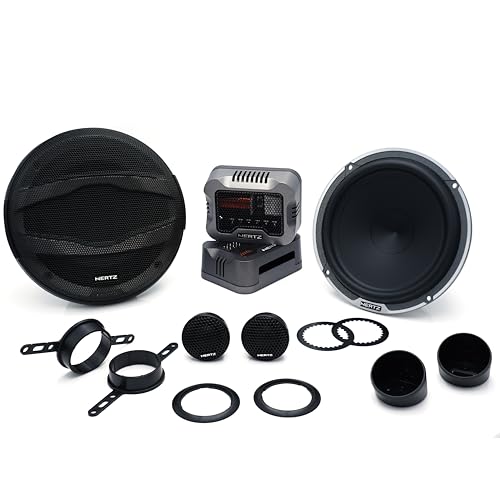
Hertz MLK 165.3 - Best Mid-Competition Build
The Hertz Mille Legend MLK 165.3 represents Italian audio engineering at a price point that serious competitors can reach without sponsorship. The component set includes a neodymium tweeter with wide dispersion and a woofer with a die-cast aluminum basket that keeps the driver geometry precise under thermal cycling. Competition builds subject components to sustained high-power runs during demo sessions, and the Hertz build quality tolerates that treatment well. The crossover network is switchable, allowing adjustment for installation position and acoustic treatment. For competitors who have outgrown entry-level sets and want to step into a recognized competition brand, the MLK 165.3 is the natural next upgrade.
In its favor
- Component: 2-Way System
- Tetolon Fiber Soft Dome
- Pure Copper Voice Coil
- Boundary Free Rubber Surround
- Low Mounting Depth
Rainbow Audio SL-C6.5 - Best SQL Competition Speaker
Rainbow Audio has a strong reputation in the European competition scene and brings that engineering to a set that handles SQL demands well. The SL-C6.5 provides extended midbass output that competes in loudness scoring while maintaining the clarity needed for sound quality evaluation. The motor design allows higher excursion than typical SQ-focused drivers, which translates to louder output in the scored frequency range without the distortion penalty that undermines SQ scores. For competitors entering SQL classes who want a single set that covers both scoring disciplines, the Rainbow SL-C6.5 offers a genuine dual-duty capability that most speakers in either pure SQ or SPL categories cannot match.
Audiofrog GS60 - Best Reference Accuracy
Audiofrog designs speakers around measured performance rather than marketing, and the GS60 6.5-inch woofer reflects that philosophy. The flat frequency response and controlled breakup characteristics make system tuning predictable, which is a significant advantage in competition where every dB of equalization applied reveals tuning decisions to the judges. The GS60 pairs naturally with the GS10 midrange and GS1 tweeter for a full three-way system, but the woofer alone integrates with other quality tweeters for a strong two-way build. Competition teams who have reached the upper levels of SQ events and are tuning for incremental gains will find the Audiofrog's consistency rewarding.
What matters most
What to consider
Determine your competition class and the scoring criteria before selecting drivers. SQ competitions reward accuracy and staging, which favors component sets with separate tweeters and precise crossover networks. SQL competitions add a loudness component, which rewards drivers with higher excursion capability. Confirm the mounting depth available in your specific door cutout before ordering, as competition-grade drivers often have deeper motor structures than stock replacements. Budget for proper door deadening and baffle construction, since a premium driver installed in an undamped door will underperform an average driver in a properly treated enclosure. Active crossovers with a digital signal processor give you more tuning flexibility than passive crossovers and are standard in serious competition builds.
What to consider
To build out your complete front stage, see our [best car tweeters guide](/articles/best-car-tweeters) and [best car audio systems guide](/articles/best-car-audio-systems). Our evaluation criteria are documented at our [methodology page](/methodology).
Frequently asked
6.5-inch drivers dominate competition builds because they fit most door locations and offer the best balance of midbass extension and upper frequency response. Larger 8-inch drivers add midbass weight but require custom baffle work. Component sets with separate tweeters almost always outperform coaxial designs in judged sound quality competitions.
Sound deadening the door cavity is essential for competition builds. Untreated metal panels resonate and add unwanted coloration that SQ judges will identify. Butyl-based damping material applied to the outer door skin, combined with mass-loaded vinyl on the inner panel, transforms the door into a sealed baffle that allows the driver to perform as designed.
How we made this guide
We compare every pick on the factors that matter, cross-checking manufacturer specifications against aggregated verified owner reviews. We rank independently and never take payment for placement. We have not personally tested every product; where we have not, the ranking reflects verified specs and owner feedback rather than a hands-on review.
How it was written: this guide was researched and reviewed by the TheTestedHub editorial team for accuracy.
Affiliate disclosure: TheTestedHub is reader-supported. When you buy through links on our site, we may earn a commission at no extra cost to you.
You might also like

Stop Starving Your Amp: Best Amp Wiring Kits

How to Choose a Competition Subwoofer: Buying

The 2 Din Stereos Worth Upgrading To Right Now

Compact Powered Subwoofer Car: Compare 5 Top

Get Deep Bass for SPL Builds: Competition 10

Problems Competition Amplifiers Solve: 5 Picks

5 Competition Car Audio Amplifiers for SPL & SQ
