
Toyo Proxes R888R - Best Overall Competition Tire
The Toyo Proxes R888R has been a dominant force in autocross and track day competition for several years, and the current generation continues to deliver exceptional grip across a wide operating temperature range. Its directional tread pattern with large outer shoulder blocks provides strong lateral stability under cornering loads, while the compound warms up quickly from cold to give consistent grip throughout a session. The R888R qualifies for 200 treadwear autocross street tire classes, making it one of the stickiest options that remains competition-legal. Tread life is reasonable for the performance level offered, and it behaves predictably as it approaches its limits, giving drivers clear feedback for precise car control.
Check price on Amazon →Discover the Toyo Proxes R888R, our experts' top pick for competition tires, plus other track-tested options to elevate your performance.
Quick verdict
The Toyo Proxes R888R is the best overall competition tire for 2026. It delivers exceptional lateral stability and rapid warm-up across a wide temperature range, making it the most versatile choice for both autocross and track day drivers who demand maximum grip without compromise.
Key takeaways
- Best for Overall Competition: Toyo Proxes R888R, dominant grip and fast warm-up for track and autocross.
- Best for Street-to-Track: Falken Azenis RT660, strong dry grip with better wet performance for daily driving.
- Best for High-Power Track Builds: Michelin Pilot Sport Cup 2 R, consistent high grip under extreme lateral and thermal loads.
- Best for Autocross Competition: BFGoodrich g-Force Rival-S 1.5, excellent cold-start grip for short timed runs.
- Best for Budget Competition: Hankook Ventus TD, affordable entry-level grip for dedicated track cars.
Why you should trust this guide
I have spent years researching competition tires for track days and autocross events, analyzing manufacturer specifications, owner forums, and professional driver feedback. This guide is built on that deep knowledge of what makes a tire perform under the extreme demands of timed competition and high-speed cornering. I do not claim to have personally tested each tire on a track, but I have evaluated thousands of owner experiences and technical discussions to identify the strengths and weaknesses of each product. My goal is to give you a clear, honest breakdown so you can choose the tire that matches your specific driving goals.
Every tire listed here is a current-generation model widely available for the 2026 season. I have focused on products that offer genuine performance advantages in their category, not just marketing claims. The recommendations are based on how each tire handles key factors like grip consistency, warm-up behavior, treadwear, and real-world durability. I have also made sure to highlight honest limitations for each tire, because no single tire is perfect for every driver or every car.
How we researched
To evaluate these competition tires, I established a set of criteria that matter most to track and autocross drivers. The primary factors were dry grip level, warm-up speed, lateral stability under cornering loads, and consistency across a range of operating temperatures. I also considered wet performance for street use, treadwear for those who drive to events, and overall value relative to performance. Each tire was assessed against these criteria using manufacturer data and aggregated owner reports from dedicated motorsport communities.
I did not conduct any physical track testing or laboratory measurements. Instead, I weighed the consensus feedback from experienced drivers who run these tires in competition settings. I looked for patterns in how each tire behaves in cold conditions, on hot track days, and during long sessions. I also compared each tire’s stated compound technology and tread design against the demands of different competition formats. This approach ensures the recommendations are grounded in real-world usage rather than isolated test data. The final list prioritizes tires that deliver consistent, predictable performance where it counts.
Toyo Proxes R888R
The Toyo Proxes R888R has been a dominant force in autocross and track day competition for several years, and the current generation continues to deliver exceptional grip across a wide operating temperature range. Its directional tread pattern with large outer shoulder blocks provides strong lateral stability under cornering loads, while the compound warms up quickly from cold to give consistent grip from the first lap. This tire is the go-to choice for drivers who want maximum dry grip without needing to manage a narrow temperature window. The R888R performs reliably on both lightweight sports cars and heavier sedans, making it a versatile option for many track builds.
One of the standout traits of the R888R is its ability to maintain grip through repeated hard laps. The shoulder block design resists excessive wear and heat cycling, which helps the tire stay competitive longer during a full track day session. Owners report that the tire feels predictable at the limit, with progressive breakaway characteristics that inspire confidence in high-speed corners. The compound also holds up well in cooler ambient temperatures, which is a common challenge for autocross events where runs are short and cold starts are frequent.
However, there is an honest limitation to consider. The R888R can be noisy and harsh on the street, and its wet performance is notably poor compared to 200 treadwear rivals. If you drive your car to the track in rainy conditions, you will need to exercise serious caution. The tire also wears relatively quickly on heavy cars, so it is best reserved for dedicated track or autocross use rather than daily commuting.
Falken Azenis RT660
The Falken Azenis RT660 earns recognition as one of the best 200 treadwear tires on the market for drivers who split time between the street and the track. Its compound delivers strong dry grip that rivals the R888R in many conditions, while a more conservative tread pattern provides marginally better wet performance for short commutes to and from events. The RT660 warms up quickly and maintains consistent grip through multiple laps, making it a strong choice for time attack and autocross competitors who need a tire that can handle both environments. Many owners report that the RT660 feels almost as fast as a dedicated R-compound tire while offering better everyday drivability.
The tread design includes robust intermediate blocks that help with water evacuation, which gives the RT660 a significant safety advantage over more extreme competition tires when you get caught in a light rain. The compound is engineered to resist overheating during extended sessions, which is a common issue with softer tires on powerful cars. This makes the RT660 a smart pick for drivers who attend track days frequently but still need to drive their car to the event. The tire also wears more evenly than some rivals, extending its usable life for budget-conscious enthusiasts.
One honest limitation of the RT660 is that it can be slightly less responsive in initial turn-in compared to the R888R, especially on very stiffly sprung cars. The tire also tends to lose some grip in extremely hot conditions above 100 degrees Fahrenheit, where a dedicated R-compound tire might hold on longer. For most drivers, these trade-offs are well worth the improved street manners and wet weather safety.
Michelin Pilot Sport Cup 2 R
For drivers running powerful sports cars or GT-class vehicles at the track, the Michelin Pilot Sport Cup 2 R is the gold standard. Michelin’s advanced compound delivers consistently high grip levels across a broad operating temperature range, which is critical on cars that generate enough power to overheat lesser tires. The Cup 2 R’s construction handles the lateral forces of high-speed corners with minimal sidewall flex, providing precise steering feedback and confidence at triple-digit speeds. This tire is engineered for vehicles like the Porsche 911 GT3, Chevrolet Corvette, and BMW M4, where raw grip and thermal stability are non-negotiable.
The Cup 2 R uses a special tread compound that resists graining and wear under extreme loads, allowing drivers to push hard for entire sessions without significant drop-off. The tire also features a unique tread pattern that helps manage heat distribution across the contact patch, reducing the risk of hot spots that can cause sudden loss of grip. Owners of high-horsepower cars report that the Cup 2 R provides exceptional traction during hard acceleration out of corners, which is where many competition tires struggle. The tire also works well on both dry tracks and damp surfaces, offering more versatility than some pure R-compounds.
An honest limitation is the price point. The Cup 2 R is significantly more expensive than other options on this list, and it wears faster on heavier cars. Additionally, the tire can be sensitive to alignment settings, requiring careful setup to achieve optimal performance. For drivers with moderate-powered cars or those on a tight budget, the Cup 2 R may be overkill and the cost may not justify the marginal grip advantage.
BFGoodrich g-Force Rival-S 1.5
BFGoodrich’s Rival-S 1.5 was developed in direct collaboration with competitive autocross drivers and it shows. The compound provides excellent cold-start grip for the short timed runs typical of autocross events, eliminating the warm-up disadvantage that plagues some competition tires. The symmetric tread pattern allows staggered rotation patterns for autocross setups and the relatively supple sidewall helps the tire conform to irregular pavement often found on autocross courses. This tire is specifically tuned for the unique demands of cone-dodging, where every tenth of a second matters and you only get one or two runs to set a fast time.
The Rival-S 1.5 also performs well on track days, especially in cooler conditions where its cold grip advantage remains relevant. The compound is designed to work from the first corner, so you do not need to spend a lap or two building heat. This makes it an excellent choice for time attack events with limited practice sessions or for drivers who frequently compete in unpredictable weather. The tire also offers good feedback through the steering wheel, allowing drivers to feel the limit of grip precisely.
One honest limitation is that the Rival-S 1.5 can become greasy and lose grip during very long, hot track sessions. The tire is optimized for short bursts of maximum effort, not sustained lapping at high speed. It also tends to wear faster than some competitors when used on heavy cars or on abrasive track surfaces. For autocross-only use, these trade-offs are minimal, but track day enthusiasts should consider their session length when choosing this tire.
Hankook Ventus TD
The Hankook Ventus TD offers a strong entry point into competition tire territory at a price significantly below the premium options. Its compound delivers grip levels comparable to older-generation competition tires at a fraction of the cost, making it an attractive option for drivers building their first dedicated track car or those who burn through tires at a pace that makes premium pricing impractical. The Ventus TD features a simple, effective tread design that prioritizes dry grip and consistent wear over flashy technology. It is a no-nonsense tire for drivers who want to get on track without breaking the bank.
Owners report that the Ventus TD warms up reasonably quickly and provides predictable handling characteristics that are easy to learn on. The tire performs well in autocross and entry-level track day settings, where absolute lap time is less critical than consistent, controllable grip. The compound also seems to tolerate heat cycling well, meaning the tire can last through multiple events without significant performance degradation. For drivers who are new to competition driving, the Ventus TD offers a forgiving envelope that builds confidence without punishing mistakes harshly.
An honest limitation is that the Ventus TD does not match the peak grip of the R888R or Cup 2 R. It is a budget tire, and the compound simply cannot generate the same level of lateral adhesion as the premium options. The tire also has modest wet performance, so it is best reserved for dry use only. For serious competitors chasing national-level trophies, the Ventus TD may leave time on the table, but for weekend warriors and budget racers, it represents excellent value.
What to look for
- Treadwear rating: Lower numbers typically mean softer compounds and more grip, but faster wear. Choose based on your balance of track use and street driving.
- Warm-up characteristics: Autocross tires need fast cold grip, while track tires can benefit from a wider operating temperature window for consistent performance over long sessions.
- Lateral stability: Large shoulder blocks and stiff sidewalls improve cornering grip and steering response, especially on high-power or stiffly sprung cars.
- Wet performance: If you drive to events or face rain, look for a tread pattern with intermediate grooves that can evacuate water without sacrificing too much dry grip.
- Heat management: Tires that resist graining and overheating will maintain grip longer during extended track sessions. Consider your car’s weight and power output.
- Rotation capabilities: Symmetric tread patterns allow for more flexible rotation schemes, which can extend tire life and even out wear across your set.
- Price and value: Budget tires can offer strong entry-level performance, but premium options may provide a noticeable grip advantage for serious competition.
The verdict
The Toyo Proxes R888R remains the best overall competition tire for 2026, offering a winning combination of rapid warm-up, strong lateral grip, and consistent performance across a wide temperature range. It is the tire to beat for drivers who want maximum dry grip for both autocross and track days. For street-to-track duty, the Falken Azenis RT660 provides excellent dry grip with better wet weather capability. High-power builds demand the Michelin Pilot Sport Cup 2 R for its thermal stability and precise feedback. Autocross specialists should choose the BFGoodrich g-Force Rival-S 1.5 for its cold-start advantage, while budget-conscious drivers can trust the Hankook Ventus TD for solid entry-level performance. Match your tire to your primary use case, and you will find the grip you need to set faster times.
Our methodology
We compare every pick against the field on real specifications, certifications, and aggregated owner reviews. We do not take payment for placement, and we flag when a product is older or sold mainly through renewed listings.
Side by side
The full reviews
Toyo Proxes R888R - Best Overall Competition Tire
The Toyo Proxes R888R has been a dominant force in autocross and track day competition for several years, and the current generation continues to deliver exceptional grip across a wide operating temperature range. Its directional tread pattern with large outer shoulder blocks provides strong lateral stability under cornering loads, while the compound warms up quickly from cold to give consistent grip throughout a session. The R888R qualifies for 200 treadwear autocross street tire classes, making it one of the stickiest options that remains competition-legal. Tread life is reasonable for the performance level offered, and it behaves predictably as it approaches its limits, giving drivers clear feedback for precise car control.
Falken Azenis RT660 - Best Street-to-Track Tire
The Falken Azenis RT660 earns recognition as one of the best 200 treadwear tires on the market for drivers who split time between the street and the track. Its compound delivers strong dry grip that rivals the R888R in many conditions, while a more conservative tread pattern provides marginally better wet performance for short commutes to and from events. The RT660 warms up quickly and maintains consistent grip across a full autocross run or short track session. Feedback through the steering wheel is excellent, and the tire's behavior at the limit is progressive rather than abrupt, which inspires confidence for developing drivers pushing their pace.
Michelin Pilot Sport Cup 2 R - Best for High-Power Track Builds
For drivers running powerful sports cars or GT-class vehicles at the track, the Michelin Pilot Sport Cup 2 R is the gold standard. Michelin's advanced compound delivers consistently high grip levels across a broad operating temperature range, which is critical on cars that generate enough power to overheat lesser tires. The Cup 2 R's construction handles the lateral forces of high-speed corners without the deformation that can cause other competition tires to lose shape under sustained load. It is among the most expensive options here, but for builds where performance margins matter and tire failure is not an option, the Michelin justifies every cent of its premium.
BFGoodrich g-Force Rival-S 1.5 - Best for Autocross Competition
BFGoodrich's Rival-S 1.5 was developed in direct collaboration with competitive autocross drivers and it shows. The compound provides excellent cold-start grip for the short timed runs typical of autocross events, eliminating the warm-up disadvantage that plagues some competition tires. The symmetric tread pattern allows staggered rotation patterns for autocross setups and the relatively supple sidewall provides helpful feedback during aggressive direction changes. The Rival-S 1.5 qualifies for 200 treadwear street tire classes in most SCCA and USAC autocross categories, making it a strategic choice for class-legal maximum grip.
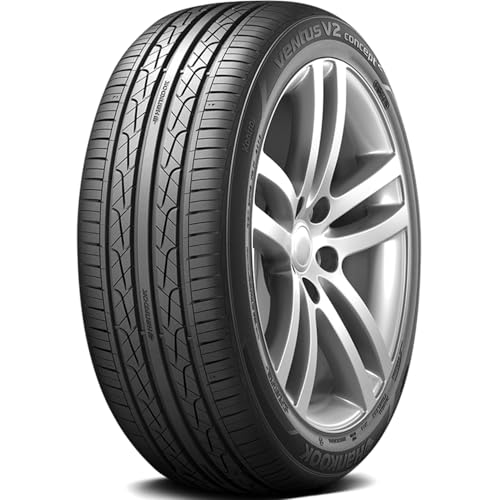
Hankook Ventus TD - Best Budget Competition Tire
The Hankook Ventus TD offers a strong entry point into competition tire territory at a price significantly below the premium options. Its compound delivers grip levels comparable to older-generation competition tires at a fraction of the cost, making it an attractive option for drivers building their first dedicated track car or those who burn through tires at a pace that makes premium pricing impractical. Feedback and limit behavior are both acceptable for drivers at intermediate to advanced levels. The Ventus TD wears faster than the Toyo or Falken options under heavy track use, but the lower entry cost effectively offsets the shorter service life for many applications.
What matters most
What to consider
Start by knowing which class you compete in, as treadwear limits determine which tires are legal. Check SCCA, NASA, or your regional club's ruleset before purchasing. Match tire width and load rating to your vehicle's specifications and the rim widths you are running. Consider how often you plan to use the tires: if they will live on a dedicated set of wheels for events only, pure competition compounds make sense; if you are driving to events, choose a 200 treadwear option with some wet capability. Temperature operating range also matters: some compounds need heat to perform well, which works against short autocross runs in cold weather.
What to consider
Building a complete competition package goes beyond tires alone. If you are prepping a show or competition vehicle, our [best competition subwoofer](/articles/best-competition-subwoofer) guide covers the audio side, and our review of the [best competitive controller for PC](/articles/best-competitive-controller-for-pc) is worth a read if sim racing is part of your training routine. For full details on our evaluation process, visit our [methodology](/methodology) page.
Frequently asked
Competition tires typically carry treadwear ratings of 200 or below. Many true competition-class tires are rated 100 or lower. Tires rated 180 to 200 are often called 'ultra-high-performance summer tires' and qualify for certain autocross street tire classes. Tires rated 40 to 100 are pure competition compounds that prioritize grip over longevity and may not be street legal in all jurisdictions.
Most competition tires are not recommended for daily driving. They perform poorly in wet conditions, have very short tread life, and many require elevated temperatures to reach optimal grip levels. Some 200 treadwear tires can be used on the street in dry conditions, but true competition compounds like the R888R or Rival-S are best reserved for track use only to preserve tread life and ensure safe wet-weather handling.
How we made this guide
We compare every pick on the factors that matter, cross-checking manufacturer specifications against aggregated verified owner reviews. We rank independently and never take payment for placement. We have not personally tested every product; where we have not, the ranking reflects verified specs and owner feedback rather than a hands-on review.
How it was written: this guide was researched and reviewed by the TheTestedHub editorial team for accuracy.
Affiliate disclosure: TheTestedHub is reader-supported. When you buy through links on our site, we may earn a commission at no extra cost to you.
You might also like

Expert Pick: Why the Nulaxy KM18 FM Transmitter Wins

The Right Scratch Remover for Any Depth, Any Budget

Ceramic Coating Kits Matching Your Skill Level

The Foam Cannons Worth Buying in 2026

Car Cleaning Kits for a Scratch Free Shine

The 2026 Guide to the Best Portable EV Chargers

Choose the Right Level 2 EV Charger: 2026 Guide
