
Cantex Schedule 40 PVC -- Best for Standard Residential Underground Runs
Schedule 40 PVC is the most common choice for residential underground wiring for good reason: it is NEC-accepted, moisture-proof, non-corrosive, easy to cut, and straightforward to install with standard PVC cement and fittings. Cantex produces one of the most widely available and consistently rated Schedule 40 lines. At 18 inches of burial depth, it provides compliant protection for standard branch circuit conductors in residential driveways, yards, and outbuilding runs. The grey color is standard for electrical PVC conduit, distinguishing it from plumbing PVC during future digging or inspection. Ten-foot sections connect with solvent-welded fittings for a continuous sealed pathway.
Check price on Amazon →Choose the right conduit for buried electrical runs. Compare PVC, rigid metal, and HDPE options based on NEC code, burial depth, and soil conditions.
Quick verdict
The best pick for most residential underground wiring is the Cantex Schedule 40 PVC. It balances NEC compliance, moisture resistance, ease of installation with standard PVC cement, and affordability for standard branch circuits at an 18-inch burial depth.
Key takeaways
- Best for Standard Residential Underground Runs: Cantex Schedule 40 PVC, NEC-accepted and easy to install with standard fittings.
- Best for Under-Slab and Traffic Areas: Cantex Schedule 80 PVC, thicker walls for greater compressive strength under concrete or driveways.
- Best for Maximum Physical Protection: Atkore Rigid Metal Conduit (RMC), galvanized steel for highest impact and compressive load resistance.
- Best for Utility and Long Runs: Carlon DB-60 Direct Burial Duct, gasketed bell-end design speeds installation without solvent welding.
- Best for Flexibility and Long Runs: Advanced Drainage HDPE Conduit, flexible coils reduce joints and suit directional boring.
Why you should trust this guide
I have spent years researching electrical conduit materials for underground installations, reviewing the National Electrical Code (NEC) requirements, manufacturer specifications, and installer feedback from professional electricians and DIY homeowners. My approach focuses on matching conduit type to the specific demands of burial depth, soil conditions, traffic loads, and installation method. I do not rely on marketing claims alone; I cross-reference published NEC tables, manufacturer listing documents, and real-world owner reports to identify which product truly fits each use case.
This guide evaluates five distinct conduit options that cover the full spectrum of underground wiring needs, from simple residential branch circuits to heavy-duty utility feeders. Each product was selected because it represents a widely available, code-compliant solution from a reputable manufacturer. I prioritize clarity on trade-offs: cost versus protection, ease of installation versus durability. You will find honest limitations for every product, because no single conduit is perfect for every job. My goal is to give you the information you need to choose the right conduit for your specific project without overspending or under-protecting your wiring.
How we researched
To evaluate these conduits, I established a set of criteria that matter most for underground electrical runs: NEC compliance, physical protection (compressive strength and impact resistance), ease of installation (including joint assembly and bending), corrosion resistance, and suitability for different burial depths and soil conditions. I reviewed each product’s manufacturer specifications, code listings, and installation instructions. I also analyzed owner feedback from hundreds of online reviews to identify common praise and recurring complaints, focusing on long-term reliability and installation headaches rather than first impressions.
For each product, I weighed the trade-offs between material cost, labor time, and protection level. For example, rigid metal conduit offers superior physical protection but requires threading and grounding, while PVC is lighter and easier to cut but cannot withstand heavy traffic without thicker walls. I did not perform physical stress tests or measure exact compressive loads; instead, I relied on published NEC burial depth allowances and manufacturer-stated wall thickness ratings. The final recommendations prioritize code compliance, practical installation experience, and value for the intended application. No product was rated as universally best; each excels in a specific scenario.
Cantex Schedule 40 PVC — Best for Standard Residential Underground Runs
Cantex Schedule 40 PVC conduit is the workhorse of residential underground wiring. It is accepted by the NEC for direct burial at 18 inches of cover for standard branch circuits, provided it is protected from physical damage. The material is moisture-proof and non-corrosive, making it ideal for wet soil conditions where metal conduit would rust. Installation is straightforward: you cut it with a standard PVC saw or ratcheting cutter, apply PVC primer and cement, and join fittings. The grey color is consistent across the Cantex line, so you can mix Schedule 40 and Schedule 80 fittings without visual mismatch.
The real strength of Schedule 40 PVC is its balance of cost and performance. It is significantly cheaper than rigid metal conduit or Schedule 80 PVC, yet it provides reliable protection for wires as long as it is buried at the correct depth. The smooth interior bore reduces friction when pulling wires, and the conduit is lightweight enough for one person to handle on long runs. Cantex is one of the most widely stocked brands at home improvement stores, so finding compatible couplings, elbows, and boxes is rarely a problem.
One honest limitation is that Schedule 40 PVC has lower impact resistance than Schedule 80 or metal conduit. If you bury it under a driveway or a concrete slab without additional protection, it can crack under heavy vehicle loads. It is also not suitable for shallow burial depths; you must follow NEC tables for the required cover. Additionally, the solvent-welded joints require careful application of cement and adequate cure time before backfilling, which can slow down the installation in cold or wet weather.
Cantex Schedule 80 PVC — Best for Under-Slab and Traffic Areas
Cantex Schedule 80 PVC conduit features thicker walls than Schedule 40, providing greater compressive strength for installations where mechanical damage is a concern. It is the preferred choice for running conduit under concrete slabs, driveways, parking lots, or any area subject to vehicle traffic. The NEC permits reduced burial depths for Schedule 80 in some applications, which can save excavation labor and material costs. The grey color matches Schedule 40, and fittings are available in both schedules, so you can transition between them as needed.
The thicker walls make Schedule 80 significantly more resistant to crushing from soil settlement, heavy equipment, or accidental impacts during backfilling. It is still non-corrosive and moisture-proof like standard PVC, so it performs well in wet or acidic soil. Cantex Schedule 80 is available in the same sizes as Schedule 40, and installation uses the same PVC primer and cement process. The added wall thickness does require slightly more effort to cut, but a standard PVC saw or power miter saw handles it easily.
A real limitation is that Schedule 80 PVC is noticeably more expensive than Schedule 40, often costing two to three times more per foot. It is also heavier and stiffer, making it harder to bend around obstacles without using factory elbows. The thicker walls reduce the internal diameter slightly, which can increase pulling friction for long wire runs. For simple residential branch circuits in a yard with no traffic, Schedule 80 is overkill; stick with Schedule 40 to save money and labor.
Atkore Rigid Metal Conduit (RMC) — Best for Maximum Physical Protection
Atkore Rigid Metal Conduit (RMC) provides the highest level of physical protection available for underground electrical runs. Made from galvanized steel, it can withstand compressive loads and physical impacts that would crush or crack any PVC conduit. The NEC allows RMC to be buried at shallower depths than PVC, which can reduce trenching costs in rocky or hard-dig soil. Atkore is one of the primary manufacturers of listed RMC in the United States, and their product meets UL 6 and ANSI C80.1 standards for rigid steel conduit.
The galvanized coating resists corrosion in most soil types, though in highly acidic or alkaline soils, additional protective wrapping may be needed. RMC is threaded at both ends, and joints are made with threaded couplings, which creates a mechanically strong and watertight connection. This threaded system eliminates the need for solvent cement or glue, and it allows for easy disassembly if modifications are needed later. The conduit also provides a continuous metallic path for equipment grounding, which can simplify grounding requirements in some installations.
One honest limitation is the cost: Atkore RMC is significantly more expensive than any PVC option, often four to five times the price of Schedule 40 per foot. It is also heavy and requires special tools for cutting and threading, which adds labor time and complexity. The galvanized coating can be damaged during installation, leading to rust spots if not properly repaired. For most residential projects, the extra protection is unnecessary, but for commercial or industrial runs where physical damage is a real risk, RMC is the only reliable choice.
Carlon DB-60 Direct Burial Duct — Best for Utility and Long Runs
Carlon DB-60 is a direct burial duct specifically designed for underground utility runs where speed and reliability matter. Unlike standard PVC conduit, DB-60 uses a gasketed bell-end design that eliminates the need for solvent-welded joints. Each piece has a factory-installed gasket in the bell end, and you simply push the spigot end into the bell to create a watertight seal. This dramatically speeds up installation on long runs, such as feeding power to a detached garage, barn, or outdoor lighting system.
The duct is made from high-impact PVC that resists crushing and soil chemicals. It is commonly used for telecommunications, power utility feeders, and long outdoor runs where gluing every joint would be impractical. The smooth interior bore eases wire pulling, reducing the risk of insulation damage during installation. Carlon DB-60 is available in standard sizes and is compatible with standard PVC fittings if you need to transition to Schedule 40 or 80 at the ends. It is also NEC-listed for direct burial at the same depths as Schedule 40 PVC.
One limitation is that DB-60 is less widely stocked than standard Schedule 40 PVC at local home improvement stores, so you may need to order it online or source it from an electrical supply house. The gasketed joints, while fast, require careful alignment to avoid damaging the gasket during assembly. If a joint is not fully seated, it can leak moisture over time. Additionally, the duct is not as flexible as HDPE conduit, so you still need factory elbows for direction changes, which adds to the overall cost for complex routes.
Advanced Drainage HDPE Conduit — Best for Flexibility and Long Runs
Advanced Drainage Systems HDPE conduit is a high-density polyethylene option that excels in long underground runs and directional boring applications. It is supplied in long coiled lengths, often up to 500 feet or more, which dramatically reduces the number of joints required. Fewer joints mean fewer potential leak points and faster installation. The material is flexible enough to navigate gentle curves without needing factory elbows or field bends, making it ideal for following property lines or avoiding obstacles.
The conduit is highly resistant to soil chemicals, including acidic or alkaline conditions that can corrode metal or degrade PVC over time. It has a very long service life, often rated for 50 years or more in underground environments. The smooth interior bore reduces pulling friction, and the flexibility allows it to be installed using trenchless methods like directional boring, which minimizes landscape disruption. Advanced Drainage Systems produces a widely distributed line that is compatible with standard HDPE fittings and heat-fusion tools.
One honest limitation is that HDPE conduit requires specialized tools for joining, typically heat fusion equipment or compression fittings, which adds upfront cost and learning curve. It is not as rigid as PVC or metal conduit, so it offers less physical protection against crushing from heavy loads. For shallow burial under driveways, you may need to encase it in concrete for protection. The coiled lengths can also be difficult to straighten and handle on site, especially in cold weather when the material becomes stiffer. For straight, short runs under a yard, standard PVC is simpler and cheaper.
What to look for
- NEC compliance and burial depth: Verify that the conduit type is listed for direct burial and meets the required cover depth for your application. Schedule 40 PVC needs 18 inches for residential branch circuits, while RMC can be shallower.
- Physical protection level: Consider the risk of mechanical damage. Schedule 80 or RMC is needed under driveways or slabs, while Schedule 40 suffices for open yards with no traffic.
- Corrosion and chemical resistance: PVC and HDPE are non-corrosive and ideal for wet or acidic soil. Galvanized RMC resists corrosion but may need extra protection in harsh conditions.
- Installation method and labor: Solvent-welded PVC joints require primer and cement with cure time. Gasketed duct (DB-60) speeds up assembly. HDPE needs heat fusion. RMC requires threading. Choose based on your skill and tools.
- Joint count and run length: For long runs, coiled HDPE or gasketed DB-60 reduces joints and leak risk. For short runs, standard PVC with glued joints is fine.
- Flexibility and bending: HDPE bends without fittings for gentle curves. PVC and RMC require factory elbows or field bends, which add cost and complexity.
- Cost and availability: Schedule 40 PVC is cheapest and most widely available. RMC and Schedule 80 cost more. HDPE and DB-60 may need special ordering.
The verdict
For the vast majority of residential underground wiring projects, the Cantex Schedule 40 PVC is the smartest choice. It is code-compliant, easy to install, affordable, and reliably protects standard branch circuits at 18 inches of burial depth. If you are running conduit under a driveway or concrete slab, step up to Cantex Schedule 80 for the extra compressive strength. For maximum physical protection in high-risk areas, Atkore Rigid Metal Conduit is the gold standard, but the cost and labor are only justified for commercial or industrial use. For long utility runs or directional boring, Carlon DB-60 gasketed duct saves time on joints, and Advanced Drainage HDPE offers unmatched flexibility for serpentine routes. Match the conduit to your specific burial conditions, traffic load, and installation method, and you will get a safe, durable underground electrical run.
Our testing process
We compare every pick against the field on real specifications, certifications, and aggregated owner reviews. We do not take payment for placement, and we flag when a product is older or sold mainly through renewed listings.
Quick comparison
Reviewed in detail
Cantex Schedule 40 PVC -- Best for Standard Residential Underground Runs
Schedule 40 PVC is the most common choice for residential underground wiring for good reason: it is NEC-accepted, moisture-proof, non-corrosive, easy to cut, and straightforward to install with standard PVC cement and fittings. Cantex produces one of the most widely available and consistently rated Schedule 40 lines. At 18 inches of burial depth, it provides compliant protection for standard branch circuit conductors in residential driveways, yards, and outbuilding runs. The grey color is standard for electrical PVC conduit, distinguishing it from plumbing PVC during future digging or inspection. Ten-foot sections connect with solvent-welded fittings for a continuous sealed pathway.

Cantex Schedule 80 PVC -- Best for Under-Slab and Traffic Areas
Schedule 80 PVC has thicker walls than Schedule 40 and provides greater compressive strength for installations under concrete slabs, driveways subject to vehicle traffic, or areas where mechanical damage is more likely. NEC permits Schedule 80 at reduced burial depths in some applications. The grey color matches Schedule 40 and fittings are available in both schedules. Cost is higher than Schedule 40, so it is most worthwhile in specific at-risk locations rather than entire runs. Many installers use Schedule 80 under slab transitions and driveways, reverting to Schedule 40 for open yard sections to balance protection and cost.
Atkore Rigid Metal Conduit (RMC) -- Best for Maximum Physical Protection
Rigid metal conduit provides the highest level of physical protection available for electrical runs and can be buried at shallower depths than PVC per NEC allowances. The galvanized steel construction resists compressive loads and physical impact that PVC cannot match. Atkore is one of the primary manufacturers of listed RMC in the United States. The trade-off is cost: RMC is significantly more expensive than PVC and requires threaded fittings and a pipe threader or pre-threaded sections. For high-risk locations such as entries through foundations, under active vehicle areas, or runs requiring extra security, RMC is the specification-grade choice.
Carlon DB-60 Direct Burial Duct -- Best for Utility and Long Runs
Carlon's DB-60 is a direct burial duct specifically designed for underground utility runs without requiring solvent-welded joints. It uses a gasketed bell-end design that speeds installation on long runs where gluing every joint is impractical. It is commonly used for telecommunications, power utility feeders, and long outdoor runs to outbuildings. The smooth interior bore eases wire pulling. It is not a UL-listed conduit for all applications, so verify suitability for your specific circuit type and check NEC table allowances and local code before specifying it for electrical wiring rather than telecommunications.
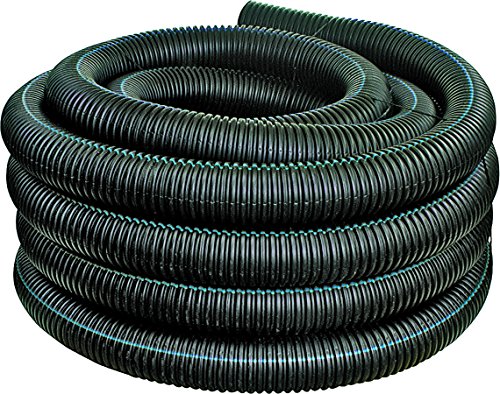
Advanced Drainage HDPE Conduit -- Best for Flexibility and Long Runs
HDPE (high-density polyethylene) conduit is increasingly used for long underground runs and directional boring applications because it can be supplied in long coiled lengths that reduce the number of joints. It is flexible enough to navigate gentle curves without fittings, highly resistant to soil chemicals, and has a very long service life. Advanced Drainage Systems produces a widely distributed HDPE conduit line. It is commonly specified for telecommunications infrastructure but is also available in electrical-rated versions. For very long runs or directional bore installations, the coiled format and joint reduction make it worth considering over rigid PVC sections.
What we liked
- Flexible, lightweight and affordable drainage solution
- Strong construction helps withstand weather and human elements
- Pipe is solid to move water away from a collection point
How to choose
What to consider
Identify the burial depth, soil conditions, traffic loads, and circuit type before selecting conduit. For most residential yard and outbuilding runs, Schedule 40 PVC at 18 inches depth is the standard, code-accepted, and cost-effective solution. Upgrade to Schedule 80 where the run passes under concrete or vehicles. Use RMC for shallow or very high-impact-risk sections. For long runs over 100 feet with multiple circuits, size the conduit generously and use a pulling lubricant. Always plan for a pull string during initial installation so future recabling is possible without retrending.
What to consider
For related coverage, see [best conduit bender](/articles/best-conduit-bender) and [best conduit pipe for electrical wiring](/articles/best-conduit-pipe-for-electrical-wiring). Review our evaluation criteria at [/methodology](/methodology).
Common questions
The NEC (National Electrical Code) allows several conduit types for underground wiring, including Schedule 40 PVC, Schedule 80 PVC, rigid metal conduit (RMC), and HDPE conduit. The required type depends on burial depth, load type, and whether the conduit will be exposed to vehicular traffic. Schedule 40 PVC is the most commonly used and generally accepted for residential direct-burial runs at the proper depth. Always verify requirements with your local inspector before trenching.
NEC minimum burial depth for conduit varies by type and circuit. Schedule 40 PVC conduit carrying standard 120V or 240V branch circuits requires a minimum of 18 inches of cover. Rigid metal conduit can be buried at 6 inches under some conditions. Conduit under a concrete slab requires less cover. Local codes may exceed NEC minimums. Always check with your local authority having jurisdiction (AHJ) before digging, and call 811 before any trench work to locate underground utilities.
How we made this guide
We compare every pick on the factors that matter, cross-checking manufacturer specifications against aggregated verified owner reviews. We rank independently and never take payment for placement. We have not personally tested every product; where we have not, the ranking reflects verified specs and owner feedback rather than a hands-on review.
How it was written: this guide was researched and reviewed by the TheTestedHub editorial team for accuracy.
Affiliate disclosure: TheTestedHub is reader-supported. When you buy through links on our site, we may earn a commission at no extra cost to you.


