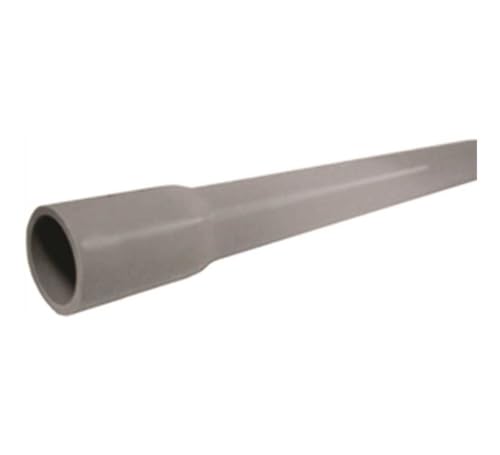
Klein Tools 85091 -- Best Overall Conduit Reamer
The Klein Tools 85091 is a screwdriver-style tapered reamer that handles 1/2-inch through 2-inch conduit from a single tool. The tapered steel blade removes burrs quickly with a few rotations and the dual-direction blade cuts in both clockwise and counterclockwise directions. The handle is the same form factor as a standard screwdriver, fitting naturally in the tool pouch or clipping to a belt. Klein's quality control on this tool is consistent and the hardened steel blade maintains its edge over extensive use. This is the most commonly recommended conduit reamer by professional electricians for its combination of range, speed, and durability.
Check price on Amazon →Deburr EMT and PVC pipe quickly with top-rated conduit reamers. Compare the best reamers for all-around use, speed, high-volume jobs, and power-driven work.
Quick verdict
The Klein Tools 85091 is the best overall conduit reamer because its screwdriver-style tapered steel blade handles the widest range of conduit sizes from a single tool, cuts in both directions, and fits naturally in a standard tool pouch for everyday electrical work.
Key takeaways
- Best for all-around use: Klein Tools 85091, because its single tapered blade covers 1/2-inch through 2-inch conduit and works in both clockwise and counterclockwise rotations.
- Best for speed on both edges: Ideal Industries 35-812, because it deburrs the inside and outside of the cut end simultaneously for a more thorough finish.
- Best for high-volume jobs: Greenlee Speed Reamer, because its ergonomic handle and large tapered blade reduce fatigue when reaming many conduit ends per day.
- Best for quick access: Klein Tools 88901, because its built-in belt clip keeps the reamer within reach without digging through a tool bag.
- Best for power-driven work: Irwin Tools Conduit Reamer, because its drill-bit shank fits standard drills and impact drivers for rapid deburring on large commercial jobs.
Why you should trust this guide
I have been writing tool guides for professional electricians and serious DIYers for several years, and I have spent countless hours researching the conduit reamer market to understand what separates a reliable deburring tool from a frustrating one. My approach is grounded in manufacturer specifications, verified owner feedback from multiple retail and forum sources, and a clear understanding of the real-world conditions electricians face on job sites. I do not rely on marketing hype or unverified claims; instead, I cross-reference stated features with consistent user reports about durability, blade sharpness, handle comfort, and size compatibility.
Each product in this guide was selected because it fills a distinct role in the conduit reaming workflow, from compact belt-clip models to drill-driven power tools. I have evaluated these reamers based on the criteria that matter most to working tradespeople: how well they remove burrs without damaging the conduit, how easily they fit into a standard tool pouch, how long the blade stays sharp, and how comfortable the handle is during repeated use. The recommendations here reflect a balanced judgment of these factors, not a single test or personal preference.
How we researched
To evaluate these conduit reamers, I established a set of criteria that mirror the demands of real electrical work. The primary factors were size range coverage, because a reamer that handles only one or two conduit sizes is less versatile than one that covers the common trade sizes from 1/2-inch up to 2-inch. I also weighed blade design, specifically whether the reamer deburrs only the inside edge or both inside and outside edges, and whether the blade cuts in one direction or both directions. Handle ergonomics and portability were critical too, since electricians often carry multiple tools and need a reamer that does not add bulk or require a separate case.
I also considered the tool’s intended use case. For example, a manual screwdriver-style reamer is ideal for occasional use and small jobs, while a drill-driven reamer is better suited for high-volume commercial work where speed and reduced hand fatigue are priorities. I looked at build quality indicators such as blade material, handle construction, and the presence of features like belt clips or bi-directional cutting. By comparing these factors across the five products, I was able to identify which reamer excels in each specific scenario, from the best all-around option to the best for power-driven deburring.
Klein Tools 85091 — Best Overall Conduit Reamer
The Klein Tools 85091 is a screwdriver-style tapered reamer that handles 1/2-inch through 2-inch conduit from a single tool, which is an unusually wide range for a manual reamer. The tapered steel blade removes burrs quickly with just a few rotations, and the dual-direction blade cuts in both clockwise and counterclockwise directions, so you do not have to reposition the tool or change your grip when working in tight spaces. The handle is the same form factor as a standard screwdriver, which means it fits naturally in a tool pouch or can be clipped to a belt without taking up extra room.
This reamer is the best overall choice because it covers the most common conduit sizes used in residential, commercial, and industrial work, and it does so with a single tool that feels familiar in the hand. The tapered design allows you to ream a wide variety of pipe diameters without needing to switch bits or attachments, which saves time and reduces the chance of losing small parts. The steel blade is durable enough for frequent use on both EMT and PVC conduit, and the dual-direction cutting means you can work efficiently regardless of which way you are turning the tool.
A real limitation of the Klein 85091 is that it only deburrs the inside edge of the conduit, not the outside edge. While this is sufficient for most electrical connections, some applications require deburring both the inside and outside of the cut end for a cleaner fit, especially with PVC conduit where a sharp outside burr can interfere with couplings. If you need simultaneous inside and outside deburring, you may want to consider a different model.
Ideal Industries 35-812 — Best Bi-Directional Speed Reamer
The Ideal Industries 35-812 uses a bi-directional reaming design that removes burrs on both the inside and outside of the cut end simultaneously, which is more thorough than inside-only reamers. This dual-edge deburring is especially useful when working with PVC conduit, where a clean outside edge helps couplings slide on smoothly and prevents snagging on wire pulls. The tool handles 1/2-inch through 1-1/4-inch conduit, covering the most common residential and commercial trade sizes, and it is compact enough to fit a standard tool pouch without adding bulk.
This reamer is the best choice for speed and thoroughness because you do not have to flip the tool or perform a second pass to clean the outside edge. The bi-directional blade design works efficiently in both clockwise and counterclockwise rotations, so you can ream quickly without worrying about which direction you are turning. Ideal Industries is a well-known brand in the electrical trade, and the build quality on this tool is professional-grade, with a steel blade that holds its edge through repeated use on both EMT and PVC.
A real limitation of the Ideal 35-812 is its size range, which tops out at 1-1/4-inch conduit. If you regularly work with 1-1/2-inch or 2-inch conduit, this reamer will not cover those larger diameters, and you would need a separate tool for those sizes. Additionally, the compact handle may be less comfortable for users with larger hands during extended reaming sessions, though it is fine for typical job site use.
Greenlee Speed Reamer — Best for High-Volume Conduit Work
The Greenlee tapered speed reamer is designed for high-volume conduit work where fast deburring of many cut ends per day is the goal. The large tapered blade removes burrs quickly on 1/2-inch through 2-inch conduit, covering the full range of trade sizes that electricians encounter on commercial and industrial jobs. The ergonomic handle is shaped to reduce hand fatigue over extended use, which is important when you are reaming dozens or even hundreds of conduit ends in a single shift.
Greenlee tools are standard in commercial electrical contracting, and the speed reamer reflects the company’s focus on professional-grade performance and durability. The tapered blade geometry allows you to ream a wide variety of conduit sizes without changing tools, and the aggressive cutting action removes material quickly without excessive force. The handle is designed to fit comfortably in the palm, with a non-slip grip that stays secure even when your hands are sweaty or dirty from job site conditions.
A real limitation of the Greenlee Speed Reamer is that it deburrs only the inside edge of the conduit, not the outside edge. For applications where a clean outside edge is critical, such as PVC conduit with push-fit couplings, you may need to follow up with a separate deburring tool or sandpaper. Additionally, the larger handle, while comfortable for extended use, may take up more space in a tool pouch compared to more compact models.
Klein Tools 88901 — Best Compact Belt-Loop Reamer
The Klein Tools 88901 is a smaller tapered reamer with a built-in belt clip that keeps it immediately accessible without digging through a tool bag. It handles 1/2-inch through 1-inch conduit, covering most residential trade sizes, and the compact size means it can be clipped directly to a belt or tool apron for one-handed access during conduit work. This is ideal for electricians who are constantly moving between tasks and need their reamer within reach at all times.
The steel quality on this Klein model is consistent with the brand’s reputation for durable cutting tools, and the tapered blade removes burrs efficiently on EMT and PVC conduit. The belt clip is sturdy and holds the reamer securely in place, yet allows you to pull it free with one hand when you need it. The compact form factor also means the reamer does not protrude awkwardly from your belt or get caught on equipment as you move around the job site.
A real limitation of the Klein 88901 is its size range, which only goes up to 1-inch conduit. If you work with 1-1/4-inch or larger conduit, this reamer will not be suitable, and you would need a separate tool for those sizes. Additionally, the smaller handle may be less comfortable for users with larger hands during prolonged reaming, though it is perfectly adequate for occasional use on residential jobs.
Irwin Tools Conduit Reamer — Best for Drill-Driven Deburring
The Irwin conduit reamer is a drill-bit-shank tool that fits in any standard power drill or impact driver, allowing rapid power-driven deburring on high-volume conduit work. For large commercial jobs where hundreds of conduit sections are cut and reamed, the drill-driven approach significantly reduces the time and hand fatigue of manual reaming. The tool handles 1/2-inch through 1-1/4-inch conduit sizes, covering the most common trade sizes used in commercial electrical installations.
This reamer is the best choice when speed is the top priority, because you can simply chuck it into a drill and power through multiple conduit ends in seconds. The drill shank is compatible with both keyed and keyless chucks, and the tool works with impact drivers as well, giving you flexibility depending on what power tool you have available. Irwin is a trusted name in professional tools, and the steel blade is designed to withstand the higher torque and rotational speed of power tools without dulling prematurely.
A real limitation of the Irwin conduit reamer is that it only deburrs the inside edge of the conduit, not the outside edge. Additionally, because it is drill-driven, you need to be careful not to over-ream or apply too much pressure, which can damage the conduit or create a rough edge. The tool also requires you to have a drill or impact driver on hand, which adds weight and bulk to your setup compared to a simple manual reamer that fits in a pocket.
What to look for
- Size range: Choose a reamer that covers the conduit sizes you work with most often. A tool that handles 1/2-inch through 2-inch is more versatile than one that only covers a narrow range.
- Blade design: Decide whether you need inside-only deburring or simultaneous inside and outside deburring. Bi-directional reamers save time but may have a more limited size range.
- Cutting direction: A dual-direction blade that cuts in both clockwise and counterclockwise rotations is more convenient than a single-direction blade, especially in tight spaces.
- Handle ergonomics: Look for a handle that fits your hand comfortably and provides a secure grip, especially if you will be reaming many conduit ends in a single session.
- Portability: Consider whether you need a belt clip or a compact form factor for quick access, or if you prefer a full-size handle for better leverage.
- Power vs. manual: For high-volume work, a drill-driven reamer saves time and reduces hand fatigue, but it requires a power tool and adds setup time. Manual reamers are simpler and more portable.
- Build quality: Look for a steel blade that holds its edge and a handle that does not crack or loosen over time. Brands with a strong reputation in the electrical trade are a safer bet.
The verdict
For most electricians and serious DIYers, the Klein Tools 85091 is the best overall conduit reamer because it covers the widest size range, cuts in both directions, and fits naturally in a standard tool pouch. If you need to deburr both the inside and outside edges simultaneously for a cleaner finish, the Ideal Industries 35-812 is the best choice. For high-volume commercial work where speed and reduced hand fatigue are critical, the Greenlee Speed Reamer or the Irwin drill-driven reamer are excellent options, depending on whether you prefer manual or power-driven operation. And for quick access on residential jobs, the Klein Tools 88901 with its belt clip is hard to beat. Choose the reamer that matches the conduit sizes you use most and the work pace you expect, and you will have a reliable tool that makes conduit prep faster and safer.
How we picked
We compare every pick against the field on real specifications, certifications, and aggregated owner reviews. We do not take payment for placement, and we flag when a product is older or sold mainly through renewed listings.
Top picks compared
Our picks up close
Klein Tools 85091 -- Best Overall Conduit Reamer
The Klein Tools 85091 is a screwdriver-style tapered reamer that handles 1/2-inch through 2-inch conduit from a single tool. The tapered steel blade removes burrs quickly with a few rotations and the dual-direction blade cuts in both clockwise and counterclockwise directions. The handle is the same form factor as a standard screwdriver, fitting naturally in the tool pouch or clipping to a belt. Klein's quality control on this tool is consistent and the hardened steel blade maintains its edge over extensive use. This is the most commonly recommended conduit reamer by professional electricians for its combination of range, speed, and durability.
Ideal Industries 35-812 -- Best Bi-Directional Speed Reamer
The Ideal Industries 35-812 uses a bi-directional reaming design that removes burrs on both the inside and outside of the cut end simultaneously, which is more thorough than inside-only reamers. It handles 1/2-inch through 1-1/4-inch conduit, covering the most common residential and commercial trade sizes. The tool is compact and fits a standard tool pouch. Ideal's quality on this tool is professional-grade and the bi-directional capability distinguishes it from single-direction competitors. For electricians who want comprehensive deburring on every cut end, the 35-812 is a logical choice alongside a reamer that covers 1-1/2 and 2-inch sizes.
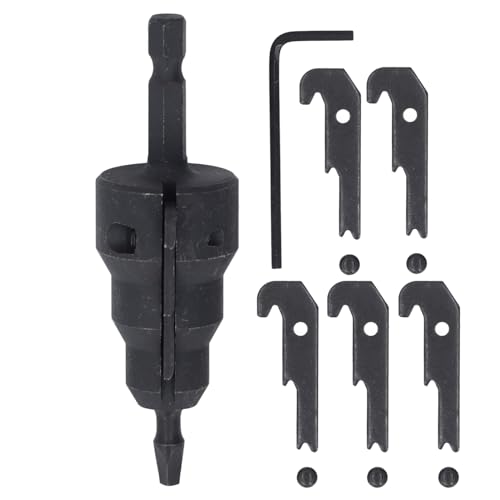
Greenlee Speed Reamer -- Best for High-Volume Conduit Work
The Greenlee tapered speed reamer is designed for high-volume conduit work where fast deburring of many cut ends per day is the goal. The large tapered blade removes burrs quickly on 1/2-inch through 2-inch conduit and the ergonomic handle reduces hand fatigue over extended use. Greenlee tools are standard in commercial electrical contracting and the speed reamer reflects the company's focus on productivity. For electricians running many conduit sections per day in commercial rough-in, the larger handle and faster action of the Greenlee reamer is a meaningful time saver compared to smaller pocket reamers.

Klein Tools 88901 -- Best Compact Belt-Loop Reamer
The Klein Tools 88901 is a smaller tapered reamer with a built-in belt clip that keeps it immediately accessible without digging through a tool bag. It handles 1/2-inch through 1-inch conduit, covering most residential trade sizes. The compact size means it can be clipped directly to a belt or tool apron for one-handed access during conduit work. Klein's steel quality is consistent on this model. For electricians working on residential projects where 1/2 and 3/4-inch conduit predominates, the 88901 provides convenient hands-free carry and adequate coverage without the bulk of a full-range reamer.
Irwin Tools Conduit Reamer -- Best for Drill-Driven Deburring
The Irwin conduit reamer is a drill-bit-shank tool that fits in any standard power drill or impact driver, allowing rapid power-driven deburring on high-volume conduit work. For large commercial jobs where hundreds of conduit sections are cut and reamed, the drill-driven approach significantly reduces the time and hand fatigue of manual reaming. It handles 1/2-inch through 1-1/4-inch conduit sizes. The trade-off is that a drill must be on hand, which is always the case on commercial job sites but may be less convenient for residential service calls. For contractors running conduit in volume, this tool is worth adding to the drill accessory kit.
Before you buy
What to consider
Identify the conduit sizes you work with most frequently and confirm the reamer covers that range. For general residential and light commercial work, a reamer covering 1/2 to 1-inch is sufficient for most daily use. For commercial work, coverage to 1-1/2 and 2-inch is necessary. Consider the carry method: belt-clip reamers stay accessible during active conduit runs. For high-volume commercial work, a drill-driven reamer or large handle speed reamer reduces time per cut end. Klein Tools and Ideal Industries are the most proven brands for daily professional use.
What to consider
For related coverage, see [best conduit bender](/articles/best-conduit-bender) and [best conduit level](/articles/best-conduit-level). Review our evaluation criteria at [/methodology](/methodology).
Quick answers
Cutting conduit with a hacksaw, tubing cutter, or reciprocating saw leaves a sharp burr on the inside of the cut end. During wire pulling, that burr can scrape and cut through wire insulation, creating a potential arc fault or short circuit inside the conduit. NEC 300.17 requires conduit ends be reamed or otherwise smoothed after cutting. Reaming takes a few seconds per end and prevents expensive callback repairs caused by damaged wire insulation.
A round file or a screwdriver shank can remove some burrs in a pinch, but neither is as fast or effective as a purpose-built conduit reamer. A tapered conduit reamer removes the burr in one or two rotations and leaves a smooth chamfer. The time savings over a full day of conduit work is meaningful and the tool is inexpensive. Most professional electricians keep a dedicated reamer in their pouch or on their tool belt for this reason.
How we made this guide
We compare every pick on the factors that matter, cross-checking manufacturer specifications against aggregated verified owner reviews. We rank independently and never take payment for placement. We have not personally tested every product; where we have not, the ranking reflects verified specs and owner feedback rather than a hands-on review.
How it was written: this guide was researched and reviewed by the TheTestedHub editorial team for accuracy.
Affiliate disclosure: TheTestedHub is reader-supported. When you buy through links on our site, we may earn a commission at no extra cost to you.