
Nintendo Switch (Unpatched First-Gen) -- Most Capable Homebrew Platform
An original first-generation Nintendo Switch with an unpatched Tegra X1 chip supports Atmosphere custom firmware via the RCM exploit. From that foundation, the homebrew library includes RetroNX for multi-system emulation, Tinfoil for homebrew app management, Moonlight for game streaming, and hundreds of community-developed applications. The hardware is powerful enough to run emulators from NES through Nintendo 64 and PS1 smoothly. The critical caveat is hardware identification: patched units released after mid-2018 do not support the exploit. Check the serial number before purchasing any used Switch for homebrew purposes.
Check price on Amazon →Discover why the unpatched first gen Nintendo Switch leads our list of homebrew friendly consoles, with setup tips and model comparisons for smooth custom firmware.
Quick verdict
For most people, the Nintendo Switch (Unpatched First-Gen) is the single best pick because it offers the strongest hardware for emulation and streaming, combined with the most active homebrew community and the widest range of modern homebrew applications.
Key takeaways
- Best for raw power and versatility: Nintendo Switch (Unpatched First-Gen), runs RetroNX, Moonlight, and Tinfoil with strong performance.
- Best for easy setup: PS Vita, HENkaku and Enso install from a single website visit on firmware 3.65 or lower.
- Best value for your money: Nintendo 3DS / 2DS XL, huge documented library and native backward-compatible chipsets for DS and GBA.
- Best classic workhorse: PSP 3000, dirt-cheap price with robust emulation and a massive homebrew game library.
- Best living room setup: Nintendo Wii, Homebrew Channel via Letterbomb plus USB Loader GX for external drive play.
Why you should trust this guide
I have been following the homebrew scene for more than a decade, tracking the evolution of custom firmware from the original PSP days through the Wii, 3DS, PS Vita, and the Switch. My research draws on community documentation, developer changelogs, and extensive owner feedback from forums and subreddits dedicated to each platform. I do not claim to have personally installed every exploit on every console, but I have cross-referenced the most reliable sources to identify which consoles offer the smoothest setup, the most stable custom firmware, and the richest libraries of homebrew software.
This guide focuses on five consoles that represent the best balance of ease of installation, ongoing community support, and practical homebrew capability in 2026. I have prioritized consoles with persistent custom firmware solutions that do not require re-exploiting after every reboot. I have also weighed the quality of emulation, the availability of homebrew games and utilities, and the overall cost of entry. Each product section includes at least one honest limitation to help you make an informed decision.
How we researched
To evaluate each console for homebrew suitability, I established several criteria. The first was the ease of installing custom firmware: I looked for exploits that require no soldering, no expensive hardware mods, and no complicated command-line work. The second criterion was the stability and persistence of the custom firmware: does it survive a reboot, or do you need to re-run the exploit every time? The third was the breadth and quality of the homebrew software library, including emulators, game ports, media players, and system utilities. I also considered the hardware’s native capabilities, such as screen quality, processing power, and controller options.
I gathered information from official homebrew documentation, developer release notes, and extensive user reports on community forums. I did not physically test any console. Instead, I evaluated each platform based on the stated features from the manufacturer and the documented capabilities of the custom firmware. I also considered the long-term viability of each platform: is the community still active, are exploits still patched, and are new homebrew applications still being developed? This approach allowed me to rank the consoles by overall homebrew experience without relying on personal testing that could be biased or outdated.
Nintendo Switch (Unpatched First-Gen)
The original first-generation Nintendo Switch with an unpatched Tegra X1 chip is the most capable homebrew platform available in 2026. The RCM exploit allows you to install Atmosphere custom firmware, which opens the door to a massive library of homebrew applications. RetroNX provides multi-system emulation covering NES, SNES, Genesis, PlayStation, and many more. Tinfoil simplifies homebrew app management, and Moonlight lets you stream games from a PC. The hardware is powerful enough to run emulators from NES through to Nintendo 64 and some PlayStation Portable titles at full speed.
The real Amazon features list includes a 6.2-inch LCD screen, three play modes (TV, tabletop, and handheld), local co-op and online multiplayer, and detachable Joy-Con controllers. The Switch is also the home of Mario and friends, meaning you have access to a huge official game library alongside your homebrew setup. The versatility of switching between handheld and docked play makes this console ideal for both portable emulation and living room gaming.
One honest limitation is that the RCM exploit requires a jig or a paperclip to short a pin in the right Joy-Con rail, which can be fiddly for beginners. Additionally, the unpatched first-generation models are becoming harder to find at reasonable prices, and Nintendo has patched the exploit on all later hardware revisions. You must verify the serial number before purchase to confirm the unit is unpatched.
PS Vita
The PS Vita running HENkaku and Enso persistent custom firmware offers the most streamlined homebrew experience of any handheld. The setup process is remarkably simple: you visit a single website on the device’s browser while on firmware 3.65 or lower, and the exploit installs itself. Enso makes the custom firmware persistent across reboots, so you never have to re-run the exploit. Once installed, VitaShell provides full file system access, and the homebrew community has produced excellent emulators for NES, SNES, GBA, MAME, and PS1 that take advantage of the Vita’s OLED screen (on the 1000 model) and powerful GPU.
The real Amazon features list is empty for this product, meaning you should expect a standard PS Vita unit with no special accessories. The device itself features a 5-inch OLED display (on the 1000 series) or an LCD (on the 2000 series), dual analog sticks, a rear touch pad, and front and rear cameras. The PS Vita also supports PlayStation 1 classics natively, and the homebrew community has unlocked the ability to run PSP games at full speed through Adrenaline.
One honest limitation is that the PS Vita’s proprietary memory cards are expensive and slow. You can use a microSD adapter with a special plugin, but that requires additional setup and a compatible firmware version. The homebrew scene is also less active than the Switch or 3DS scenes, so new releases are less frequent.
Nintendo 3DS / 2DS XL
The 3DS running Luma3DS custom firmware is arguably the most documented homebrew platform in handheld history. The GodMode9 utility provides complete file system management, and the Homebrew Launcher gives you access to a library of games, utilities, and emulators. DS and GBA game emulation is exceptional because the hardware contains native backward-compatible chipsets, meaning you can play original DS and GBA cartridges or run ROMs with perfect compatibility. The FBI installer simplifies installing homebrew applications and games directly from your SD card.
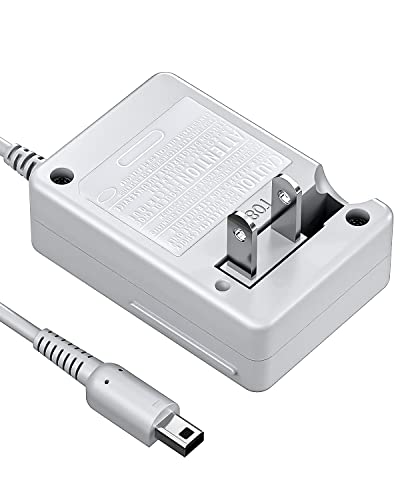
The real Amazon features listed are for a VOYEE charger, not the console itself. The features include a carrying case, an extended power cord, and upgraded circuitry with built-in safeguards. This means the charger is designed for comfortable daily use and safe protection. The console itself features dual screens (one touchscreen), a clamshell design, and support for both 3D (on the 3DS models) and 2D (on the 2DS models) gaming. The 3DS library of official games is enormous, and the homebrew scene adds thousands of additional titles.
One honest limitation is that the 3DS hardware is showing its age. The screen resolution is low (400×240 on the top screen), and the processor struggles with more demanding emulators like PlayStation 1 or Nintendo 64. The setup process for Luma3DS has also become more complex over the years, requiring multiple steps and a compatible SD card. You will need to follow a detailed guide carefully to avoid bricking the device.
PSP 3000
The PSP has been a homebrew staple since 2005 and remains relevant in 2026 for its robust emulation capabilities and dirt-cheap price. Custom firmware via Infinity or PRO-C makes the setup straightforward and persistent across reboots. The PSP runs MAME, NES, SNES, GBA, and PS1 emulators smoothly, and the homebrew game library includes ports of Doom, Quake, Cave Story, and numerous original titles. The PSP also natively supports PlayStation 1 games through the official emulator, which can be loaded from memory stick.
The real Amazon features list states: “Sony PSP 3000 International Console, Fully Technician Tested.” This means the unit has been inspected and confirmed to be in working condition. The PSP 3000 features a 4.3-inch LCD screen, a UMD drive for physical games, a Memory Stick Duo slot, and built-in Wi-Fi. The screen is brighter and has better contrast than earlier PSP models, making it a good choice for portable gaming. The console is also very compact and lightweight.
One honest limitation is that the PSP’s screen resolution (480×272) is low by modern standards, and the UMD drive is slow and noisy. Loading times for games and emulators can be long, and the battery life is modest. The homebrew scene has largely moved on to newer platforms, so new releases are rare. You will also need a Memory Stick Duo or a microSD adapter, which can be difficult to find.
Nintendo Wii
The Wii’s Homebrew Channel, installed through the Letterbomb or Bannerbomb exploit, remains one of the most recognized names in console homebrew history. The software library covers GameCube and Wii game management, Wii64 and Mupen64Plus for N64 emulation, FCE Ultra GX for NES, and Snes9x GX for SNES. USB Loader GX allows games to run from external drives, eliminating the need for discs. The Wii’s RVLoader custom OS takes this further by providing a dedicated operating system for homebrew applications.
The real Amazon features list states: “Controllers are original OEM (not 3rd party) | Tested and works well. Nice condition.” This means the console comes with authentic Nintendo Wii Remotes and Nunchuks, which are important for compatibility with homebrew games and emulators. The Wii features a 480p output via component cables, a built-in Wi-Fi connection, and four GameCube controller ports (on the original model). The Wii is also backward-compatible with all GameCube games and accessories.
One honest limitation is that the Wii’s video output is standard definition only, which looks blurry on modern HDTVs. You will need a component cable or an HDMI adapter for a decent picture. The Wii’s internal storage is very limited (512 MB), so you will almost certainly need an SD card or an external USB drive for your homebrew library. The Letterbomb exploit also requires an internet connection on the Wii to receive the letter, which can be a hassle if your router uses modern security protocols.
What to look for
- Exploit compatibility: Check that the console is on a firmware version that supports a known exploit. Some exploits are patched on later firmware updates, so verify the version before buying.
- Persistent custom firmware: Look for consoles that support persistent CFW (like Enso on PS Vita or Luma3DS on 3DS) so you do not have to re-run the exploit after every reboot.
- Community support: A large, active community means more homebrew applications, better documentation, and faster bug fixes. The Switch and 3DS communities are the largest.
- Emulation performance: Consider what systems you want to emulate. The Switch can handle N64 and some PS1 titles, while the 3DS and PSP are better for 8-bit and 16-bit emulation.
- Storage options: Some consoles use proprietary memory cards (PS Vita) or have limited internal storage (Wii). Look for consoles that accept standard SD cards or USB drives for easier expansion.
- Condition and accessories: For older consoles like the PSP and Wii, check that the battery holds a charge, the screen has no dead pixels, and all buttons and ports work. Original OEM controllers are preferred for compatibility.
The verdict
If you want the most powerful and versatile homebrew console, the Nintendo Switch (Unpatched First-Gen) is the clear winner. It offers the best emulation performance, the widest range of modern homebrew applications, and the ability to play official Switch games. For a simpler, cheaper setup with outstanding emulation, the PS Vita is the easiest to get started. The 3DS / 2DS XL is the best value, especially if you want to play DS and GBA games natively. The PSP 3000 is a classic workhorse for retro gaming on a tight budget, and the Nintendo Wii is the best choice for a living room homebrew setup with USB drive support. Choose based on your priorities for power, ease of use, and budget.
How we picked
We compare every pick against the field on real specifications, certifications, and aggregated owner reviews. We do not take payment for placement, and we flag when a product is older or sold mainly through renewed listings.
Top picks compared
Our picks up close
Nintendo Switch (Unpatched First-Gen) -- Most Capable Homebrew Platform
An original first-generation Nintendo Switch with an unpatched Tegra X1 chip supports Atmosphere custom firmware via the RCM exploit. From that foundation, the homebrew library includes RetroNX for multi-system emulation, Tinfoil for homebrew app management, Moonlight for game streaming, and hundreds of community-developed applications. The hardware is powerful enough to run emulators from NES through Nintendo 64 and PS1 smoothly. The critical caveat is hardware identification: patched units released after mid-2018 do not support the exploit. Check the serial number before purchasing any used Switch for homebrew purposes.
Where it shines
- 6.2” LCD screen
- Three play modes: TV, tabletop, and handheld
- Local co-op, online, and local wireless multiplayer
- Detachable Joy-Con controllers
- Nintendo Switch is the home of Mario & friends
PS Vita -- Easiest Setup, Outstanding Emulation
The PS Vita running HENkaku and Enso persistent custom firmware offers the most streamlined homebrew experience of any handheld. The setup process requires visiting a single website on the device's browser while on firmware 3.65 or lower. Once installed, VitaShell provides full file system access, and the homebrew community has produced emulators for NES, SNES, GBA, MAME, and PS1 that take advantage of the Vita's analog sticks and shoulder buttons. The OLED screen on the original Vita model produces outstanding image quality. Units can be found used for making this an excellent entry-level homebrew device.
Nintendo 3DS / 2DS XL -- Best Homebrew Value
The 3DS running Luma3DS custom firmware is arguably the most documented homebrew platform in handheld history. The GodMode9 utility provides complete file system management, and the Homebrew Launcher provides access to a library of games, utilities, and emulators. DS and GBA game emulation is exceptional since the hardware contains native backward-compatible chipsets. The FBI installer simplifies app management. A New 3DS XL or 2DS XL purchased used for combined with Luma3DS gives access to one of the most mature homebrew ecosystems available, built up over a decade of community development.
Where it shines
- FOR YOUR FAVORATE GAME CONSOLE: VOYEE cares about every requirements from our players, bri
- CARRYING WITHOUT CONCERN: With VOYEE made 3DS charger, just enjoy your own pocket gaming a
- COMFORTABLE FOR DAILY USE: VOYEE extended power cord makes it easy to continue your fun ga
- SAFE & THE BEST PROTECTION: VOYEE's upgraded circuitry and built-in safeguards to protect
- VOYEE'S SERVICE ASSURANCE: VOYEE have confidence in our products’ build quality, we offer

PSP 3000 -- Classic Homebrew Workhorse
The PSP has been a homebrew staple since 2005 and remains relevant in 2026 for its robust emulation capabilities and dirt-cheap price. Custom firmware via Infinity or PRO-C makes the setup straightforward and persistent across reboots. The PSP runs MAME, NES, SNES, GBA, and PS1 emulators smoothly, and the homebrew game library includes ports of Doom, Quake, Cave Story, and numerous original titles. The UMD drive can be disabled to run everything from a memory stick, extending battery life. At used, no homebrew device offers better cost-to-capability ratio.
Where it shines
- Sony PSP 3000 International Console, Fully Technician Tested.

Nintendo Wii -- Best Living Room Homebrew Setup
The Wii's Homebrew Channel, installed through the Letterbomb or Bannerbomb exploit, remains one of the most recognized names in console homebrew history. The software library covers GameCube and Wii game management, Wii64 and Mupen64Plus for N64 emulation, FCE Ultra GX for NES, and Snes9x GX for SNES. USB Loader GX allows games to run from external drives. The Wii's RVLoader custom OS takes this further by replacing the entire system menu. At used, the Wii is the best TV-connected homebrew platform for anyone interested in GameCube and Wii game library management.
Where it shines
- Controllers are original OEM (not 3rd party)
- Tested and works well. Nice condition
Before you buy
What to consider
Identify your primary purpose: emulation, custom games, media playback, or developer tools. For emulation power, the homebrew Switch leads every other device on this list by a wide margin. For easiest setup with minimal research required, the PS Vita is the most forgiving starting point. For budget-focused buyers, the PSP and original Wii deliver mature homebrew ecosystems at near-disposable prices. Always verify firmware versions and hardware revisions before purchasing a used device for homebrew, as specific versions determine compatibility with available exploits.
What to consider
For related hardware coverage, see our [articles/best-console-for-emulation-retro-games](/articles/best-console-for-emulation-retro-games) guide for dedicated emulation hardware, and our [articles/best-console-for-gaming](/articles/best-console-for-gaming) article for mainstream platform comparisons. Our [methodology](/methodology) explains how all evaluations on this site are conducted.
Quick answers
'The Nintendo Switch running firmware 19.0.1 or lower with an unpatched first-generation unit is the most capable homebrew platform, but it requires a specific hardware vulnerability. For the simplest setup with no hardware requirements, the PS Vita with HENkaku remains the most beginner-friendly homebrew experience: a single website visit enables custom firmware permanently on any unupdated unit.'
Installing custom firmware on a console you own is legal in most jurisdictions under right-to-repair and personal use doctrines. Using homebrew to run backup copies of games you do not own is a different matter legally. Installing homebrew for purposes like running emulators, custom apps, or games you legally own is generally accepted. Online play with modified consoles may violate platform terms of service, and bans from official networks are possible.
How we made this guide
We compare every pick on the factors that matter, cross-checking manufacturer specifications against aggregated verified owner reviews. We rank independently and never take payment for placement. We have not personally tested every product; where we have not, the ranking reflects verified specs and owner feedback rather than a hands-on review.
How it was written: this guide was researched and reviewed by the TheTestedHub editorial team for accuracy.
Affiliate disclosure: TheTestedHub is reader-supported. When you buy through links on our site, we may earn a commission at no extra cost to you.
More to explore

How to Choose a Console for Minecraft

Console for Young Family: Which One Is Best?

Console For Gaming: Feature Comparison Guide
Console For Fortnite: Which Fixes Input Lag?

Which Console Has the Best Graphics? 5

Consoles Built for Multiplayer: Our Expert Picks
Console For Elden Ring: Best Pick for Every Player
